
The ruling party, the African National Congress (ANC), lost the National and Provincial Elections last week in South Africa leading to uncertainty about the political future of the country.
ANC which has ruled South Africa in 30 years since the abolition of apartheid saw its support decrease from 57.5 % to 40.2 %. Voter turnout was relatively high, 59 %, according to the electoral commission.
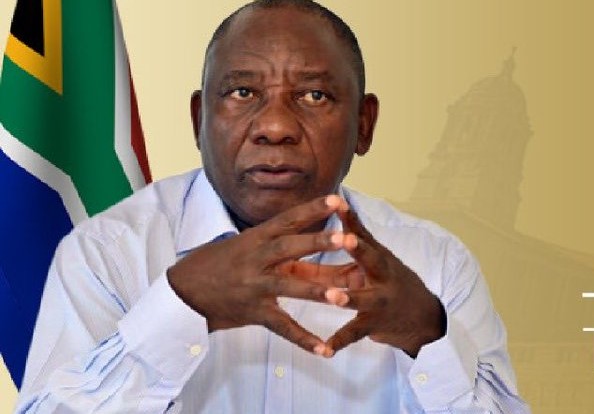
ANC’s loss was a personal loss for the incumbent president, Cyril Ramaphosa, who was elected in 2018 after the former president Jacob Zuma was forced to resign after allegation of corruption and mismanagement. The reign under Ramaphosa, who also has been accused of corruption, was not more successful, as the country continued to suffer high unemployment and widespread power cuts.
In fact, South Africa under the rule of ANC has not managed to change the socio-economic reality it inherited from the apartheid period according to a recent article in The New York Times. The ANC won the 1994 election on the promise of “a better life for all.” But for many that promise has fallen short.” Polls suggested that the party would lose the elections for the first time and that also happened.
Black South Africans, who make up 81% of the population, often argue that they’ve gained political freedom, but not economic freedom — and remain trapped in the structure of apartheid, according to the article.
By one measure, the World Bank has ranked South Africa as the most unequal in the world. 10% of the population holds about 71% of the country’s wealth, while the bottom 60% holds just 7% of assets. The deep inequality follows racial lines. What is most striking is that democracy was not followed by a comprehensive land reform. A minority of white farmers still own about half of the country’s area.
Cyril Ramaphosa recognized his loss but has not yet resigned as party leader. The party is expected to discuss possibilities to remain in power in a coalition government with some of the main parties: Democratic Alliance (a liberal – conservative party, with 21.8% of the votes), uMkhonto weSizwe, MK (Jacob Zuma’s party, 14.6%), Economic Freedom Fighters, EFF (a leftist party, 9.5%), and Inkatha Freedom Party, IFP (a conservative nationalistic party 3.9%).
The EU deployed an Election Experts Mission to South Africa to make a technical assessment of the electoral process in light of international and regional commitments as well as relevant national legislation, a Commission spokesperson said on Monday.
EU Electoral Experts Missions (EEMs) are composed of a limited number of independent experts deployed for a period of approximatively two months during a country’s electoral process. Due to their limited scope and size, EEMs usually monitor the electoral process from the capital only.
They do not communicate publicly at any stage of the process. However, they submit a final independent report to the national authorities with eventual recommendations to improve the electoral framework in future processes. This final report is only made public if the national authorities wish to do so, according to the Commission.
M. Apelblat
The Brussels Times
