
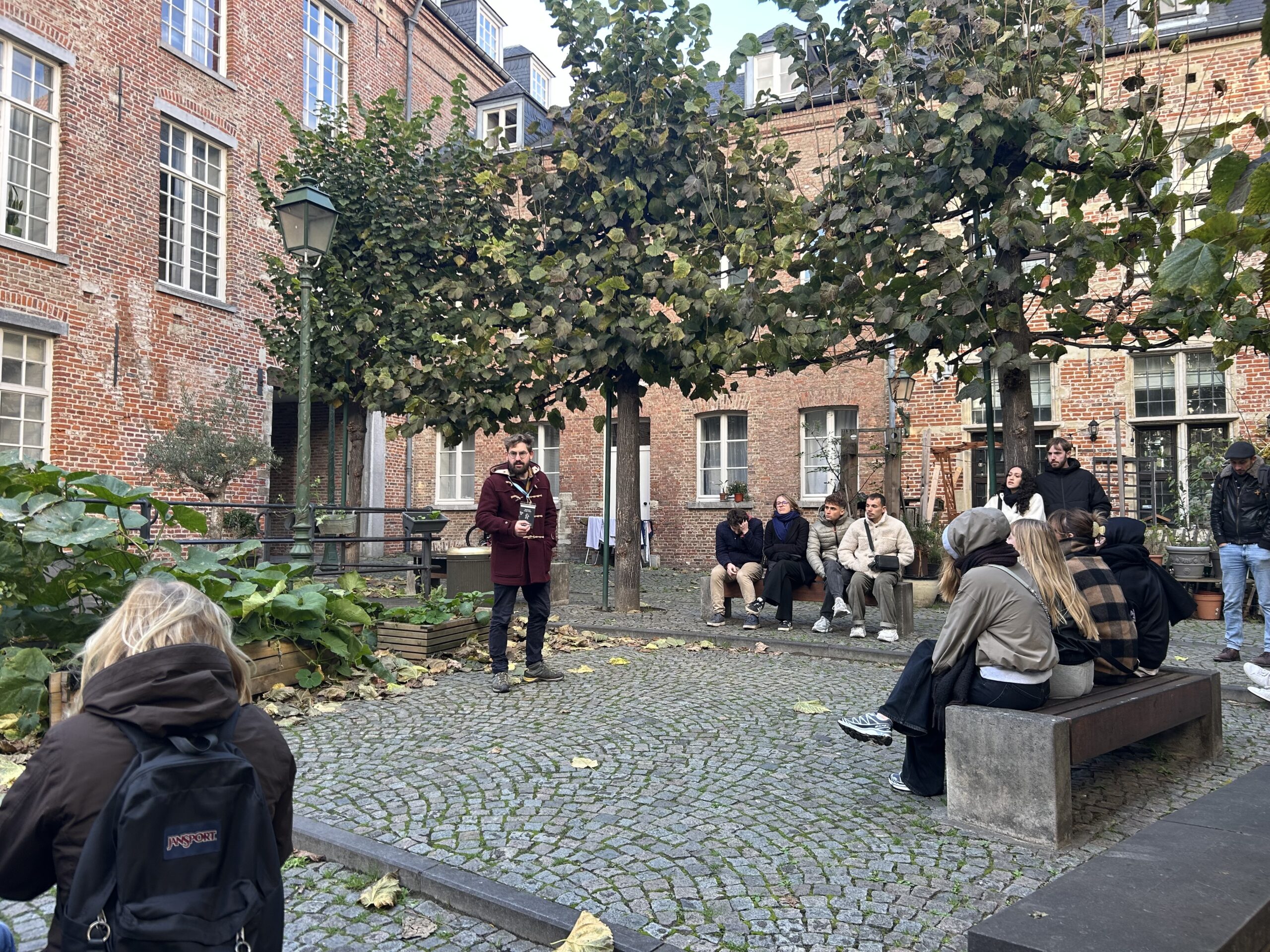
On a misty October afternoon, a small group gathers outside the Hôtel Amigo, just steps away from the Grand Place. The cobblestones glisten, and the air is heavy with anticipation.
Their guide, Thibault, smiles before breaking the silence: “Today,” he says, “you’ll see Brussels as you’ve never seen it before - through the eyes of its most shocking crimes.”
With Bruxelles, Scène de Crimes, Brussels by Foot turns the capital’s historic centre into an open-air stage where history, tragedy, and theatre intertwine. The two-hour walk immerses visitors in the city’s criminal past, from 19th-century murders to forgotten tales of vengeance and betrayal.
A city written in blood and ink
“This tour is about stories that once filled the newspapers,” explains Thibault, who has a background in history and theatre. “The cases that scandalised Brussels — the ones people whispered about in cafés and read about in the gazettes.”
The idea was born in 2018 from François Ghislain’s dual passions for history and performance. The founder of Brussels by Foot wanted something immersive: “Not a dry lecture, but an experience that lets people feel what the city was like when these crimes took place”. Since then, the initiative has grown into a small collective of passionate guides, many of them trained actors, offering around fifteen thematic walks on various topics catering to locals and tourists.
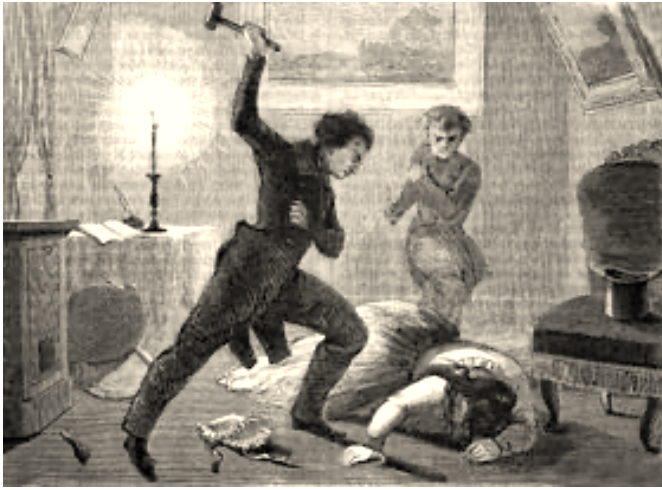
The tour winds through the capital’s oldest quarters - from the narrow alleys behind the Grand Place to the shadowed arches of Saint-Géry. Along the way, Thibault brings back to life Jeanne Van Calk, who was murdered in 1906, and explains the strange story of an 1850 double murder which came about after a dispute over 50 kilos of pork. He also describes the famous altercation between French poets Rimbaud and Verlaine.
Credit: Aurore Spitaels
Each stop has its own secret. In front of the Hôtel Amigo, Thibault reveals that the luxurious location once housed a prison where, centuries ago, petty thieves and debtors were locked up. Nearby, at the Coin du Diable, he recounts a 17th-century legend of murder and superstition.
Theatre meets history
What makes the tour truly stand out is its theatrical storytelling. Thibault doesn’t just recount facts - he performs them, shifting emotions to bring each story to life. “We don’t invent anything,” he insists. “Everything is documented - from archives, court records, and press clippings. But we tell it as a story.”
Despite the subject, the tone remains respectful. “We never sensationalise the crimes,” Ghislain adds. “These were real people - victims, perpetrators, witnesses. They all deserve to have their stories told with dignity.”
Brussels by Foot storytelling is not just about blood and mystery - it’s also about the evolution of justice, the role of the press, and the changing face of Brussels society. Each story is also a window into the city itself. “When we talk about a murder in 1873,” Ghislain explains, “we also talk about the smells, the social tensions, the way the police worked. It’s a way to understand how Brussels became the city we know today.”
Not just tourists
The audience is surprisingly local. “We get a lot of people from Brussels,” says Ghislain. “Even those who’ve lived here all their lives are shocked to learn about crimes that happened just around the corner”. One participant even tells us that she didn’t think Brussels had so much crime history, compared to other famous capitals like London and its Jack the Ripper or Paris and its Jean-Baptiste Troppmann.
For many visitors, locals and tourists alike, the tour offers a fresh way to connect with the city. “It’s not like the usual historical tours where you can read everything on Wikipedia,” says a participant visiting from France. “Here, you get anecdotes, atmosphere, and a sense of mystery.”
For others, it’s simply a fun day out. The tours are accessible from age 12 and have become a surprising hit for families during school holidays. “It’s a good mix of history and intrigue,” says one mother, visiting with her 16 year-old daughter from Rixensart.
Interest peaks in October. “There’s clearly a revival around Halloween,” explains our guide Thibault. “In summer, it’s quieter, but in autumn, the tours fill up fast.”
From Netflix to Place de Brouckère
The timing couldn’t be better. True crime has exploded in popularity, from podcasts to streaming documentaries - and Brussels is no exception. Two young people participating in the tour explain to us: “This is our second date! It might not sound romantic, but we both like watching crime shows and we don’t know Brussels that well as we come from Charleroi. We thought this would be fun, and it is!”
For ethical reasons, Bruxelles, Scène de Crimes avoids case which are too recent. “We stay within a window — from the 19th century up to the mid-20th. That’s enough to have rich archives but distant enough that we don’t hurt anyone still affected,” explains François Ghislain.
One exception has been made with an unsolved case dating back from 2008, but Thibault explains why this case was included in the tour: “Since the case is extremely linked to the neighbourhood in which it happened, everyone still has an opinion on who did it. So, we decided to include it, as it is an integral part of the mood you can feel in those narrow streets around Grand Place.”
Practical Information
The tour can be booked here. It departs from the Hôtel Amigo (1 rue de l’Amigo, 1000 Brussels) and ends at Place Saint-Géry, covering some of the city’s most atmospheric streets. It is available in French, English, and Dutch, open to anyone aged 12 and up, and lasts around two hours.
Private tours can also be arranged - for families, groups, or work colleagues looking to see Brussels “through another lens”.
Related News
- Inside a Belgian theme park's horrifying Halloween realm
- The remarkable lives still stirring in Ixelles cemetery
- Police standoff in Molenbeek after man allegedly stabs his mother
- Belgium launches PoliceSearch to link data from 200 local police zones
- Spooky season: What to do for Halloween in and around Brussels
