
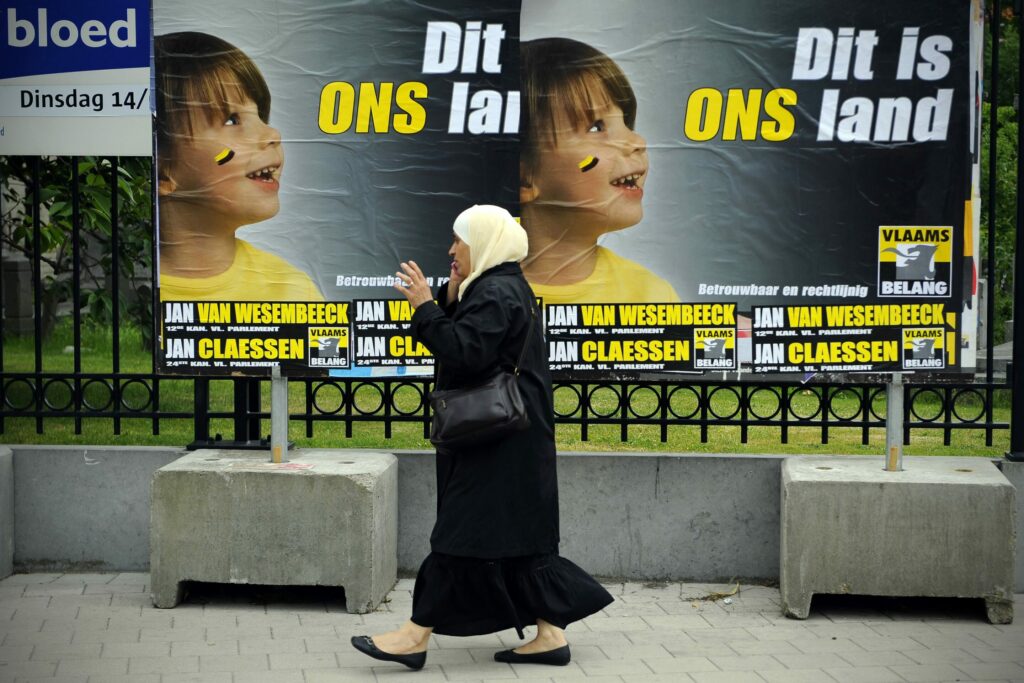
In its annual review, Belgium's Human Rights League's (Ligue des Droits Humains or LDH) observed a rise in far-right ideas and a weakening of checks and balances in a year marked by European, national and regional elections.
The 2024 report, published Thursday, noted a rise in far-right sympathy – especially in Flanders. It points out that the far-right party Vlaams Belang not only grew more popular, it also secured historic wins to now govern in four Flemish municipalities: Ranst, Iseghem, Brecht and Ninove.
On the French-speaking side of the country – which historically has been more left-wing – there also has been a shift to the political right. These are "worryingly" being adopted by traditional parties.
Press freedom and justice powers
As the far-right continues to grow in strength, key democratic balances in power – namely,the press and judicial systems – are struggling more than ever. Never before has Belgium seen so many attacks on freedom of the press as in 2024, particularly by public actors, the LDH said. "We are particularly concerned about the gag procedures deployed by both private and public actors, and even more worryingly, by members of governments."
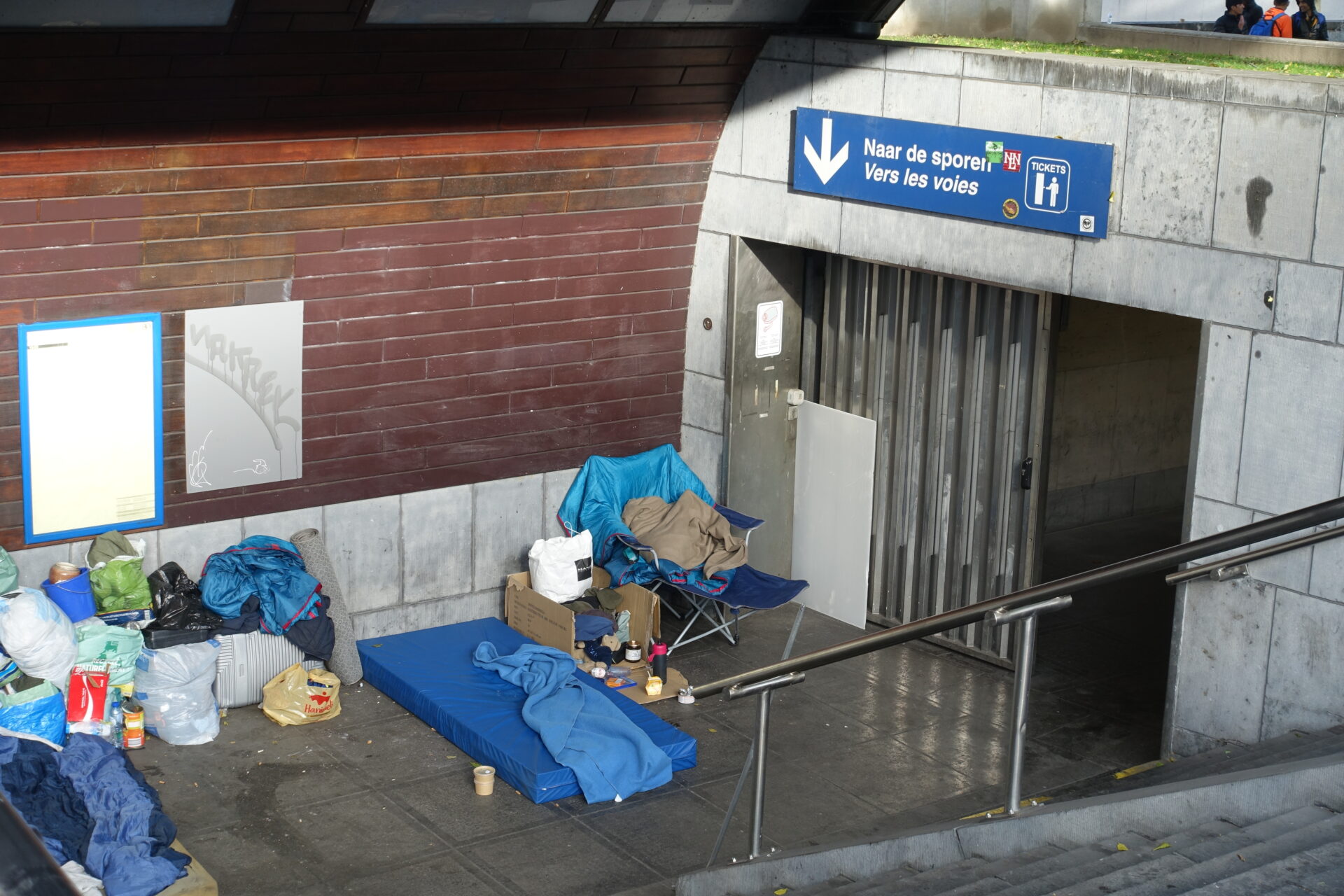
Asylum seekers shelter near the former Federal Immigration Services building, October 2022. Credit: Lauren Walker
"The checks and balances represented by the media and the justice system are faltering," the report states. It highlights repeated efforts to sound the alarm over Belgium's failure to respect the rule of law, specifically regarding the asylum shelter crisis.
The League also noted Belgium's failure to comply with the rulings of the European Court of Human Rights (ECHR). In Belgium, 21 judgements are still awaiting execution while almost 40% of decisions have not yet been implemented over the last ten years. The average time for authorities to implement ECHR judgments is almost four years.
Capacity for resilience
Repression was another focus of the report, specifically the repression of demonstrations in support of Palestine.
The LDH also questioned repressive tactics by the Brussels Region to put an end to drug-related shootings, including gathering bans.
It notes that this hardline security stance "is likely to continue" judging by the proposals for the incoming Federal Government. It pointed to the probable authorisation of the use of facial recognition, among others.
Finally, the LDH expects "a weakening of public services and an erosion of economic, social and cultural rights, particularly for the most vulnerable people."
"In this particularly dark period, civil society must prepare to stand together, to show tenacity and solidarity," it concluded. "Democracies have proven in the past that they have a capacity for resilience, but it requires constant vigilance and mobilisation."
