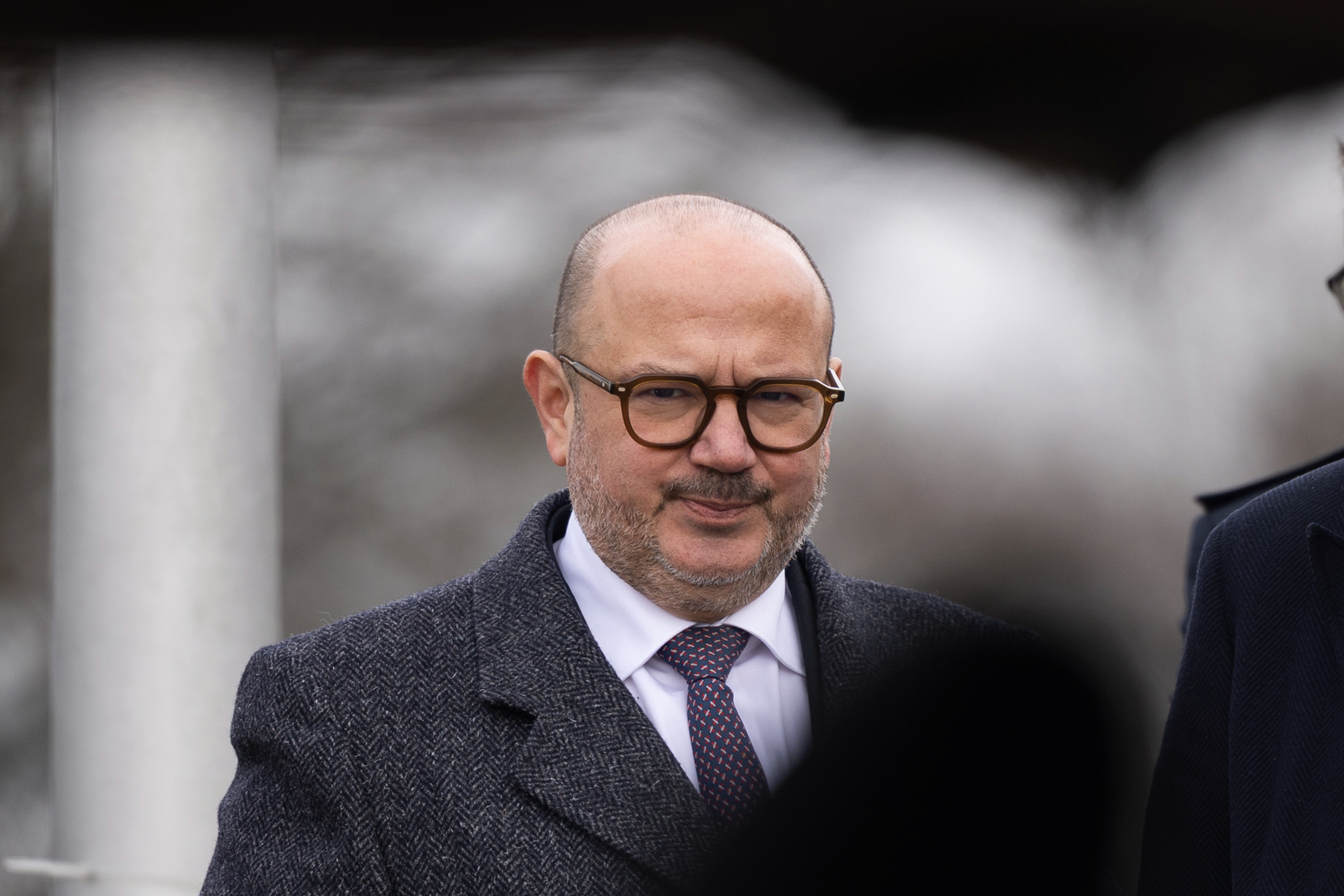
A historian by training, liberal by conviction and rather approachable, Bernard Quintin is the man of the hour. Amid the rise of insecurity in the heart of Europe, he's keen on implementing structural changes, working with law enforcement in what he sees as a pivotal moment in the Capital of Belgium's history.
"I’d rather have the police with me than behind me," Bernard Quintin makes it crystal clear in an exclusive interview with The Brussels Times. It’s a Friday afternoon, and he greeted me between tight schedules, in a hurry, reflecting on the most ambitious public security reforms the capital has seen in decades.
The status quo
Belgium is grappling with organised crime. That is the central security dilemma today. And at the centre of this dilemma is a driving force: money. What is even more fascinating is that all these types of organised crimes intersect with one another. It's an ecosystem. You wouldn't think that the drug traffic, Islamic terrorism, and human trafficking would at one point collide; but they all feed off each other. The drug money helps buy the weapons and trafficked humans who are used for other trafficking: a classic example of this paradigm.
Citing Afghanistan’s poppy fields under Taliban control as a historical case, Quintin draws a clear line between illicit economies and ideological violence. "Even the most fundamentalist regimes need cash," he adds.
But to fight organised crime, you need to be better organised. You need more police officers, and these police officers need to have better working conditions, and mostly a justice system that follows. Quintin is optimistic about the new Brussels public prosecutor Julien Moinil, "He's full of energy", Quintin says. But the problem remains structural.
Brussels, the de facto capital of Europe, currently operates six independent police zones. To outsiders, this might sound like an exercise in administrative eccentricity. To insiders, it’s a logistical nightmare. "Why should the biggest city in Belgium be the only one where six different police chiefs don’t necessarily speak to each other?" Quintin asks. His answer? Merging – a unification of the six zones into a single police command.
However, this is more than just a bureaucratic cleanup. It’s a political bet on the power of centralisation, coordination, and what Quintin unabashedly calls "zero tolerance".
His plan sounds radical. "We’re not just moving pieces on a chessboard. We’re changing the way security is structured and delivered," he says. Critics accuse him of rushing the reform – some mayors see it as a federal land grab – but Quintin remains unfazed. "We’ve tried coordination. Now we need coherence."
He invokes recent episodes of football hooliganism, cross-zone criminal movement, and slow operational responses as evidence. "You can’t fight 21st-century crime with 20th-century institutions," he says.
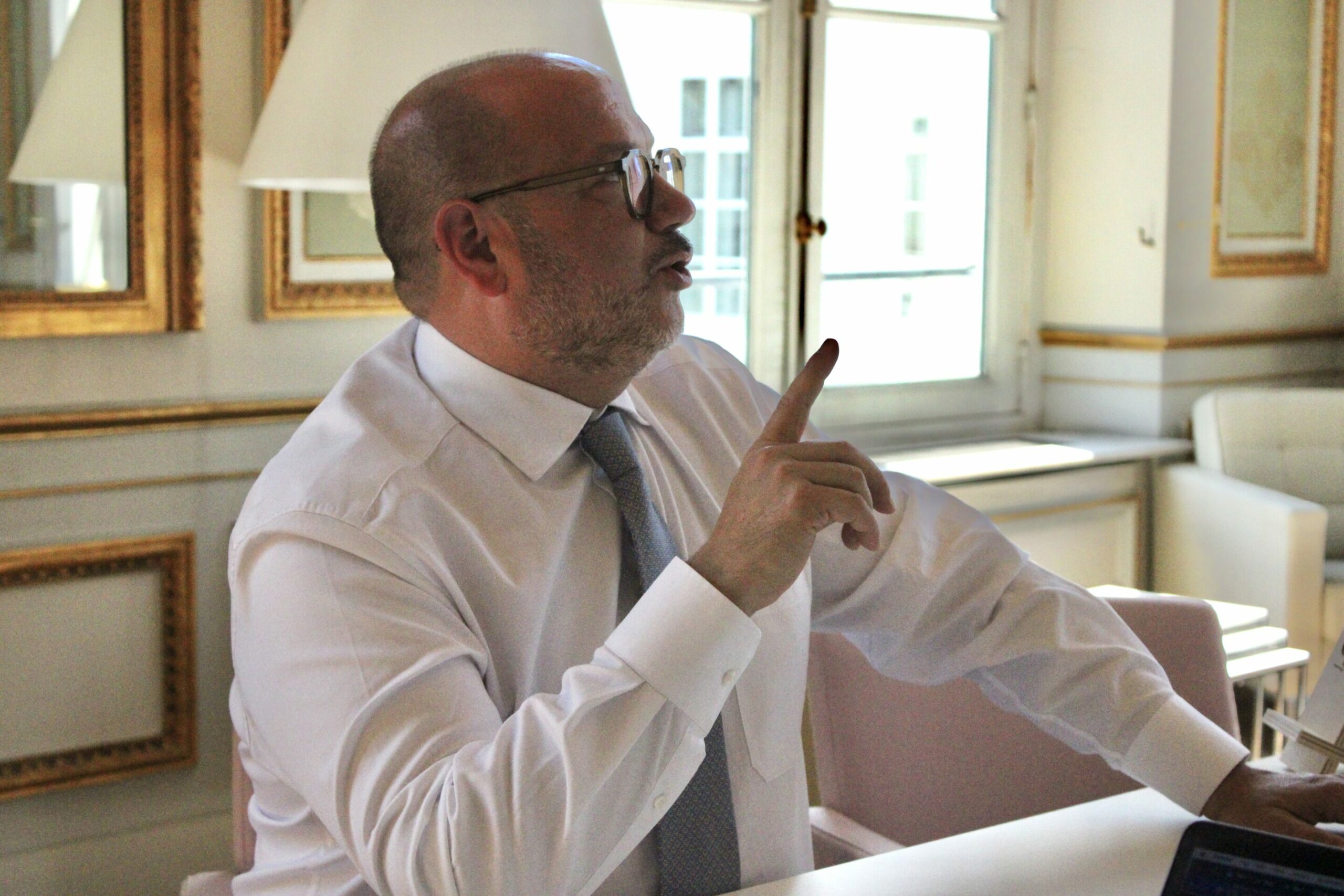
Bernard Quintin in an exclusive interview with The Brussels Times. Credit: Anas El Baye
The pre-emptive state
Quintin is cautious, even cryptic, when asked whether recent attacks have been thwarted. "Listen, we’re very attentive," he says. "Just because something hasn’t happened doesn’t mean it wasn’t going to."
The Sûreté de l’État (civil intelligence), the CUTA (The Coordination Unit for Threat Analysis ), the federal police, and the military intelligence service work together, evaluating threat levels that fluctuate. This goes without explanation to the public. For every manhunt or press release, there are dozens of interventions no one ever hears about.
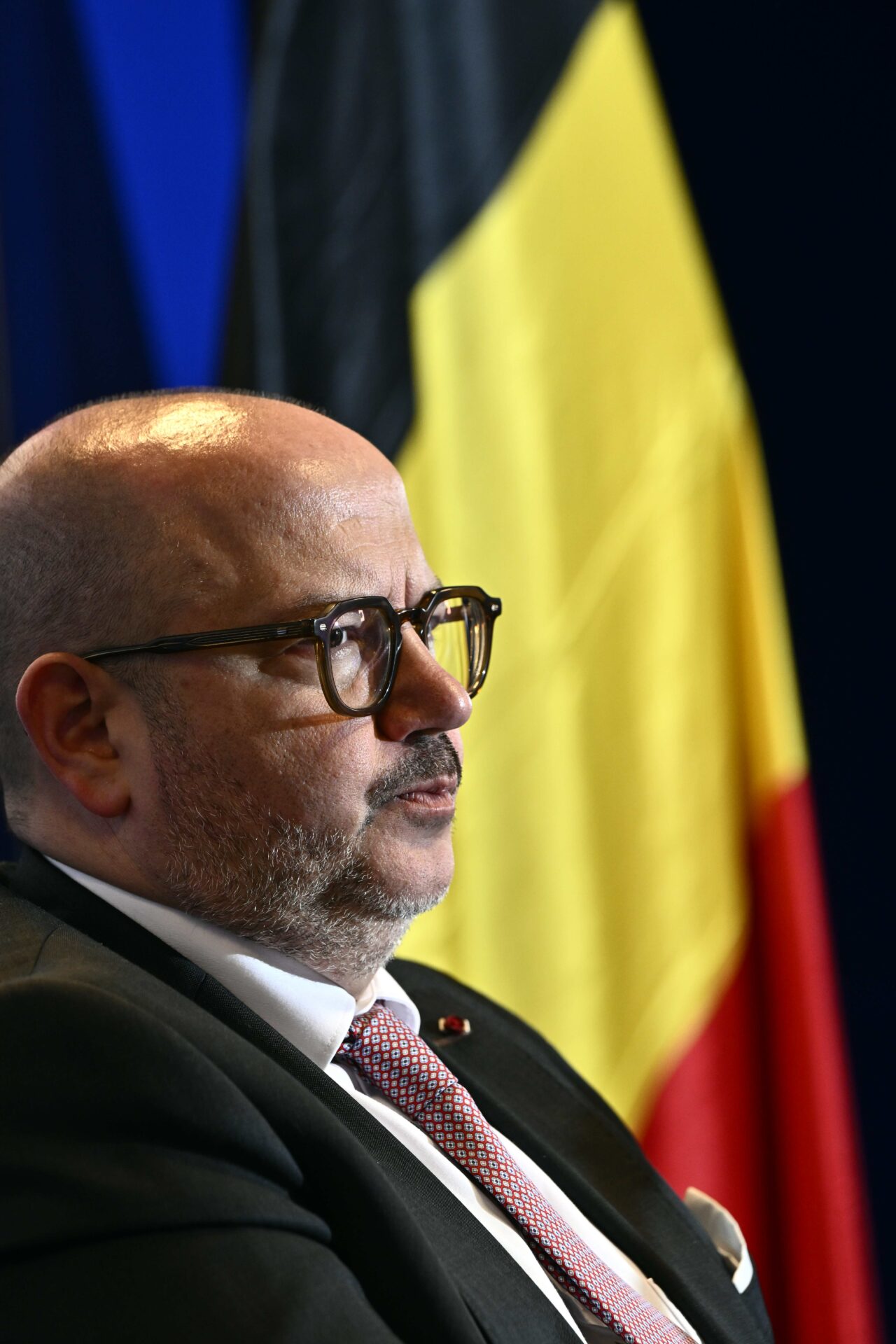
Minister of Interior Bernard Quintin pictured during a press conference to present the annual report of the Federal Police, in Brussels, Monday 24 February 2025. Credit : Belga/Eric Lalmand
Zero tolerance
Central to Quintin’s security vision is what he insists is not just a slogan: "Tolérance zéro". When asked what it actually means, he’s frank: "It means no excuses. It’s a political statement. We will not tolerate attacks on police, paramedics, or firefighters. Full stop."
The statement lands at a moment of heightened tension. Belgium, like many European countries, is struggling with questions of police legitimacy. Cases of police aggression have ignited protests in recent years. The term "police violence" itself, says Quintin, has become "dangerously loaded."
"There is violence by police officers, which must be investigated and punished. But that’s not the same thing as "police violence" as a systemic fact," he argues. For him, the state holds the monopoly on legitimate violence, à la Max Weber – and in his view, that principle must remain non-negotiable.
Yet his hard line has sparked concern among civil liberties advocates. They warn that "zero tolerance" policies often end up disproportionately affecting minorities and poorer neighbourhoods, especially when paired with enhanced surveillance technologies like body cams and digital patrols, which Quintin is in favour of. But also aware of the pitfalls.
"Technology is not an end in itself. It’s a tool," he says. And tools, he adds, need "a strong legal framework, independent oversight, and consequences if misused." His solution is to regulate, not retreat. "We can't behave as if we're still in the age of horse-drawn carts. The world has moved on."
But is ideology a hindrance? "The problem isn’t ideology. The problem is pretending you don’t have one," he replied. Despite the steady tone and historical references, he does have an ideology: clear, muscular, and anchored in a vision of Belgium as a state under pressure, needing a firmer hand.
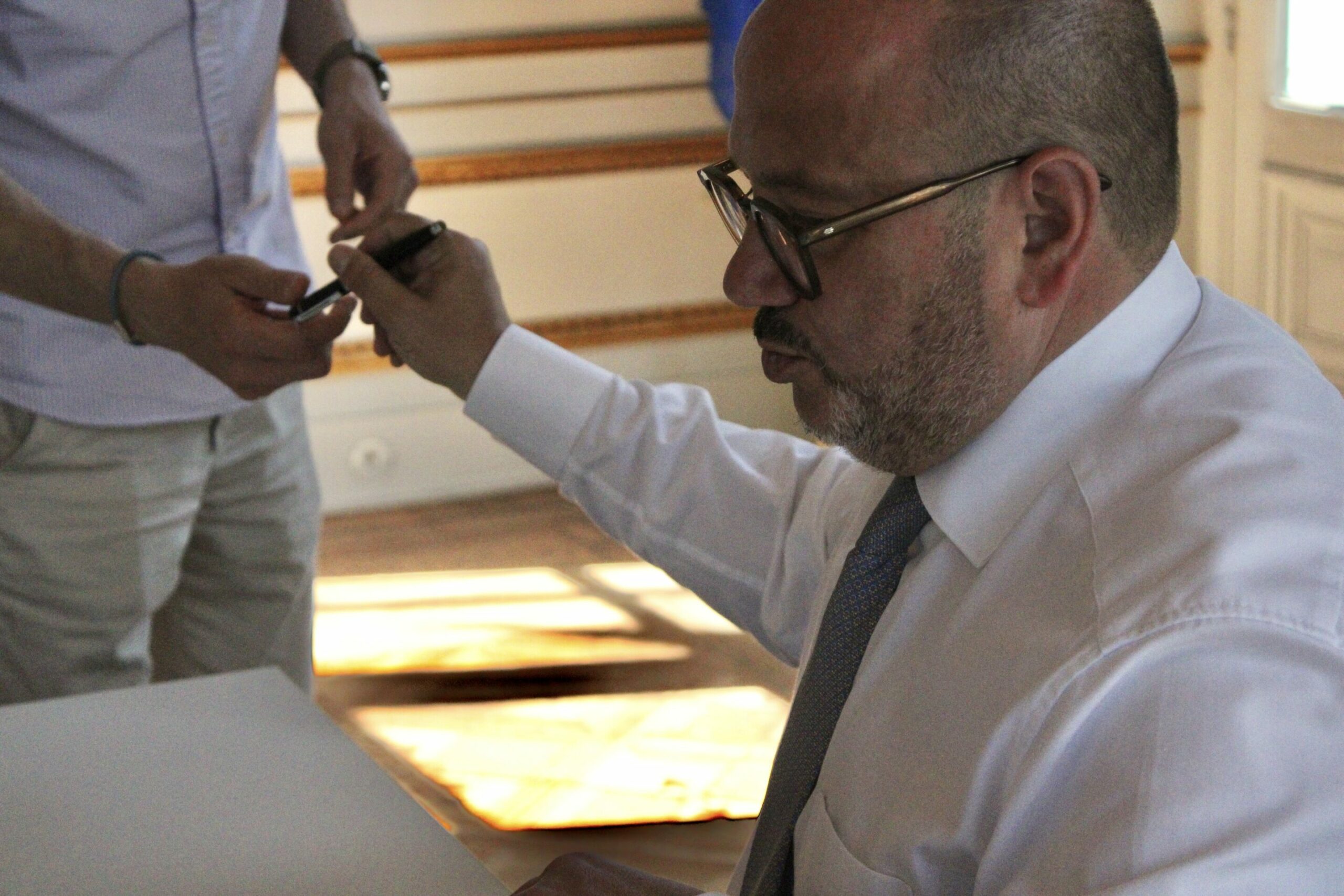
Bernard Quintin in an exclusive interview with The Brussels Times. Credit: Anas El Baye
A question of authority
At the heart of Quintin’s philosophy is a belief in authority, not authoritarianism, but authority as structure, clarity, and trust. It’s a worldview shaped by his upbringing and honed by his training as a historian. "Authority is what allows a child to say, 'I’ll behave, someone’s watching' – not out of fear, but respect," he reflects.
That respect, he says, is eroding (and not just in Belgium). "The problem isn’t just crime. It’s a societal erosion of what authority even means," he warns. In that sense, police reform is also symbolic. A reassertion of structure in a society that often prides itself on decentralisation, deliberation, and compromise. But does that actually work?
Quintin knows the stakes. His office receives letters from police officers, citizens, and even local mayors. Some resist, others applaud. "We already have one mayor onboard," he says, referring to Vincent De Wolf of Etterbeek. "One out of 19 may not seem like much. But it’s a start."
For now, his biggest ally is time. Brussels is becoming a hub for drug lords and divisive and populist politics, fueling civil unrest. But if Quintin is wrong, if centralisation backfires, or zero tolerance leads to public mistrust, the political cost could be high.
Still, he seems at peace with the gamble. "I’m here to decide," he says. "Not to float endlessly between opinions. That’s how systems stagnate. Brussels deserves better than stagnation."
Quintin’s legacy may well be defined by how far he can push reform without losing the public's trust. His vision is one of clarity: clear laws, clear rules, clear authority. However, clarity in policy doesn’t always translate to clarity in outcomes.
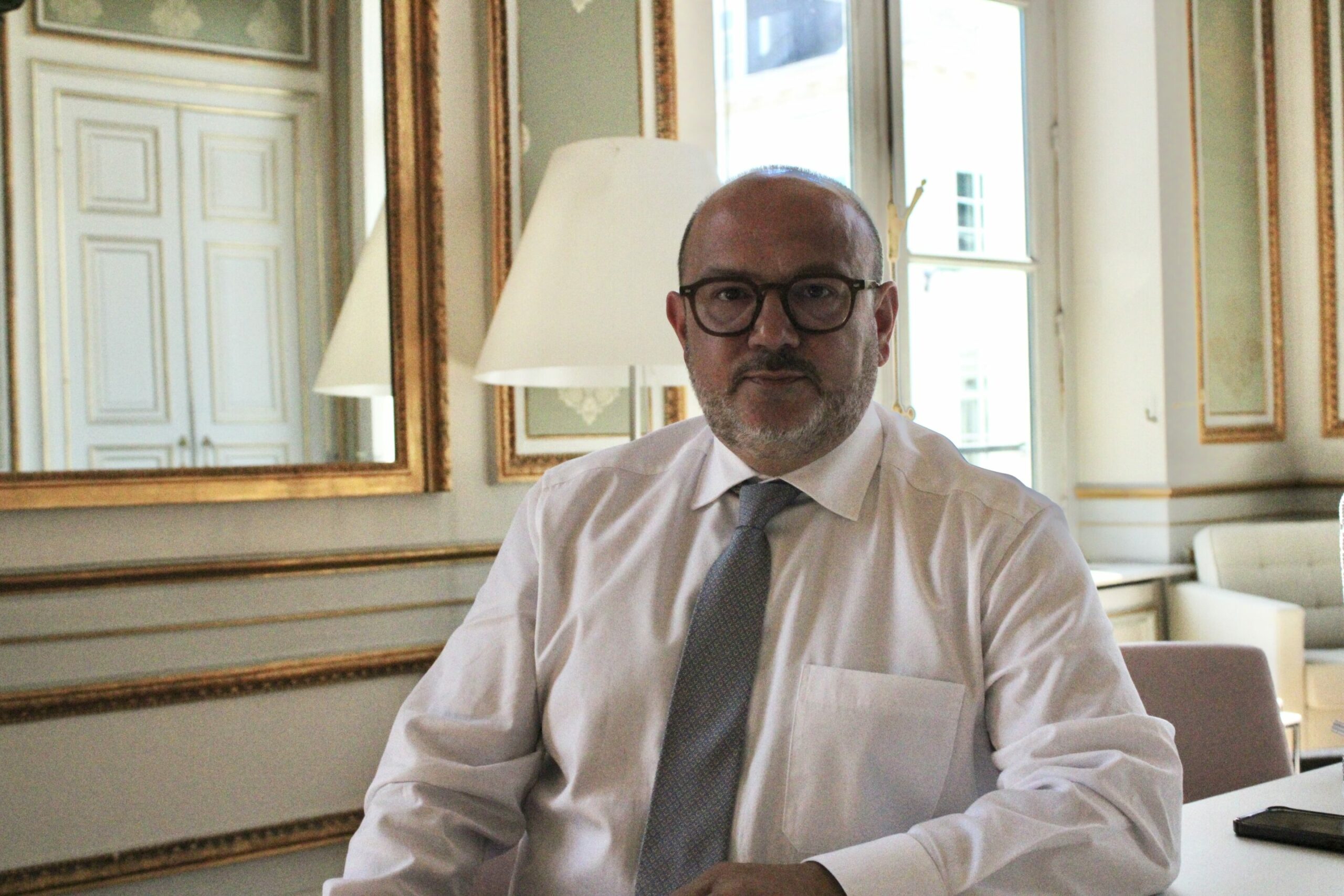
Bernard Quintin in an exclusive interview with The Brussels Times. Credit: Anas El Baye
Can one man, in one ministry, redraw the map of urban security in a fragmented capital?
"I won’t pretend we’ll win every battle. But we’ll fight each one. Because if the state isn’t strong, someone else will be," he concludes.
Brussels is a city that defies simplicity. Nineteen municipalities, six police zones, three official languages, and a constant dance between regional and federal authorities. It is both a political microcosm of Belgium’s intricate federalism and a test tube for European multiculturalism. But that doesn't seem to be working anymore. The state is paralysed by the day in the absence of pragmatic decisions and the hindrances of ideological chimaera.
Related News
- Interview: Expats should learn Dutch says Flemish Minister Cieltje Van Achter
- 'I do not believe in legalising drugs': Justice Minister on rising festival drug trends
- Military on the streets, cameras, police action: Interior minister's plan for Brussels and big cities
- Troops on the streets, cameras, police action: Interior minister's plan for Brussels and big cities
- 'My job is to put bandages on a leaking bottle' – Anderlecht mayor on what it means to run a municipality
