
If you've lived in Brussels for more than a few weeks, you've probably noticed it: the white residue on your kettle, the stains on your shower door, or the washing machine that seems to tire before its time. This is not uncommon in Brussels because the city's water is naturally hard.
According to Vivaqua, the public company that supplies water to the Brussels-Capital Region, hardness levels in the city range between 21 and 42 French degrees (°fH).
That puts Brussels firmly in the category of 'hard to very hard' water. And while that might be a nuisance for appliances, it is entirely within legal limits. Some even claim it is good for you.
A geological explanation
The reason for Brussels' hard water is geological rather than industrial. The capital's supply comes mainly from groundwater sources across 26 catchment sites, most of them in Wallonia, where rainwater percolates through chalk and limestone. This natural process enriches the water with calcium and magnesium, two minerals that make it 'hard'.
"The water we distribute is mostly 'medium hard' to 'hard', depending on the municipality," Vivaqua explains. "It’s a direct result of the natural geology of the regions where we draw water."
Once treated for safety, the water passes through five main reservoirs, where different sources are blended before being distributed across the city.
That is why there is no single 'average' hardness level in Brussels; each neighbourhood has its own mineral profile.
To find out how hard the water is in your neighbourhood, click here
What does hardness really mean?
Water hardness refers to the concentration of calcium and magnesium dissolved in the water. On the standard French scale: 0–5 °fH is very soft, 5–15 °fH is soft, 15–25 °fH is moderately hard, 25–40 °fH is hard, and above 40 °fH is very hard. A minimum hardness level is necessary, since overly soft water can no longer be considered potable.
Brussels' water sits within the regulatory range of 15 to 67.5 °fH. Vivaqua notes that in 2022, the hardest water measured in the region was 42.2 °fH, and the softest 21.0 °fH.
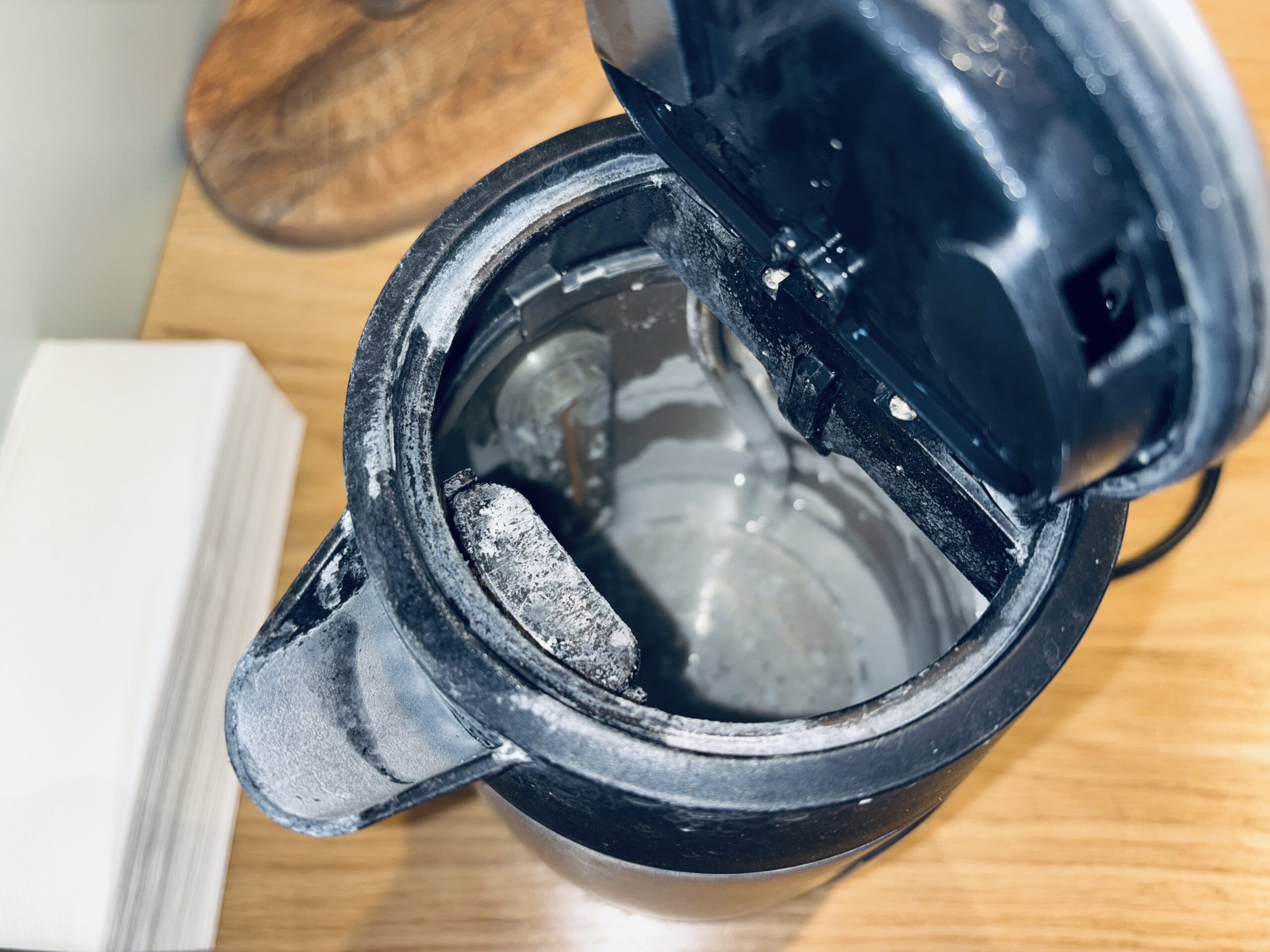
Calcified kettles is one of the signs of water hardness. Credit : The Brussels Times
Why won't Vivaqua soften the water?
If hard water is such a household headache, why not soften it? The answer, says Vivaqua, is both scientific and practical.
"Softening the entire water network is not recommended," the company explains. "Calcium and magnesium are essential nutrients. According to the World Health Organization and the European Food Safety Authority, drinking water can supply 10 to 25% of our daily needs in these minerals."
Studies have even shown that calcium absorbed from hard water is comparable to that from milk. By contrast, industrial-scale softening would remove these nutrients, make water more corrosive to metal pipes, and potentially raise consumer prices by up to €0.25 per cubic metre. It could also reduce the effectiveness of disinfection, as softened water tends to have a more alkaline pH.
And the health implications go beyond minerals: some studies, Vivaqua notes, have even found possible links between softened water and certain cancers, though research remains limited.
Despite the limescale that frustrates residents, the issue barely registers on Vivaqua's complaint radar.
Out of more than 2,000 complaints received in 2022, only eight concerned water hardness - a figure that has remained stable for years.
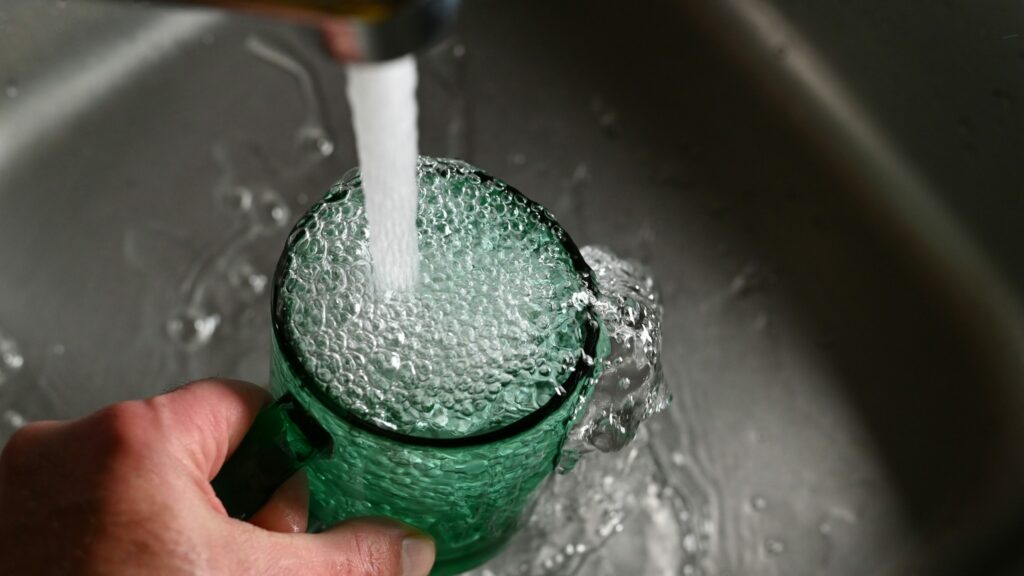
Most complaints, the company says, are based on misconceptions. A frequent error people make is mistaking white or cloudy water for excess calcium. In most cases, this phenomenon is caused by tiny air bubbles that disappear after a few seconds.
When such questions arise, Vivaqua's laboratory contacts customers directly to explain the chemistry and to reassure them that their water meets every legal and health standard.
Still, the experience of hardness isn't uniform. In Uccle and Woluwe-Saint-Pierre, water can exceed 40°fH, while in Schaerbeek or Watermael-Boitsfort, it's closer to the mid-twenties.
That difference might not change taste or safety, but it does affect how much time and money people spend fighting limescale.
Related News
- Why is Belgium's broadband slower than in neighbouring countries?
- What should you do after a car accident in Belgium?
- Non-EU passengers face three hour queues at Brussels Airport border control
- Brussels police use tear gas and water cannon to disperse protesters in Anderlecht
- Europe must 'take care of itself', warns WHO
