
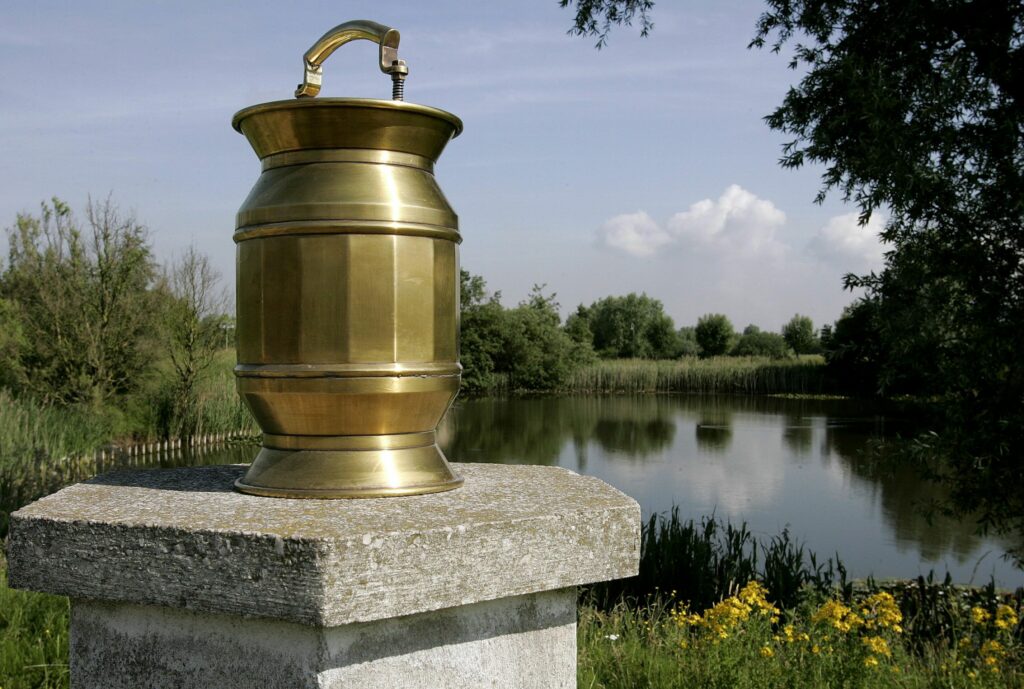
A crematorium in Wilrijk, Flanders, is trialling the use of water cremation to dispose of bodies – the first time such a service has been used in Belgium.
The process, also known as resomation or alkaline hydrolysis, mimics the process of natural decomposition by using water, heat and pressure to break down tissue.
It involves placing the shrouded body in a closed cylinder containing water and potassium hydroxide and heating the cylinder to around 160°C. In these conditions, it takes around four hours for the body tissue to break down.
Remaining pieces of bone and teeth are dried and can be powdered and returned to loved ones or be scattered like ashes.
An environmentally-friendly alternative
The process is used in the US, the UK, Canada and South Africa and is growing in popularity as a more environmentally-friendly alternative to traditional cremation. Anti-apartheid campaigner Archbishop Desmond Tutu chose resomation for his 2021 funeral in South Africa.
According to the British company Resomation, the process uses a seventh of the energy produced by traditional cremation and a third less greenhouse gas.
Belga News Agency reports that Pontes Crematorium in Wilrijk would be the first crematorium to offer resomation services on the European mainland as part of a pilot project. The bodies used in the pilot project will be people who have donated their bodies to science.
Tom Wustenberghs, general manager of Pontes said: “In Flanders, we still have little objective research on this technique, so we want to thoroughly substantiate the process scientifically before implementing it in practice," says Tom Wustenberghs, general manager of Pontes.
“It would require less energy consumption and produce fewer emissions, but we still want to determine the actual environmental impact. A robust technical, legal, and certainly ethical framework is also needed.”
The ‘third way’
Flemish Interior Minister Hilde Crevits (CD&V) cautiously welcomed the initiative, but warned that “important conditions still need to be met”.
“Cremation also had to come a long way before it became the 'second way' to say goodbye to a loved one, in addition to burial,” she said. “Now there's a new form, and we absolutely want to give it the opportunity to develop into a ‘third way’.
“But for that to happen, important conditions still need to be met. More research is needed, an advisory opinion from the Superior Health Council, a guarantee that everything is done with respect for the integrity of the body and for the bereaved, and I want a public debate: how do the Flemish people view this new technique?”
According to Belga News Agency, the Flemish pilot project will likely take two to three years, including the development of the legislative framework.
Crevits said the demand for such a project has existed for years. "We are now giving the green light, but it will be monitored very strictly scientifically, and a strong ethical framework will have to be established," she explained.
“It's indeed possible that it's a sustainable method and that people will therefore choose it, but that still needs to be confirmed by the research.”
