
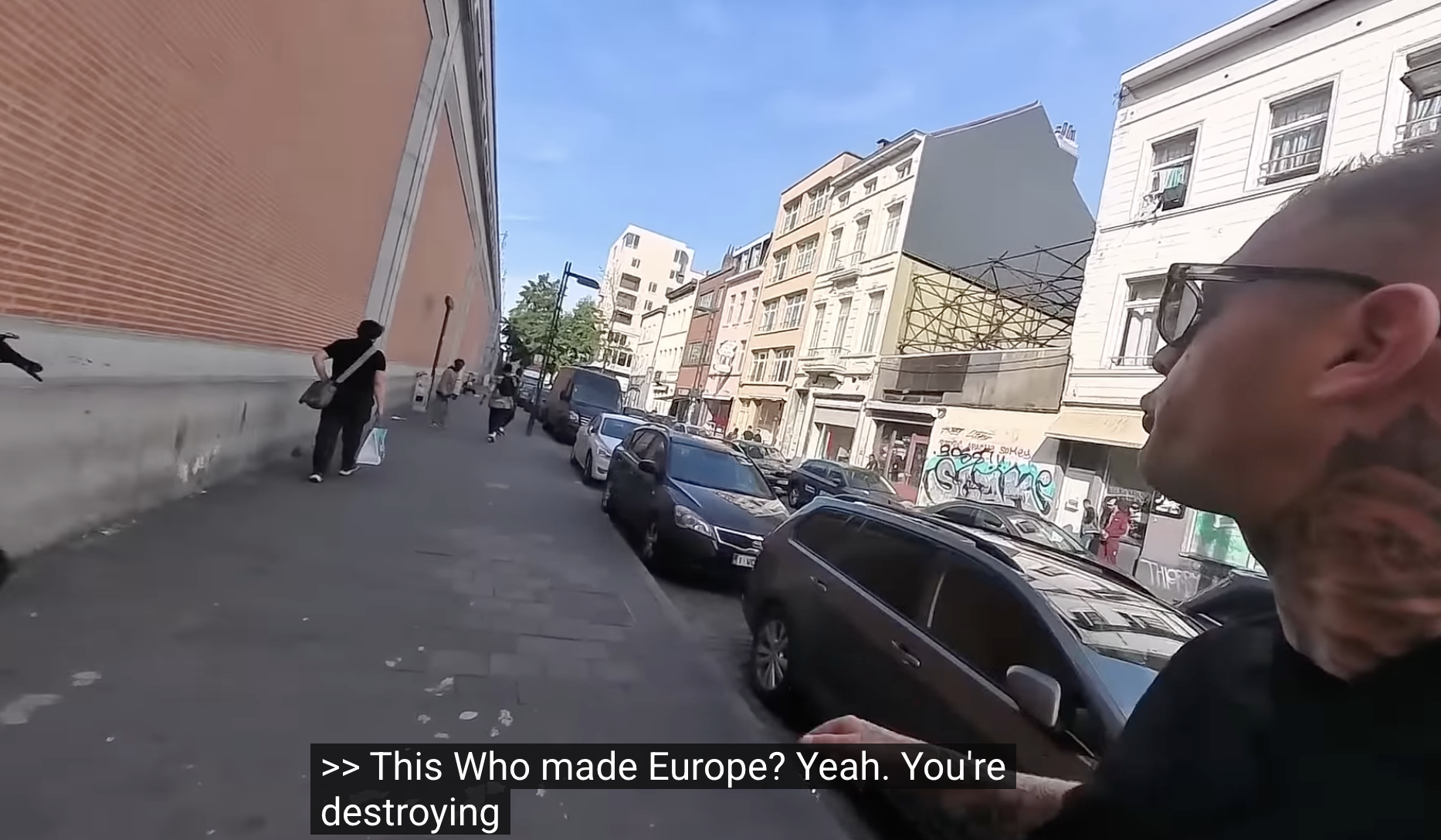
I went to the most hated, unsafe city in Europe. Harassed In Europe's Worst City. Five hours in Europe's dirtiest capital.
These are just some of the headlines you will easily stumble upon on top of your YouTube feed by simply searching for Brussels. If you thought this was just about people sharing their bad experiences in the city, you might be surprised. The Belgian capital has been caught up in a new exploitative niche of travel vlogging, popularised on social media platforms such as YouTube.
The concerning aspect of this trend is how much attention content creators doing these sorts of videos can attract. The most popular video titled 'Attacked in Brussels?! The truth about Europe’s capital' stands at 2.8 million views, more than the whole population of Brussels.
This particular type of travel vlogging does not have an agreed-upon name yet, but rage-bait farming or danger vlogging are sometimes used.
The idea is quite simple – to "entertain" viewers by visiting places, usually working class areas in large cities, to present a distorted version which ramps up a narrative of insecurity.
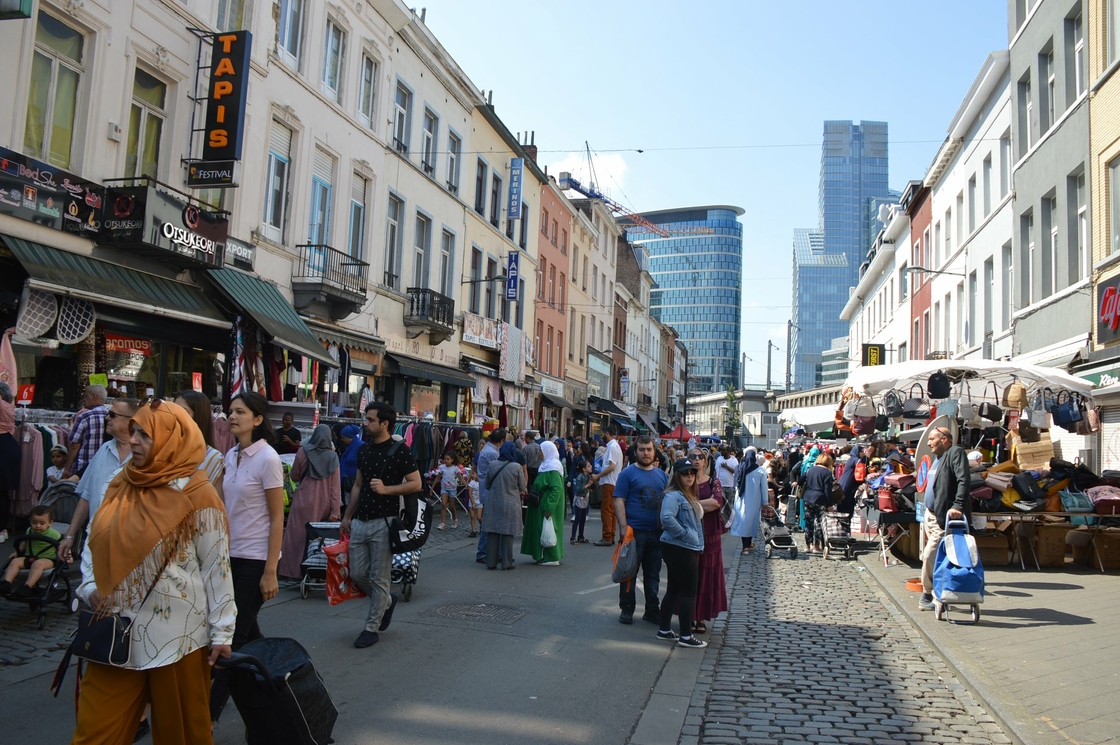
Street In Brabant Quarter. Credit: Saint-Josse
Usually harbouring a political agenda, these agent provocateurs target many European cities, mostly capitals, including Rome, London, Paris, Berlin and of course Brussels. But it isn't just a European phenomenon: there have even been complaints about Western tourists creating fake rage-bait videos when visiting Japan.
One of its popularisers is a famous Australian YouTuber Spanian, an ex-convict himself, who travelled all around the globe showcasing the so-called hoods. However, his coverage was neutral in its character and mostly centred on genuine curiosity.
Later, the evolution of this genre in general took a far-right twist. Today, most of these videos place a heavy emphasis on perceived danger associated with immigration, while also exploiting untidiness
The most popular video on Brussels, mentioned earlier, was released back in September by a self-described football fan from Dutch Limburg, Tom Van Den Heuvel, known online as “Dutch Travel Maniac”. In it he wanders around Molenbeek, asking people “Where are the Europeans?” and provokes confrontations with aggressive bystanders in Rue d'Aerschot near Brussels-North station. He finishes the video by stating that Brussels is “an absolute shithole”.
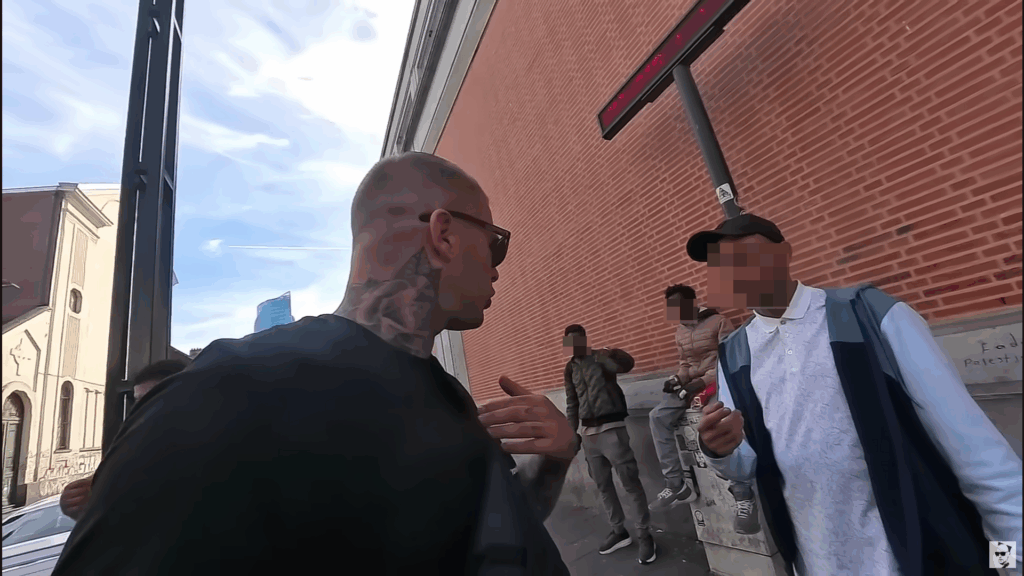
Screenshot of Van Den Heuvel engaged in confrontation in Brabant quarter. Credit: Dutch Travel Maniac
This particular video seems to have inspired many other vloggers, who appear to copy a lot of aspects from it. Among them are Kurt Caz, a South African-German blogger with an openly far-right agenda.
While filming his own video, which is now deleted, he met Dries Van Langenhove, a Flemish nationalist activist and former politician convicted for holocaust denial. Together, they go through Molenbeek, discussing the commune's demographics, while linking immigration with crime. Some of the short clips (known as 'shorts') still floating around online have over 6 million views.
Now, even people without an open far-right agenda started making similar content about Brussels. For example, controversial Russian blogger and urbanist Ilya Varlamov made a whole documentary about the city with very similar talking points. And he is not alone; dozens of other micro-influencers online are jumping on the trend.
The architecture of rage-baiting
Many questions remain after reviewing such videos. Mainly, what is the true motivation of the creators, and why does this content even gather such sensational viewership? To understand this new phenomenon better, The Brussels Times talked to Jana Goyvaerts, a VUB researcher and guest professor specialising in communications and populism.
In her opinion, the recent trend is likely a complex mix of political reasons and financial incentives.
"It’s always difficult to judge the intentions of these influencers, because it is a very lucrative business – it’s a way for them to make money," Goyvaerts told The Brussels Times. "But at the same time, there is an opportunity here to promote ideological messages by jumping on trending topics."
Goyvaerts says that influencers know how to use social media algorithms, which prioritise engagement most easily acquired by anger, provocations and sensationalism, with no obligation to report the truth or facts.
"This reminds me a lot of the tradwife hype, which played into trends of domesticity and cooking videos, but was highly ideological in nature," she continues.
In general, the researcher highlights this trend as part of an invisible battle for cultural hegemony happening all over social media between the left and the right.
Anti-immigrant and nativist sentiment has largely taken hold in the mainstream, which prompts a range of different bloggers (and even traditional politicians) to raise what was, until recently, extremist fringe far-right politics, more casually and openly. Collaboration between influencers and activists is also quite common.
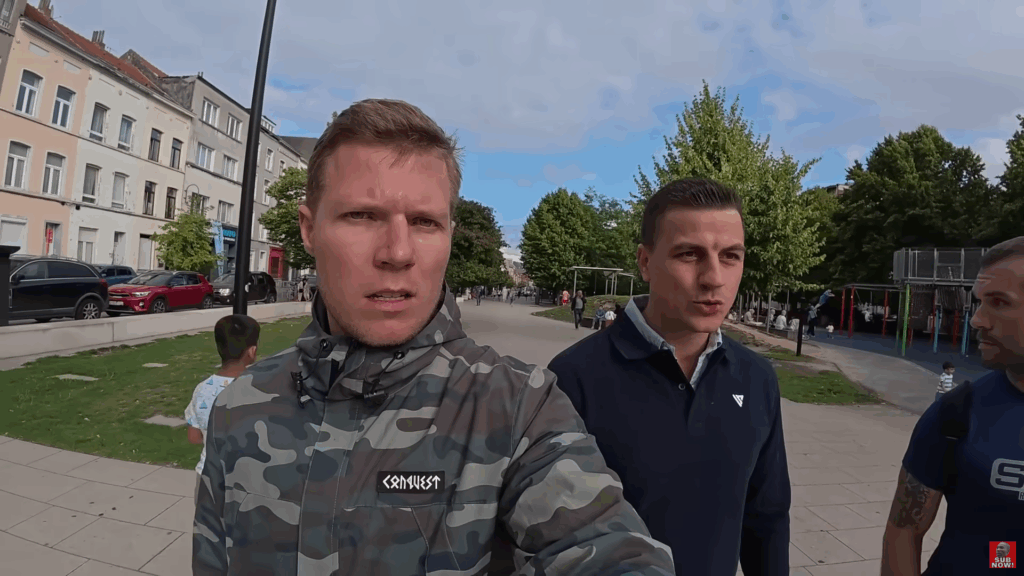
Screenshot of Kurt Cass, South Africa-born travel vlogger, walking through what seems to be Molenbeek with Dries Van Langenhove and a bodyguard. Credit: Kurt Caz
Some have claimed that the rise of the far-right can be explained as a reaction to higher multiculturalism in European cities, but Goyvaerts says the two cannot be directly linked. "If you look at what people vote for, you often see that the cities most supportive of Vlaams Belang [Flemish far-right party, ed] are not the most diverse ones, for instance. In places like Brussels, there is almost no far-right presence at all."
When asked if such videos could damage the international status of Brussels, Goyvaerts jokes,"Brussels generally already lacks a good image in mainstream media. And while such content might strengthen those images, it can also discourage things like mass tourism, which ultimately makes Paris or Amsterdam less liveable."
The Brussels Times has contacted Tom Van Den Heuvel and Kurt Caz for comment, but has not received a reply by the time of publication.
