
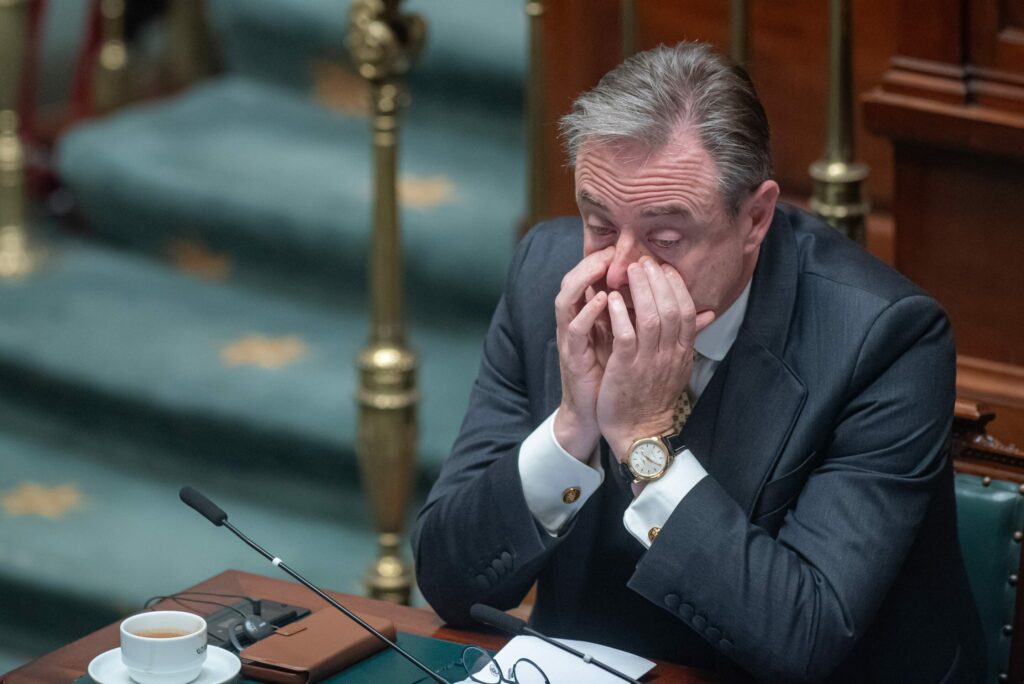
With three missed deadlines to agree on a budget for Belgium's Federal Government and a week to go to the next deadline, questions are being asked about whether Prime Minister Bart De Wever (N-VA) should resign if no deal is reached soon.
The Federal Government is seeking at least €10 billion by the end of its term to reduce the deficit to 4% of GDP in 2029 – bringing it closer to the trajectory initially submitted to the European Union under the excessive deficit procedure. The objective remains to reach 3% by 2030.
However, time is running out. And without a budget, De Wever could face a major political crisis. He might even be forced to submit his resignation to the King.
But what would that mean for him, and the rest of the country?
"There are a few scenarios. Either an agreement is reached, or De Wever goes to the King to hand in his resignation. But whether that means he will actually resign is another matter," Dave Sinardet, professor of political science (VUB), told The Brussels Times.
Sufficient will?
Last Friday, the core cabinet (De Wever and his five deputy prime ministers) met until late in the evening to discuss the budget. While they did not reach an agreement, De Wever stressed that there was still "sufficient will" to reach an agreement on a multi-year budget extending to 2029.
"The level of ambition remains unchanged, namely the European spending standard as a minimum benchmark," De Wever told RTBF. They agreed to continue the work and in-depth negotiations, aiming to present an agreement to the parliament no later than 6 November – exactly one week from now.
According to Sinardet, achieving a deal by next Thursday will be difficult. "A week is very short. They might be able to find an agreement in the coming weeks, or maybe by the end of the year. But that will not be easy either," he said.
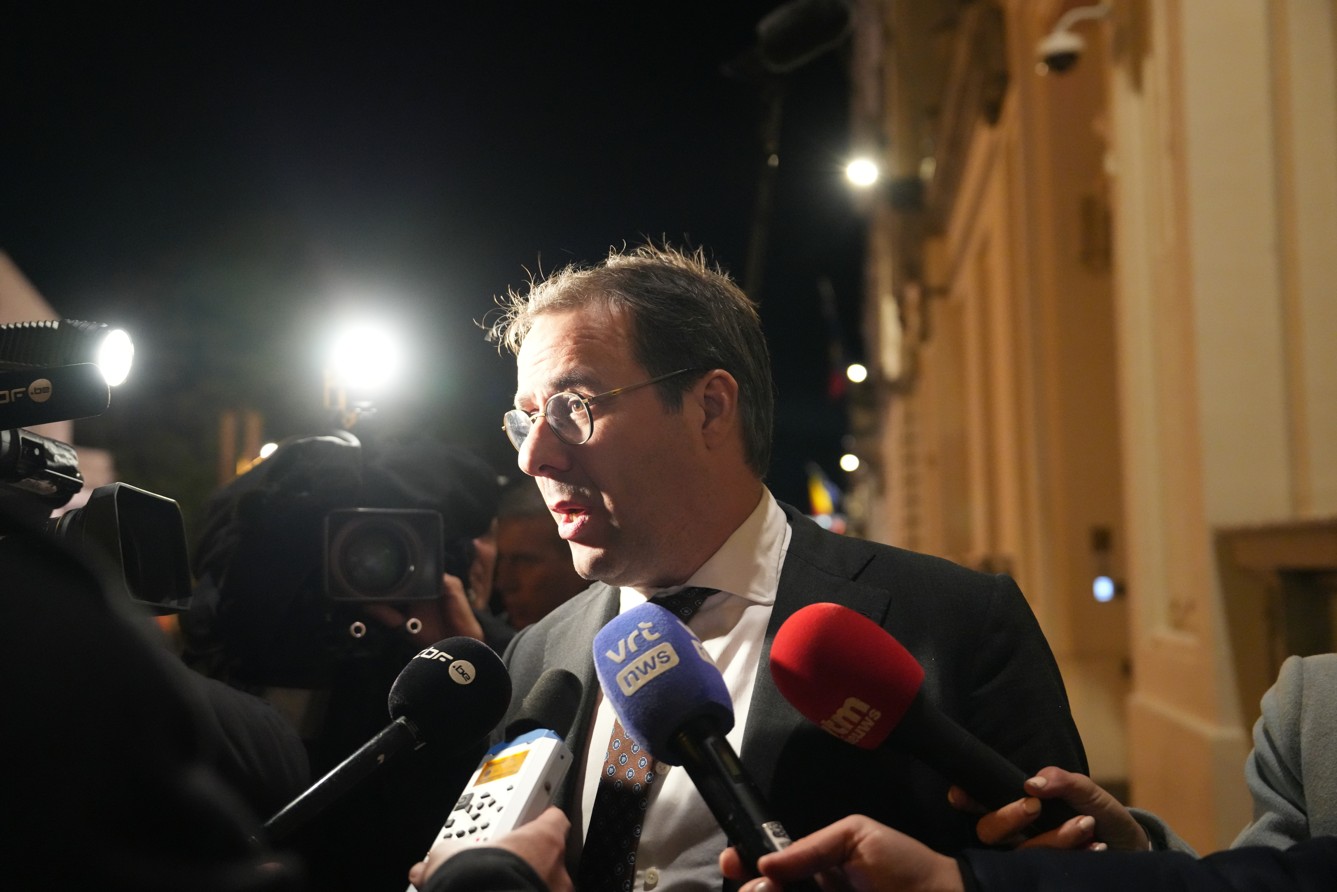
Federal Economy and Work Minister David Clarinval (MR), after a core cabinet meeting, Friday 24 October 2025. Credit: Belga
The underlying issue is that there are several conflicting interests within the centre-right coalition, which consists of De Wever's N-VA (Flemish nationalists), CD&V (Christian Democrats) and Vooruit (socialists) on the Dutch-speaking side, and MR (liberals) and Les Engagés (centrists) on the French-speaking side.
One of De Wever's key promises was to balance the budget, and the pensions and labour market reforms are a large part of his aim to deliver on that promise. However, the left-right divide within the coalition (with Vooruit, CD&V and Les Engagés on the left and N-VA and MR on the right) is making it very hard to find the needed €10 billion.
"The proposals on the table are difficult for different parties for different reasons. A VAT increase is hard for MR, while changes to the automatic wage indexations are hard for Vooruit," Sinardet explained.
Without these measures, De Wever will never get to €10 billion, he said. "But they are totally unacceptable for some people at the table, and specifically for MR. So something's gotta give, as they say. But they have all dug in very deeply now."
Layers of conflict
Still, even if the current conflict is resolved, there is another one lurking beneath it: Vooruit will insist on a contribution from "the strongest shoulders" in the form of some kind of wealth tax – which, again, is very difficult for MR. "Either way," said Sinardet, "the left-right divide will come up".
On top of that, the geopolitical situation has changed quite substantially since this coalition was formed: US President Donald Trump has pressured NATO countries – including Belgium, where the military alliance is headquartered – to invest more in defence.
According to Sinardet, this has derailed the budget even further. "In addition to the rising interest rates and the country's not-so rosy economic outlook, you might say it is not surprising that the budgetary trajectory is off track," he said.
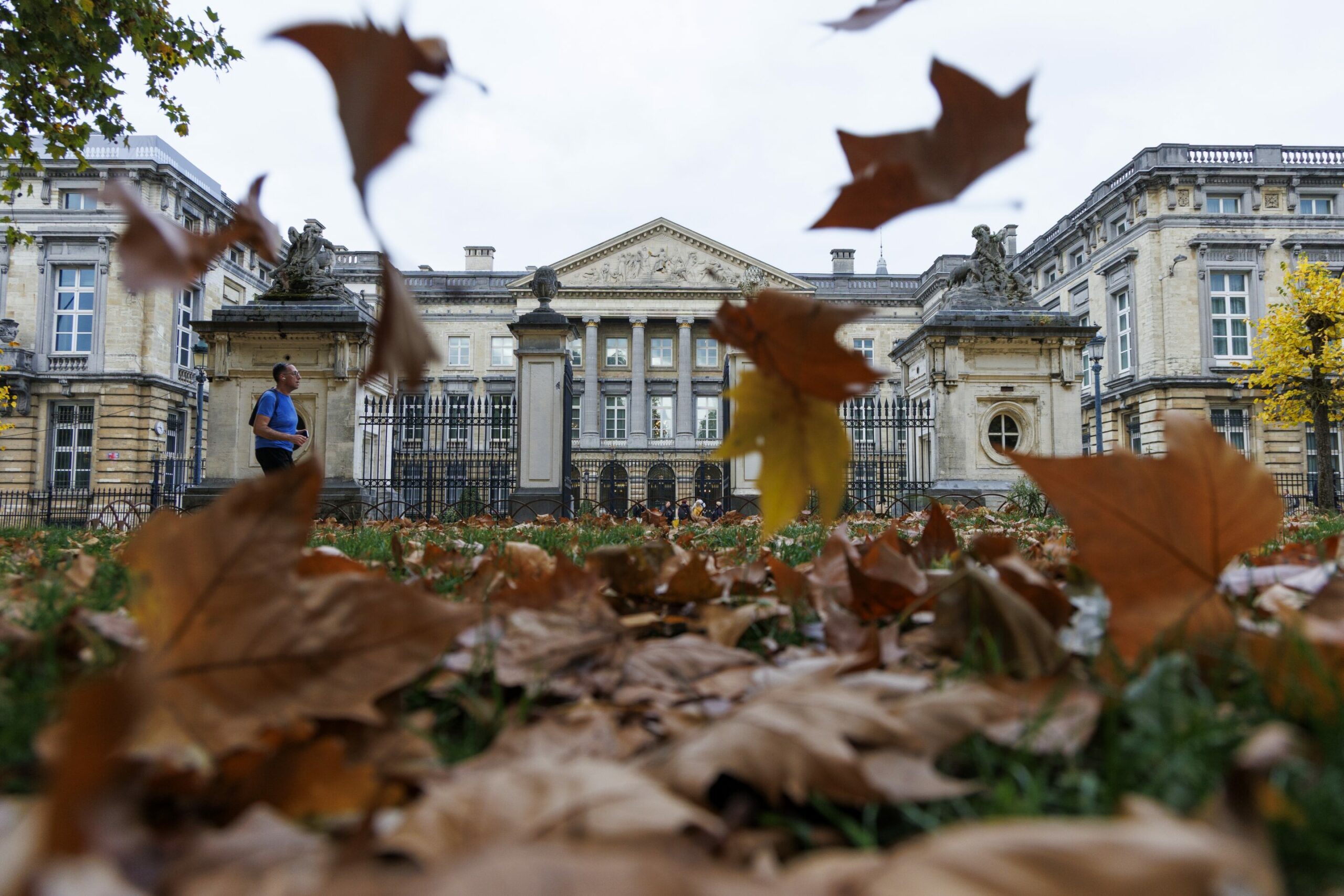
The Federal Parliament building with fall foliage, during a core cabinet meeting, Wednesday 22 October 2025 in Brussels. Credit: Belga/Nicolas Maeterlinck
If the parties' positions indeed prove to be too far apart to find middle ground by 6 November, De Wever could decide to go to the King to offer his resignation.
"When a Prime Minister goes to the King in the middle of a crisis, we always start panicking that he is going to resign," explained Sinardet. "But we really need to stop that. It is a trick, a way to exert pressure on the negotiations."
During his time as the formator of the Federal Government, De Wever went to the King a few times to tender his resignation, but a government was ultimately still formed – with the help of a mediator.
"If he actually offers to resign, the King can keep that under consideration and appoint a mediator again, and they will try to work it out that way," said Sinardet. "One way or another, an agreement must be found. There is not really another option."
Running after deadlines
Whether that agreement will be found by 6 November, however, is another matter – for weeks now, De Wever has been running from deadline to deadline.
"First, the budget had to be ready by the second Tuesday in October, for his State of the Union speech in Parliament. Then, that was postponed by a week 'at most,' but no agreement was reached either," Sinardet said. "Last Friday was supposedly 'the moment of truth,' but nothing came out of that core cabinet meeting either."
"So now, we are here. And 6 November could certainly be pushed back again. Although De Wever does have to remain somewhat credible. If no one budges, he will have to draw his conclusions at some point."
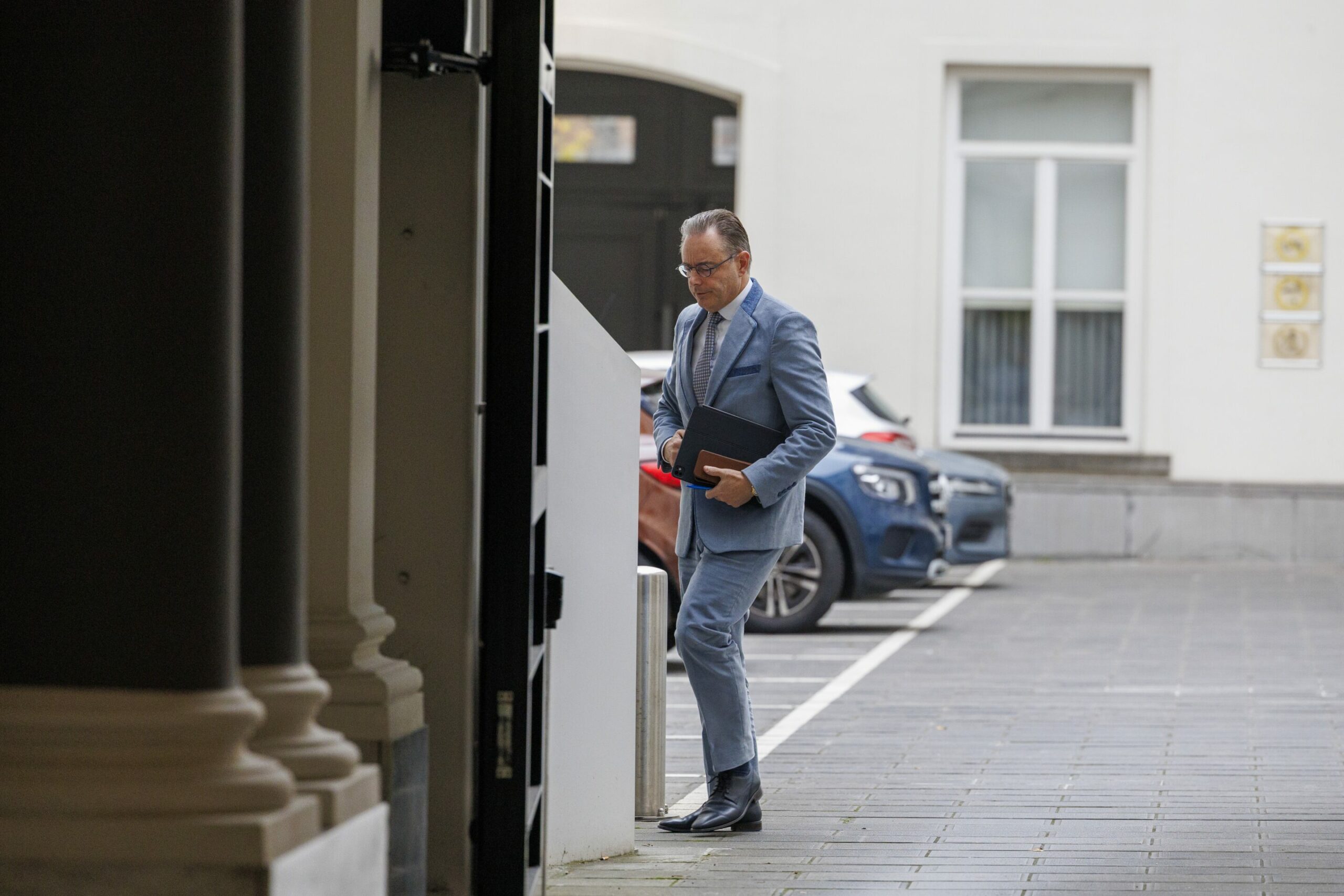
Prime Minister Bart De Wever arrives for a core cabinet meeting selected Ministers of the Federal Government, Friday 10 October 2025 in Brussels. Credit: Belga
But what happens then? If the Prime Minister resigns, are new elections on the horizon? Sinardet doubts it. "A real resignation seems highly unlikely to me. De Wever submitting his resignation to the King does not necessarily mean much."
While none of the parties in the coalition would benefit from new elections at the moment, Sinardet stressed that the danger of constantly speaking about them is ending up with a self-fulfilling prophecy.
"No one really wants elections now. But if everyone thinks that the others are preparing, they might do the same," he said. "And then, something might happen that nobody wants."
