
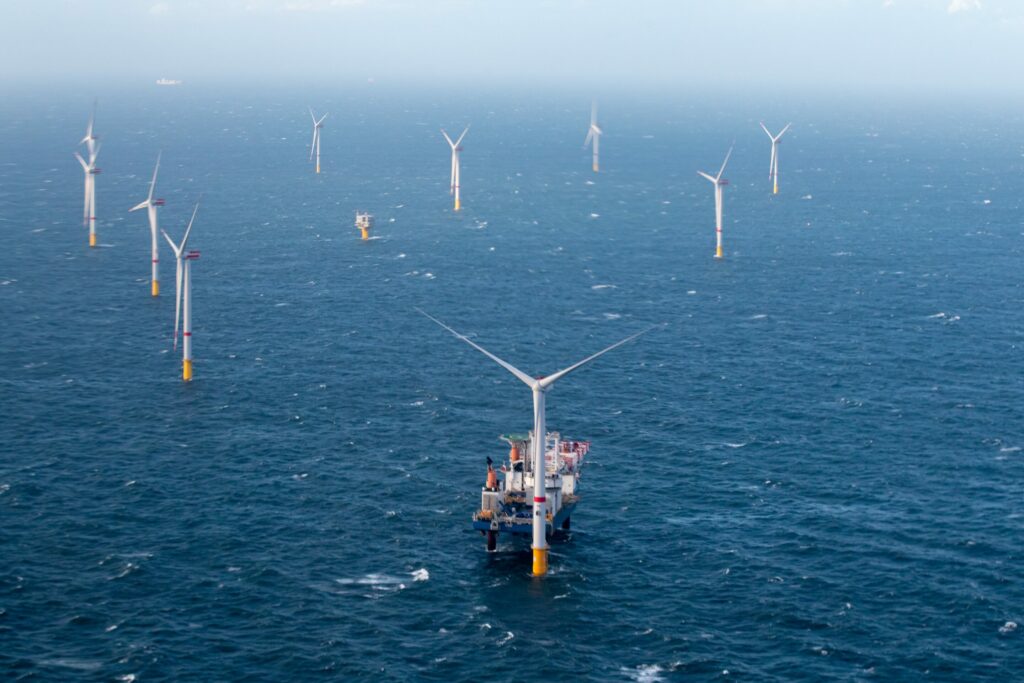
As the international offshore wind sector is under pressure from rising costs and geopolitical uncertainty, Belgium and eight other EU countries strengthened their cooperation to provide affordable and sustainable offshore energy.
Under the Belgian co-chairmanship of Energy Minister Mathieu Bihet (MR), the countries reaffirmed their joint ambition to further develop the North Sea into "the heart of Europe's sustainable, reliable and affordable energy supply." To do this, they adopted the Ostend Declaration last week.
"The fact that this consultation is taking place in Ostend – which is Belgium's offshore hub par excellence – underlines our country's central role in this alliance," emphasised Bihet in a press release.
This partnership – called the North Seas Energy Cooperation (NSEC) – brings together Belgium, Denmark, Germany, France, Ireland, Luxembourg, the Netherlands, Norway and the United Kingdom, as well as the European Commission, and is celebrating its 15th anniversary this year.
The cooperation is the most important European platform for the regional coordination of offshore energy projects.
Pressure on the sector
The new declaration comes at a time when the international energy sector is facing major challenges. In the United States, the investment climate for offshore wind is uncertain, while many turbines and components in Europe are manufactured in China.
In the North Sea countries, including France, the Netherlands, Germany, Denmark and the United Kingdom, tenders are struggling with failed bidding rounds or rising costs. Belgium, too, is feeling this pressure.
"All North Sea countries face the same challenges," Bihet said, referring to limited space, vulnerable supply chains and the need for a fair distribution of costs and benefits.
As co-chair, Belgium wanted to put these pressing issues on the table this year and work towards concrete solutions. "Not only must we work together, but we must also dare to make choices – faster, smarter and with an eye to pan-European consultation," he added.
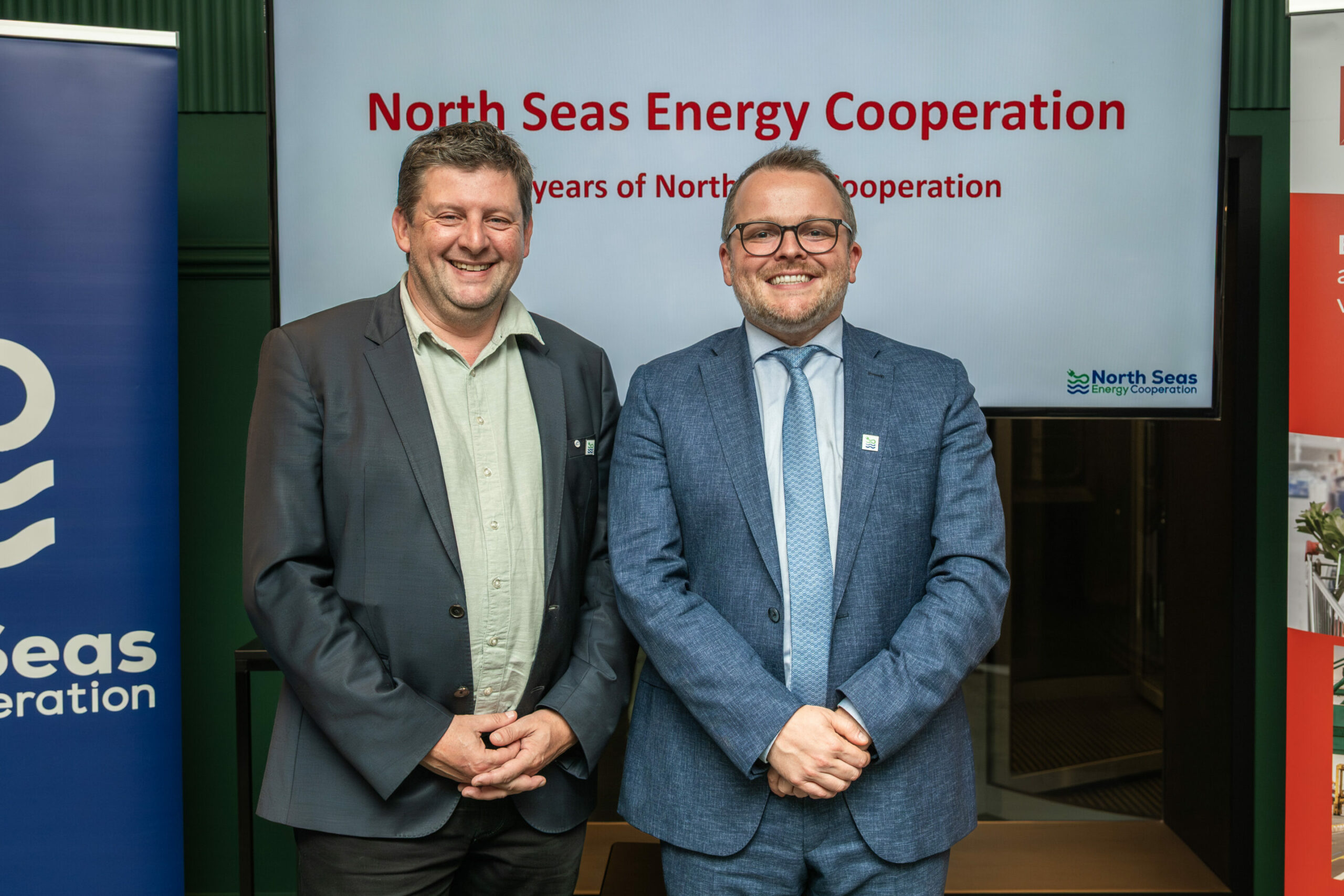
Ostend mayor John Crombez (Vooruit) and Energy Minister Mathieu Bihet (MR). Credit: Minister Bihet's office
The Ostend Declaration emphasises several priorities, such as the need for predictable and coordinated project planning, and the development of workable financing models for joint offshore energy infrastructure to share the costs fairly.
The countries also commit to working more closely with transmission system operators, regulatory authorities and the European Investment Bank.
Additionally, cooperation with the United Kingdom will continue on the basis of the existing Memorandum of Understanding, and the exchange of procurement criteria under the Net Zero Industry Act will be strengthened to stimulate more European production and innovation.
"If we coordinate our planning, investments and ambitions now, we can make the North Sea the beating heart of Europe's sustainable and sovereign energy," Bihet added.
With the Ostend Declaration, the North Sea Energy Cooperation wants to make it clear that regional cooperation is not an end in itself, but "a means to preserve our energy independence, strengthen our industry and keep the energy transition affordable for everyone."
Energy island
Belgium also remains committed to the further development of offshore wind in the Princess Elisabeth Energy Island. Earlier this year, the Federal Government decided to review the planned tender for the first plot following negative advice, so the legal and financial framework could be strengthened.
This tender will be relaunched in early 2026 at the latest, in the interests of the competitiveness of Belgium's companies and the purchasing power of its citizens.
The energy island has also been adjusted, with investment in the direct current component being paused in order to keep financial risks under control, resulting in estimated savings of €3 billion.
