
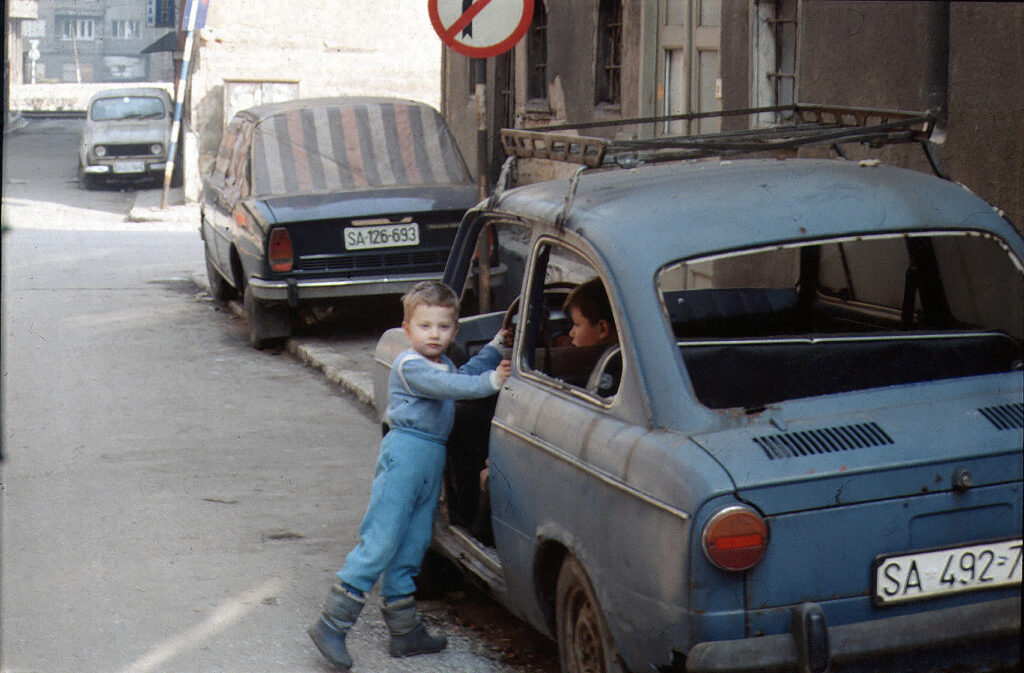
Wealthy foreign tourists, including Belgians, allegedly paid extortionate amounts for "sniper tourism" – the shooting of civilians during the siege of Sarajevo in the Bosnian war, according to a damning investigation in Italy.
A form of human hunting, wealthy tourists are said to have paid up to €100,000 for the chance to kill innocent civilians in Sarajevo between 1992 and 1995, in an alleged form of war tourism.
So-called "weekend snipers" allegedly paid members of the Serbo-Bosnian army led by Radovan Karadzic, who was convicted for genocide and crimes against humanity in 2016 by the International Criminal Court, to shoot defenceless civilians, usually on weekends.
The investigation focuses on Italian citizens, but documentary evidence points to Belgian, French, German and Spanish nationals having been involved. Other sources suggest the presence of also Americans, Canadians and Russians.
Eduard Limonov, a Russian writer & political activist, visited Bosnia in 1992. He can be seen in this video, while accompanied by Bosnian Serb leader Radovan Karadzic, firing a machine gun at civilians in besieged Sarajevo. pic.twitter.com/mJ3vgYw1Uy
— Smajo Bešo OBE (@SmajoBeso) February 23, 2023
"We have moved from the banality of evil, Hannah Arendt's concept, to the indifference of evil. These people were shooting other humans just to assert their superiority", deplores Ezio Gavazzeni, the Italian writer whose research is the basis of an investigation recently opened by the Milan Public Prosecutor's Office, in La Libre Belgique.
Rumours had been circulating about these "sniper tourists" since the 1990s, but nothing was ever proven. A documentary film called "Sarajevo Safari", released in 2022 by Slovenian director Miran Zupanič, brought this chapter back into the spotlight.
Belgian investigation?
The film prompted Italian journalist Gavazzeni to compile a 77-page dossier, detailing the alleged involvement Italian "tourists", including with testimonies, which was recently presented to prosecutors in Milan.
His research focused on Italians, who were mainly from the wealthier northern regions. But he also found evidence based on the available documentation that there were Belgian, French, German, and other nationalities involved.
This was confirmed by leading magistrate Guido Salvini, who now works as a lawyer, to La Libre. He supported the journalist presenting his report to the Milan Prosecutor's Office. Salvini also confirmed that an investigation has been opened in Italy for crimes aggravated by cruelty and futile motive.
On the involvement of Belgian nationals, Salvini refused to give further details, but twice emphasised their presence in the case.
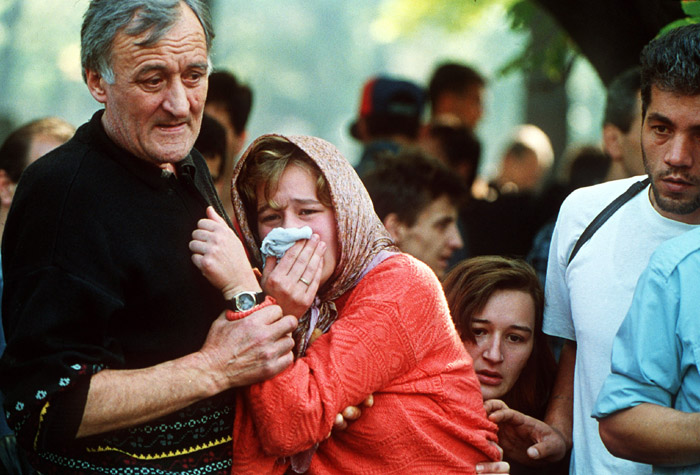
Bosnian civilians mourning at a funeral during the siege of Sarajevo in the Bosnian war
Crimes against humanity, even if the acts were committed abroad, cannot expire. While any implicated Belgian nationals cannot be tried at the International Criminal Court (ICC), as it did not exist at the time, they can be tried domestically if the Federal Public Prosecutor's Office opens an investigation.
Following the report in La Libre, Brussels regional MP Leila Agic (PS), announced on Monday that she had sent a letter to the Federal Prosecutor to alert them of the facts and call for an investigation.
"I quickly feared that Belgian nationals might also be involved when the first findings of the investigation opened in Milan were made public," Agic told The Brussels Times on Monday.
"I was planning to contact the former mayor of Sarajevo – the one who raised the alarm in 2022 – to ask her if she was aware of the possible presence of Belgians in these trips to Sarajevo, but... La Libre revealed that the Milan case file refers to the presence of Belgians on at least two occasions."
How did it happen?
Serbo-Bosnian officials from the Republika Srpska have denied all allegations from this report, calling them "propaganda" against the Serb people.
During the Bosnian war, there were many paramilitary militias in the former Yugoslavia, and they all wanted to make money, Gavazzeni further explained.
The individuals would leave from the Italian city of Trieste for Belgrade, and then be taken by helicopter to the hills surrounding Sarajevo and embedded with the Republika Srbska's army.
This was the Bosnian-Serbian faction in the war, who led the siege and was later found responsible for various international crimes, including crimes against humanity and ethnic cleansing.
It is unclear how many people were allegedly killed "weekend snipers", but between 1992 and 1995 there were "safaris" organised every weekend.
More than 11,000 people died during the brutal four-year siege of Sarajevo. The systematic killing in Bosnia is best known through the uncovering of the Screbenica massacre, which was a part of the wider Bosnian genocide conducted by Serbian Bosnians against Muslim Bosnians.
"The targets were men, women, children, elderly people, it didn't matter, it was just killing for the pleasure of shooting," Gavazzeni says.
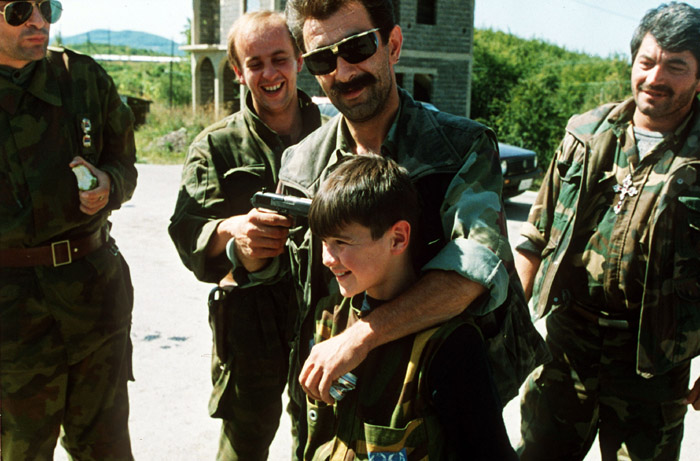
Serbian Bosnian Officer jokingly points gun at his son's head while waiting for a prisoner exchange during the Bosnian War.
The exact amount of deaths are unknown, but the type of targeted civilian would have had an impact on the money paid. For example, children had the highest bounty price, while elderly people had no extra cost.
"We're not just talking about a few psychopaths, we're talking about many, many people of different nationalities who paid the equivalent of the current price of a three-room flat in Milan to take part in these “safaris”, the journalist adds. "These were rich and powerful people, well integrated into society with immense resources at their disposal."
According to his research, Gavazzeni initially believed the "weekend snipers'" motivation would have been political, i.e. with "right-wing extremists or Christians who wanted to kill Muslims".
"But after analysing their profiles with a criminologist, I think there was no motivation, just the desire to feel the adrenaline of shooting humans, because it wasn't a few extra snipers added to Karadzic's shooters who could make the difference, it was pure fun," Gavazzeni says.
'Ignored for decades'
Brussels MP Agic underlined to The Brussels Times that she does not understand how "this issue has been completely ignored for decades."
"In the last 48 hours, we are now learning that 30 years ago, certain media outlets — in Bosnia and Italy — were already reporting on these human safaris. We also know that a Bosnian army intelligence officer alerted the Italian army at the time."
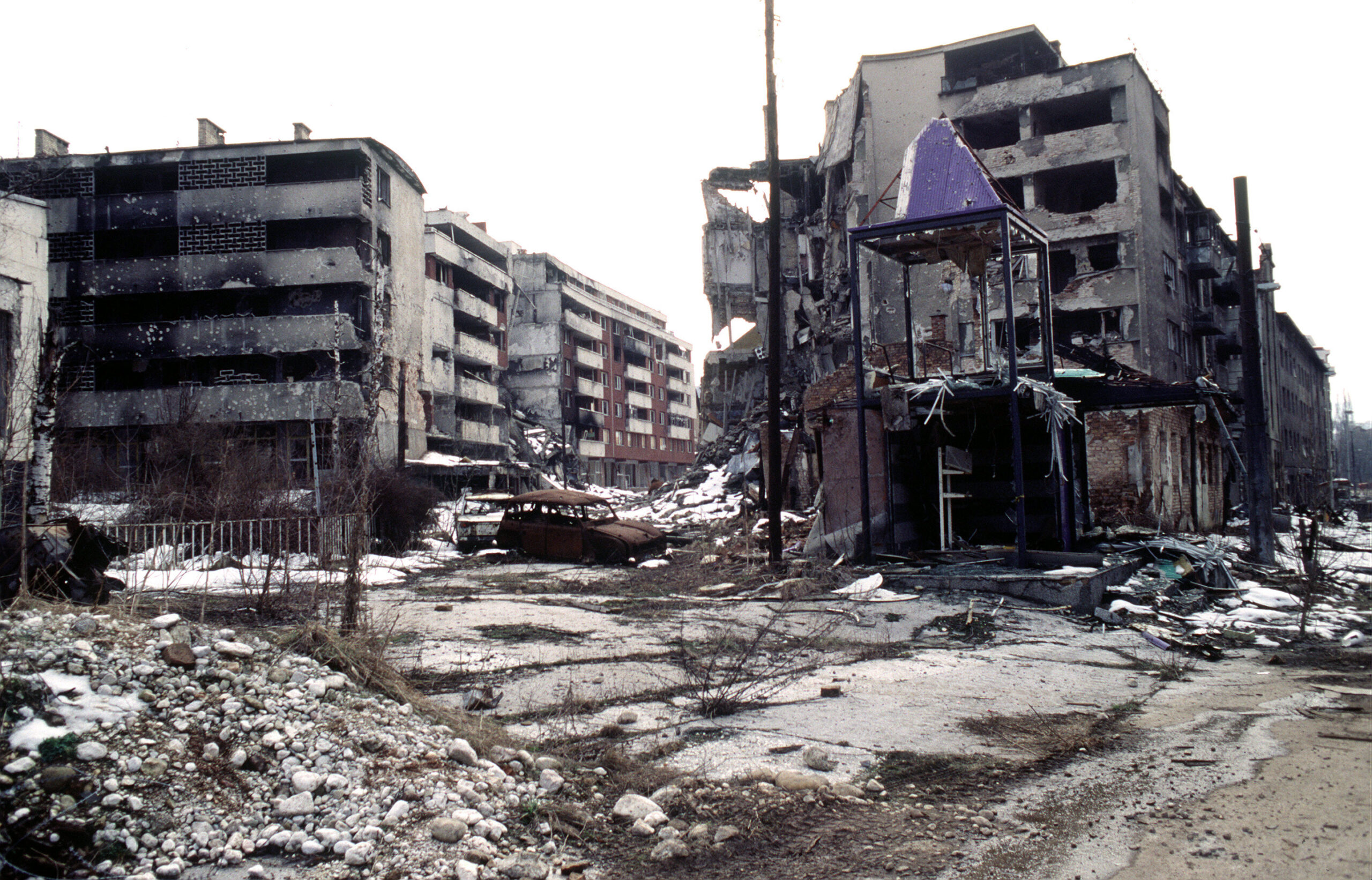
Grbavica neighbourhood of Sarajevo
Agic welcomes the opening of the Milanese investigation as an important step forward, but wonders how no one was prosecuted as early as 1995 – and how such a serious matter could have gone unnoticed in the work of the International Criminal Tribunal for the former Yugoslavia.
A small number of her family lived through the war in Sarajevo — particularly in the Grbavica neighbourhood, which was particularly exposed to sniper fire, although her parents are from further north.
"These events therefore resonate with my personal history. But I am convinced that they affect people far beyond those of Bosnian origin: many people, simply in their humanity, are deeply disturbed by the idea that individuals could have paid to shoot civilians."
The Brussels Times has sent a request for comment to the Federal Prosecutor's Office.
