
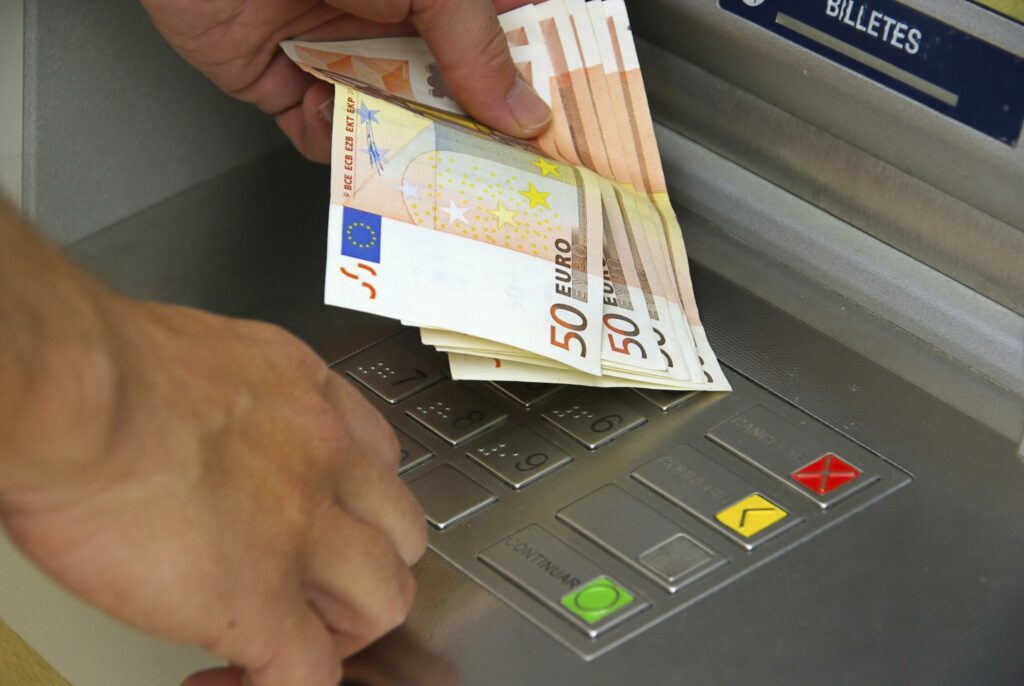
Trying to find somewhere to withdraw cash in Belgium can sometimes feel like searching for a needle in a haystack. But this is set to become a thing of the past, with shops across the country soon able to offer 'cashback' and install private ATMs.
Belgium's Federal Government is currently working on a way to make it easier (and cheaper) for shops to install ATMs. To do that, they need to amend an old law that states that ATMs may only be refilled and emptied by certified security companies – involving high costs that many retailers are unable to bear.
"There is a lot of demand for more cash machines. You see them in big cities in the United Kingdom or the United States, where there is one in almost every store. But there are very few here," Lieven Cloot of the Union of Independent Entrepreneurs (Unizo) told The Brussels Times.
In addition to clients, it is also very useful for shop owners: they would not have to store large amounts of cash in a safe in their shop, they could just deposit it at the ATM.
Expensive and complicated
However, there are some legal hurdles. In 2017, Belgium tightened the rules around ATMs to provide better security: cash machines could only be installed and managed by a certified security company, which drove up the price of such machines considerably.
As a result, having an ATM was no longer attractive to retailers, and many removed the machines from their shops.
Previous EU legislation stated that if shops offer consumers the possibility of withdrawing cash, they are considered a payment institution or a bank – meaning they would have to comply with a series of registration, licensing, and security requirements.
"So not only did it cost money, but having a private ATM also came with a very heavy administrative burden," Cloots said. "Those two changes led to the fact that there are very few ATMs left in Belgium and Europe."
Credit: Belga
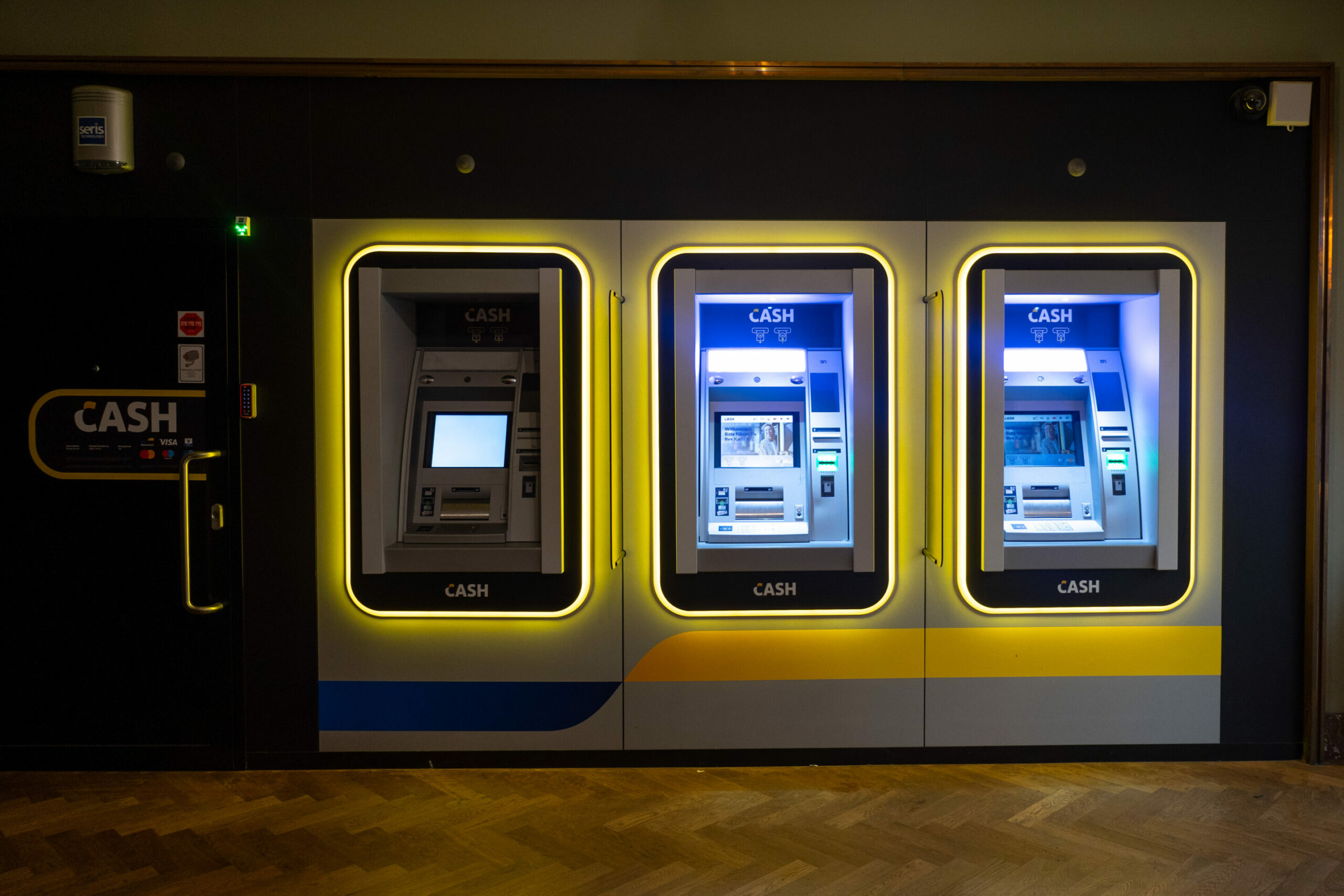
In Brussels, for example, there has been a recent increase in private ATMs – owned by Euronet, among others – in response to the disappearance of traditional bank ATMs.
"Despite the fact that these are managed by an external party and are therefore relatively more expensive, we are starting to see them appear all over: in walls, on the street, but also in stores," said Cloots. "Once merchants are able to manage them themselves, we are certain that many retailers will install ATMs in their own stores."
This, he said, would not only happen in supermarkets, but also in restaurants, bars, cafés and even in hairdressers, grocers and newsagents.
"These will likely be a €10,000-€15,000 limit on how much money can be in that ATM," Cloots said. "People will likely be able to withdraw up to €150."
Cashback
Last week, the EU agreed to relax these regulations and is no longer considering retailers who give customers the option of withdrawing cash as a payment institution, meaning the heavy administrative burden falls away – making it much more interesting for entrepreneurs.
"That left store-owners with the issue of the 2017 legislation, which states that an ATM can only be installed and managed by an external security company," Cloots added.
When Bart De Wever (N-VA)'s Federal 'Arizona' Government took office at the start of 2024, the coalition agreement provided for this 2017 legislation to be changed, ensuring that merchants will be able to deposit and withdraw money from these machines themselves.
Now, Economy Minister David Clarinval (MR) and Minister for the Self-Employed Eleonore Simonet (MR) are working on adapting the law to reflect the coalition agreement.
ATM cash distributor pictured in Antwerp on Monday 4 November 2024. Credit: Belga/Ward Vandeal
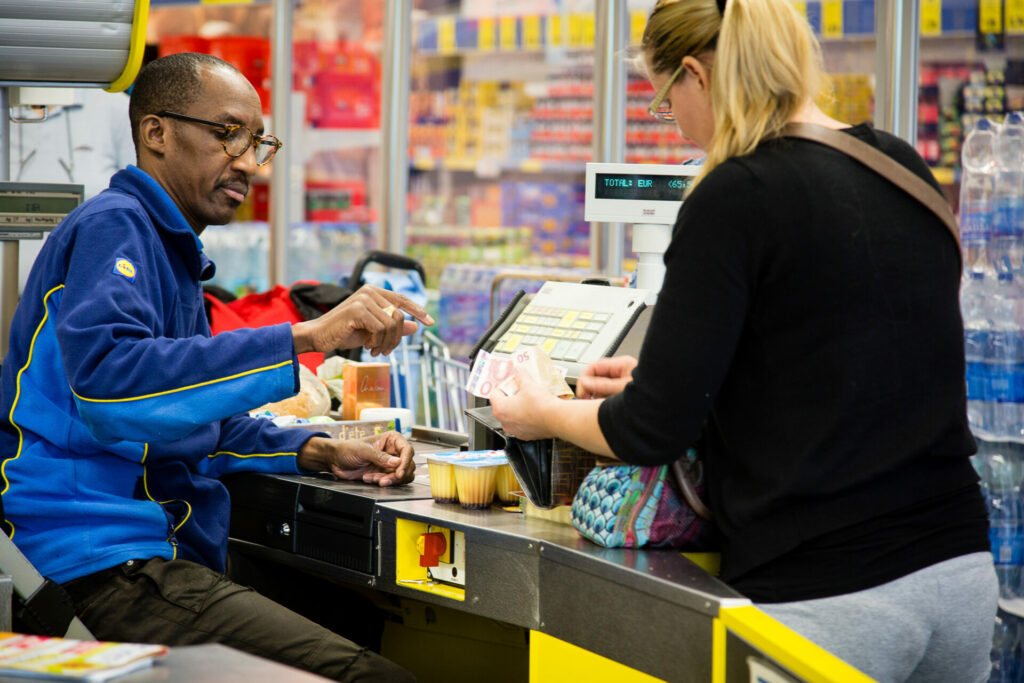
Additionally, recently relaxed European legislation now also provides for the possibility for retailers to offer 'cashback', meaning that consumers can ask to withdraw money at the checkout – with or without making a purchase.
The provisional political agreement, reached by the European Parliament and the Council of the EU last week, must now be finalised and then officially adopted and published by the EU as a new regulation (replacing the current directive).
"The new regulation will, in principle, take effect two years after its publication by the EU," a spokesperson for Clarinval told The Brussels Times. "That means we are talking about 2028, but the timing is subject to the finalisation of the provisional political agreement."
