
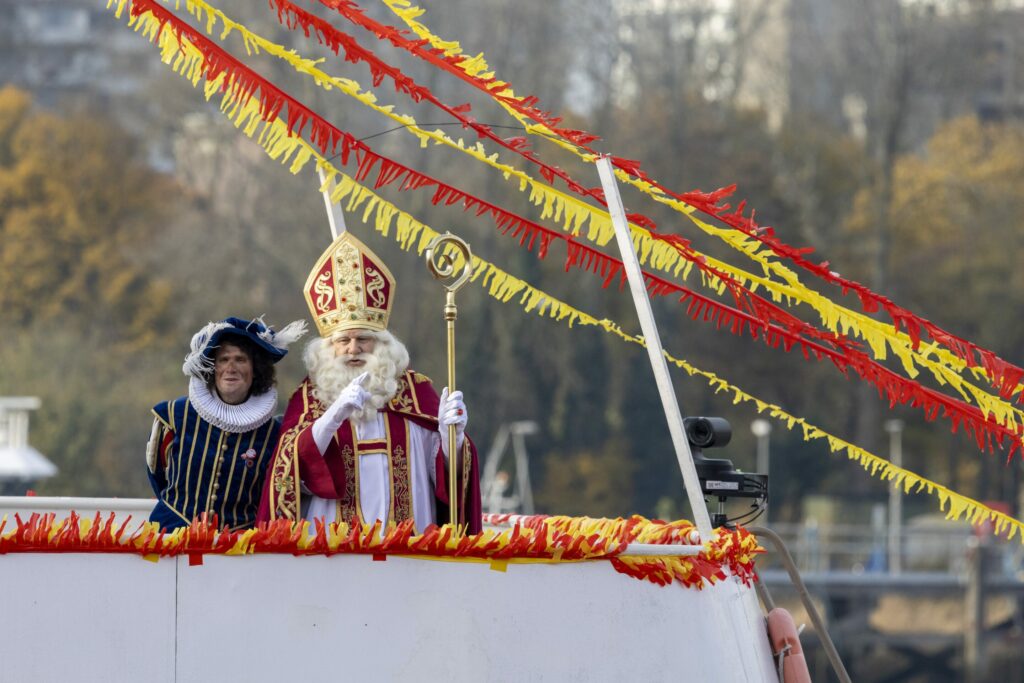
Many children in Belgium will be too excited to sleep tonight, ahead of the much-anticipated visit from a jovial old man. On Saturday morning, they will wake up to presents and sweet treats – but only if they have been well-behaved this year.
Children do not have to wait until Christmas to unwrap presents in Belgium, as the country's folkloric Santa Claus figure (Sinterklaas or 'de Sint' in Dutch, Saint Nicolas in French) arrives as early as 6 December.
Before going to bed on 5 December, children across the country typically put out a glass of milk (or beer) for Sinterklaas, a carrot and sugar cube for his horse, and a sweet treat for his helper Zwarte Piet ('Black Pete').
According to tradition, Sinterklaas and his helper travel across people's rooftops overnight and climb down chimneys to leave presents in living rooms. The next morning, well-behaved children will discover presents, including speculoos, chocolate figures and coins, marzipan and mandarins.
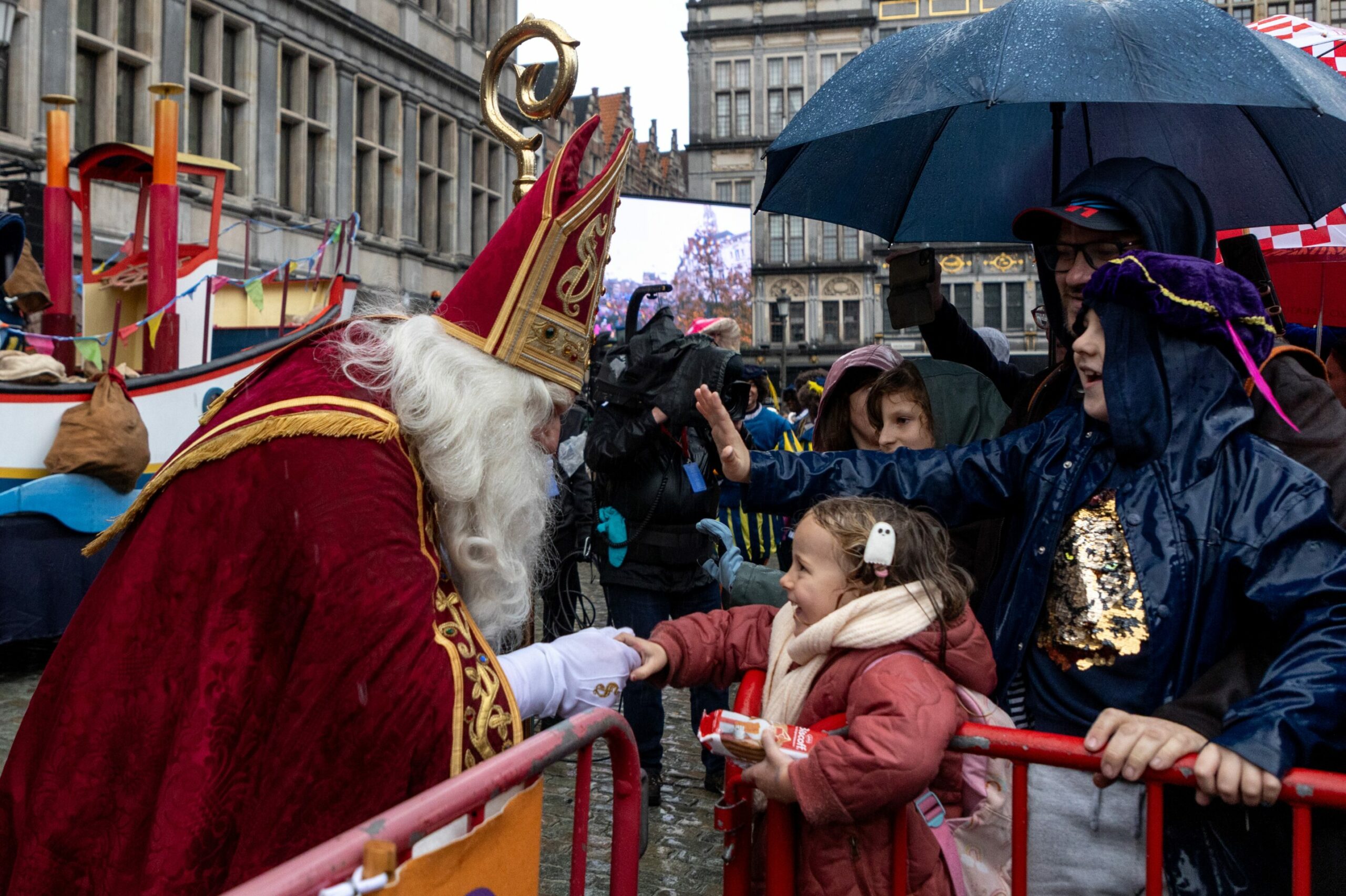
Sinterklaas greets a child upon arriving in Antwerp, Saturday 15 November 2025. Credit: Belga/Zeno Druyts
Who is Sinterklaas?
The Christmassy character has its origins in Nicholas of Myra, a Greek bishop from Myra who lived in the fourth century. He is depicted as a stately old man with a long white beard, and his clothing is broadly based on a bishop's attire: he wears a tall, red hat (mijter in Dutch and mitre in French), adorned with a golden cross on the front.
Other distinctive features are his red cloak, adorned with gold stitching, and his golden staff. He is often seen carrying a large book in which he keeps his records on whether children have been naughty or nice.
Every year around mid-November, Sinterklaas arrives in Antwerp by steamboat.

The arrival of Sinterklaas in Antwerp. Credit: Belga/Nicolas Maeterlinck
His right-hand man, Zwarte Piet, has been at the centre of many heated debates in Belgium and the Netherlands and attracts a great deal of international criticism. According to the folkloric tale, his face is blackened by chimney soot.
However, impersonators used to don blackface, black curly wigs, paint large red lips and wear big golden earrings – creating the caricature of a black person.
But times are changing, and given Belgium's violent colonial history in the Democratic Republic of the Congo, Rwanda and Burundi, many believe the country should reshape outdated colonial narratives on race. Nowadays, people dressing up as Zwarte Piet either wear no make-up or paint a few black spots (representing soot from the chimney) on their face, and some refer to him as 'Soot Piet' instead.
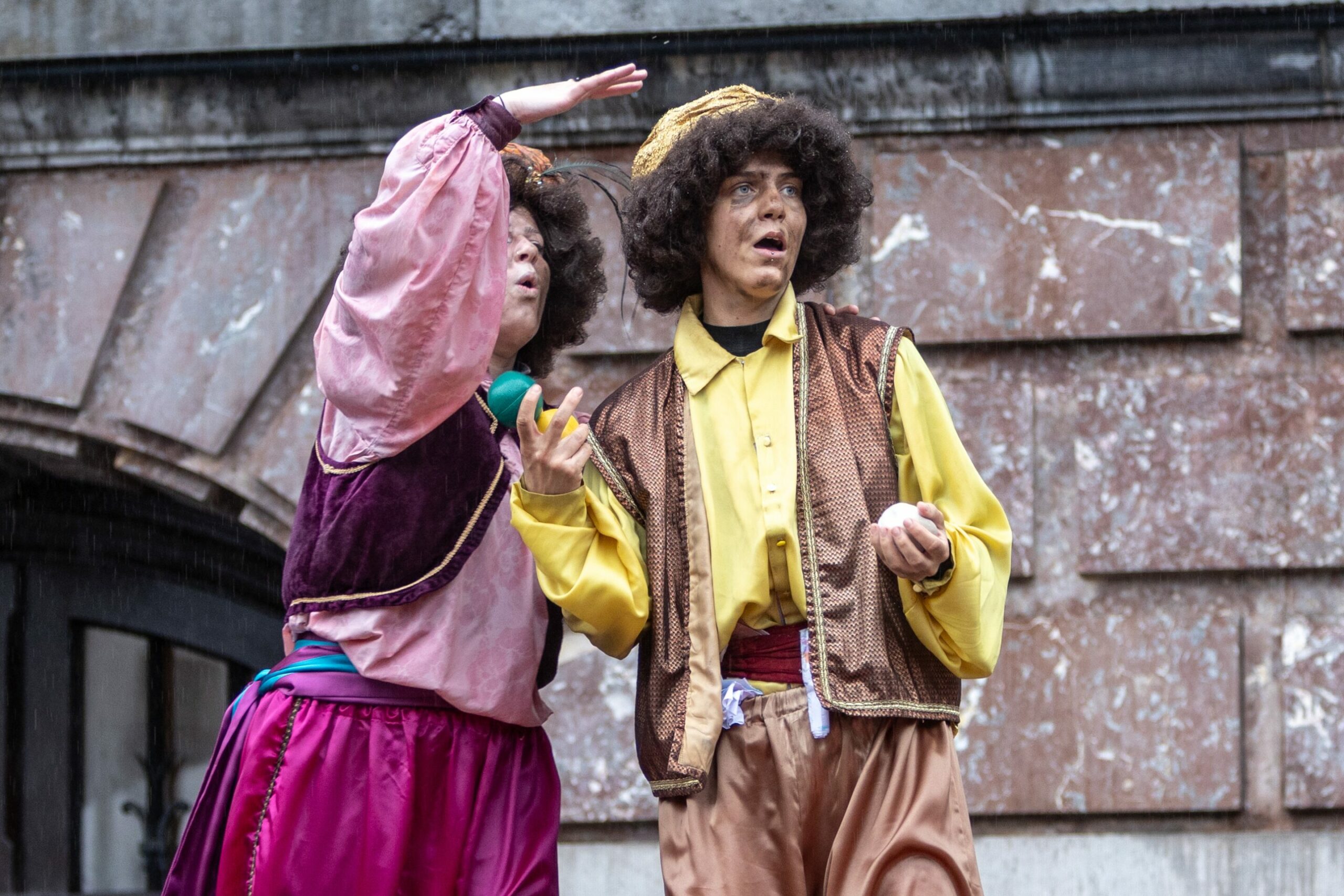
Soot Piet pictured during the arrival of Sinterklaas in Antwerp, Saturday 15 November 2025. Credit: Belga/Zeno Druyts
Depending on when 6 December falls in the week, Sinterklaas visits children in the daytime to hand out more sweet treats.
People can expect to spot him in many large supermarkets, shopping centres and other retail locations across the country over the weekend. Most schools will also invite Sinterklaas to meet pupils, while many public libraries are also organising events around his special day, including a visit from the man himself.
