
Belgium will start looking into introducing a minimum age for social media, following the conclusions of a report on the consequences of their use on young people's physical and mental health.
The report, published by the Superior Health Council (SHC) on Thursday, confirms the need to introduce "real protection" for young people online, with a minimum age for access to social media, according to Federal Digitalisation Minister Vanessa Matz (Les Engagés).
"The findings in this report are in addition to those previously established by the French commission of inquiry into TikTok, by Amnesty International, Testachats and other organisations," said Matz.
With a ban on social media, Belgium would go a step further than the nationwide smartphone ban, which has been in place for all primary and secondary school pupils in Flanders, Brussels and Wallonia since the start of this school year.
Physical and psychological effects
In the SHC's advice, which was requested by Federal Health Minister Frank Vandenbroucke (Vooruit), the physical and psychological impacts of excessive screen use – particularly when using social media – are firmly established.
In general, the physical impacts relate to sedentary behaviour, eyesight and sleep. When used excessively by young children, screens have also been linked to delays in cognitive, motor and/or language development. However, co-viewing certain educational content may have positive effects, the report said.
On the psychological level, the nature of content, platform design, and the context of use play a far greater role than screen time, the SHC found.
Some practices (such as interactions with content featuring inspiring activities or educational content) encourage creativity, social interaction, entertainment and learning. Others, however, can be associated with "high mental pressure, body dissatisfaction, and depressive symptoms" – particularly prolonged or repeated exposure to harmful content (such as influencers giving beauty advice).
"Other risks include unsafe online contacts and conduct (such as cyberbullying, sextortion, and grooming). Persuasive design mechanisms can contribute to addictive behaviours," the SHC said.
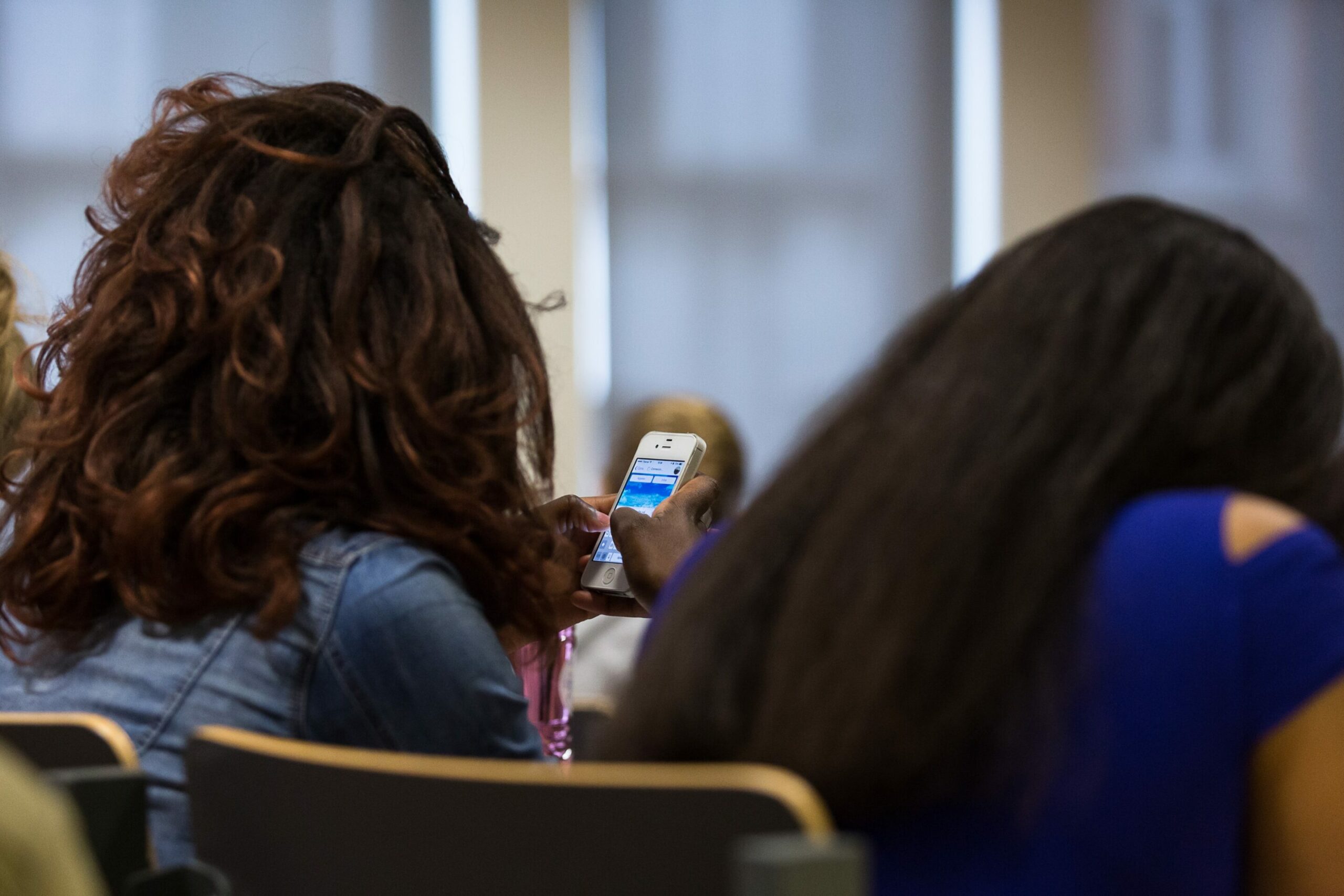
Credit: Belga/Siska Gremmelprez
As a result, the SHC advocates restricting access to social media for children under the age of 13, but added that screen use should be understood as part of a broader societal challenge.
"Isolated measures will not suffice," the experts said. "Only a coordinated combination of educational, preventative, regulatory, and support actions can reduce risks while preserving the potential benefits of digital technologies for young people."
For Matz, the report clearly emphasised that "in addition to the question of a minimum age, an age verification system must be introduced to ensure compliance with the age limit."
However, as opinions vary among political parties on the age limit, Matz wants to seek further advice before deciding on a specific age.
Banned until 13, 15 or 16?
For Flemish Media Minister Cieltje Van Achter (N-VA), the proposed age limit of 13 years old is "appropriate." She stressed that it must also be better enforced in practice. "A ban on social media until the age of 16 is not a good idea, as the advice shows."
The advice strongly emphasises the need for support, guidance and media literacy for both young people and parents, she stressed. "And that advice is very clear about the direction we need to take. It literally states: 'We have a duty not to remove children from their online world, but to make it safer'. That is precisely our responsibility."
For the Flemish socialist party Vooruit, however, social media should remain banned for children until they are 15 years old. "Our children are being poisoned right before our eyes. Brain rot. Dangerous challenges on TikTok. Toxic ideas," said leader Conner Rousseau.
"I want to protect our children. For their health. For their future. And above all, to let children be children again," he said. His party is also calling for age and identity verification via the itsme application, enforcement by the platforms and a supporting policy to teach young people how to use social media.
Smartphone users. Credit: Unsplash
Last month, the European Parliament also adopted a report recommending that access to social media be prohibited for young people under the age of 16, unless they have their parents' consent.
This is also the age proposed by the leader of the Flemish Christian Democratic party CD&V, Sammy Mahdi. "TikTok and Meta are the Marlboro of this generation," he said.
His party wants an enforceable minimum age of 16 for social media, with fines that can be imposed on tech companies that do not cooperate with enforcement – as is the case in Australia.
From Thursday, Australians under the age of 16 are being removed from Instagram, Facebook and Threads; parent company Meta wants to have all young people's accounts deleted before the new legislation comes into force, on 10 December.
"If we think something is harmful, why do we not make more of an effort to build in a little more caution, especially when it comes to children?" Mahdi said. "How long are we going to allow tech billionaires to ruin our children's brains?"
Tackling the root cause
For the Flemish Greens, however, a ban on social media for young people is "not the solution." The party does advocate better regulation of algorithms and advertising, and greater awareness among young people.
"There is definitely a problem with our social media today," said Flemish MP Bram Jacques (Groen). "But tackling the root of the problem and banning harmful and toxic content and algorithms is what needs to be done."
Jacques hopes that the Flemish Government will take action on this, but at the same time, he sees an important role for schools, parents and society in general. "Teaching young people to use social media critically is crucial to ensuring that they use these platforms in a healthy way. The online world is changing at a fast pace, so young people must be given the tools they need to explore it, so that they do not get swallowed up by it."
Credit: Unsplash
Soon, the Federal Parliament will begin work on "the protection of young people online and on ending malicious anonymity on the internet," Minister Matz said.
Once that work has been completed and the resulting recommendations have been made, Matz will submit a draft bill that guarantees the protection of minors online, in line with the work being done in this area at the EU level.
Additionally, she is determined to provide Belgium with "a robust legal framework" in which age verification will be effective through digital authentication.
