

While Belgians are increasingly using artificial intelligence (AI) in various areas of their daily lives, they do not yet have much confidence in it, according to a recent survey by consumer protection organisation Testachats.
In the space of a year, a perception by Belgian residents that AI is being used in all areas of daily life – from information and media to shopping, education and financial matters – has grown significantly, the survey shows.
"Artificial intelligence has become an indispensable technology in Belgium," said Laura Clays, spokesperson for Testachats.
"To fully deliver on its promises, consumers therefore expect more transparency, clear explanations and regulations that are also effectively enforced," she said. "This is necessary to strengthen consumer confidence in AI and to further develop AI fairly and responsibly."
What AI can (and cannot) do
In general, Belgians are particularly concerned about the rise of AI and the risks it entails: 65% fear that AI will lead to more manipulation of public opinion, 63% believe that AI poses more risks to privacy, and 58% believe that AI poses more risks than benefits to cybersecurity.
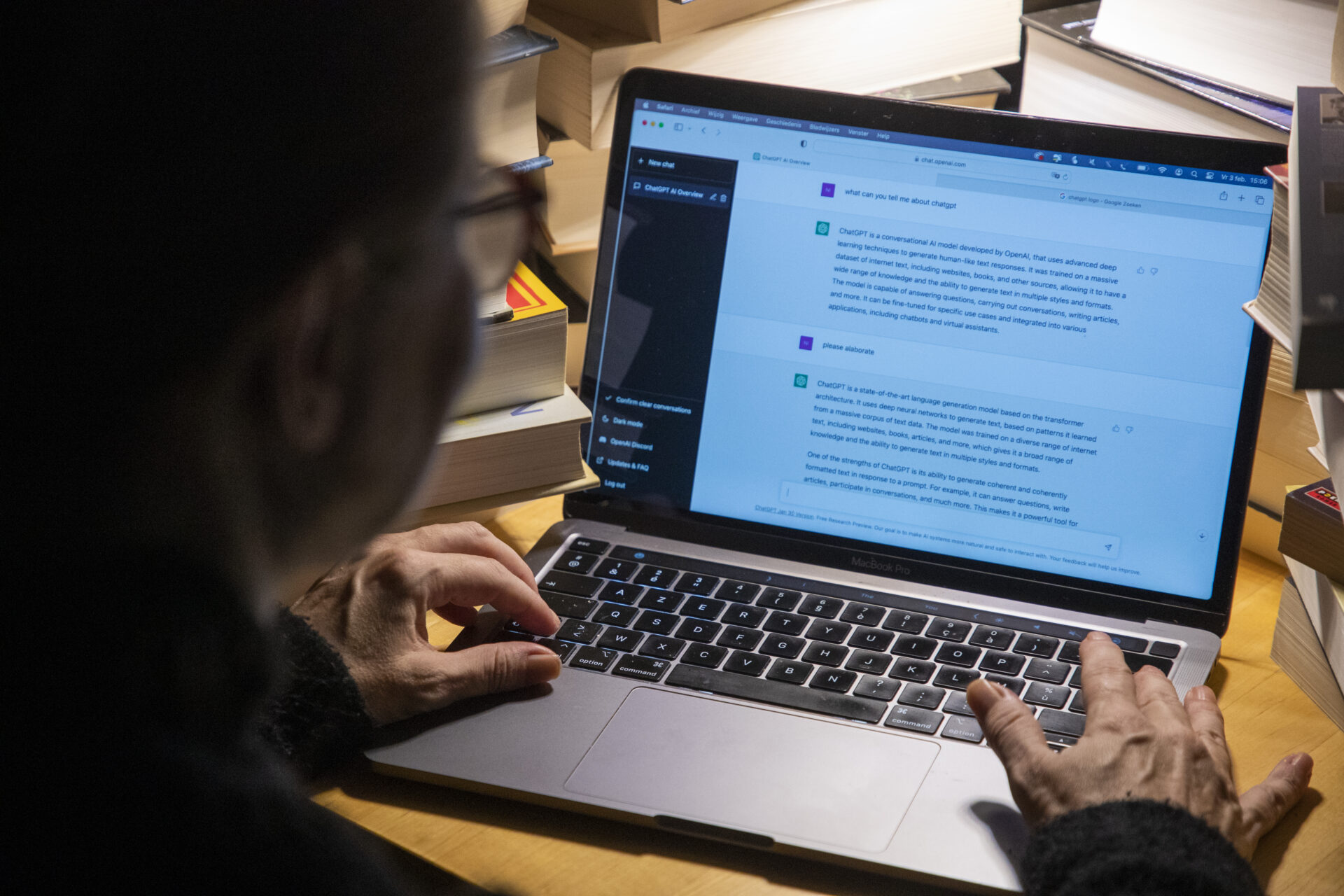
Another striking finding in the survey is the rapid rise of generative AI tools, which create text, audio or images themselves. Of all respondents, 32% use them 'occasionally' and 17% use them 'almost daily'.
However, as the technology becomes more integrated, expectations are also rising: last year, 63% were satisfied with the results of generative AI tools – a figure that dropped to just 54% this year. This means that expectations are rising faster than the accuracy of the responses.
"Therefore, it is incredibly important to understand what AI can do, and importantly, what it cannot do," Isabelle Borremans of Flanders' AI Academy (Vaia) told The Brussels Times.
Credit: Belga / Nicolas Maeterlinck
"You should not let AI work for you. Instead, you should learn how to work with it. In this regard, critical thinking and awareness of the risks are extremely important," she said.
She stressed that people should always be aware of their personal responsibility as AI users: the person using AI output is responsible for it.
"With high-risk AI systems, there must always be a human making the final decision. 'Computer says no' is not an option," Borremans emphasised. "The human decision-making factor always wins."
Overall, 39% of respondents indicated that AI had a positive impact on their daily lives in the past 12 months, and 38% say it improved their choices as consumers. Consumers said they particularly appreciate the boost in productivity (such as time saving) they gain from using the tools, as well as their creative applications.
Additionally, almost 50% of Belgians believe that AI has improved the quality of online information, although around 20% believe that the quality has actually deteriorated due to the use of AI.
Low trust
While Belgians see the usefulness of AI, they also remain sceptical. When asked about their confidence in the way companies use AI, about a third of respondents say they 'do not know', and another third think that companies 'will not use AI responsibly'.
There is also little confidence in the government: only 39% are confident that the authorities can compel companies to apply AI according to the rules.
Additionally, 28% doubt the government's ability to effectively enforce the rules – despite all the EU's efforts to establish a regulatory framework.
At the same time, Belgians also recognise the benefits of AI: 44% believe that AI can bring substantial progress in healthcare, another 44% recognise that AI provides a more personalised customer experience, and 38% believe that AI can help with studying.

Credit: Belga/Siska Gremmelprez
Additionally, 41% of Belgians also indicated in the survey that they feel they are able to use AI-based services. However, there are significant differences: consumers over the age of 61 with a low level of education clearly feel less comfortable with these technologies.
"The digital divide is threatening to widen due to the rapid development of AI. Both the government and private companies must take measures to make AI more accessible, to ensure more inclusion rather than less," Testachats' Clays said.
As of 2025, Article 4 of the EU's AI Act obliges companies and organisations to teach their staff and customers AI literacy. "Just last week, Petra De Sutter demonstrated the importance of being critical of AI output," said Borremans.
While the narrative surrounding AI is often negative, its capacity to achieve efficiency gains and take boring work away from people to allow them to focus on exciting work is "enormous," she stressed. "AI comes with so many opportunities, but you have to be aware of the full possibilities and look beyond the simple tools we know today."
