
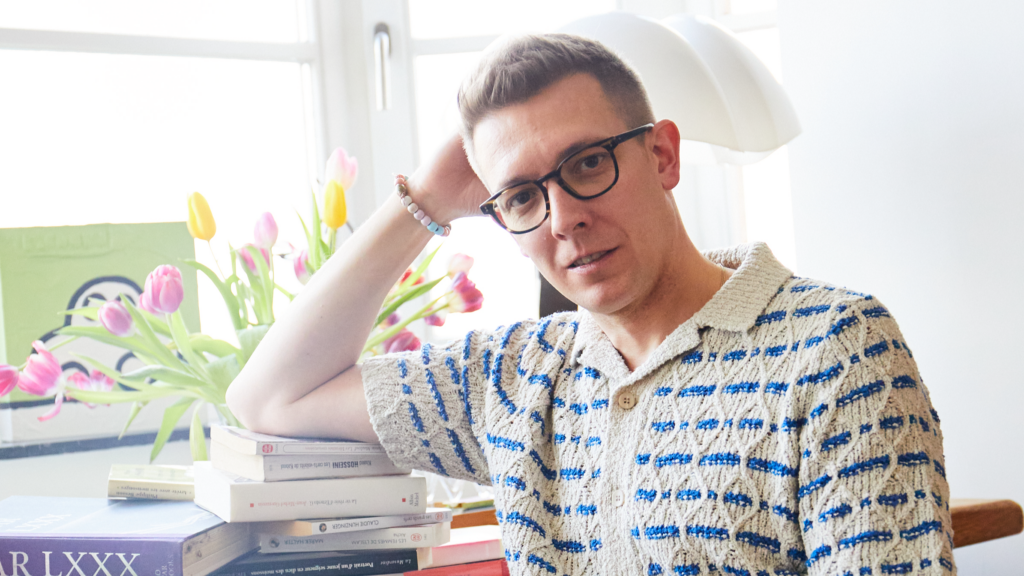
In his late 30s, Belgian journalist Éric Willem had briefly explored the idea of having a child through surrogacy with his ex-partner, before deciding not to go ahead with it. After the couple separated, Willem thought he would never become a parent.
Speaking to The Brussels Times, he explains that as a single gay man adopting a child in Belgium is "basically impossible". "Solo? No way. It does not happen," he says.
A brief radio segment about foster care ignited his curiosity, and he decided to find out more about the topic. Foster caring made perfect sense to him. He went through several interviews and psychological assessments, a period he describes as "a thorough deep dive into what fostering actually means".
Only after the screening did the matching process begin. "They do not line up children and ask you to choose the one you want," says Willem. "It is more about helping you understand what a foster carer can expect, including the possibility that the biological family may remain present."
Thousands of children in need of a home
In French-speaking Belgium, around 1,000 children are currently waiting for a foster family, according to Arnaud Gendrot, director of the Foster Care Service in Brussels. In the Flemish-speaking part of the country, the number amounts to around 1,500 in 2025, a 27% increase compared to 2023, according to Pleegzorg.
The figure refers to children whose official care project over the past two to three years was placement in a foster family, but for whom no family could be found due to a lack of candidates.
Many of those children are very young. Exact figures for under-threes are not broken down for the French-speaking part of the nation, but the service confirms that a significant proportion are between 0 and 6 years old. In the Flemish-speaking part of the country, almost 449 of the children waiting for a foster family are toddlers.
Not all institutional placements are inappropriate, Gendrot notes. In some situations, it is considered the most suitable placement for the child.
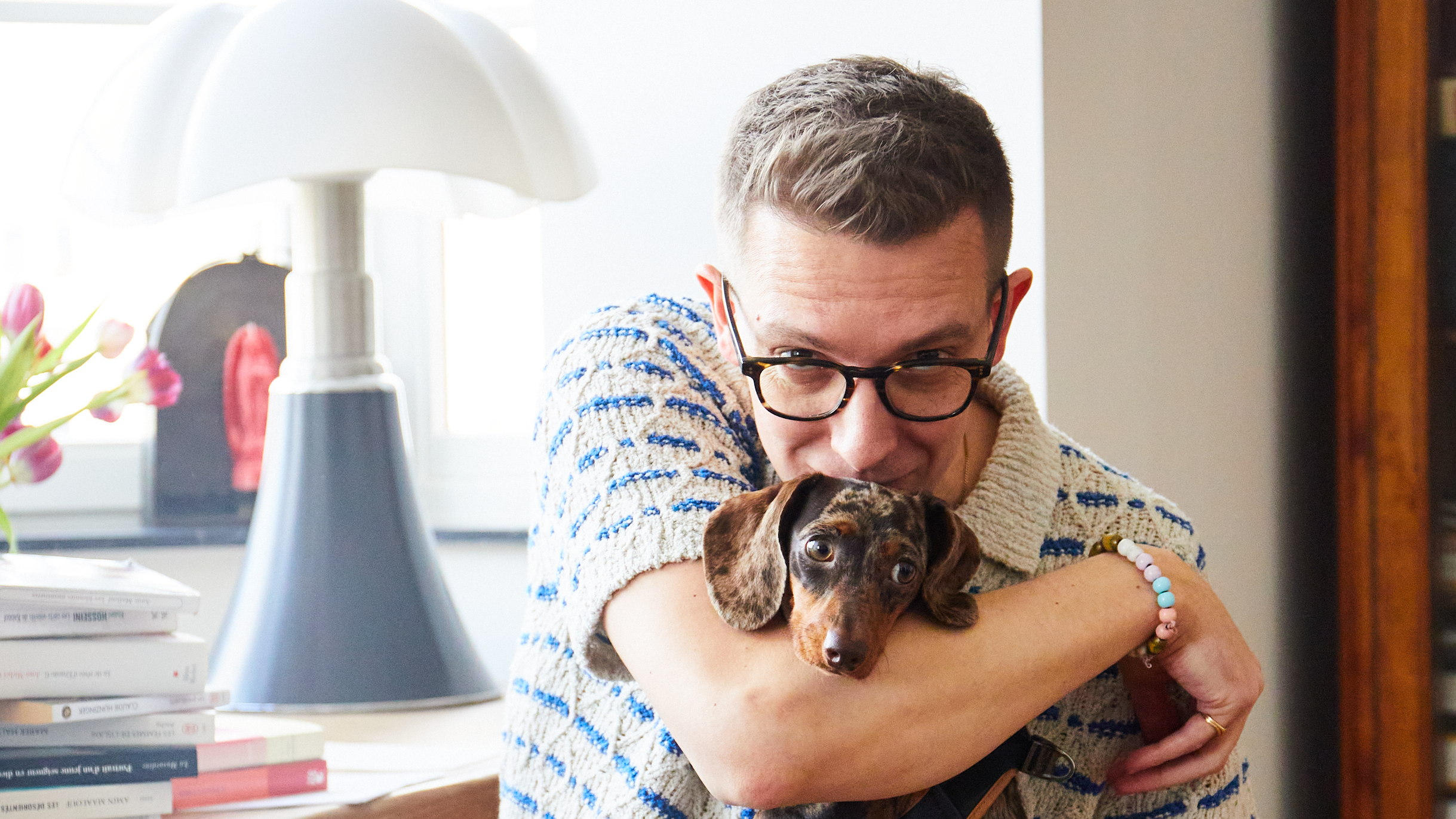
Willem with the family puppy. Credit: Julien Thomas/Studio LA
Meeting Lilly for the first time
Willem did have the possibility to ask to know the child's age. A baby, he tells us, would have been more difficult for him to care for given that he often has a lot on his plate.
His first introduction to Lilly was during the Covid-19 pandemic – an anonymous profile presented over a video call with the foster care service. He describes the experience as "cold". No name, no photo, only facts. He had 24 hours to make a decision.
"I said to friends, 'I cannot accept'," he recalls. "But at the same time, I thought, who am I to refuse a child who is in an institution and deny her a family?"
He then figured out that speaking to the children's nurse who cared for Lilly was paramount. The call was set up in an hour by the foster care service, and the nurse described Lilly as a fun, cheeky little girl who always smiled and loved chocolate.
"It was the first time Lilly felt like a person rather than a file. The next day, I said yes," he explains.
The full process took nine months. After he said yes, the so-called "pre-welcome" followed: several times a week, Willem visited Lilly in the institution so they could get to know each other before Lilly eventually moved in.
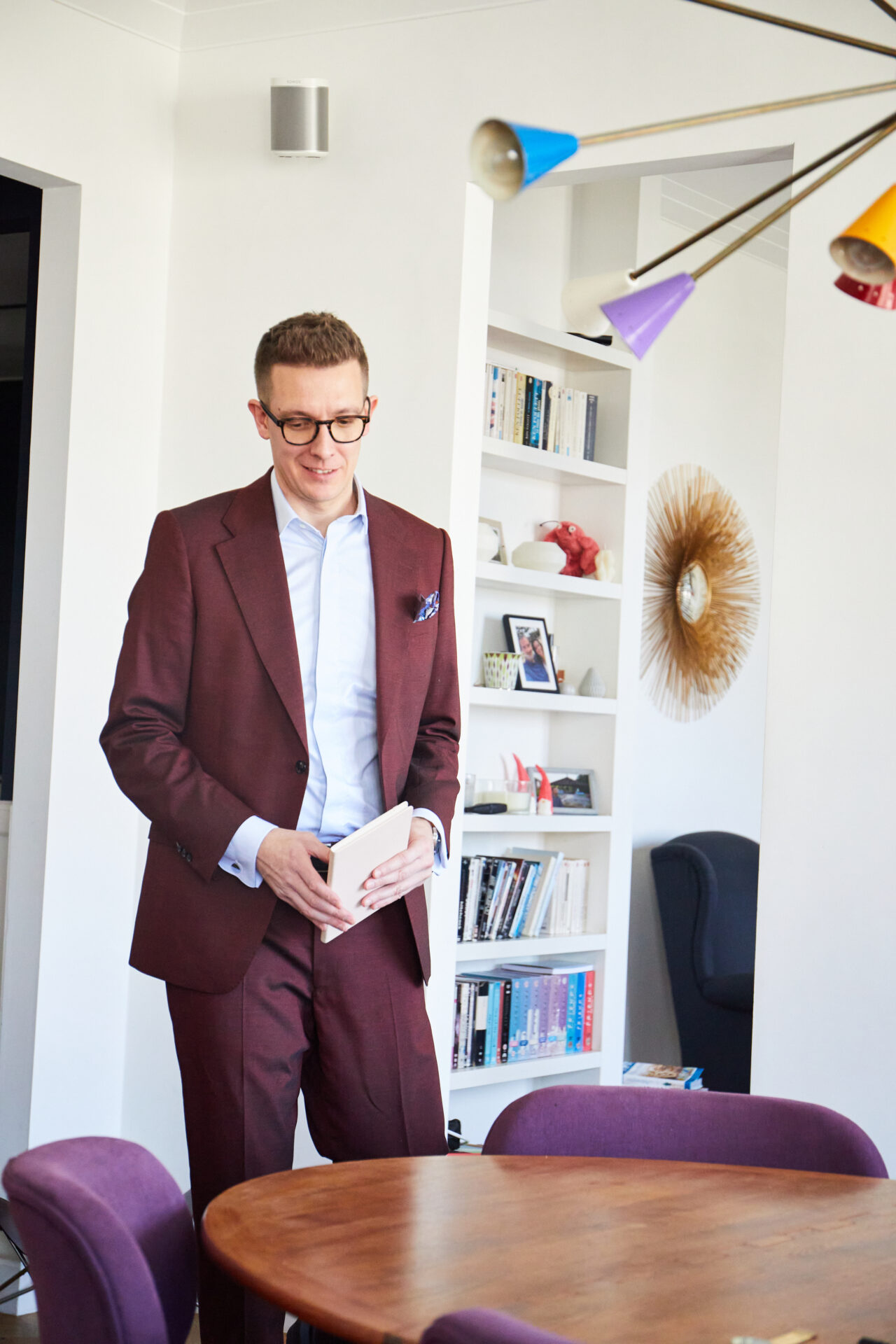
Willem writes and presents columns on La Première (RTBF), in which he speaks about his daily life as a single foster father. He also shares his passion for journalism with his students at the Institut des Hautes Études des Communications Sociales (IHECS) in Brussels. Credit: Julien Thomas/Studio LA
'She comes first'
Today, Lilly is 10, almost 11, and has been living with Willem for five years. He says she is thriving, but he is honest about some of the challenges of their day-to-day life.
"She tests me constantly," he jokes. "Lilly forgets her homework and pushes my boundaries."
A village around him – aunts, uncles, grandparents – helps him daily in raising Lilly. And so does his current partner, Adrien: a 28-year-old GP who is "a patient, empathetic guy," as Willem describes him.
But most importantly, he respects that fostering Lilly is Willem's main priority. "She comes first," he says.

Between 3,000 and 4,000 children in French-speaking Belgium are placed in institutions. Roughly half of all children removed from their homes each year are placed in foster families, while the other half enter residential institutional care, Gendrot explains. Credit: Belga
"She is my daughter, even if the law says otherwise"
Willem is adamant that Lilly is his daughter. "I take her to the doctor, sign her up for school and dance classes, and argue with her over homework as any parent does. She is my daughter, even if the law says otherwise."
Under a 2017 Belgian federal law regulating the status of foster carers, families can make everyday decisions concerning the child, such as routine medical visits or school administration.
However, parental authority often remains with the biological parents. The boundary between "daily decisions" and "important decisions" requiring parental consent can be unclear.
"There is still ambiguity about where everyday authority ends and parental authority begins," Gendrot explains, adding that a clear articulation of the law would help foster families.
Another disparity concerns support structures. According to Gendrot, in Flanders, all foster families are accompanied by specialised services. In French-speaking Belgium, only about half receive structured follow-up. The others rely primarily on Youth Aid services, he adds.
Yet foster care remains one of the least costly child protection measures for society, while generating significant long-term preventive benefits, he says.
