
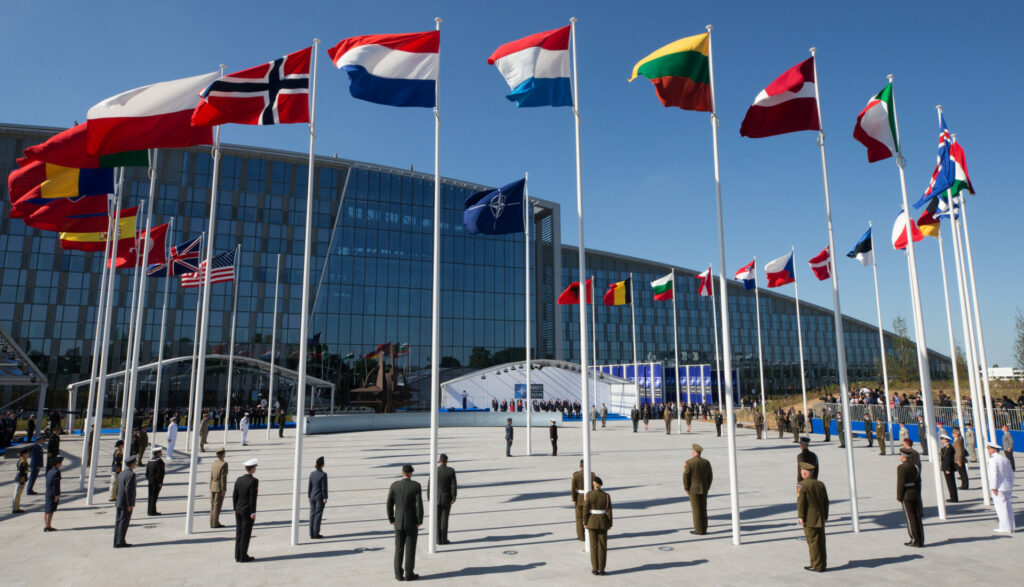
NATO defence ministers will gather in Brussels on Thursday for the first time since US President Donald Trump nearly upended the alliance after threatening to forcibly take Greenland, a self-governing territory belonging to NATO ally Denmark.
At the meeting, allies are expected to discuss support for Ukraine, strengthening the defence of the Alliance's eastern flank, and implementing commitments to increase defence spending. Arctic security plans will also be discussed.
The meeting will begin with joint remarks by NATO Secretary General Mark Rutte and US Under Secretary of War for Policy, Elbridge Colby.
Colby, the the third-highest-ranking civilian defence official at the Pentagon, will be representing the US at the meeting in place of his boss, Secretary of Defence Pete Hegseth, who pulled out of the meeting last Thursday for undisclosed reasons. Colby is a staunch supporter of a more isolationist US foreign policy and wants Europeans to take more responsibility for their own defence.
The meeting follows Wednesday's meeting of EU Defence Ministers at the Foreign Affairs Council, which focused on EU support to Ukraine and cooperation in the defence sector.
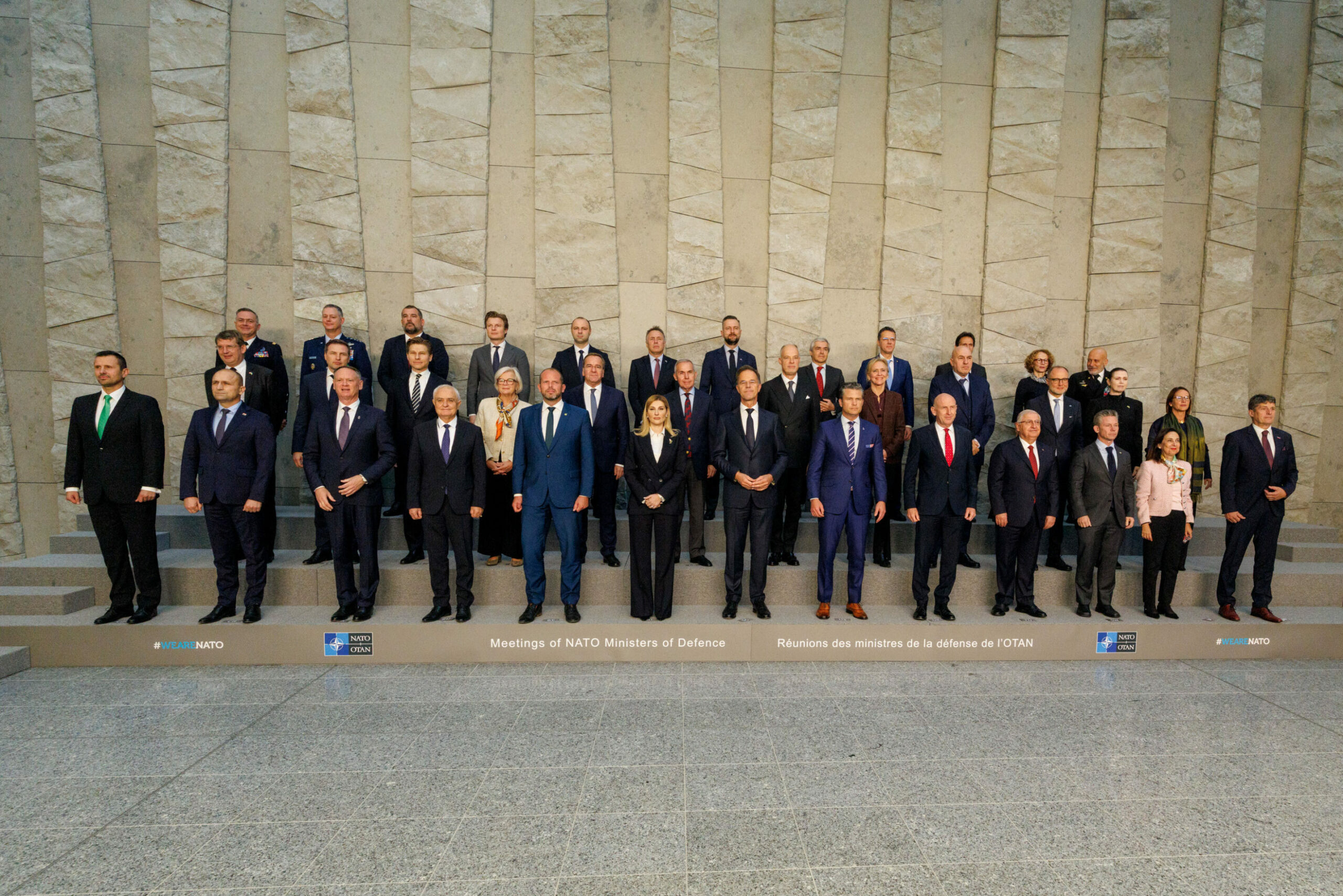
Meeting of NATO Defence Ministers in Brussels on October 15, 2025. Credit: NATO
The US cooperation and Ukraine's support top the agenda
At the meeting in Brussels, the US expects more pledges from the European allies to supply US-made weapons through the Prioritised Ukraine Requirements List (PURL) initiative, the US Ambassador to NATO, Matthew Whitaker, told reporters on Tuesday. The allies have already committed to purchase over $4.5 billion (nearly €3.8 billion) under PURL, he said.
Colby, who has long advocated for pulling US troops out of NATO's territories, is also set to inform European allies of the US commitment to keeping most of its troops stationed in Germany, Italy and Europe's eastern flank in place, according to Euronews. There are currently around 80-90,000 US troops stationed in Europe.
Ukraine's newly-appointed Defence Minister Mykhailo Fedorov will also attend the ministers' session and later take part in the informal Ukraine-NATO Council. In the afternoon, the Ukraine Defence Contact Group (known as the Ramstein format - an alliance of 57 countries) will meet to focus on military support for Ukraine.
Launching an Arctic mission
On Wednesday, ahead of the meeting in Brussels, NATO confirmed the launch of a so-called 'Arctic Sentry' mission to strengthen security in the High North and Arctic region.
After the plans were announced on 3 February, Danish Defence Minister Troels Lund Poulsen said that both Denmark and Greenland welcomed a greater NATO presence in and around the island.
The US Ambassador to NATO told journalists on Tuesday that "all NATO assets" would be needed to secure the region, should Greenland ever become independent from Denmark.
At Wednesday's press conference ahead of the meeting, Rutte pointed to "Russia's increased military activities and China's growing interest" in the region and its importance for the alliance's security. The mission is set to bring all NATO activities in the region "under a single command," he said.
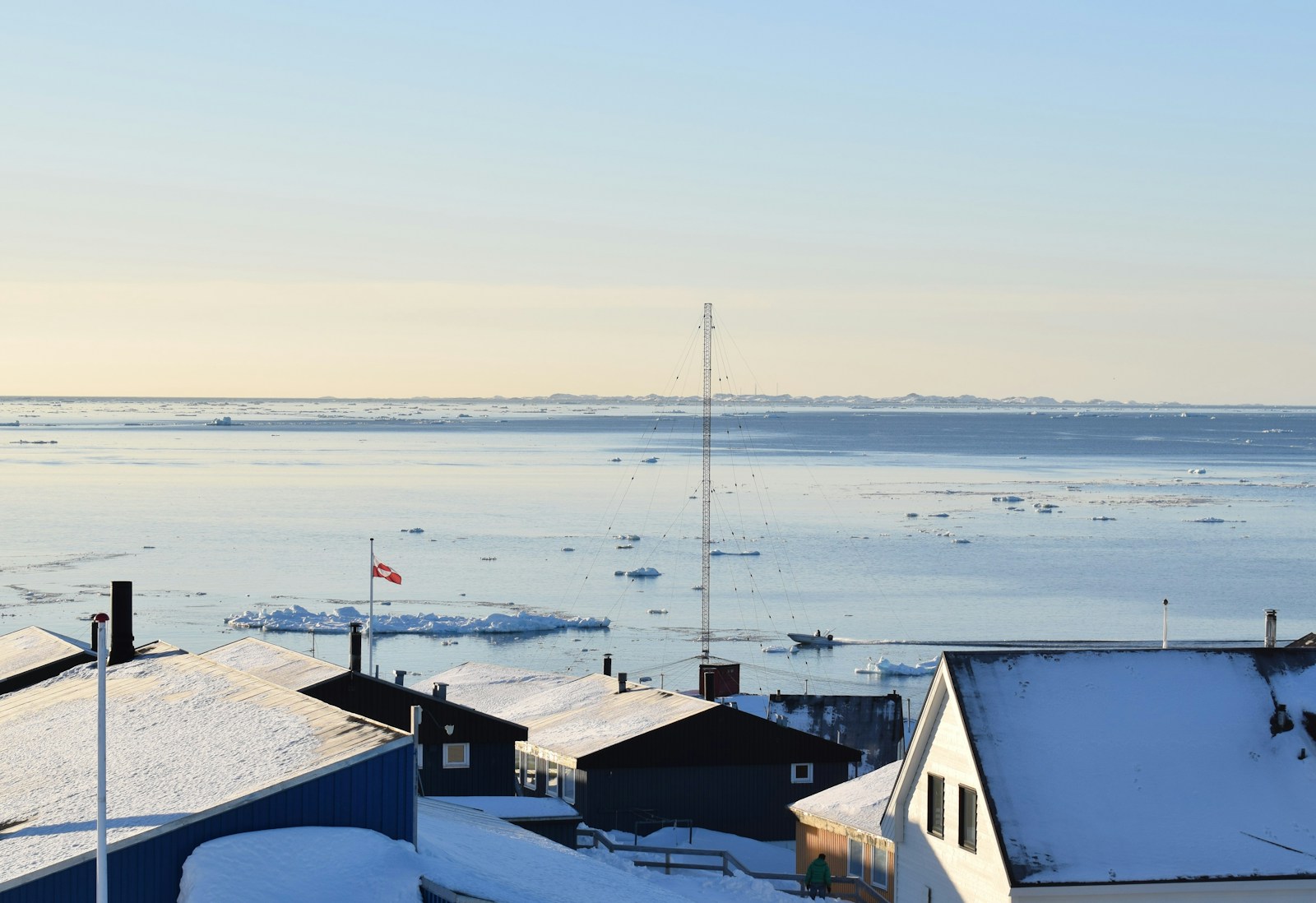
Nuuk, the capital of Greenland. Credit: Unsplash / Ken Mathiasen
The UK's Defence Minister John Healey will also discuss the country's role in the Arctic Sentry mission at Thursday's Brussels meeting, pledging a "vital" role, for the UK.
The Arctic Sentry mission could involve military exercises, increased surveillance, additional vessels and air assets in the region, including drones, officials familiar with the matter told Reuters.
Rutte and Trump reportedly reached a "framework" for the future agreement on Greenland during a closed-door meeting at the World Economic Forum in Davos. The talks between the senior officials from Denmark, Greenland, and the US followed in late January.
