
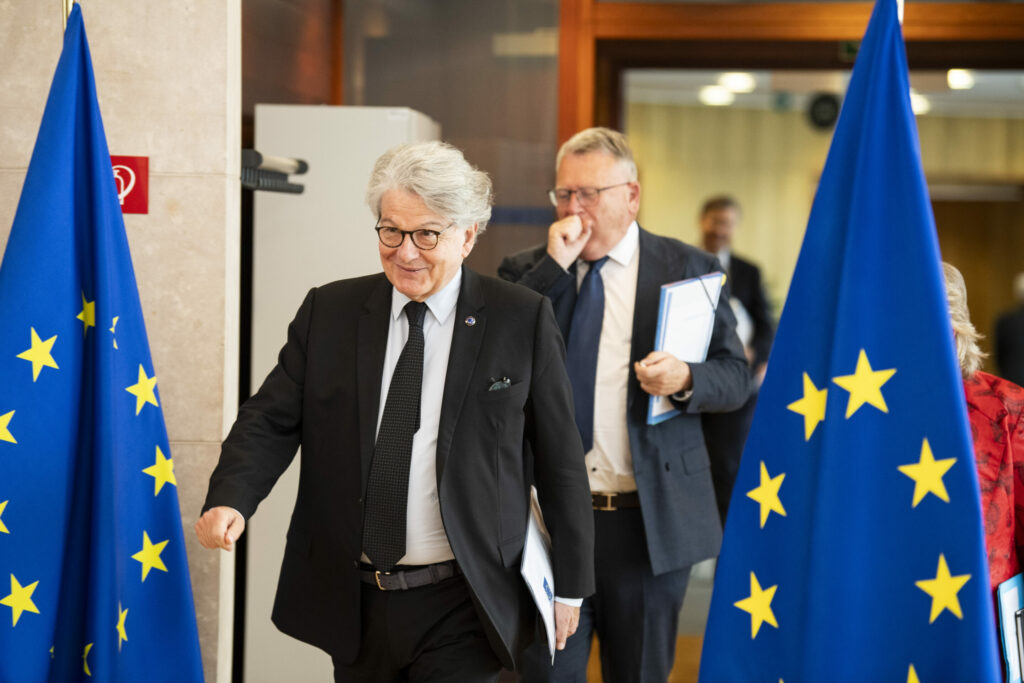
United States sanctions against top European officials will be discussed at the European Parliament on Wednesday, a day after the US ambassador to Belgium rowed back his visa ban threat against a Belgian party leader.
Since his return to office, US President Donald Trump has increasingly resorted to coercive measures, such as US sanctions and travel bans, against political opponents. The Economist recently labelled this diplomatic strategy as "mafia-style diplomacy" – a characterisation the US naturally disputes.
On Wednesday, the European Parliament will debate the US administration’s visa sanctions against former European Commissioner Thierry Breton and four Europe-based experts on digital rights and disinformation, which were announced on Christmas Eve.
Other sanctioned individuals include Josephine Ballon and Anna-Lena von Hodenberg (Managing Directors of HateAid), Imran Ahmed (CEO of the Center for Countering Digital Hate), and Clare Melford (CEO of the Global Disinformation Index).
Those targeted have advocated for a safer EU digital environment, namely by holding large digital platforms accountable while pushing for the full implementation of digital laws, according to the European Parliament.
US tech giants face colossal fines under EU digital laws (such as the Digital Services Act) for failing to moderate harmful content on their online platforms.
In a statement, a group of MEPs said the Trump administration's travel bans demonstrate an attempt to "regulate political opinions".
Washington, meanwhile, has justified the sanctions by branding Europe's digital laws as "censorship of American speech".
Bill White v. Conner Rousseau
A striking example of the US government's new approach was in evidence in Belgium this week. Over the weekend, US Ambassador to Belgium Bill White threatened travel sanctions on Flemish socialist and leader of the Dutch-speaking Vooruit party Conner Rousseau. This effectively barred Rousseau from entering the US.
In social media posts, Rousseau had previously compared the US administration's deportation tactics to measures in Nazi Germany. Citing these social media posts, White demanded an immediate apology from Rousseau, and said he would face sanctions – including a travel ban – if he refused.
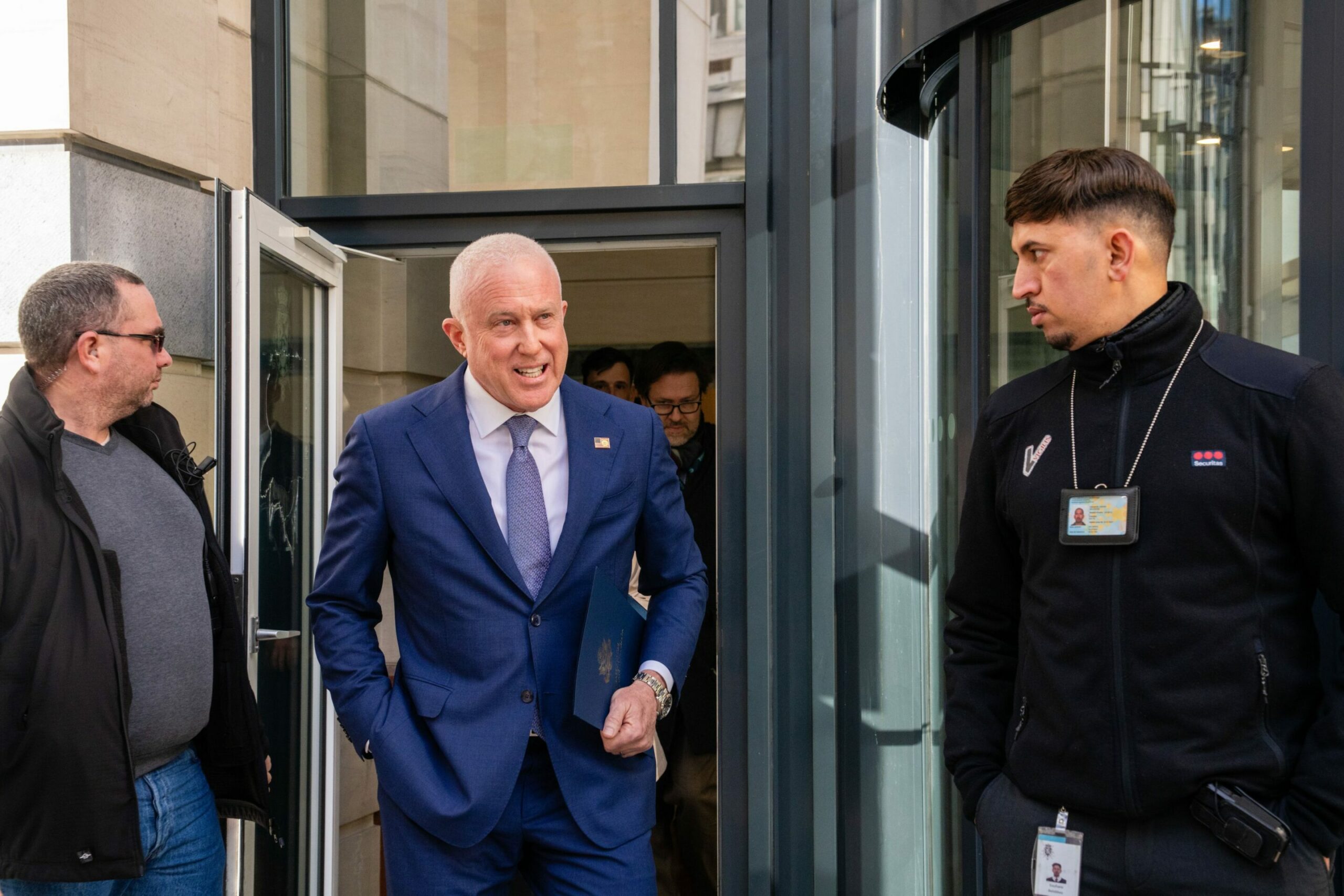
US ambassador to Belgium Bill White talks to the press after a meeting at the offices of the Foreign Affairs department of the Federal Government in Brussels, Tuesday 17 February 2026. Credit: Belga
On Tuesday, during a "frank and direct" exchange between White and Belgian Foreign Minister Maxime Prévot (Les Engagés), White backed down from his threat.
The two met in Prévot's office on Tuesday morning, where they had a "frank and direct exchange" during which Prévot noted that "the judiciary is independent and impartial in Belgium, and that therefore its action cannot suffer from political or diplomatic interference".
"It is now time to end all ad hominem attacks on both sides and work to strengthen our partnerships in a spirit of constructive and respectful cooperation between partners. In this spirit, the US Ambassador has indicated that he will lift the idea of travel restrictions on Mr. Rousseau," the Foreign Ministry statement read.
"The Minister stressed that it is now important to turn the page and channel our energy into investing positively in our bilateral relationship," it added.
