

The start of a new month means the usual changes in laws and regulations in Belgium, which will impact residents in various ways.
This time, several of the Federal Government's contested new budget measures are coming into force.
From hotel stays becoming more expensive to the unemployment benefits reform, discover the most important changes in March 2026 below.
Pricier hotel stays and pesticides
While some of the Federal Government's VAT reform measures have been sent back to the drawing board, others are taking effect from March (as planned). As a result, VAT on hotel stays and campsite pitches will increase to 12% from now on. In practice, this means that the prices for consumers will rise.
For crop protection products (pesticides), VAT is rising to 21%. While most fertilisers will remain at 6% VAT, the ones that use a herbicide (such as moss remover) will increase to 21%.
Following a highly critical opinion from the Council of State, the Federal Government decided in mid-February to postpone the planned VAT increases on sports, culture and takeaway meals to a date yet to be determined.
Controversial unemployment reforms
Unemployment benefits will be limited in time
From now on, unemployed people applying for benefits in Belgium will only be able to receive full unemployment benefits for a maximum of two years.
Full unemployment benefits consist of a basic period of 12 months, supplemented by an additional period of up to 12 months depending on the person's employment history.
Specifically, people who have worked for at least one year in the past three years are entitled to 12 months of benefits. Each additional period of four months worked entitles the person to one additional month of benefits.
Brussels' unemployment agency Actiris. Credit: Belga/Siska Gremmelprez
The Federal Government is making exceptions for jobseekers receiving a protection benefit, people over 55 years old with more than 30 years of employment history, unemployed people who started training for an occupation with a labour shortage before the end of 2025, or artists, recognised dockworkers and sea fishermen.
For jobseekers who are already receiving benefits, transitional measures have been put in place to phase them out. The first group – unemployed people who had been fully unemployed for at least 20 years – lost their entitlement to benefits at the beginning of this year.
From March, the next group – jobseekers who have been fully unemployed for between eight and 20 years during their career – will lose their benefits. Later this year, other groups of unemployed people will also be affected.
In total, the National Employment Service (RVA) expects that around 168,000 unemployed people will lose their entitlement to benefits by 1 July 2027.
Stricter rules for social assistance
New rules will apply to determine who is entitled to social assistance. To calculate whether someone already has sufficient means of subsistence, social welfare centres (CPAS/OCMW) must now also take the income of everyone living under the same roof as the applicant into account.
Previously, social welfare centres only had to consider the income of the applicant and their partner, but they now also have to take into account the means of support of "adult dependants" (such as parents, grandparents, children, grandchildren) if they live under the same roof.
Potential child benefits will also be taken into account.

Image of a person waiting at a public welfare centre in Brussels. Credit: Belga
If centres consider that these combined resources are sufficient, social assistance in the form of a guaranteed minimum income will be refused.
However, they can decide to disregard certain means of subsistence "for reasons of fairness." This may be the case, for example, when a household is faced with high medical expenses, heavy rent or other unavoidable costs. In those cases, they will still provide the financial assistance.
Introducing 'trampoline' benefits
Employees will now be able to claim unemployment benefits once if they want to change jobs or re-train – as part of the so-called "trampoline bonus". With this measure, the Federal Government wants to offer a safety net for six months to those who are looking to find another job or to avoid burnout.
Employees who have worked for ten years (3,120 working days or equivalent) or longer and want a career change can make a one-off claim for the new allowance if they give up their job. They will then receive the amount of the unemployment benefit in their account for six months.

Credit: Belga
This "trampoline allowance" is different from regular unemployment benefits: the latter can only be claimed if someone becomes unemployed involuntarily. With the former, the government wants to give people who are stuck in their jobs the opportunity to leave of their own accord.
Anyone who starts training for a shortage occupation in the first three months of that period and successfully completes it can even enjoy an extra six months of the allowance.
Banning lorries from village centres
Four municipalities just outside the Brussels-Capital Region are banning lorries and other heavy goods vehicles from driving through their village centres and school areas to improve the quality of life and road safety.
In November 2024, the pilot project began when four other municipalities (Kampenhout, Herent, Steenokkerzeel and Kortenberg) introduced a tonnage restriction (3.5 tonnes) south of the Chaussée de Haecht (N21). Since then, heavy traffic has been obliged to follow the main roads.
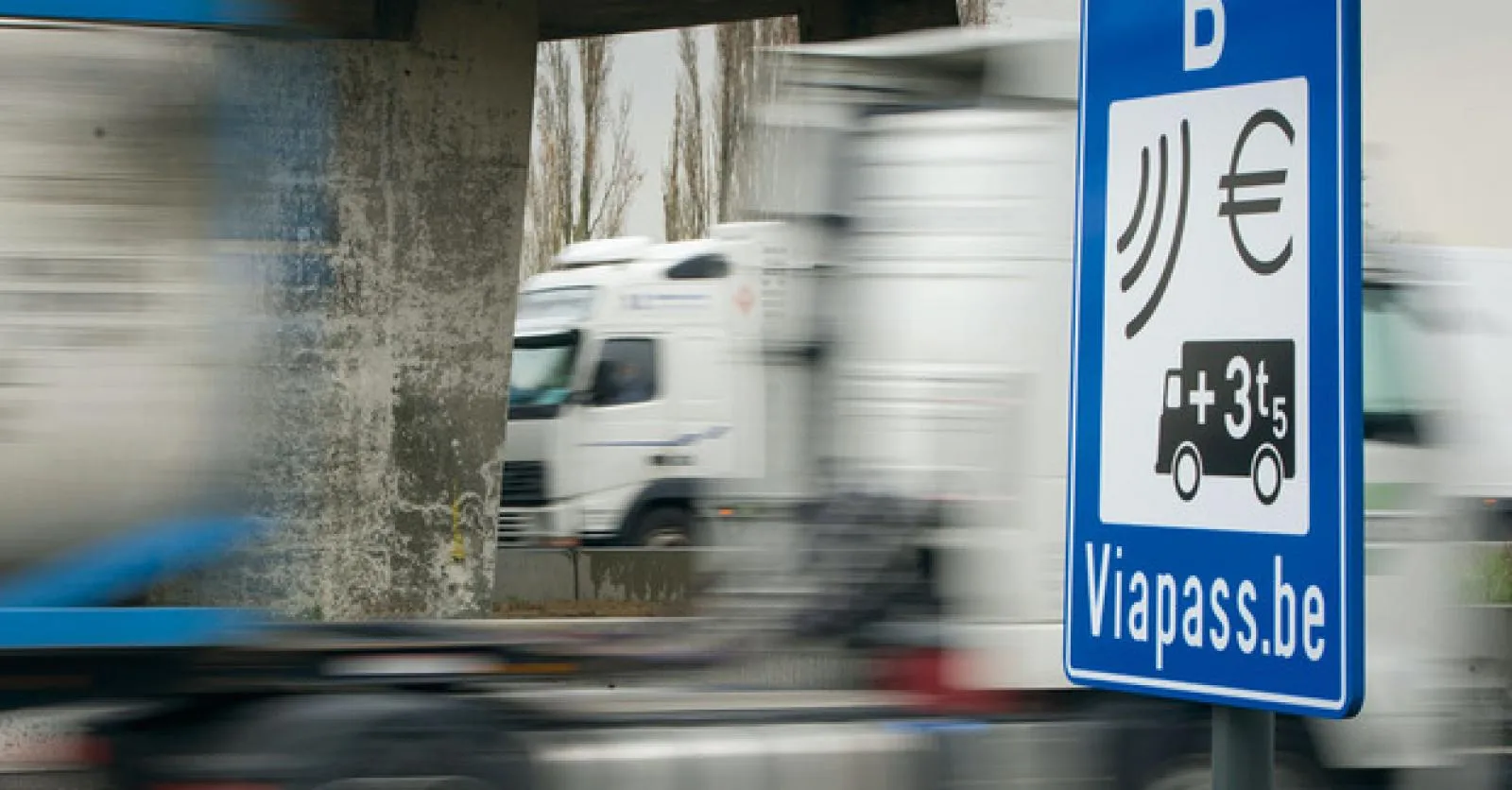
Now, the second phase expands that zone to the north of the Chaussée de Haecht as well: heavy traffic can no longer pass through Kampenhout, Steenokkerzeel, Zemst and Boortmeerbeek. Instead, lorries will have to follow the main roads.
Credit: Belga
Importantly, the 3.5-tonne weight restriction only applies to through traffic of heavy goods. Deliveries and local freight traffic will still be permitted. Buses, agricultural vehicles, horse-drawn vehicles, light goods vehicles and recreational traffic will also still be allowed to pass through the zone.
The pilot project is being carried out in consultation with the Flemish Government's Department of Mobility and Public Works, the municipalities and police zones concerned.
Walibi increases its prices in response to a rise in municipal tax
Regular and season ticket prices for the Walibi and Aqualibi amusement parks will increase by several euros from 1 March due to a rise in municipal tax on amusement parks in the Wavre area.
Walibi tickets (undated) will increase from €54 to €56 from 1 March. However, tickets for children, senior citizens and people with disabilities will decrease to €46.

Walibi amusement park in Wavre. Credit: Belga / Hatim Kaghat
Season tickets will increase from €150 to €155 for one year, and those including the neighbouring water park, Aqualibi, will increase from €230 to €240.
Daily rates will also change for Aqualibi. An undated ticket will cost €37.50 – up from €36 previously. Tickets for senior citizens and people with disabilities will cost €30, and those for children under 1.20 metres tall will remain at €14.
Home renovations
Permits no longer required for everything
A number of home renovations no longer require a permit in Flanders. Specifically, it concerns renovations to facades and roofs (without volume expansion), including the modification and installation of doors and windows.
This also applies to all interior renovations, the installation of interior insulation and the installation of plug-in solar panels.
Farmers no longer need a permit for small shelters, limited water storage facilities and small-scale water treatment plants. Small pocket digesters (installations that convert biomass such as manure into energy) no longer require planning permission either.
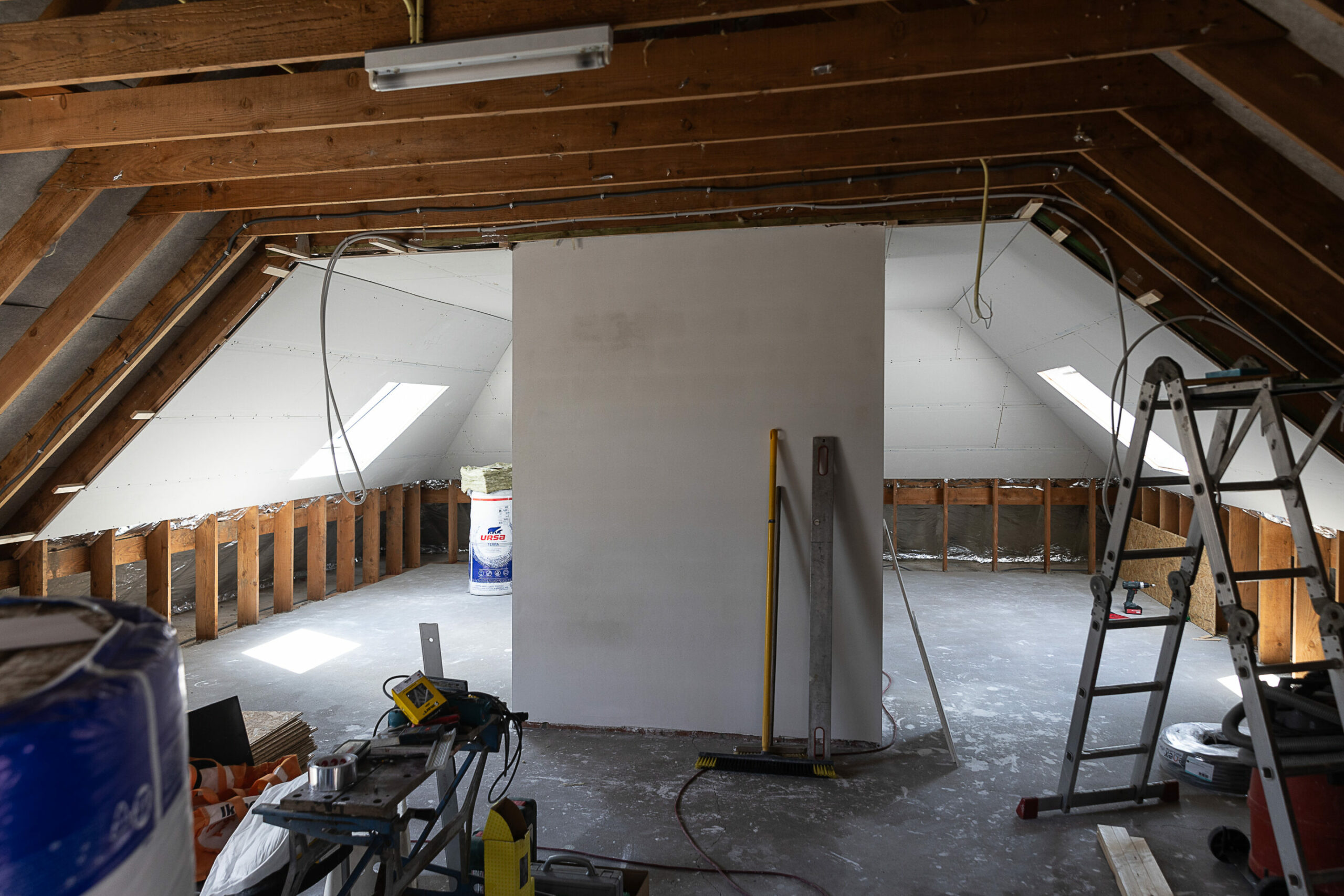
Placing insulation. Credit: Belga/James Arthur Gekiere
Additionally, the so-called "notification requirement" is being abolished. This requirement was created in the past as a simpler alternative to obtaining a permit.
In practice, however, it led to "a large administrative burden with a high margin of error," according to the Flemish Government. From now on, people will either need a permit or nothing at all.
Local authorities may still impose additional rules for some interventions, but the list of cases in which they can do so will be limited.
'My Renovation Premium' limited for higher incomes
Fewer renovators will be able to receive a 'My Renovation Premium' in Flanders, as people in the highest income categories will only be able to obtain a premium for a (usually very costly) heat pump and a heat pump boiler.
The highest income categories start at an annual income of €43,240 for a single person or €60,520 for a household of two. The premiums they can receive for their heat pump or heat pump boiler will also be limited to a maximum of 20% or 25% of the total invoice.
Nothing will change for people on lower incomes. In addition to heat pumps and heat pump boilers, they can still receive subsidies for work on windows and doors, roof, floor and wall insulation, among other things.
