
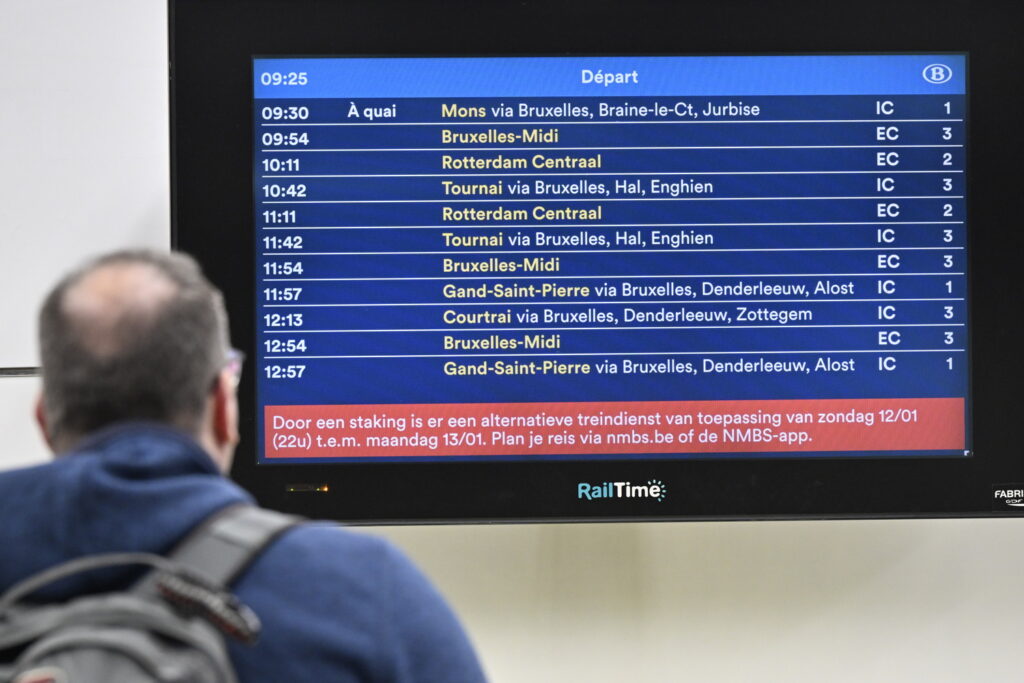
Public transport across Belgium will be disrupted for four consecutive days this week as the country is hit by a three-day railway strike, followed by a national demonstration.
With the strike action, the unions are showing their dissatisfaction with the Federal Government's pension reforms and other austerity measures.
Monday (today) is the first of three days of rail strikes, but the impact is expected to be limited. Seven in ten IC trains (between bigger cities) will run, as will half of the L (local) and S (suburban) trains.
However, not many P (peak hour) trains, which normally operate during the morning and evening rush hours, will run, announced the Belgian railway operator SNCB/NMBS this week.
The strike notice has only been issued by the socialist railway union ACOD Spoor.
Tuesday and beyond
On Tuesday, the second day of the strike, the disruption will be similar to the day before: seven in ten IC trains will run, as will three in five local L and suburban S trains. However, like Monday, few P trains will run.
As the impact of the strike will vary from day to day, SNCB advises passengers to prepare their journey well by regularly consulting its online travel planner.
From Tuesday morning, the adjusted train service for Wednesday will be available.
Following the three-day train strikes, trade union members and supporters will take to the streets of Brussels for a national demonstration on Thursday 12 March, called by the unions CSC/ACV, FGTB-ABVV, and CGSLB/ACLVB.
You can find out everything we know so far here.
