
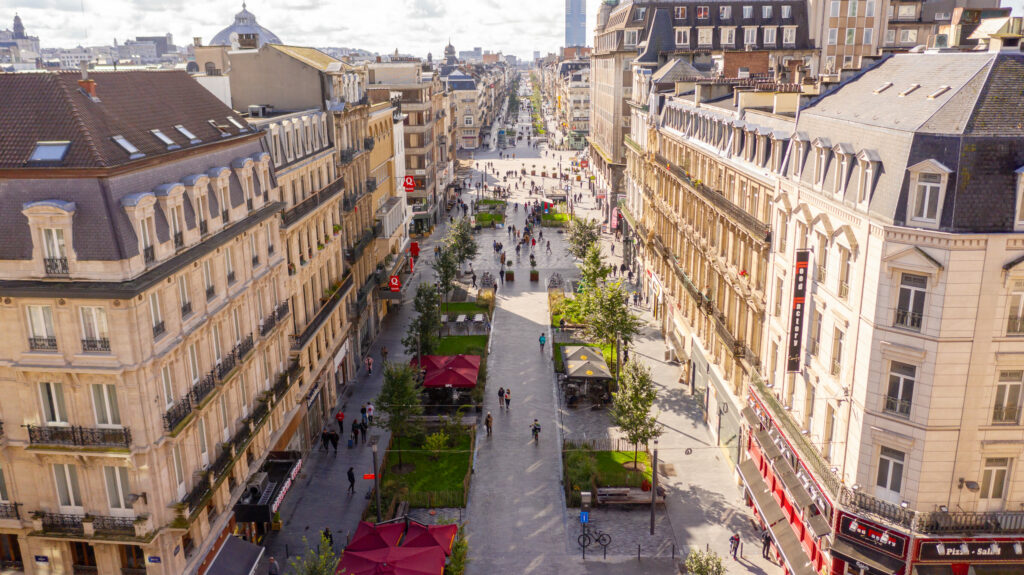
Brussels joined the likes of Beijing, Amsterdam and London to be among the best cities to have made "remarkable reductions" in air pollution between 2010 and 2024, according to a new study.
Cities are at the forefront of the battle against air pollution, which remains the largest environmental health risk worldwide, and disproportionately affects lower-income communities.
Last week, Breathe Cities released a new study examining air quality trends across 96 climate leadership cities – which represent one twelfth of the world's population and one quarter of the global economy. These cities span Europe, North America and Asia.
In its findings, it identified 19 cities, including Brussels, that achieved "remarkable reductions" of at least 20% in both fine particulate matter (PM2.5) and nitrogen dioxide (NO2) over the past 15 years, in some cases achieving reductions of around 45%.
The study found that levels of NO2 in Brussels fell by 29% between 2010-2024, with London and Paris achieving the same result, and Warsaw down by 20%.
Belgium's Dutch neighbours, Amsterdam and Rotterdam, led the ranking with the highest reduction in NO2, followed by Hangzhou in China.
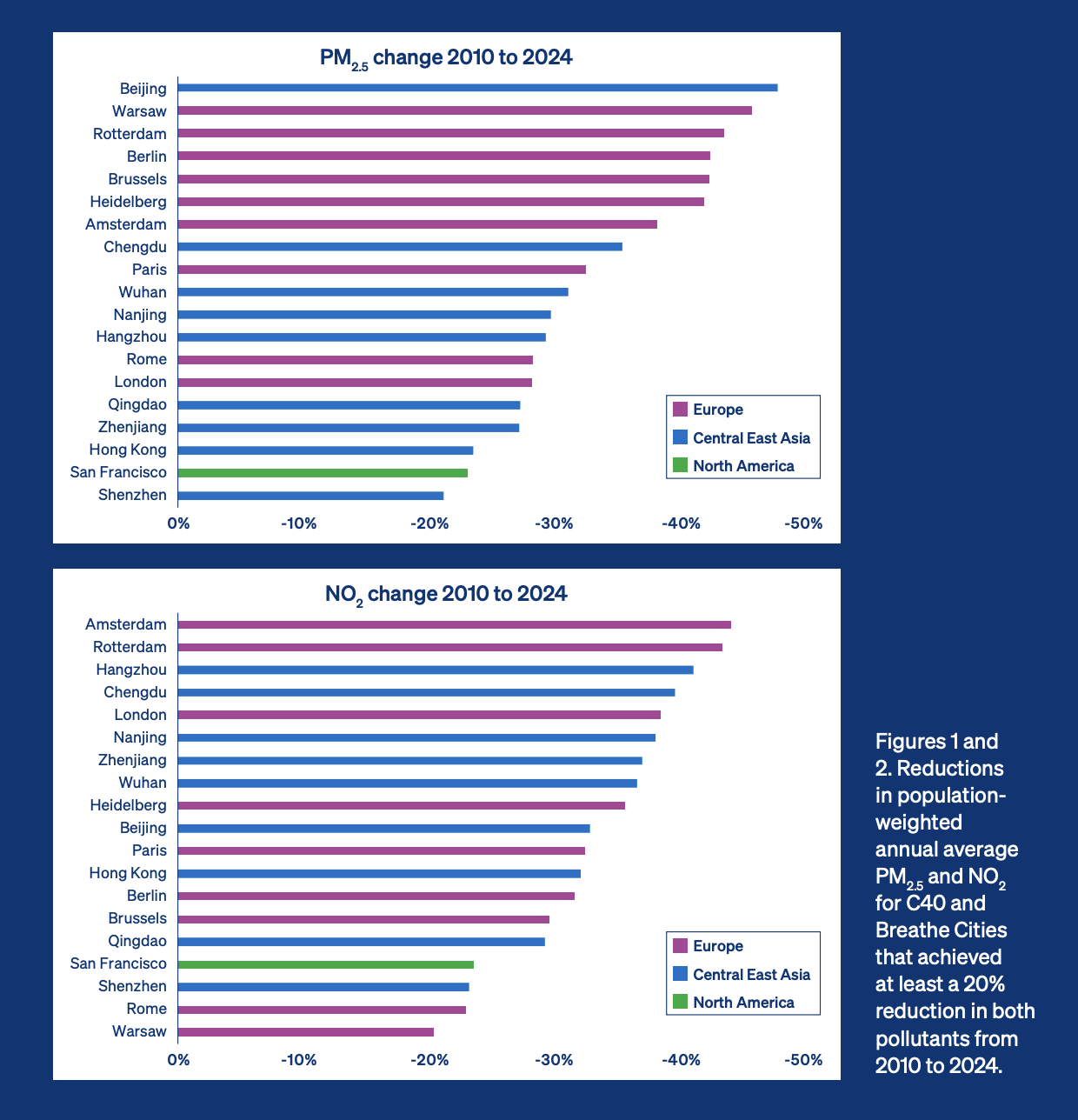
Brussels is among the top 19 cities to have made serious pollution reduction efforts since 2010. Credit: BreatheCities
When it came to the change in particulate matter (PM2.5), Brussels lowered it by a staggering 42%, making it one of the top four worldwide.
Paris (32%) and London (28%) were further behind, while Warsaw recorded a near world-leading 46% reduction, beaten only by Beijing.
Other European cities to have been included in the top 19 for their pollution reduction efforts are also Rome, Berlin and Heidelberg in Germany. Only one US city made the cut – San Francisco, while the rest were cities in China.
How Brussels scored high
Brussels was lauded for its efforts in a number of areas, including promoting active travel. Most leading cities have taken major steps to reshape urban space in favour of clean mobility.
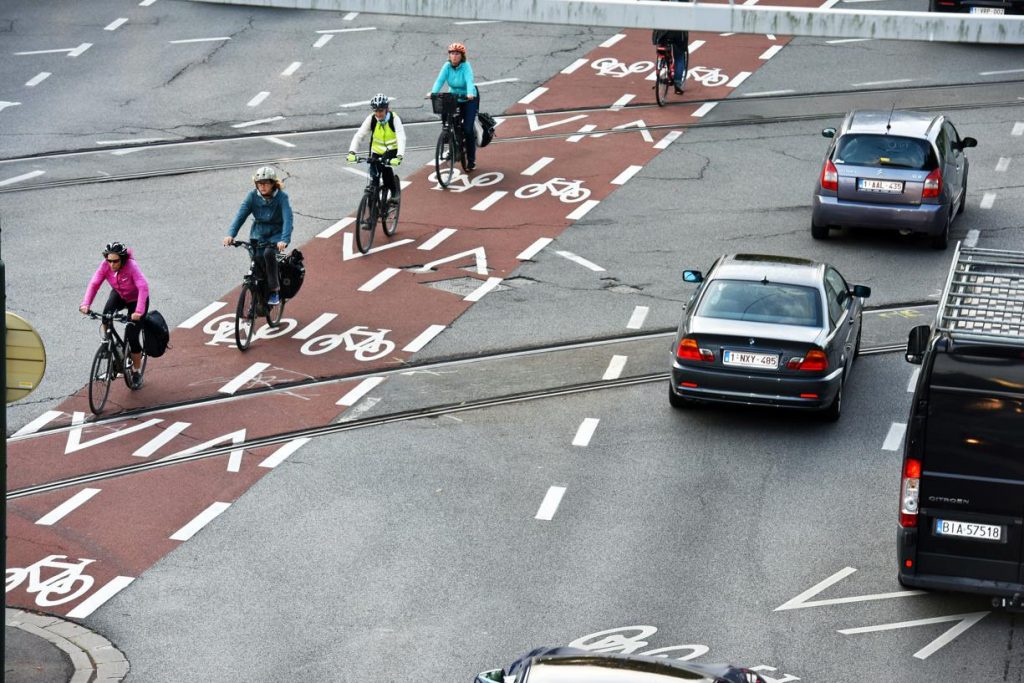
The Belgian capital has doubled the length of its dedicated bike lane network, installed around 40,000 secure bicycle parking spaces and pedestrianised a large part of the city centre.
Credit: Belga
It also created "school streets" at 11% of its primary schools to promote cycling and walking. However, these efforts could still be scaled up.
On restricting older and dirtier vehicles, Brussels was praised for having turned the entire city into a low-emission zone, banning high-polluting vehicles from driving anywhere in the city since 2018.
"The evidence highlights two key points. First, substantial reductions can be achieved within 15 years. Second, progress does not happen automatically; it requires deliberate, coordinated action sustained over time," the authors stated.
