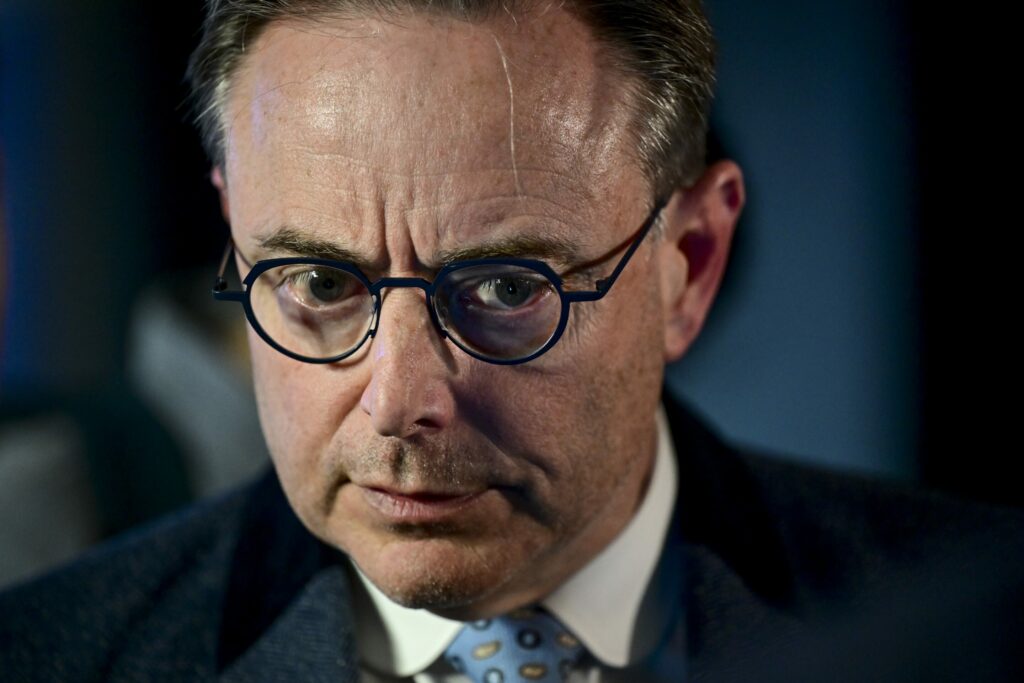
Belgium's Prime Minister Bart De Wever (N-VA) made headlines over the weekend for calling for a "normalisation" of relations with Russia. However, Foreign Affairs Minister Maxime Prévot (Les Engagés) said on Sunday that De Wever's statement went "too far".
Given the apparent disagreement at the highest levels of government, what is Belgium's official position on Ukraine now?
In an interview with L'Echo to promote the publication of the French translation of De Wever's book 'On Prosperity' last weekend, he called for the "normalisation" of relations with Russia and for the European Union to negotiate with the Kremlin to bring an end to the war in Ukraine.
"The official line is that we will continue until Russia is brought to its knees. That would only be realistic with 100% support from the United States, but they are not at all in favour of Ukraine. I sometimes think they are closer to Putin than to Zelensky," De Wever said.
Since the EU is "unable to threaten Putin by sending weapons to Ukraine" and "cannot strangle him economically without US backing," De Wever sees only one option left: strike a deal.
"But without a mandate to negotiate in Moscow, we are not at the negotiating table where the Americans, for their part, will push Ukraine to accept a deal. And I can already say that it will be a bad deal for us," he said.
'Modus vivendi'?
In his book, De Wever states that "Russia must never be rewarded for its invasion – that lesson is crucial – but in the long term we must strive for a vigilant 'modus vivendi', which once again leaves room for other geopolitical challenges."
The conflict must be ended in the interests of Europe, "without being naive about Putin," De Wever stressed. "Relations with Russia must normalise, and access to cheap energy must be restored."
Strikingly, he added that European leaders agree with him in private, "but nobody dares to say it out loud."
While De Wever made similar statements in the past, the interview with L'Echo led to harsh criticism – from within his Federal Government, the opposition, and the European Commission.
Within the Federal Government, De Wever's coalition partners Vooruit (Flemish socialists) and CD&V (Christian Democrats) are not happy with the comments.
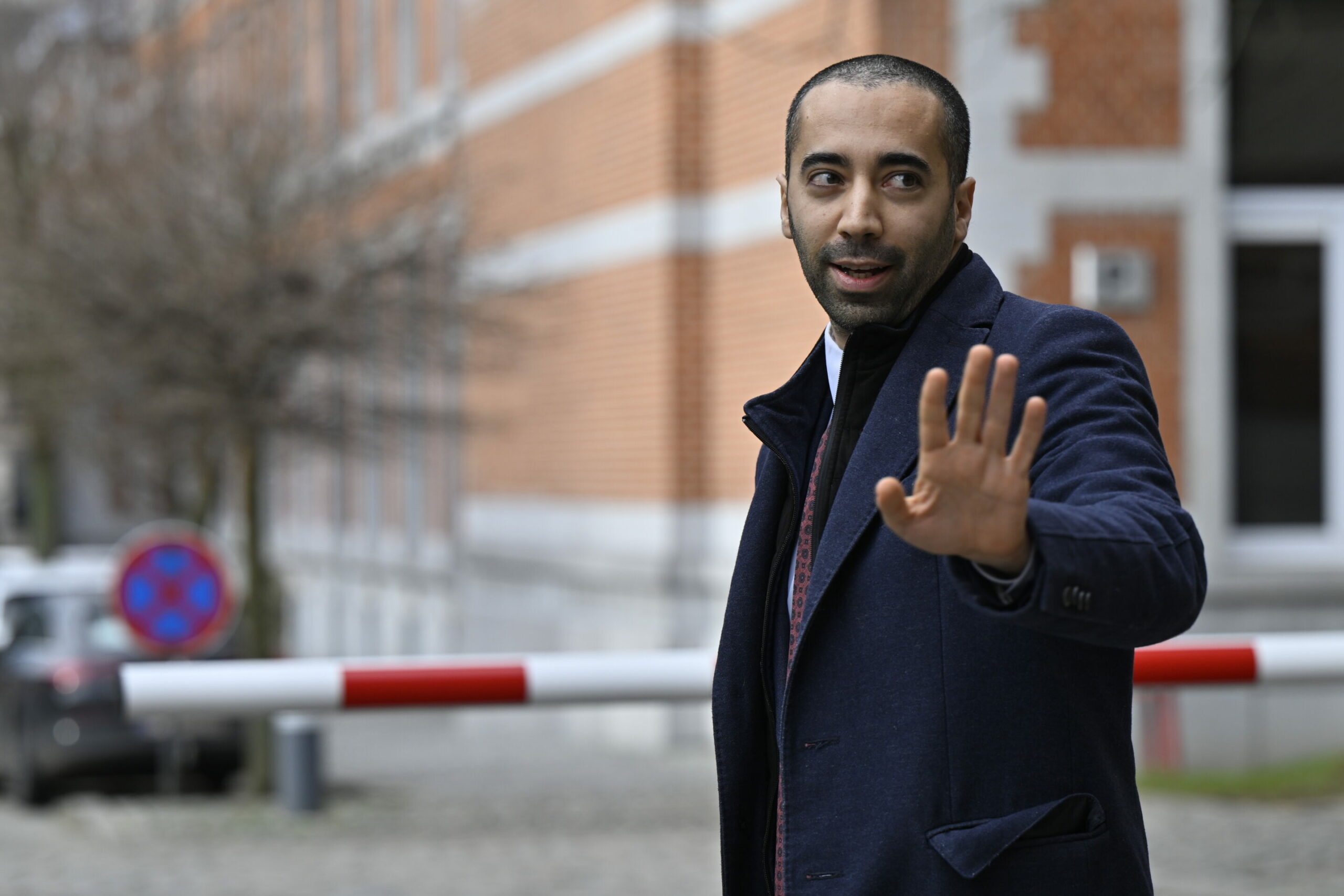
CD&V leader Sammy Mahdi. Credit: Belga
Vooruit party leader Conner Rousseau stressed that De Wever "is free to say what he likes in his own name, but on behalf of the government he cannot say that we now suddenly want to go and beg Putin for cheap energy."
"That has not been agreed upon within the government. Everyone knows that Putin is untrustworthy, that you cannot make deals with that man," he said.
Above all, Europe must seek to become independent of Russian gas, Rousseau added. "If we remain dependent, the future will become truly unaffordable for people."
Meanwhile, CD&V stated that buying more gas from Putin again will simply give Russia more money to continue its war in Ukraine. "Why on earth would he ever stop his war or come to the table to negotiate? You are simply fuelling Russian aggression even more."
Even after a possible peace deal in Ukraine, CD&V does not want to normalise relations with Russia, as De Wever suggested. "As Europe, we must not be dependent on Russia again. That is simply not wise."
Dialogue is not submission
For MP Meyrem Almaci of the opposition party Groen (Flemish greens), De Wever is showing "his most hypocritical side" with these comments. "De Wever cannot bring himself to condemn the reckless war waged by [US President Donald] Trump and [Israeli Prime Minister Benjamin] Netanyahu in Iran."
"Yet it caused oil and gas prices to skyrocket. And now Ukraine is being backed into a corner, in exchange for cheap Russian gas. Trump and Putin are winning, and ordinary citizens are paying the price, literally and figuratively," she said.
De Wever, however, seemingly believes that a deal with Russia is precisely what is needed to prevent ordinary citizens from paying the price.
As long as the war lasts, he considers Europe to be the biggest victim after Ukraine; Europe has largely swapped Russia for the US as its energy supplier, meaning the United States is getting rich off the higher prices while the EU has to finance the war in Ukraine on its own.
Meanwhile, China is benefiting from a constant supply of oil and gas from Moscow at heavily discounted rates because Russia can no longer sell its goods elsewhere due to the sanctions.
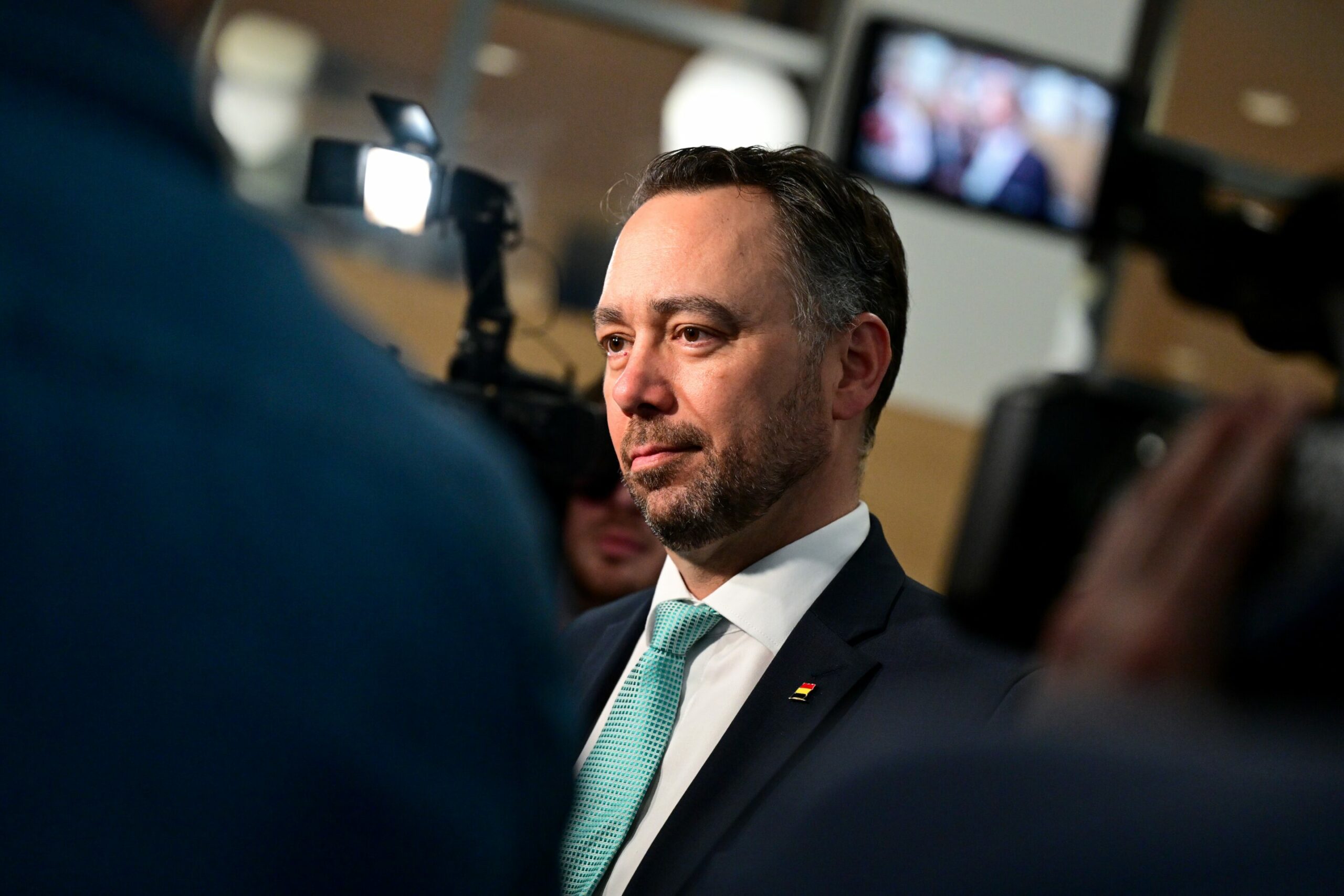
Foreign Affairs Maxime Prévot (Les Engagés). Credit: Belga/Dirk Waem
Still, the biggest rebuke came from Foreign Minister Maxime Prévot (Les Engagés). In an official statement sent to The Brussels Times, Prévot made clear that De Wever's remarks are damaging to Europe's position with regard to Russia.
He is particularly troubled by the fact that De Wever speaks in the interview of a "normalisation" of relations with Russia.
"Should we engage in dialogue with Russia? Yes. That is what diplomacy is: talking, including to those with whom you disagree. Dialogue does not mean submission, quite the opposite," Prévot said. "But dialogue is not the same as normalisation. And that is a crucial distinction."
Currently, Russia refuses to accept a European presence at the negotiating table and is sticking to its maximalist demands, according to Prévot. "As long as that is the case, talking about normalisation is a sign of weakness that undermines the European unity we need more than ever."
Door remains open
Still, Prévot added that he understands De Wever's intention. "No one wants a war without end. And our objective remains precisely to bring this war to an end. Our support for Ukraine remains unchanged. The prime minister has not said otherwise. Nor has he called for an easing of sanctions. Before any potential peace agreement, that is not on the table."
The Brussels Times has learned that Prévot's response was coordinated with the prime minister and his office, which referred to it as a "clarification" by Prévot.
Ahead of the European summit in Brussels this week, European Commissioner for Energy Dan Jørgensen on Monday stressed that the EU will not import "a single molecule" of energy from Russia in the future.
However, De Wever's comments were welcomed by Hungarian Foreign Minister Peter Szijjártó of Viktor Orbán's government.
On Monday, Prévot reassured his European counterparts that Belgium's position towards Ukraine is unchanged.
"Belgium and Europe stand with Ukraine in its fight for independence. Our support will not waver," he stressed. "The door to dialogue must remain open, but the normalisation of relations with Russia is not for tomorrow."
Last December, De Wever was accused of being a "friend of Russia" following his French-language speech at the Grandes Conférences Catholiques in Bozar. The remarks he made there were taken slightly out of context in the middle of the Euroclear negotiations.
The prime minister appears to be aware that his statement about a deal with Russia carries risks. "It gives the impression that you are betraying the Ukrainians," he said. "Nobody wants to be labelled that."
