
On the afternoon of 13 October last year, hundreds of people gathered at Florennes Air Base in Wallonia. Among them, Belgium’s King Philippe, Defence Minister Theo Francken (N-VA) and military commanders watched as three American F-35 fighter jets broke through the clouds above southern Belgium.
These planes were part of a long-promised delivery from the United States. In 2018, at a cost of €3.8 billion, Belgium opted to buy 34 US-made Lockheed Martin F-35 Lightning II jets to replace Belgium's ageing fleet of F-16s. Belgium has so far received 12 of these F-35s, eight of which are stationed at Luke Air Force Base in Arizona.
Given the choice between buying F-35s from Lockheed Martin and Rafale fighter jets from French company Dassault, the government of Charles Michel opted to go with the American firm, citing the F-35’s compatibility with NATO standards, its interoperability with NATO equipment and its advanced stealth capabilities.
Belgium's decision to buy American raised few eyebrows in Europe back in 2018, but the decision to purchase a further 11 F-35s from Lockheed Martin last year sparked widespread criticism. An article on French defence website Forum Militaire delivered a blistering attack on Belgium’s decision to “sign a cheque to Washington”.
“How can we justify the purchase of a closed American aircraft, designed outside any European logic? For many observers, it's a major paradox: Belgium is defending the rhetoric of a European defence, while reinforcing its dependence on NATO.”
In January, the decision to buy American also came under scrutiny in the Belgian parliament, where Prime Minister Bart De Wever (N-VA) responded by saying that Belgium has "no alternative" to buying F-35s, as these capabilities "simply do not exist in Europe." He also argued that Belgium spends about 7% of its military budget in the United States, arguing it is "very little".
Belgium races to restore its defence capabilities
As relations between the US and Europe have become increasingly fraught, many EU countries, including Belgium, have been pushing for autonomous European defence. Last year, Belgium increased its defence spending to 2% of gross domestic product (GDP), after years of falling short on NATO requirements set in 2006.
Belgium plans to invest 3.5% of its GDP in defence and 1.5% for general security-related investments under the country's new Military Programming Law designed to meet the NATO requirements set at the Hague summit in June 2025.
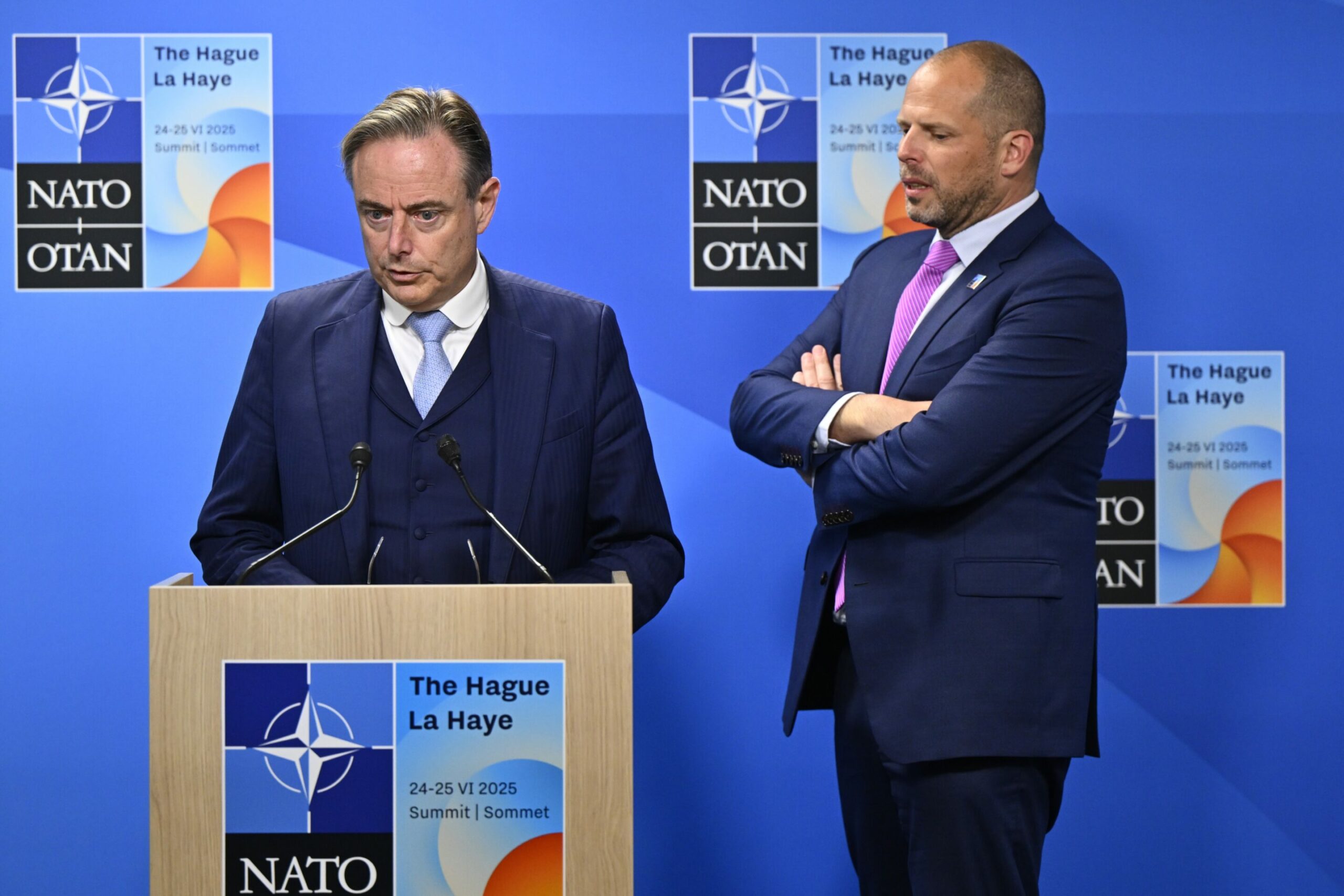
Prime Minister Bart De Wever and Minister of Defence Theo Francken hold a press conference at a NATO summit in June 2025. Credit: Eric Lalmand/Belga
'Buy European' stumbles on capability gaps
Speaking at the defence exhibition BEDEX in Brussels last week, Defence Minister Francken reaffirmed his stance on the need to invest in European defence integration and production to buy the same equipment in Europe and lower the costs. But he also said that strategic autonomy "does not mean that we need to push out the Americans, or the Canadians, or Turkish, or the people from Norway, or the UK".
According to Wannes Verstraete, a deterrence and arms control expert at the Egmont Institute, although the French defence establishment took offence at Belgium’s decision to buy F-35s over France’s Rafale fighter jets, the jets are not "a one-to-one" comparison.
"In the end, you just want to have the best capability for your soldiers to fight with," Verstraete told The Brussels Times. "Sometimes there is a good European alternative, but for some capabilities, such as the F-35, there is no European fifth-generation fighter."
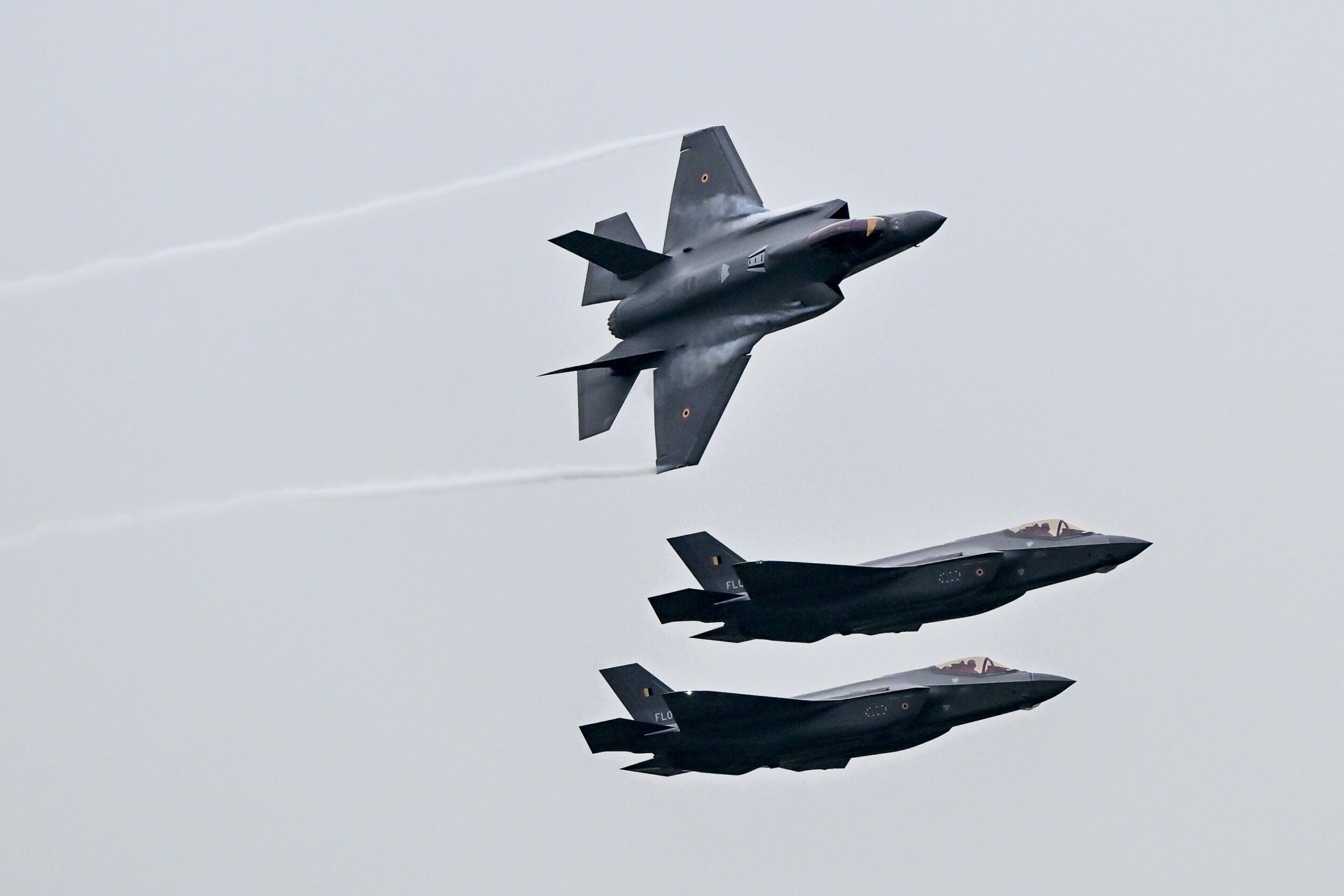
US-made Lockheed Martin F-35 Lightning II fighter jets at the Florennes military airbase in Belgium, on Monday, 13 October 2025. Credit: Belga / Dirk Waem
"There are two European programmes, FCAS [German, French, Spain] and GCAP [UK, Italy, Japan]. But these are already for sixth-generation fighters. So we are having a European gap in the fifth generation," Verstraete said.
While GCAP has been roughly advancing, FCAS has nearly collapsed. All the more, those programmes would be realised in 10 to 15 years, Verstraete explained. "[Europe] needs to have a solution now for the coming decade. And the F-35 is the only available option at the moment, right, for us Belgians, to have a fifth-generation fighter."
How much of its overall capabilities has Belgium purchased from the US?
In fact, most of Belgium’s defence spending over the past decade has remained within the EU. According to parliamentary records, between 2016 and 2024, Belgium spent €6.5 billion on 181 contracts with US-based companies – €4.9 billion of which went on the 34 F-35s.
In contrast, €20.1 billion went for contracts with EU-based producers, including €9.77 billion spent with Belgian companies across 3,176 contracts. Today, Belgium has 80 companies in the defence sector. In four to five years, Francken hopes to have at least 160.
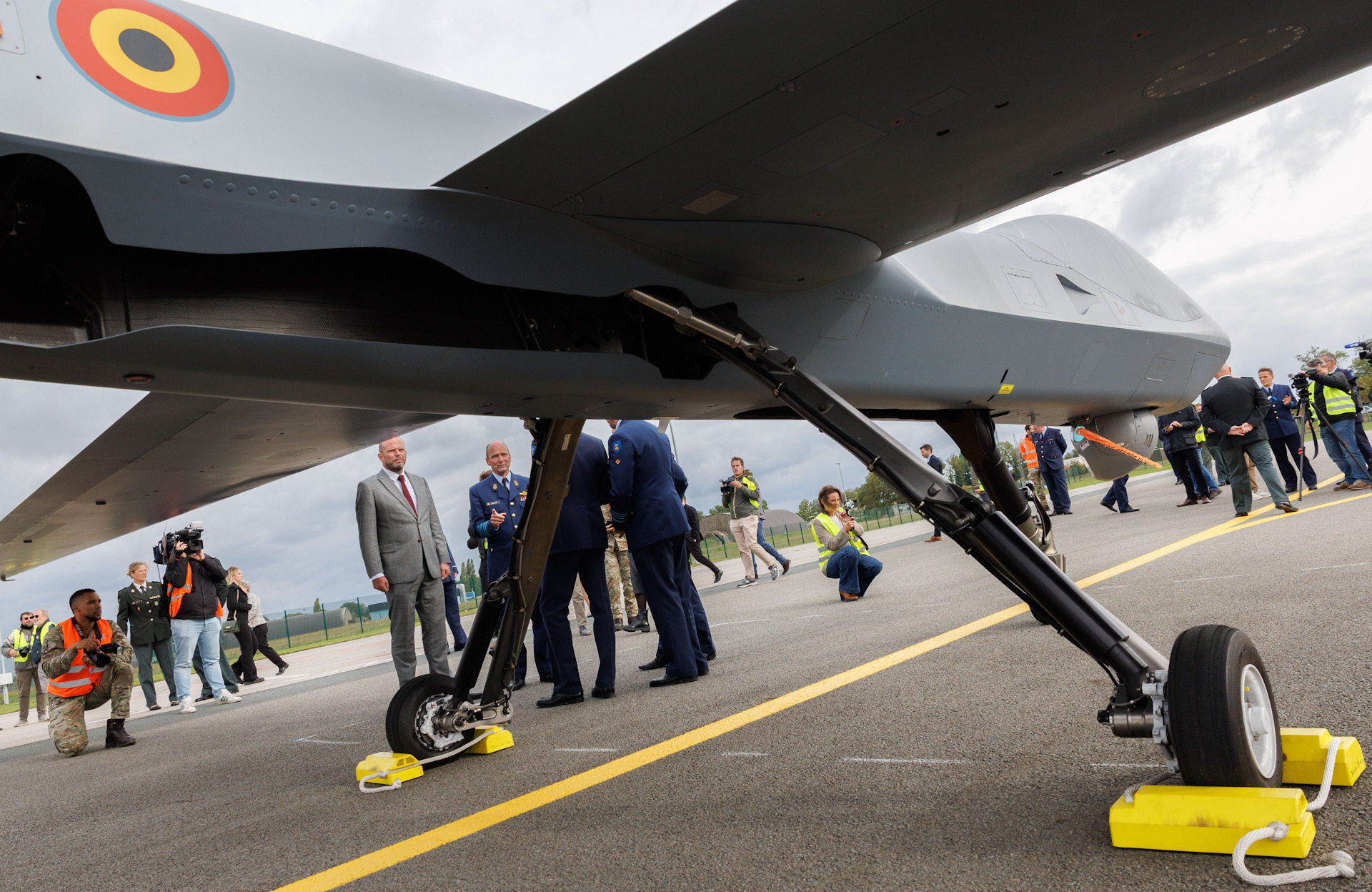
Minister of Defence and Foreign Trade Theo Francken and Chief of Defence Fraderik Vansina at the presentation of the American MQ-9B 'SkyGuardian' remotely piloted aircraft system at the Florennes military airbase, Tuesday 23 September 2025. Credit: Belga / Benoit Doppagne
Statistics from Swedish defence institute SIPRI show that between 2016 and 2025, Belgium’s US contracts included AIM-120 long-range air-to-air missiles, Mk-54 anti-submarine torpedoes, Mk-41 naval surface-to-air missile systems, and multiple types of engines and guided bombs.
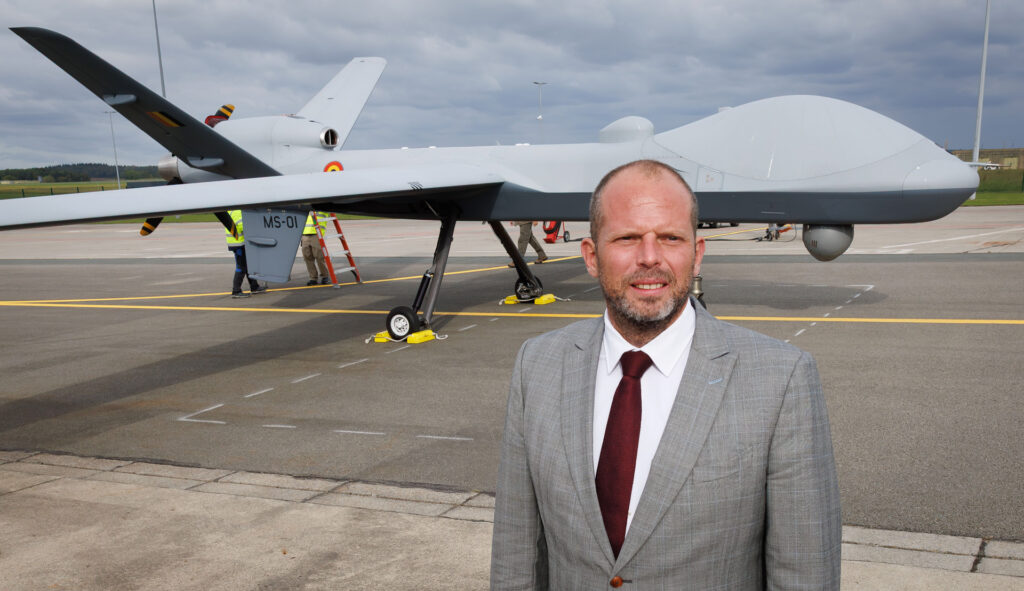
Belgium received 322 L-ATV armoured personnel carriers, contracted in 2020 – whose production line also included Belgian companies – and the first MQ-9B SkyGuardian drone system, four of which were contracted in 2020. Belgium also purchased five US-made Textron Sky Courier commercial aircraft for Special Operations Forces (SOF) at the end of 2025.
For 2026, Belgium has allocated €10.6 billion for defence, 41% of which will be funnelled into European defence contracts – with just 7% allocated to the US, almost all of which will cover the F-35s and their associated costs. The Ministry of Defence has not yet decided on the fate of the remaining 52%.
Belgium's defence investment plan includes major partnerships with France, mainly through land dimension integration, and the Netherlands, largely focused on maritime capabilities. Belgium's investments in short-range air defence will also involve French and German procurements.
"The major capabilities for our army are French-made in the context of the CaMo programme," said Verstraete. "Also, the minehunters are made in France by the Naval Group for the Navy. Our future frigates, together with the Netherlands, will be made by Damen."
"We are often focused on these big projects, such as the F-35s. It's true, it costs a lot. But if you look at the overall picture, it's more nuanced," he said.
At time of publication, the Belgian Ministry of Defence did not respond to The Brussels Times' request for comments.
