
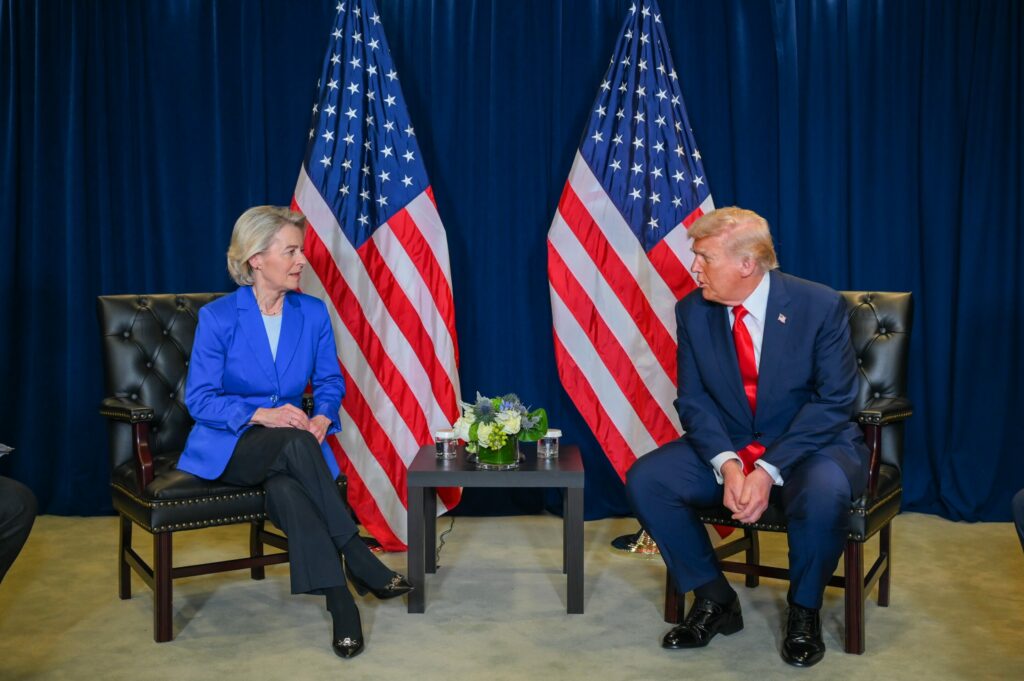
The EU-US trade deal is back on the table after Members of the European Parliament (MEPs) in the trade committee paved the way for its full approval on Thursday.
MEPs in the International Trade Committee adopted their position on two legislative proposals aiming to eliminate most tariffs on industrial and agricultural goods from the United States. It passed with 29 votes in favour, 9 against and one abstention.
The EU-US tariff deal, originally concluded last year by the European Commission and the US administration, has now been "strengthened", with better protections against Washington's hostile behaviour, according to MEPs who voted in favour.
MEPs had decided to suspend the approval of this deal following US President Donald Trump’s Greenland threats and the US Supreme Court ruling which stuck down Trump's 2025 sweeping tariffs, which included a 15% tariff on all EU goods exports.
'Firmness and fairness'
On Thursday, MEPs in the trade committee praised the "significant improvement" of the text, which rectifies the "unbalanced deal" agreed with European Commission President Ursula von der Leyen at Turnberry, the Trump-owned golf course in Scotland.
"Today we have reached a broad majority behind a strong text that aims to provide a dose of stability, fairness and firmness in our trade relationship with the United States," said the Parliament’s rapporteur for the file, German MEP Bernd Lange (S&D).
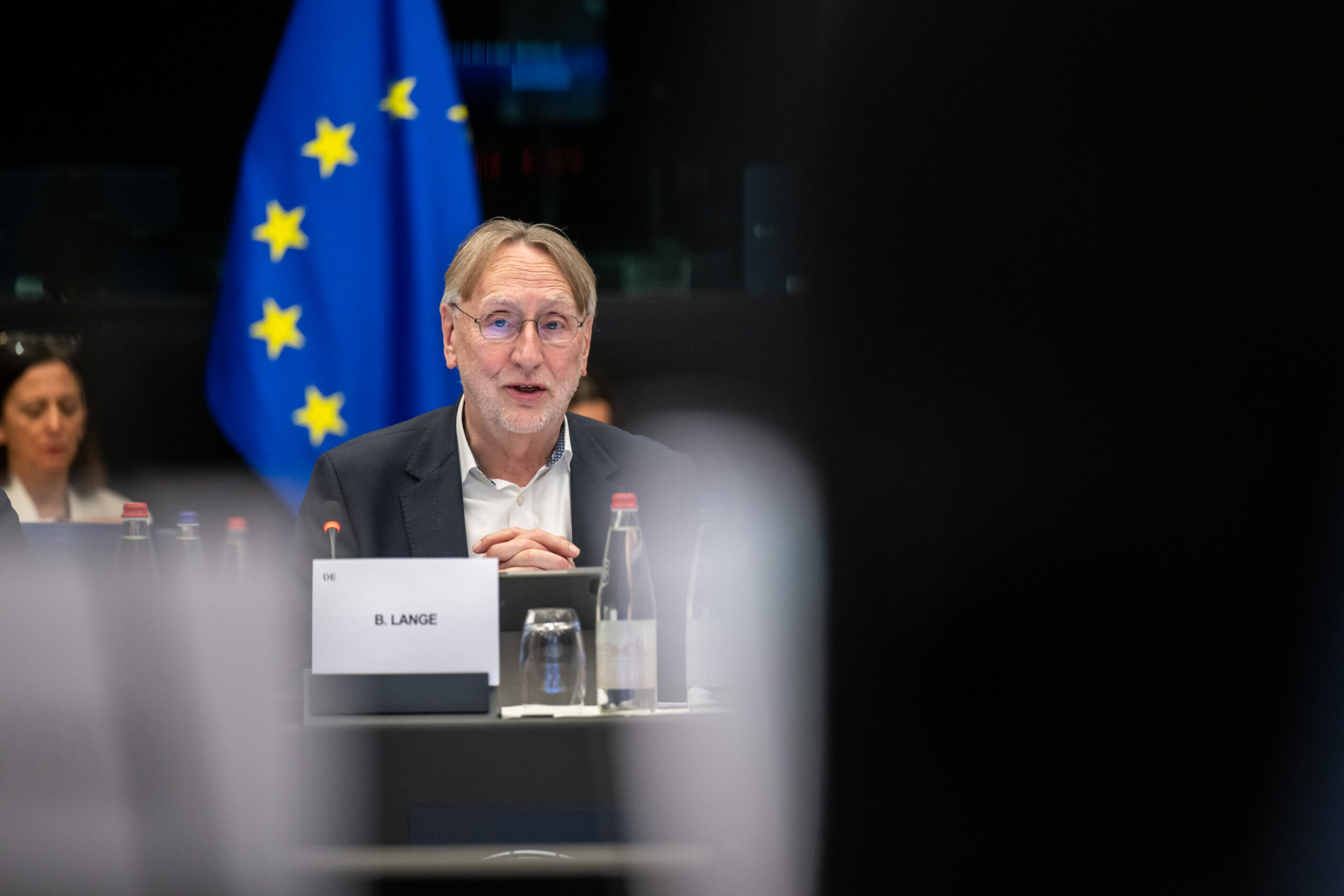
MEP Bernd Lange (S&D) at the Conference of Committee Chairs. Credit: EU
However, Lange stressed that the European Parliament "remains in the driving seat" and will have the final say on the implementation of the trade deal.
"We sent an unequivocal message to the US administration: we will not be taking any final decision without clarity," Lange added in a statement.
"And to be clear: this is not a blank cheque. The current US administration has too often surprised us with unfair announcements and unjustified threats – behaviour that should have no place among allies."
What has changed?
As part of the new protections, the Parliament has brought in a tougher suspension clause – activated in the event of threats or acts against the territorial integrity of EU Member States or because of their foreign policy decisions.
This comes after Trump recently threatened Spain with economic sanctions for not allowing the US military to use its military bases to attack Iran.
A separate "sunrise clause" is also now in the text, meaning that the tariff concessions on US products would only become effective when the tariff preferences granted to EU products in Turnberry are effectively respected. A "sunset clause" would also see the deal end in March 2028 unless the Parliament explicitly extends it.
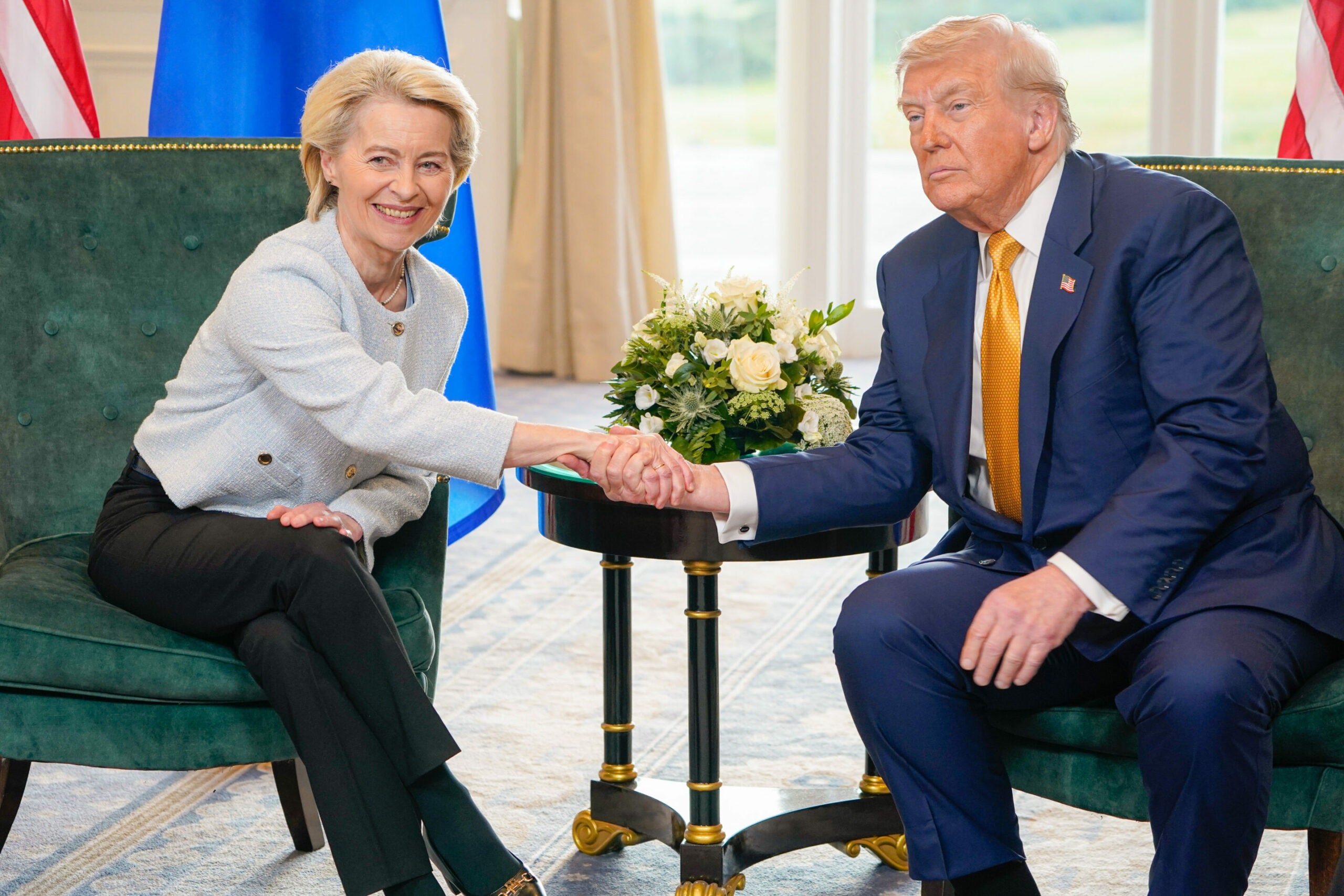
President of the European Commission Ursula von der Leyen, travels to Scotland, upon invitation of Donald Trump, President of the United States, to discuss transatlantic trade relations Sunday 28 July 2025. Credit: EU
New safeguards for the EU’s steel and aluminium sectors were also agreed by the trade committee.
This involves an automatic sub-sunset clause (valid for 6 months), giving the US six months to reduce tariffs on EU products containing steel or aluminium from 50% to a maximum of 15%. Failing this, the EU will automatically re-establish its tariffs on US exports.
'Incomprehensible' - Belgian MEP
So what changed the tide? A call this week between MEP Lange and US trade representative Jamieson Greer floated the idea that the Trump administration was planning to shorten the number of steel items that are subject to high US tariffs.
While it is unclear how rigid this offer was, Lange will travel to Washington on Friday to meet Greer.
And indeed, not everyone is convinced. Belgian MEP Saskia Bricmont (Greens/EFA, Ecolo) has said that she will vote against the deal, as it would be "unthinkable" to endorse the agreement as it currently stands.
"The text, as amended, is not bad itself; the problem is more the lack of predictability of Trump, and his multiple threats against Europe (and the world)," MEP Bricmont told The Brussels Times on Thursday, shortly after voting to reject the text.
"In this context, it would be incomprehensible to allow any privilege to the US. The EU needs guarantees from the US and to refuse any blackmail," she underlined.

MEP Saskia Bricmont giving a speech during French-speaking greens Ecolo, Sunday 26 May 2024 in Brussels. Credit: Belga
According to the Tournai-born Belgian MEP, the terms of the agreement were "already bad" in the summer, and several events since then "have confirmed" that the agreement would not bring relief for either geopolitical stability or economic predictability.
Trump is not a "reliable partner", according to Bricmont, who cited several reasons why she could not approve the text. Namely, the US Supreme Court ruling on the illegality of 2025 tariffs (and its announcement of new ones shortly after), as well as threats to annex Greenland and sanctioning Spain.
Easing Russian sanctions and starting the war in Iran, enacted in violation of international law and without the slightest coordination with Europeans and its energy consequences, are further reasons why she opposes the deal.
"I refuse to play along in the farce that it has been orchestrating for over a year. It is time for the EU to build a united front with the other countries threatened by Trump so that we can stand together against his tyranny."
The two legislative proposals will now be voted on by the whole Parliament at the next plenary session on 26 March, before negotiations on the final version of the legislation with EU governments can begin for a final version of the text.
