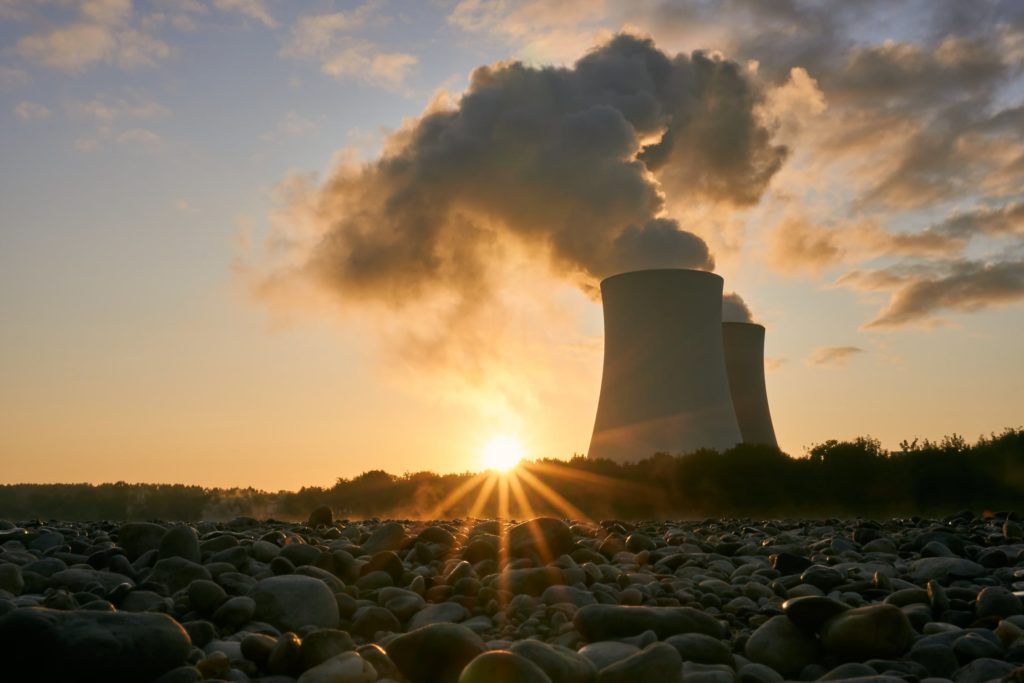
After years of reluctance about investing in nuclear energy, Belgium appears to have now made a complete U-turn: the Federal Government wants to play a leading role in what it calls the "energy of the future."
With most of Belgium's nuclear energy reactors old or shut down, the Federal Government is now taking a more active stance on making nuclear a large part of the country's energy mix.
"Belgium intends to play a leading role in the roll-out of nuclear energy of the future," Federal Energy Minister Mathieu Bihet (MR) told The Brussels Times on Thursday.
Earlier this week, Flemish Minister-President Matthias Diependaele (N-VA) confirmed that the Flemish Government is looking for four sites to build a new type of nuclear reactor: an SMR, or Small Modular Reactor.
SMRs?
As the name suggests, these reactors are smaller than conventional nuclear reactors (such as those in Doel or Tihange). They would be built from separate modules – components produced in large numbers in factories – and assembled later, IKEA-style.
According to Bihet, SMRs could provide significant leverage in the long term, thanks in part to their flexibility and their potential to be deployed close to industrial clusters.
"Their mass production should also help to reduce production costs," he said.
Now, the Federal Government has set up a specific working group on SMRs to examine the practical preconditions, such as site selection and licensing procedures – as part of the inter-federal MAKE 2025-2030 plan.
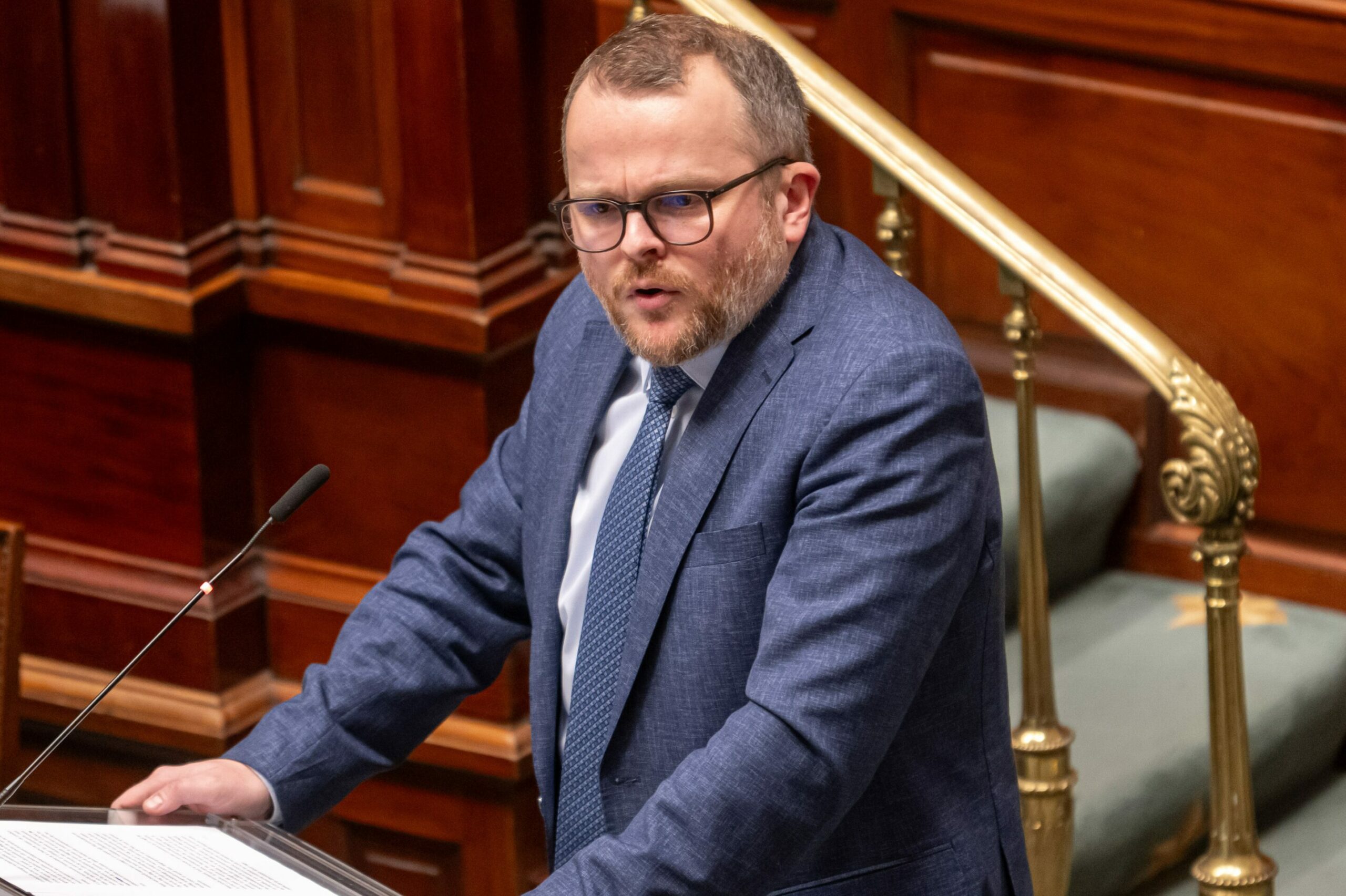
Minister of Energy Mathieu Bihet (MR) in the Federal Parliament in Brussels, Thursday, 15 January 2026. Belga / Jonas Roosens
In February, Bihet also announced a partnership between the European EAGLES consortium (comprising partners Ansaldo Nucleare, ENEA, RATEN and SCK CEN) and the French company Newcleo, to develop and commercialise lead-cooled SMRs. By 2034, a low-power reactor is due to be built at the site of the Belgian Nuclear Research Centre (SCK CEN).
While nuclear energy is a federal competence, the allocation of sites and the licensing procedures fall within the regional governments' responsibilities.
"The initiatives being taken in Flanders and Wallonia fit within this logic of complementarity between the different levels of government," Bihet said. He added that everything will be done "in the spirit of cooperation" between the regions.
"In the coming months, we want to flesh out these ideas, so Belgium remains at the forefront of the development of this innovative technology," he stressed.
Four locations
The European Commission is encouraging the deployment of SMRs because, in their view, they "offer added value in integrated energy systems by providing low-carbon electricity and heat for a wide range of industrial applications."
At the moment, however, SMRs are still purely theoretical; only a handful of projects have been launched to actually build them. In Belgium, the project is currently in the study phase: four potential sites for SMRs in Flanders are being identified.
This happens by mapping out where sufficient space is available, where large industrial consumers (that can use electricity or heat) are located nearby, where cooling water and high-voltage infrastructure are present, whether the spatial and environmental conditions are feasible, and how potential sites fit in with existing port and industrial clusters.
The aim is to draw up an exploratory shortlist of (at least) four realistic locations. In the next phase, these will be analysed in greater depth later.
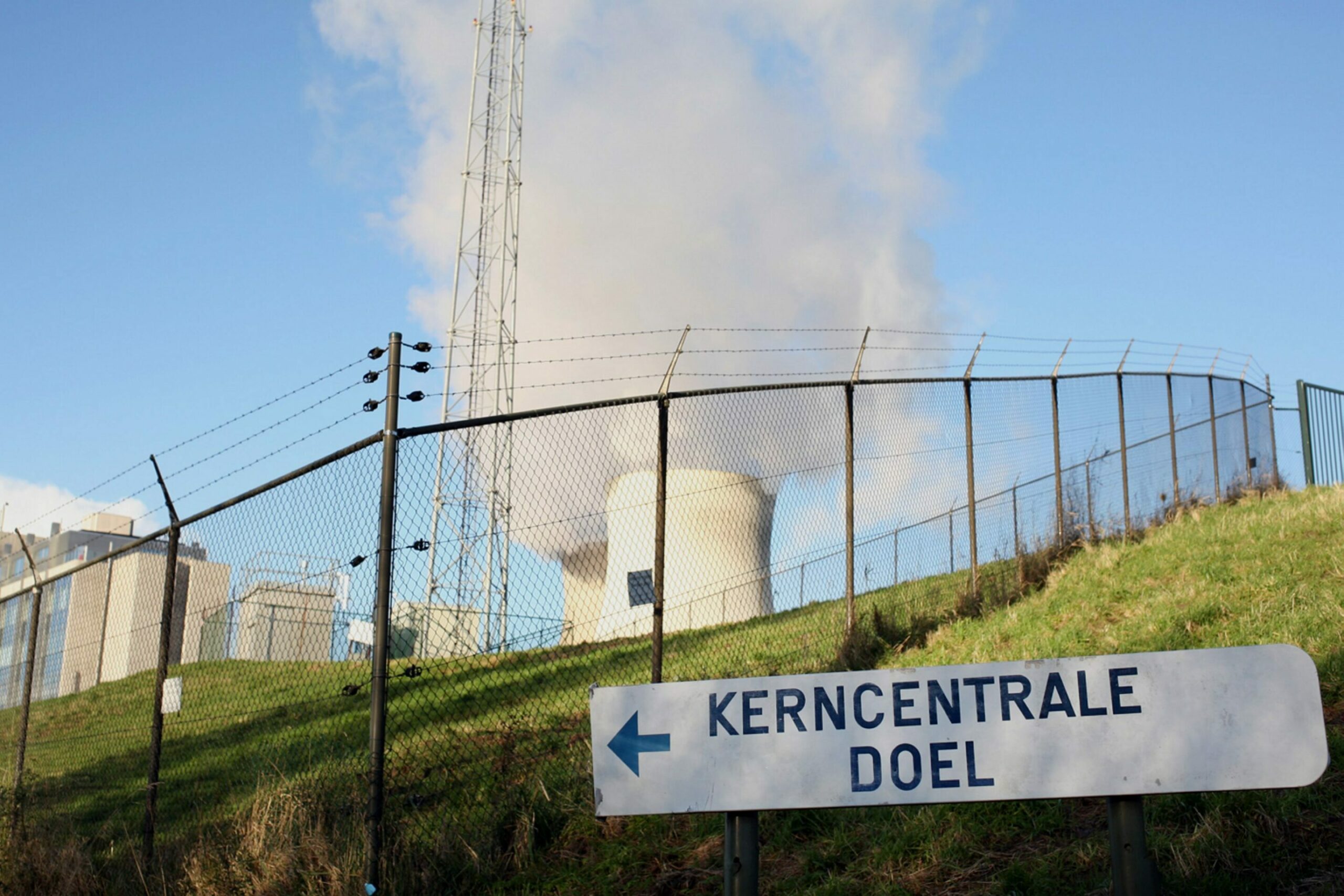
Doel nuclear power station, Tuesday 11 December 2007. Credit: Belga
At the same time, a study will be conducted into an initial financial model. Questions such as how much this entire project will cost, how it can be made profitable, and who is interested in co-investing are all questions that need answering.
Even though SMRs are much more manageable to finance than large conventional power stations, they still cost around €1 billion per small reactor, energy specialist Joannes Laveyne (UGent) told Het Nieuwsblad.
"We will see whether companies in Belgium are queuing up to finance that," Laveyne said. "At some point, some form of government support will probably also be needed, and then it will become clear how serious the government is about supporting nuclear energy."
Meanwhile, Diependaele explained that the more SMRs are built, the cheaper it becomes; the second SMR, for example, is 20% cheaper than the first one, according to his calculations.
Geopolitical dependence
The war in Iran demonstrates that Belgium urgently needs alternative, stable energy sources, he stressed. "The European Commission also recently announced that it wants to have the first operational SMRs in Europe by 2030."
"The geopolitical dependence on fossil fuels, which is causing our prices – including electricity prices – to rise sharply, is definitely making certain political actors yearn for more nuclear energy as a kind of insurance," UGent's Laveyne said. "And there is certainly something to be said for that."
At the nuclear energy summit in Paris earlier this month, European Commission President Ursula von der Leyen called the decision to phase out nuclear energy a "strategic mistake for Europe."
In 1990, around a third of Europe's electricity came from nuclear energy; now, that share has fallen to around 15%. Now, von der Leyen said that a combination of renewable energy and nuclear energy would be "the ideal mix" for future electricity supply.
Last year, the Commission launched an industrial alliance for small modular reactors, while also relaxing state aid rules to expand funding for nuclear fission and fissile materials.
