"Do I trust a party which in its statutes says it wants the separation of Belgium? The answer is no."
These are the words of Charles De Groot, a young, politically active Belgian who stands out in the current scene as someone who advocates for greater Belgian unity.
In 2024, he co-founded a pan-Belgian party L’Unie, a youth-oriented movement that has a radical idea for contemporary Belgium: get rid of regional governments to give the Federal Government more power.
While the party is still in its early stages, De Groot was voted the youngest councillor in Overijse, Flemish Brabant, at the last elections. He wrote a book on Belgian unity aged just 23, and last month launched a bilingual podcast asking Belgian figures the question: What is Belgium for you?
But his Belgium, the one he dreams of, seems distant today. Flemish nationalism has gripped Flanders: In 2024, roughly 46-47% of the Flemish vote share was taken by the right-wing N-VA and the far-right Vlaams Belang.
Today, a key figure in the Flemish nationalist movement, Prime Minister Bart De Wever, leads the country with an aggressive economic reform agenda, which some argue is necessary for the country to survive, while others say the Belgian state is being gutted irreparably.
Last week, Flemish nationalists, including N-VA and Vlaams Belang politicians, gathered at the Flemish National Song Festival, where calls to give Flanders greater autonomy – via another state reform – were renewed while also lamenting De Wever’s inaction on this front.
Institutional lasagna
For De Groot, this is ironic. He argues that it is, in fact, regional governments which bloat Belgium’s budget deficit with unnecessary and wasteful spending.
But for this, he blames the other coalition parties, such as MR and Les Engagés, for not having the courage to tackle "the institutional lasagna" of Belgium.
"If these parties had a backbone, they would fight to get rid of the regional governments and simplify the institutions so that the money could go directly to people, education, roads and health instead of being lost in the lasagna," De Groot tells The Brussels Times.
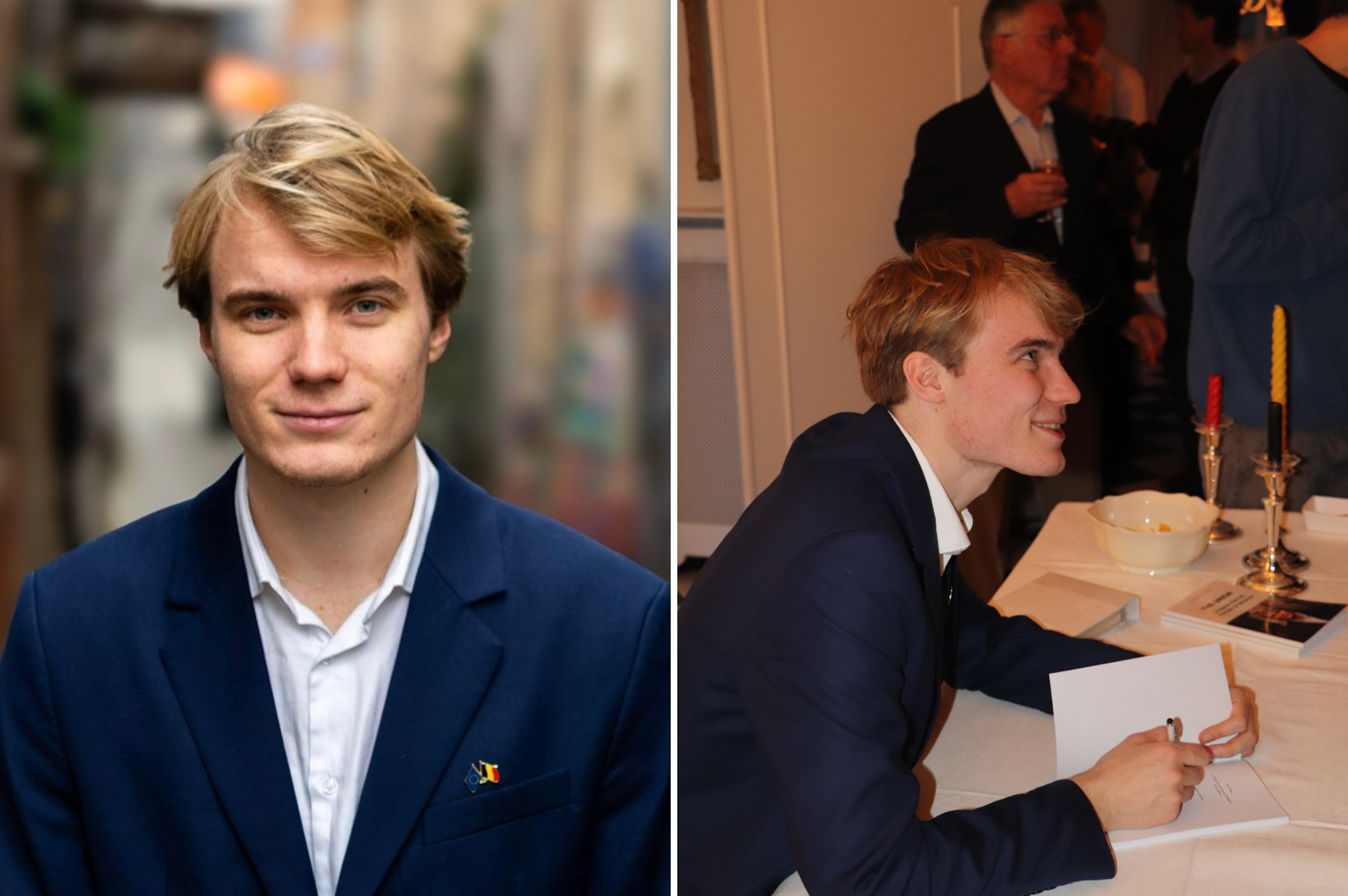
Charles de Groot, founder of L'Unie party and municipal councillor in Flemish Brabant. Right, at the launch of his book. Credit: Antoine Deutsch
"However, I fear that these parties have too many politicians living off the regional governments. Hence, system change is still waiting," he continues.
This would, of course, prove difficult to sell to a Flanders that fought hard for linguistic representation inside the Belgian system, culminating in the recognition of Dutch in 1870 for administration, the language border in the 1960s and the formal creation of regions in the 1970s.
Yet De Groot appears to be calling for a modern, federalised system which prioritises bilingualism and shared culture, reversing the division caused by fragmented regionalism.
Language discrimination
Growing up bilingual on the Belgian language border has shaped his experience and vision. As someone who was taught in both languages at schools in Tervuren and in Etterbeek, he was a victim of discrimination from both Dutch-speakers and French-speakers.
On one occasion, he was grabbed by the ear by a Flemish teacher for speaking French to his unwell mother on the phone. Years later, he was also called "sale Flamand" [dirty Fleming] by a French-speaking teacher.
"I do not blame the teachers, I blame a culture that has accepted this type of behaviour. I can say this because it is my story," De Groot underlines when explaining why Belgian unity is so important to him.
In Belgium, he sees a trend to further disunite the country and its people, which he strongly opposes. "Being the son of bilingual parents, I have always seen multilingualism as Belgium’s greatest strength. However, I have been told it is a weakness from an early age."
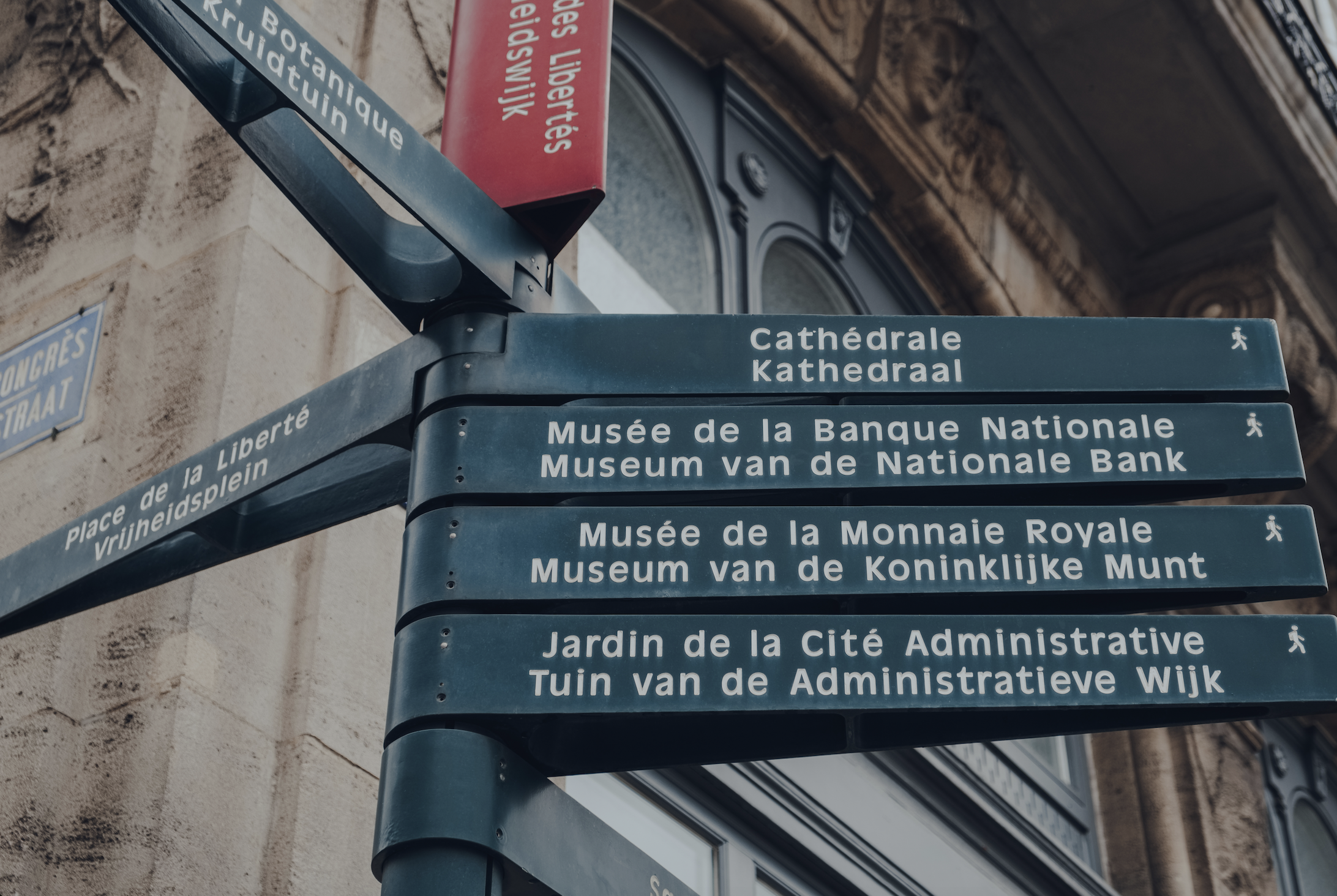
Bilingual signs in Brussels
During the financial crisis, De Groot’s family were forced to leave Belgium and relocate to Canada. It was here that a young Charles witnessed the power of bilingualism and integration firsthand, as he learnt English on top of his native French and Dutch.
Industrial powerhouse
But beyond language, a shared history and culture is what unites Belgians today. Emphasising this can bridge gaps caused by divisive regionalist politics, he stresses.
"For over 500 years, towns in West and East Flanders ruled half of the trade of Europe. Think of the beautiful cities of Bruges and Ghent. Then, cities like Liège and Namur became economic engines when the Meuse river industrialised."
Belgium was the first country in mainland Europe to industrialise in the 19th century, driven by the adoption of steam engines (including rail travel), coal and steel production in Wallonia, and the textile trade around Ghent.
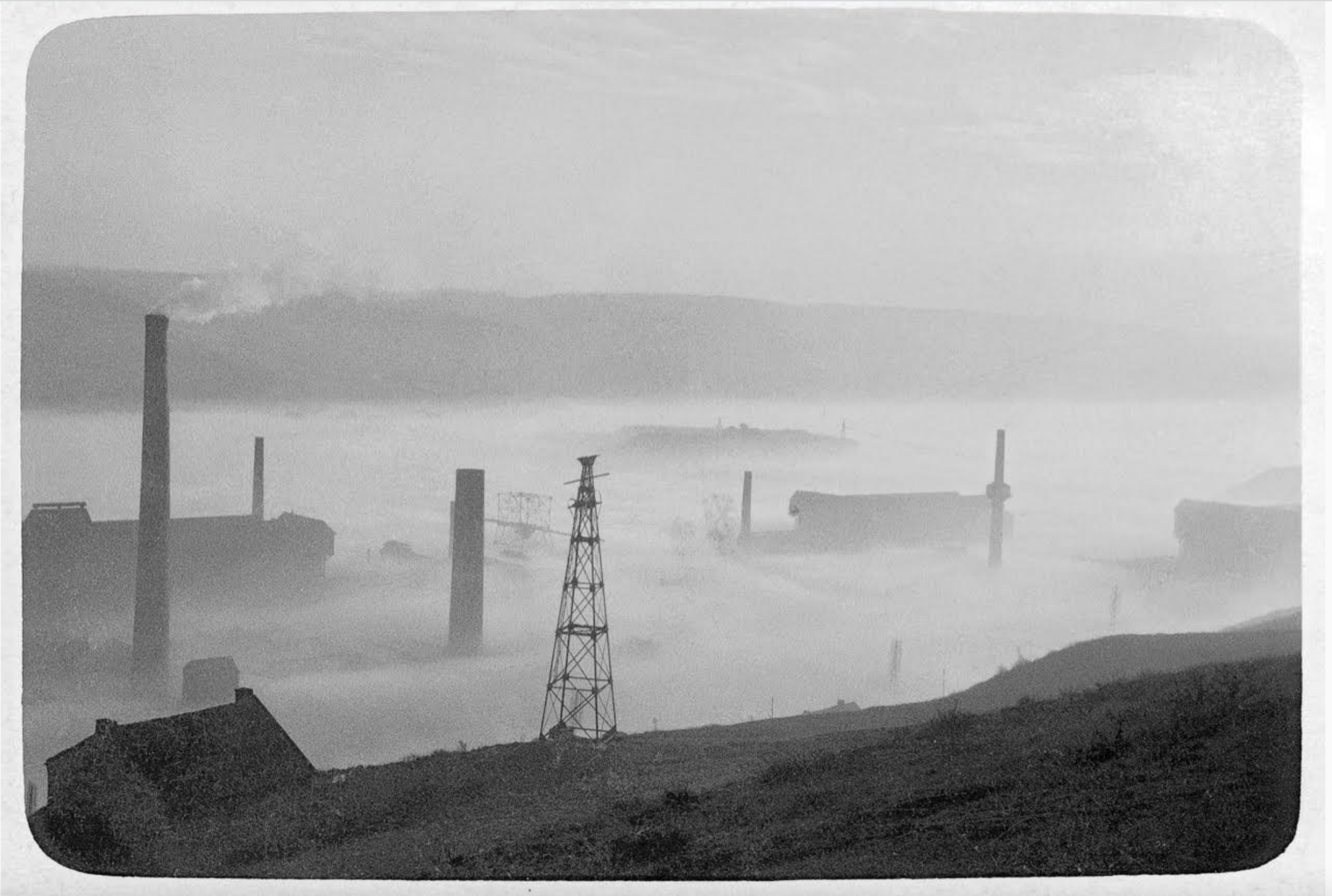
Fog in the industrialised Meuse Valley circa 1930. Credit: Albert Humblet collection.
Belgium’s rapid industrialisation coincided with the country’s revolution in 1830 and subsequent declaration of independence. By 1914, it was considered one of the most densely industrialised countries in Europe.
"We often forget that Belgium is in fact an economic laboratory superpower, not despite but because of our distinct culture," De Groot explains. "This country was the first in mainland Europe to industrialise and inspired other countries to follow suit."
Is Flanders lost forever?
Today, Belgium faces an increasingly fragmented political landscape, enhanced by calls for greater regional autonomy driven by Flemish politics, which sees the country's economic and linguistic divergences as insurmountable.
Prime Minister De Wever has even advocated for undoing the Belgian revolution and bringing back a reunification with the Netherlands, illustrating a split among Flemish nationalists between independantists and people who want a "Greater Netherlands".
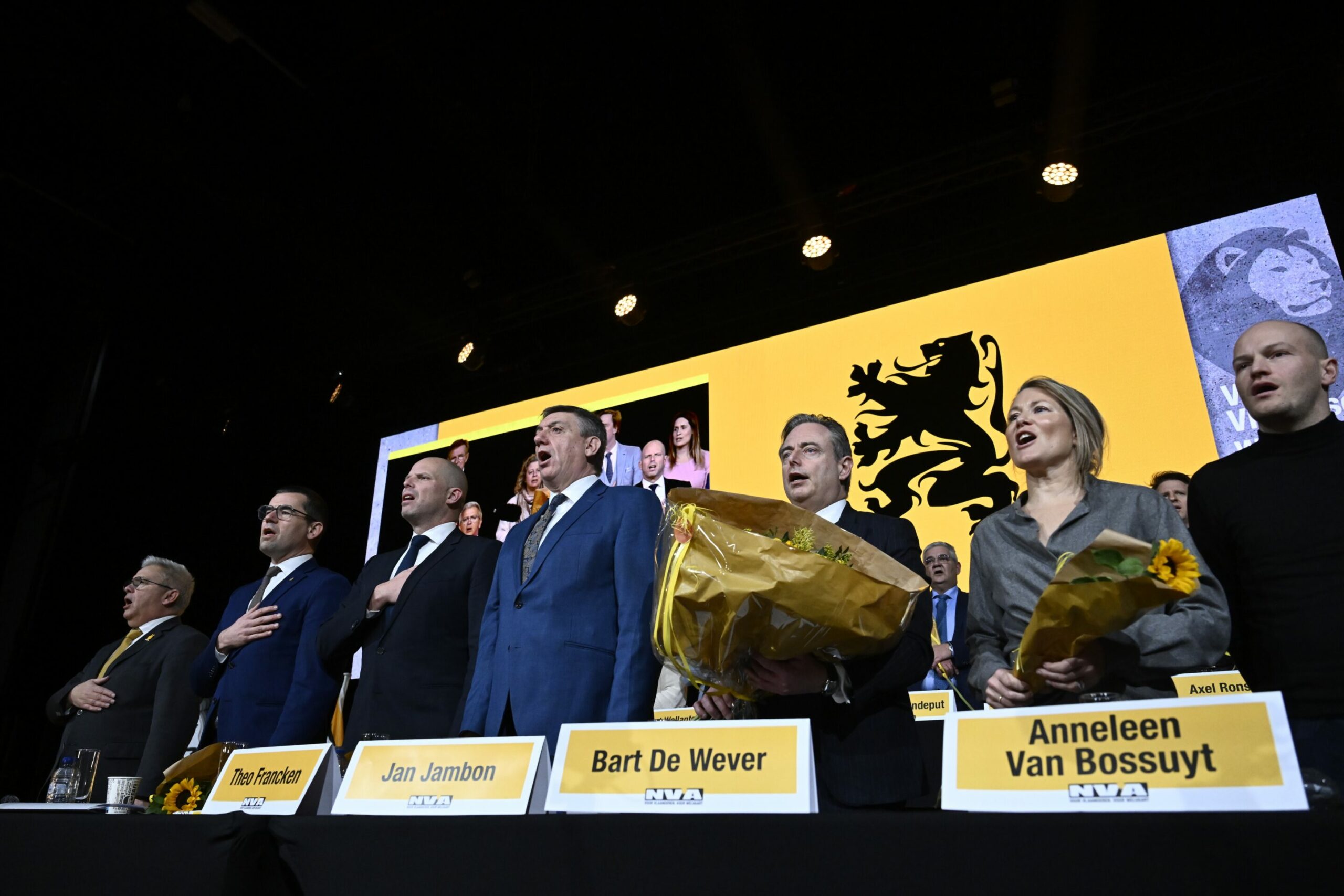
Prime Minister De Wever at the Flemish nationalist party N-VA regarding the participation in the new Federal Government, Sunday 02 February 2025 in Antwerp. Credit: Belga
De Wever made it clear that he was speaking of his personal conviction and not relaying the official position of the government, but it is extremely unusual to have a Prime Minister in favour of splitting his country. While he has maintained his focus on economic reforms, and is polling well across the country, L'Unie's leader is not convinced.
"You have to believe in Belgium to be able to make Belgium’s economy grow," De Groot says. "This Federal Government has many priorities, but 'growth' does not seem to be one of them."
He says Belgium is lucky to have a huge chemical industry, the port of Antwerp, many pharmaceutical companies and a fast-developing tech sector.
"Yet, in the media, we only see bickering politicians and tinkering around the edges. My heart also breaks for the increasing number of homeless people in our cities, most notably in Brussels, Europe's capital." The spread of the use of drugs, especially prevalent in the small forgotten Belgian towns, like where he lives, is also an increasing emergency.
Netherlands v Belgium
Despite these political problems, De Groot does not consider himself left-wing or right-wing. "Two weeks ago, some people approached me while I was campaigning to ask me that same question: I told them I believe in unifying Belgium."
He uses the example of Belgium and the Netherlands having almost equal GDP per capita in 1970, prior to the decision to create a regional government and pursue the political separation of Belgians.
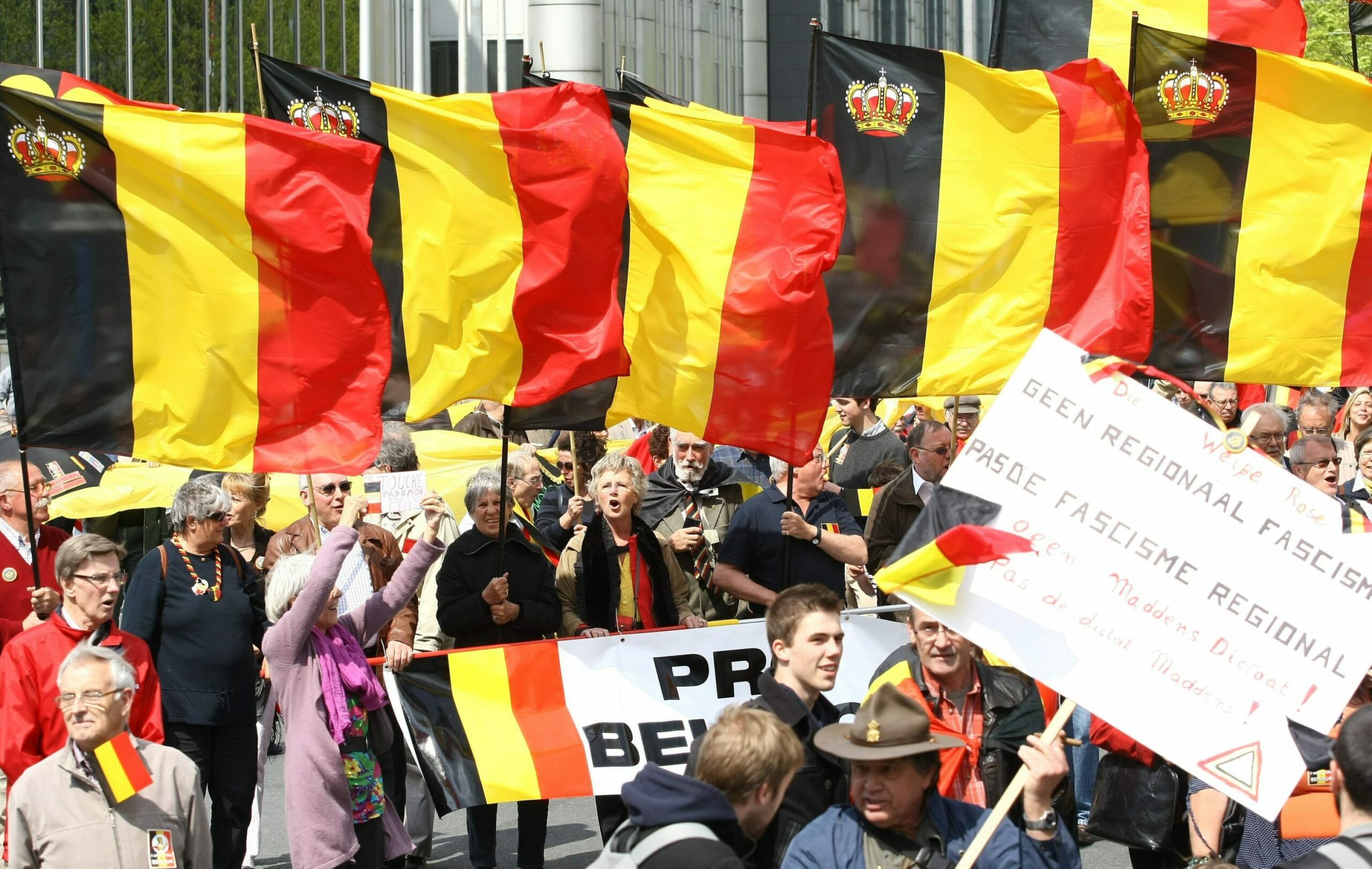
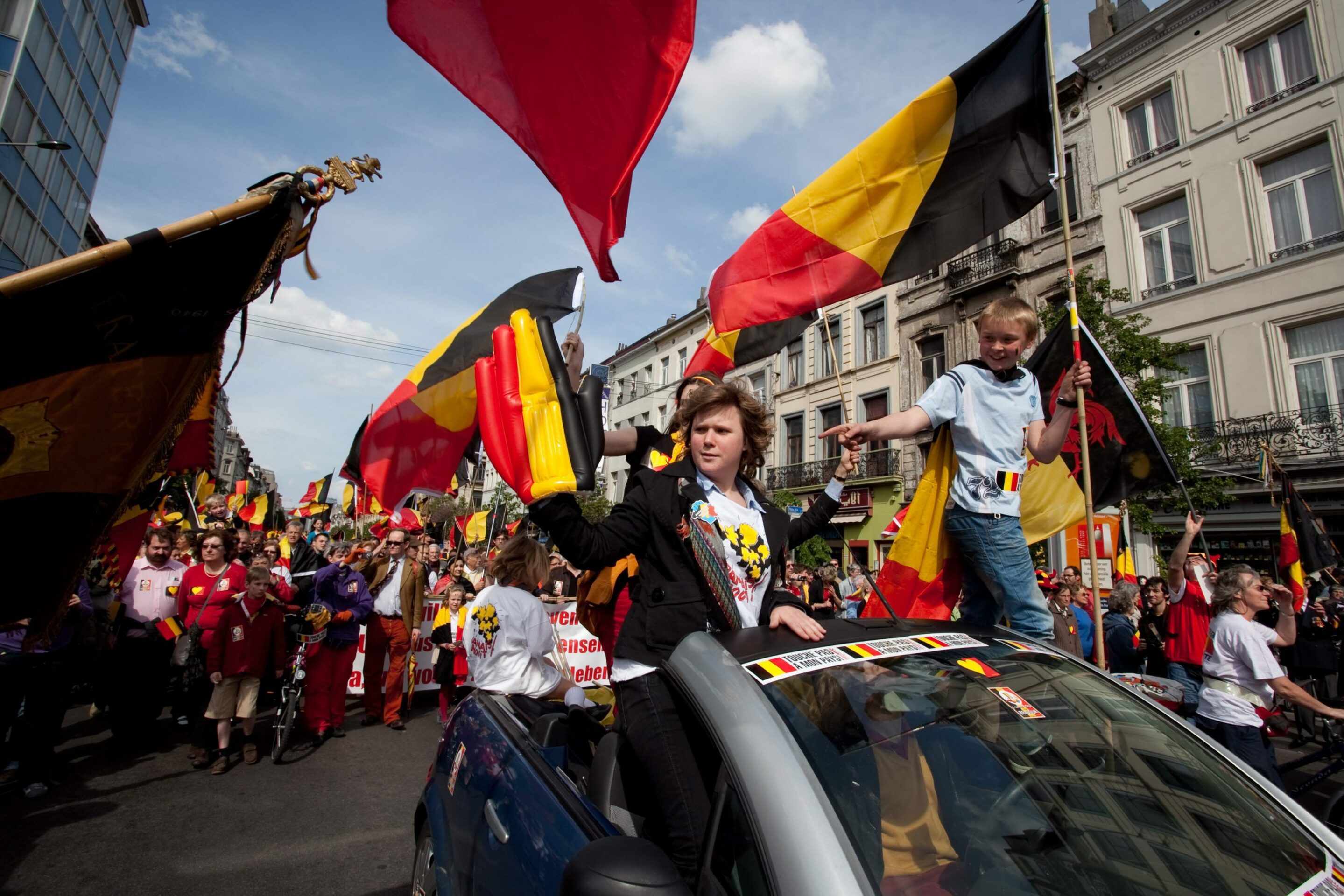
Illustration picture shows people waving Belgian flags during a 'Protest march for the unity of Belgium and for efficient politics', in the centre of Brussels, Sunday 16 May 2010. Credit: Belga
De Groot argues that this is due to regionalisation, which has cost the Belgian state and made it much poorer than the Netherlands. Of course, there were also other historical factors at play, such as the 1970s oil crises and the rapid decline of Wallonia's industries. Yet studies appear to support De Groot's notion.
Regionalisation was found to have helped Flanders overtake Wallonia economically, while bypassing the shocks of the region's slow industrial decline – boosting inequality. The regional structures themselves are also costly affairs, accounting for nearly 20% of public debt.
As examples of why the fragmentation is a problem on the ground, De Groot references the farcical situation of young Belgians not being spoken to in their own languages at the hospital or on the train because of the risk of being given fines.
Last year, a Belgian train conductor greeted passengers with "goeiedag, bonjour" on a train in the Flemish town of Vilvoorde – just minutes outside of Brussels but technically over the language border in the Dutch-speaking Flemish region. Not only did someone file a complaint, but the complaint was upheld by an official committee.
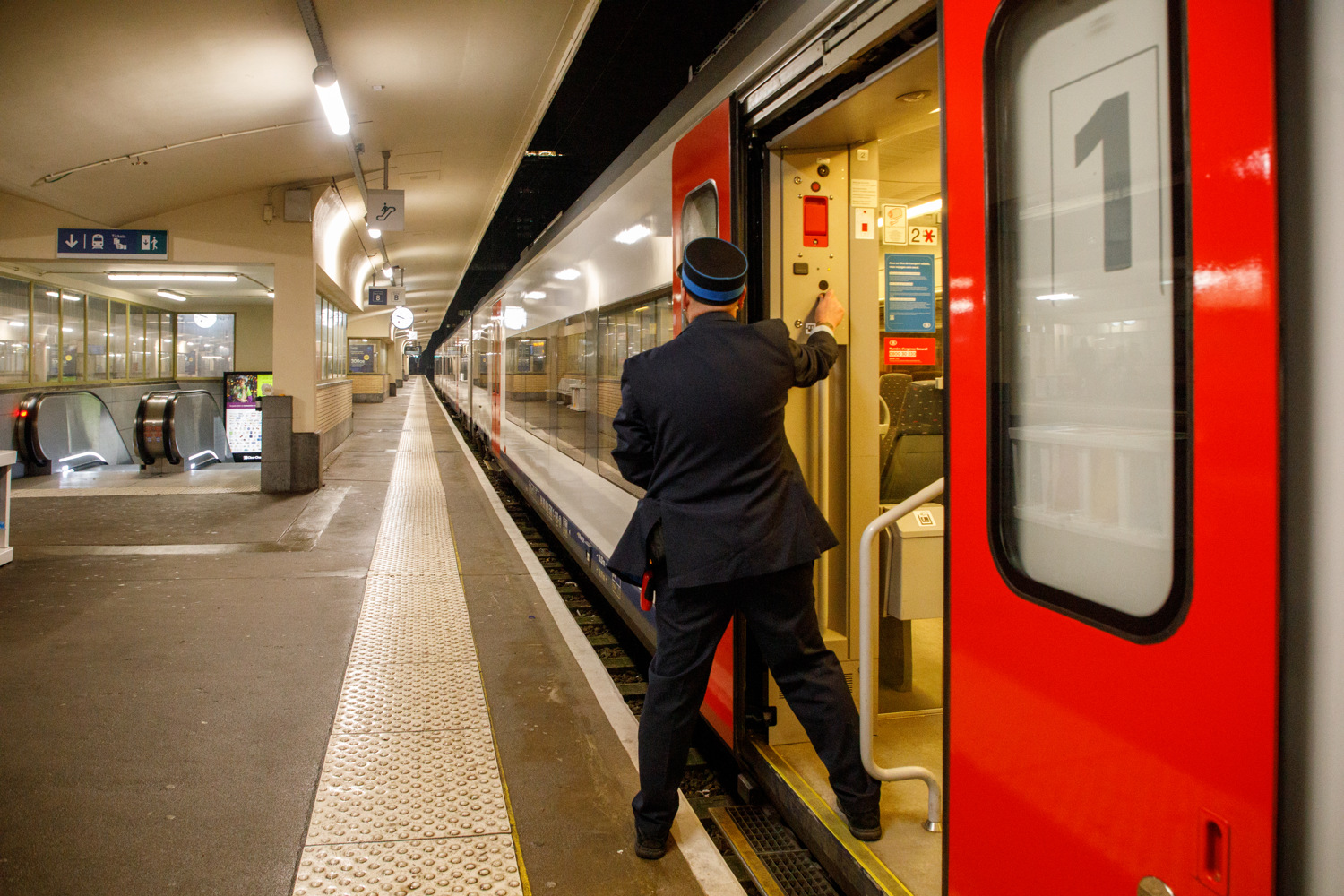
Illustrative image of a train conductor on a train. Credit: Belga/Hatim Kaghat
For pro-Belgians, these situations can show the dysfunctional nature of the country’s current system, which also impacts the national economy. N-VA’s ultimate goal has historically been confederalism, which keeps Belgium united on paper but has three regions acting autonomously.
While this is not possible with the current coalition government’s seven-party formation, De Wever’s restructuring agenda does not completely close the door on it either.
Voices like De Groot are rarely heard in contemporary Flanders, which sees greater fragmentation of the Belgian state as the only political way forward. This may also be due to the absence of figures who are making the case for Belgian unity – just a few years shy of the country's 200th birthday.
"I actually believe that the unity message that people like me represent will be more popular with Dutch-speaking Belgians since they have for their entire lives only heard that Belgium should be split," De Groot says.
'The only thing that can beat political separatism is bringing people together and speaking loud and clear to those Belgians who feel forgotten about the promise of unity."
