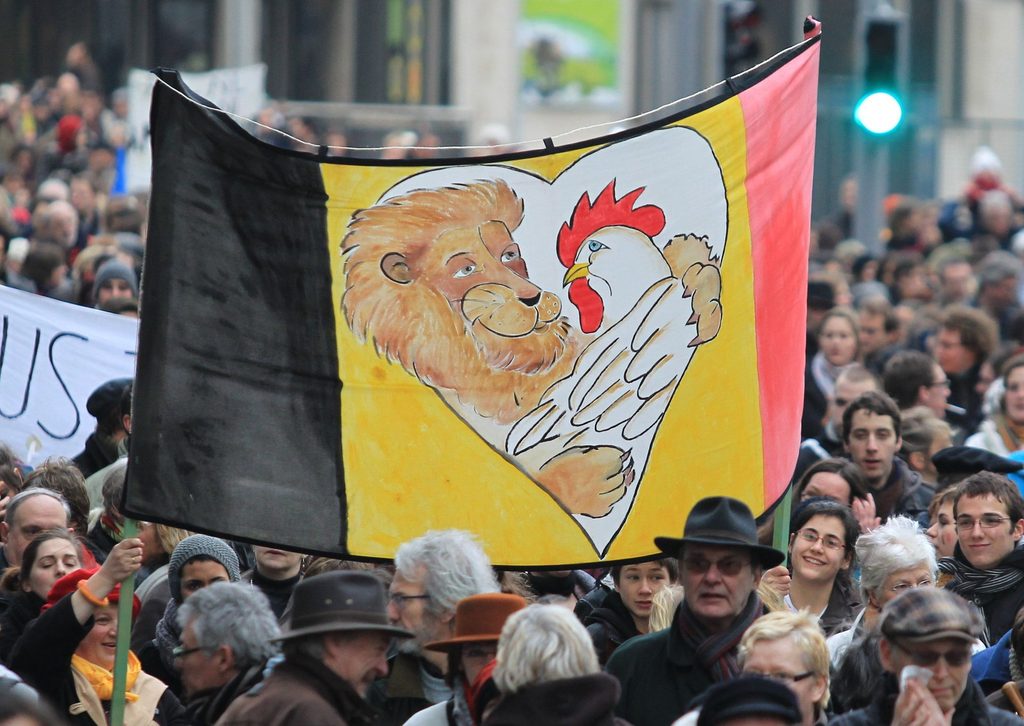
Flanders is often called a right-wing region, while Walloon attitudes skew much more to the left.
This perception has lived in Belgium for decades – often with the starkly contrasting election results to prove it. Beyond the surface, however, the stereotypes might not be true.
In his research 'Two worlds, one nation? Comparing the political spaces of Flanders and Francophone Belgium', Daan Delespaul, a political sociologist and researcher at KU Leuven, took a look beyond the surface.
"Belgium has one political system with the same political rules, the same electoral threshold and the same policies for party financing. And yet, Flanders and Francophone Belgium have two different party systems, with vastly different electoral results," he told The Brussels Times.
To find the answer, Delespaul looked at the regions' historical backgrounds – hoping to discover why these two communities drifted away from each other.
"My main idea was that, given that Flanders has a far-right party and a party system that had changed more profoundly than in the Francophone part of the country, it must be that Flemish voters had changed while the French-speakers remained the same," he said.
Unexpected common ground
Interestingly, he did not find any evolution of political attitudes over time, nor did he find a lot of differences between Flanders and Wallonia. From gender equality to immigration, attitudes remain surprisingly similar on both sides of the linguistic border.
"If we look at cultural attitudes regarding how society should be organised, we see very few differences between Flemish and Francophone voters," he stressed.
What's more, taking into account the whole reservoir of characteristics that generally define a far-right vote (a lower education level, a working-class background, being critical towards immigration), Delespaul found that the percentage of voters in Francophone Belgium who would be susceptible is actually larger than in Flanders.
The differences are more apparent in the economic sphere, although they remain nuanced. "While French-speaking Belgians tend to lean slightly more to the left than their Flemish counterparts, there is also strong support for egalitarianism and the welfare state in Flanders."
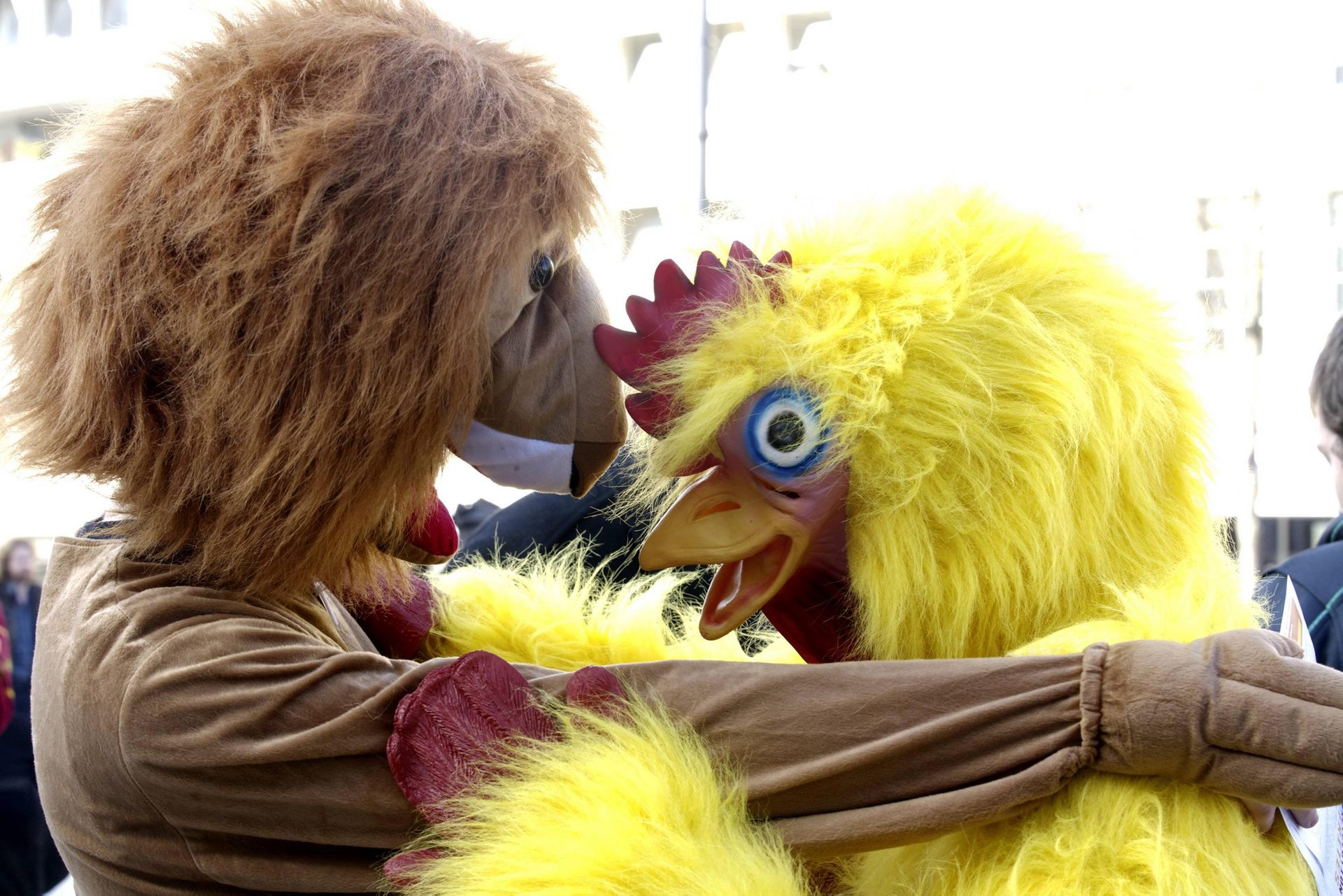
A person dressed as a lion (for the Flemish flag) and another as a rooster (for the Walloon flag) pictured during a protest against the long government formation in 2007. Credit: Belga/ Nicolas Maeterlinck
As a result, Delespaul had to reverse the question. "If you look at the map of Europe and you look at the scores of the far-right in each country, Wallonia is the odd one out."
Delespaul draws the comparison with Astérix, the popular French comic book series about the only Gallic village that was able to resist the forces of Julius Caesar's Roman Republic Army.
"If you look at how the far-right is on the rise across Europe, Wallonia is like a Gallic village. It does not even have a far-right party to vote for," he said. "Ten years ago, there were no far-right parties in Spain or Germany either, but now, Wallonia is the last bastion out there that has withstood the rise of the far right."
And so, the question is not why is Flanders so different, he says, but why is Wallonia so strange?
Media coverage
"One of the reasons for this is the strong class identity in Francophone Belgium, because of the region's heritage of industrial society," Delespaul said. This has given the socialist PS party a mandate as the "real defender of the Francophones in Belgium."
Many people have joined the socialist labour union, the party is embedded in clubs and associations, and has managed to really integrate itself into society.
"This model of having direct ties between the party and the voters has largely remained the same in Wallonia. While this also used to be the case in Flanders, this 'pillared' society has been mostly eroded," said Delespaul.
Secondly, political parties play a key role. In Francophone Belgium, parties do not seem to give much attention to immigration – neither in their discourse, nor in their policy.
"In Flanders, from the 2000s, parties – including left-leaning ones – started to talk more about immigration, giving the issue a bit more salience in the public debate," Delespaul said. "In Wallonia, meanwhile, there seems to be a tacit agreement not to talk too much about it."
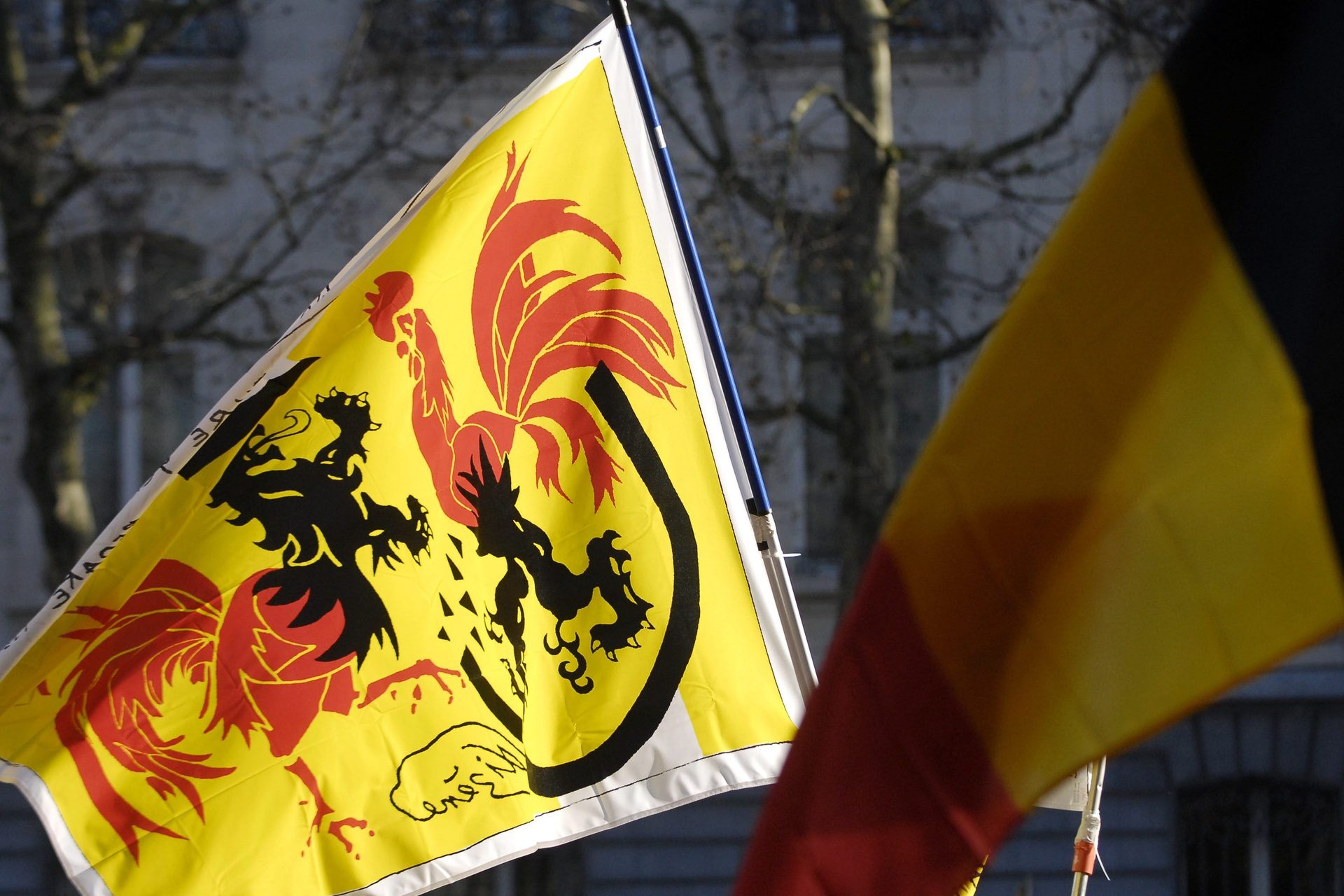
A flag combining the Flemish lion and the Walloon rooster during the 'March for Unity' in 2007 in Brussels. Credit: Belga/ Drk Waem
As a result, the issue does not feature heavily in the media either, and is therefore not at the forefront of Walloon voters' minds. Delespaul looked at the results of a survey from 1991 (the year that the Flemish far-right party won a very large number of votes for the first time) to the last election in 2024, which asked voters why they opted for the party they voted for.
"In Flanders, a very large number of people say it is because of immigration. In Francophone Belgium, only 7.1% mentions immigration as a reason to vote," he said.
Interestingly, that does not mean that the southern part of the country is open to migrants. "Many of them still have a negative attitude towards immigrants, but it is not what they base their vote on. They think more about the economy, unemployment, and inflation."
Another interesting finding, he says, is that the ideological profile of a Vlaams Belang voter in Flanders overlaps to a large degree with that of the average PS voter in Wallonia. "This was really confusing to me, but it just shows how in control of the narrative the socialist party is in Francophone Belgium."
However, Delespaul fears that this means the Francophone party system is not entirely aligned with what voters want. "Since the 80s, people have been critical of migration, but they did not want to vote for a far-right party because they were loyal to other parties, or they still carried the legacy of the Second World War with them."
A shift to the far-right?
In the past three decades, however, research has shown a realignment towards a more ideologically consistent vote for most people.
"As a result, most party systems in Western Europe are now fragmented. But the Walloon system has not been responsive towards its voters, especially compared to the Flemish one."
A large study on voter shifts between two elections, meanwhile, showed that for the first time, the number of voters switching between parties was higher in Wallonia than in Flanders. "That is remarkable, but we have always considered the system to be quite stable, with people tending to remain loyal to their parties."
PS is traditionally the largest party in Francophone Belgium, in both Brussels and Wallonia. Now, Brussels' Minister-President is a liberal instead of a socialist for the first time in over 20 years, and PS is not even part of the Walloon Government.
"It seems like many people have lost faith in their traditional party," he said, adding that this could signal a broader realignment of voters in the next few years in Wallonia. "In the next election, we could see a larger shift towards the far-right, if there were a party in Francophone Belgium able to capture these voters."
