
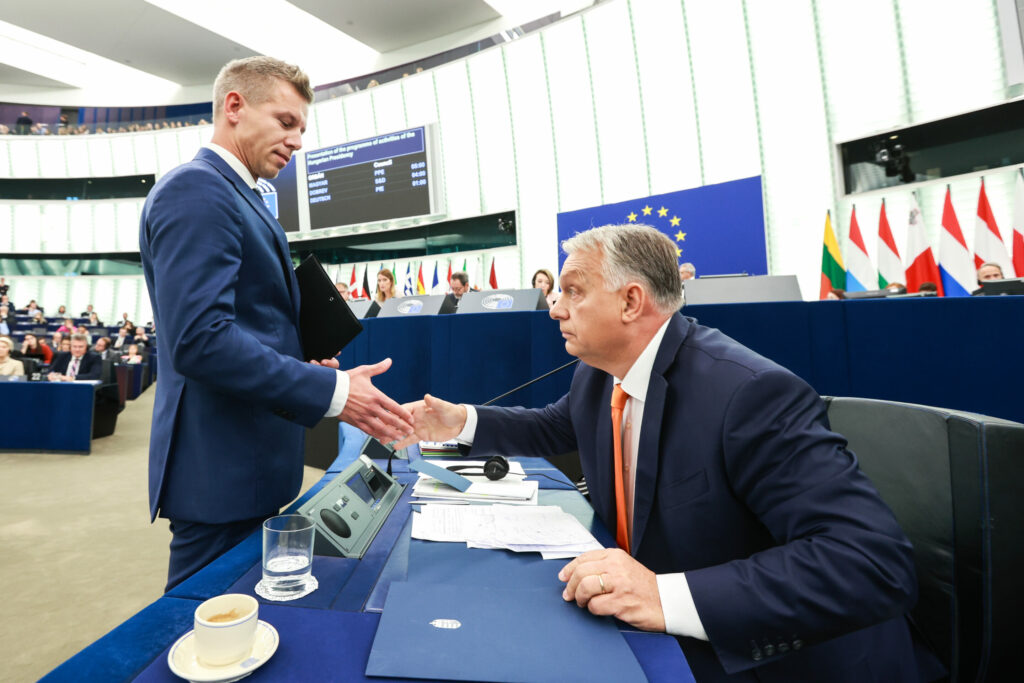
Belgium-based Hungarians will head to the polls on Sunday to vote in a crucial parliamentary election which could bring to an end 16 years of rule by Viktor Orbán's Fidesz party.
Orbán faces his toughest elections to date, with most recent polls indicating his party is trailing Péter Magyar and his centre-right opposition party Tisza. Although Magyar is a polarising figure, a Tisza election victory would reshape Hungary's relationship with Europe after years of antagonism.
A turning point?
While some Hungarians resident in Belgium will vote at the local embassy, others are choosing to return home to Hungary to cast their vote.
Hanna*, a trainee at the European Parliament who has been living in Brussels since mid-2025, is among those who chose to return home for polling day.
Although she appreciates the convenience of being able to vote at the embassy, she told The Brussels Times that she "felt a profound need to be physically present in Budapest," in part to witness what she called a "turning point" alongside family and friends.
"At a time when the country feels so divided, there is a specific kind of healing in standing with those who share a vision for a more transparent, democratic Hungary," she said.
Ervin*, who studies in Belgium, has a similar reasoning. "There wasn't a question in me whether I'm going home or not. I wanted to vote at home in Hungary," he told The Brussels Times.
Most Hungarians who moved to Western Europe for work, education or political reasons have historically voted against the anti-EU Fidesz.
"When my own grandmother is terrified of me living in Brussels because she’s been told the EU is a war-mongering enemy, it’s no longer just 'politics' but a personal tragedy," said Hanna. "It makes me incredibly sad to see my country being pushed toward the East when our future should clearly be tied to the West."
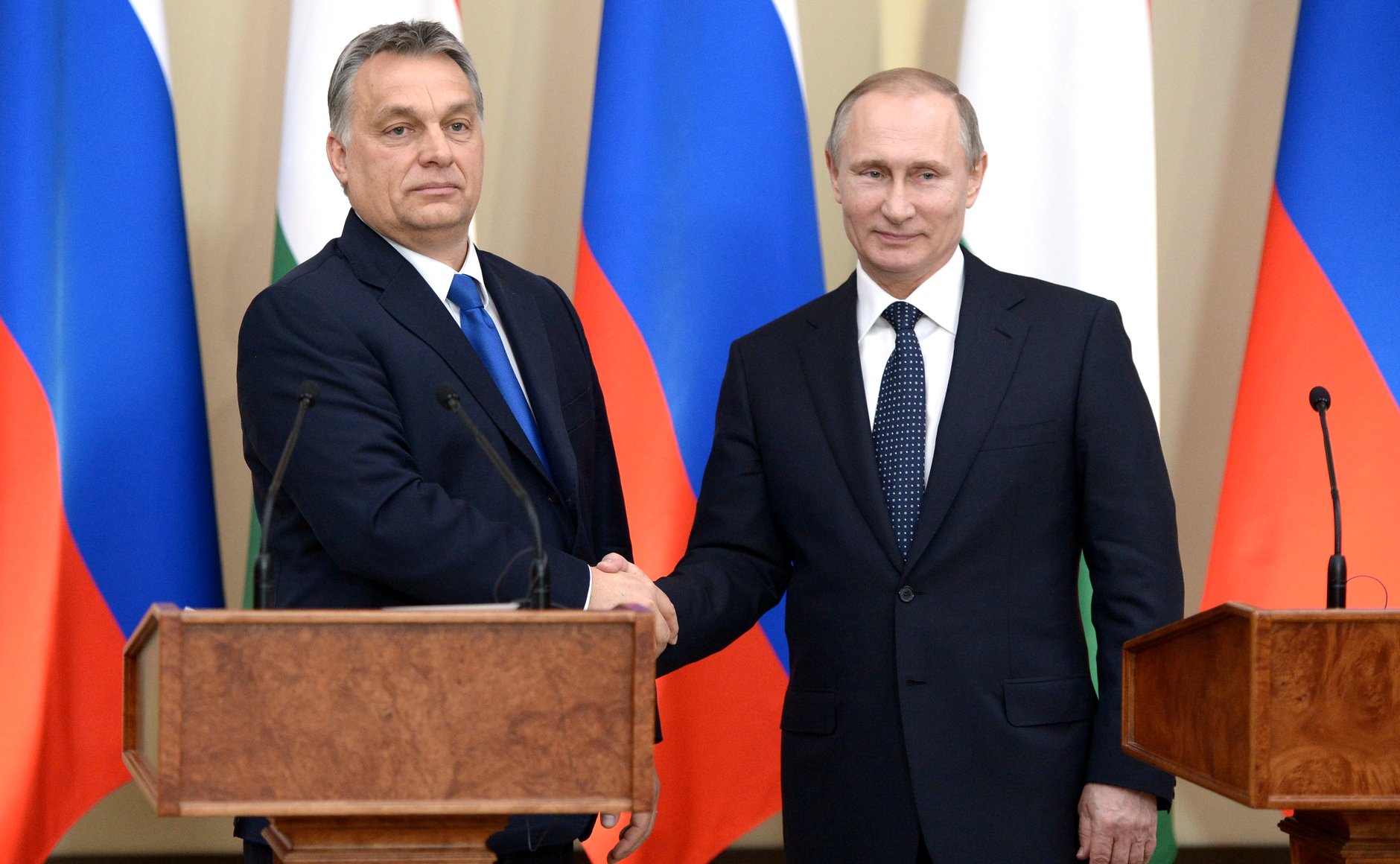
Hungarian Prime Minister Viktor Orbán at a press conference with Russian President Vladimir Putin in February 2016. Credit: Wikipedia CC BY 4.0 / Kremlin.ru
"I feel that we've reached a boiling point now, the whole country has become so polarised, it's basically black or white," Bence, a journalism student who votes at the consulate on Sunday, told the Brussels Times.
"They [Fidesz/state-owned media] show footage of people dying and missiles being launched in Ukraine, and make sure to mention that every other party would be on Ukraine's side and therefore would want Hungary to join the war, even though it's not true and every other party leader rejected that claim," said Bence.
Concerns about voting at the embassy
Some of the people we interviewed said they had concerns about voting at the Hungarian Embassy.
Dominik*, who currently studies in Belgium, said that he and his partner, also Hungarian, believe travelling to Hungary is "the best choice".
"I can’t believe that the embassies around the world are all objective and impartial," he told The Brussels Times.
Péter*, who is also a trainee at an EU institution in Brussels, feels similarly cautious, but remained hopeful that heightened awareness would incentivise better oversight. On Sunday, he will vote at the embassy in Brussels.
"In many group chats abroad, including in my inner circles, people are sharing tips and tricks on how to make their votes 'bulletproof', for instance, [by] using their own pens or making sure that the ballot paper is sufficiently folded so that it is impossible to see through the envelopes," Péter said.
Nóra, who works as a senior project officer and has lived in Brussels for four years, is more concerned about the integrity of the postal vote system. "I hope that my vote will arrive and be counted. I have more fears related to those votes that are posted [postal votes are allowed for those living abroad without Hungarian residency]."
The Brussels Times contacted the Hungarian Embassy in Brussels to comment on these concerns, but did not receive a response at the time of publication.
Hoping for change
Most Hungarians who spoke to The Brussels Times mentioned prosecuting corruption and realignment with the EU as crucial aspects defining their choice on Sunday.
According to Transparency International, Hungary has the highest corruption rates in the EU, while Orbán's clashes with the bloc on Russian energy and aid for Ukraine have made Hungary something of a pariah in Brussels and led to cuts in the country's EU funding.
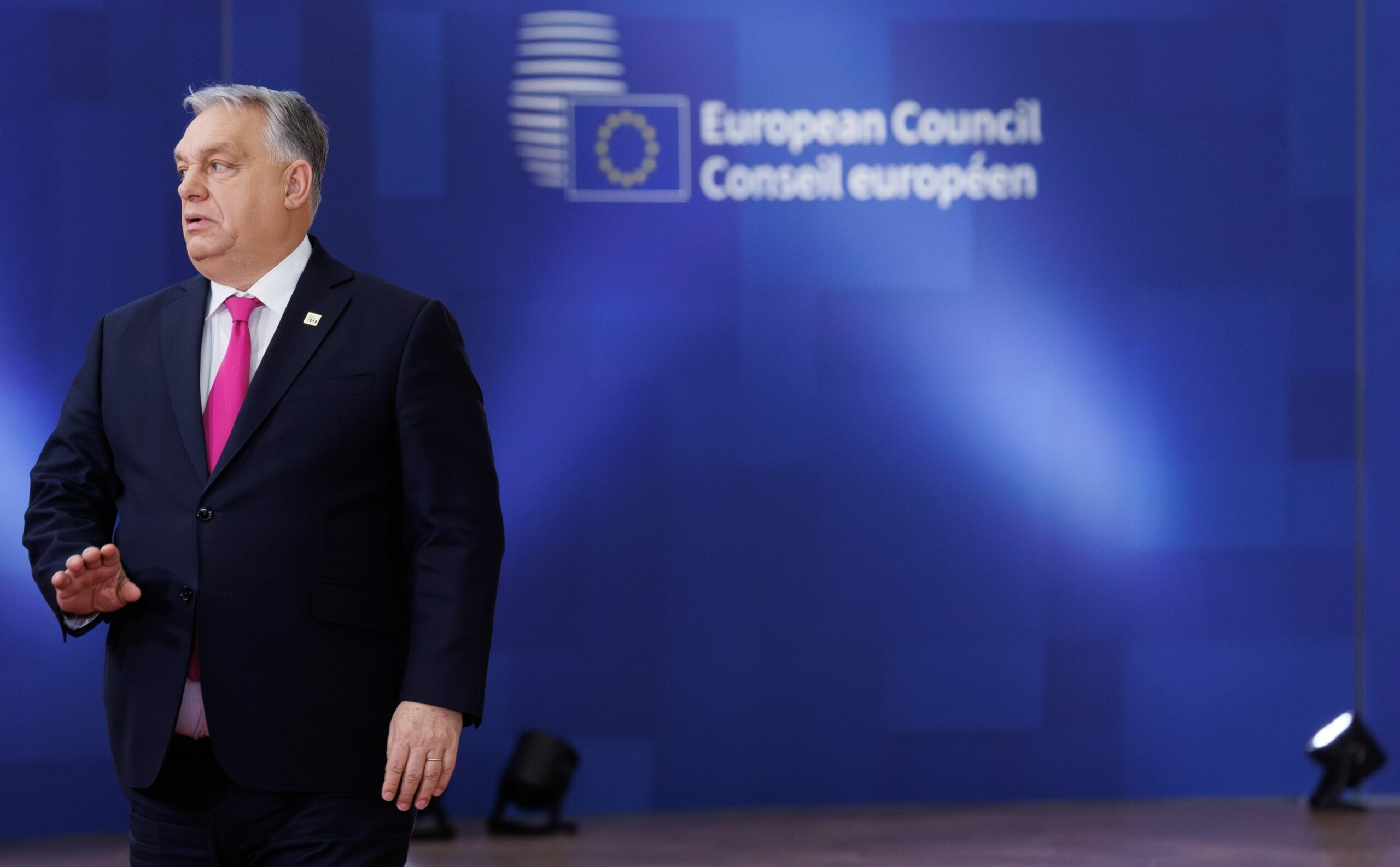
Hungarian Prime Minister Viktor Orban pictured at the arrivals ahead of an European Council summit, in Brussels, Thursday, 18 December 2025. Credit: Belga/Benoit Doppagne
Péter said that "restoring the rule of law" is the most important issue for him in this election. "I want to finally see that committing crimes will have consequences for those who commit them, that rampant corruption can be tackled, and that faith in our institutions can be restored," he said.
He laments what he describes as the "wasted years" under Orbán. "Suspended EU-funds, no more Erasmus+ for Hungarian students – [these were] wasted years of what could have been a fruitful decade of cooperation and development within the EU," he explained.
Hanna wants to move back to Hungary in the future, but said that first she must see evidence of "a country that invests in its future and its people rather than its political elite".
"I am a proud Hungarian and a proud European" she said. "These identities shouldn't be in conflict."
* Some names have been changed.
