
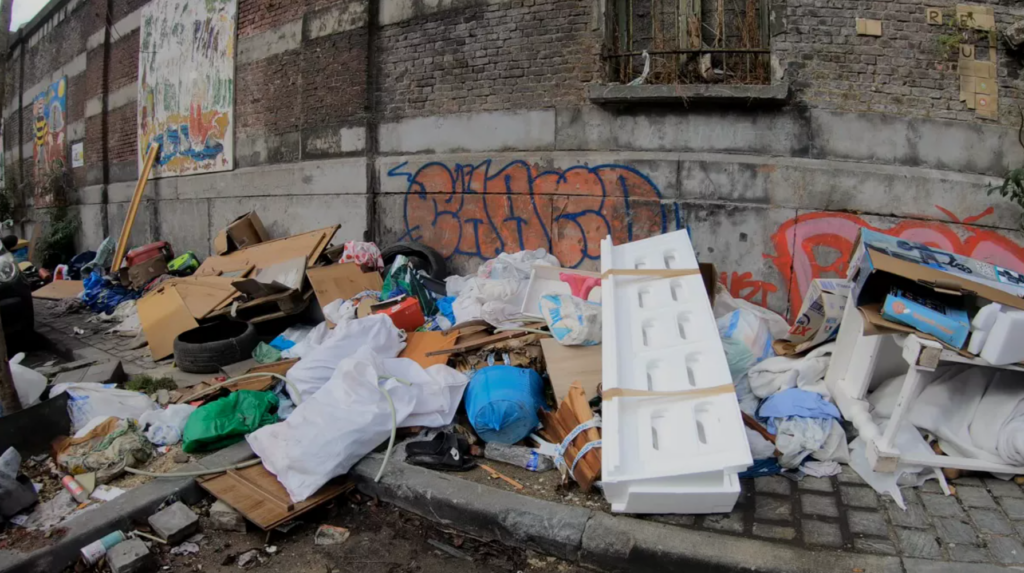
In light of recent strikes by waste collection workers, the issue of cleanliness in Brussels has once again come to the forefront of public debate.
Individual behaviour such as illegal dumping has often been highlighted as part of the problem. Without dismissing its importance, context is crucial, and a fragmentation of institutional responsibility has aggravated the issue.
To better understand these dynamics, we spoke to Adel Lassouli, spokesperson for Brussels Cleanliness (Bruxelles-Propreté/Net Brussel), the regional agency in charge of waste collection and public cleanliness.
A fragmented system of responsibilities
The responsibility for public cleanliness is mainly shared between municipalities and the regional agency Brussels Cleanliness, creating overlapping responsibilities that can blur accountability and hinder effective action.
According to the agency, this fragmentation has "indeed posed significant difficulties in recent years", even if improvements have been made. The situation has evolved with the regional “Clean” strategy, which aims to strengthen coordination.
Division of responsibilities
Responsibilities are divided across several actors. Municipalities oversee local roads and public spaces, while Brussels Cleanliness manages regional roads and waste collection. Other regional actors, such as Brussels Mobility and the public transport operator STIB/MIVB, are also involved in maintaining specific parts of the public space.
This institutional layering can make it harder to ensure consistent standards across the territory. While fragmentation "cannot be invoked as a simple excuse", the agency acknowledges that "a unified steering of cleanliness would be beneficial".
It has also been argued that a more centralised system — giving Brussels Cleanliness a leading or exclusive role — could improve efficiency.
This perspective is consistent with broader analyses, including policy reports and urban studies, which similarly emphasise how governance structures — particularly their impact on enforcement capacity—shape outcomes, alongside factors such as urban density.
This fragmentation also affects how effectively illegal dumping is prevented and addressed. In practice, it can limit enforcement capacity by dispersing responsibilities across multiple actors.
Illegal dumping: a multifaceted issue
"There is not a single cause for the persistence of illegal dumping, but rather a combination of factors," the spokesperson explains to The Brussels Times.
This view is echoed in academic research. A study published in Brussels Studies shows that illegal dumping is influenced by a range of urban and social factors.
Socio-economic conditions also play a role. According to Brussels Cleanliness, there is a correlation between economic hardship and lower compliance with waste disposal rules.
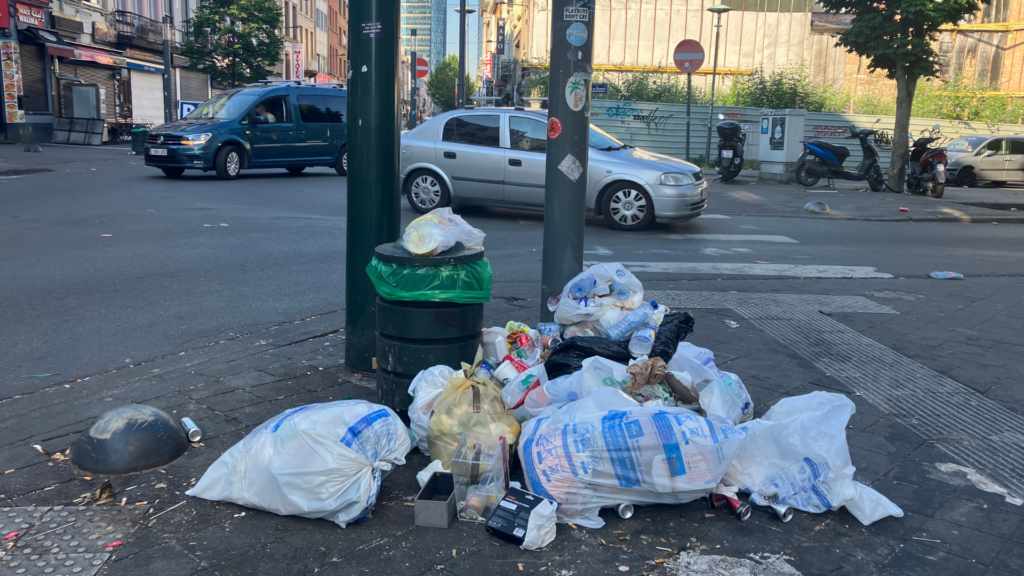
Rubbish in the Brabant quarter. Credit: The Brussels Times
"The greater the economic difficulties are for a part of the population, the less the respect for waste disposal rules is observed, as other priorities take precedence," the spokesperson notes.
Brussels’ high population turnover further complicates the situation. As a city with a constant influx of newcomers, not all residents are familiar with local rules, which can vary across municipalities. "We continuously welcome new arrivals, who are not always informed about the rules in place,” the agency explains.
Short-term tourist accommodation is also seen as a contributing factor. Visitors staying only a few days may dispose of waste incorrectly, either due to a lack of information or because their presence is temporary.
Another factor is the much lower price of official bin bags in Brussels. According to the spokesperson, this has led to what is described as ‘rubbish tourism’, with individuals from outside Brussels disposing of their waste in Brussels using locally purchased bags.
Enforcement: present but limited
Brussels Cleanliness operates an inspection and sanctioning service. Around 21 inspectors are responsible for covering the entire regional territory, which remains limited given the scale of the challenge.
Their work extends beyond illegal dumping, including littering and improper disposal.
As the spokesperson puts it, “the current mechanisms exist and function”, but they could be strengthened. That, however, ultimately depends on political decisions. The Regional Policy Declaration includes provisions to enhance monitoring and sanctioning mechanisms during the current legislative period.
Towards a broader approach
For Brussels Cleanliness, improving cleanliness requires action on multiple fronts. Awareness-raising and behavioural change are seen as key elements. “The cleanest city is, above all, the one that is littered the least,” the spokesperson emphasises.
Some of the measures outlined at the regional level aim to provide concrete responses. The planned creation of rapid intervention teams, for example, is intended to improve the speed at which illegal dumping sites are cleared.
Other proposals focus on infrastructure. One measure included in the Regional Policy Declaration is the installation of underground waste containers in certain areas, applied on a neighbourhood-by-neighbourhood basis. These are intended to reduce the number of bin bags left on public streets. These measures also raise questions about coordination, as their effectiveness depends on how different actors implement them across the territory.
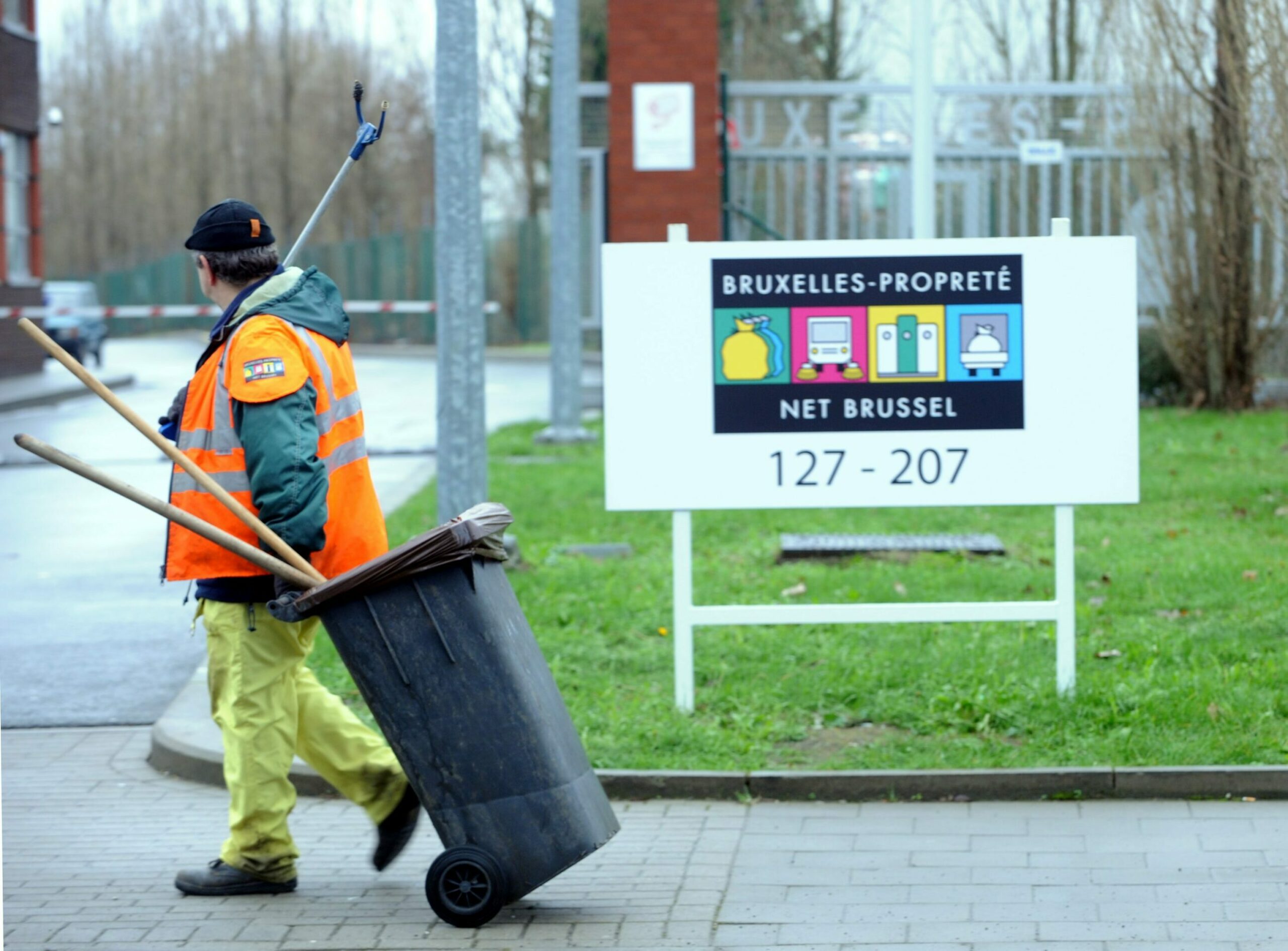
The entrance to the rubbish sorting centre in Forest, Brussels, December 2009. Credit: Belga / Herwig Vergult
More broadly, urban planning is increasingly seen as part of the solution. Strengthening “social control” through the design and use of public space — reducing areas where a lack of oversight can create a sense of impunity — is considered an important lever in reducing illegal dumping.
At the same time, the agency stresses that cleanliness cannot be addressed in isolation. “When a city is confronted with socio-economic, security or homelessness issues, it is illusory to think that the cleanliness services alone will be able to resolve the situation,” the spokesperson notes. In this sense, uncleanliness lies “at the crossroads” of multiple urban challenges.
Ultimately, Brussels’ cleanliness problem reflects a combination of structural, social and behavioural factors. Addressing it will require not only better coordination between institutions, but also sustained efforts to engage with the broader conditions that shape how the city is lived in and maintained.
