
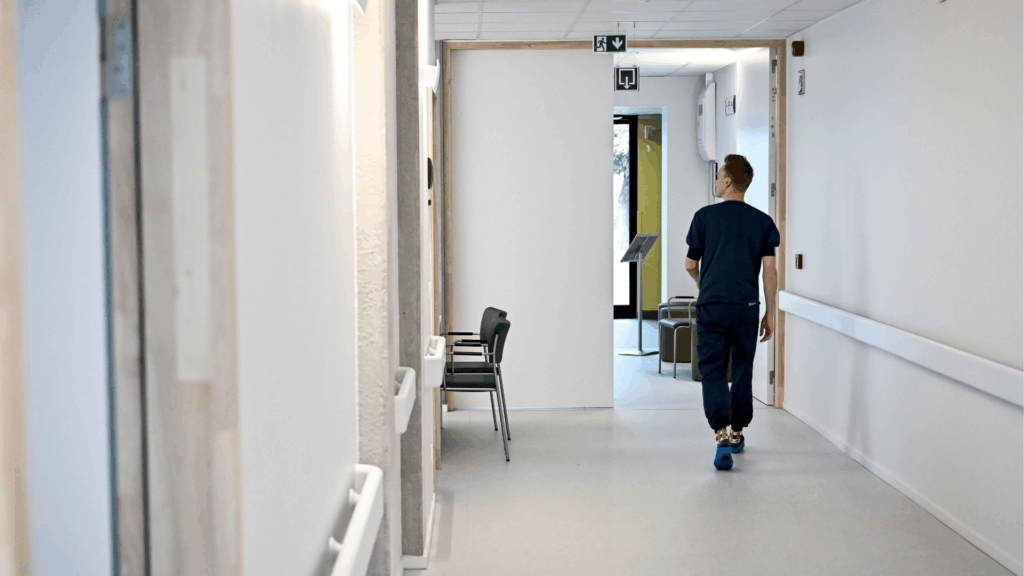
A hospital stay in Belgium can result in an unexpectedly hefty bill, especially in Brussels, where several hospitals charge more than double the amount charged by hospitals in Flanders for premium supplements.
Five months after architect Pieter De Smedt from Lennik underwent an ablation – a standard procedure for heart rhythm disorders – he received a bill for €5,380 in the post from UZ Brussel. He was shocked by the amount.
"In addition to the surcharge of €314, it turned out the doctors had charged thousands of euros in additional fees that I had to pay out of my own pocket," he told The Brussels Times.
De Smedt had done his research beforehand. For the operation, which lasted barely 30 minutes, he would not normally have needed to stay overnight. "But the doctors decided it was necessary after all."
He was asked if he wanted a single room. As he has no hospitalisation insurance, he enquired about the extra cost; €314, came the reply. "I hesitated at that point. It is not a small amount. You could book a very nice hotel for a city break with that. I went ahead with it anyway. I wanted a peaceful night's sleep."
Rising supplementary charges
De Smedt is not the only one to receive an unexpectedly high bill following a hospital stay. Figures from the Intermutualistic Agency (IMA-AIM) show that the costs patients have to pay themselves can be high and are often difficult to predict.
For example, the average bill for the patient for a standard hospital stay is €2,778 in a single room, and €323 in a shared room.
Notably, the total amount of supplementary charges rose by 9.1% in a single year. This is a sharper increase than that of the health insurance contribution (+5.6%) or the patient’s co-payment (+1.5%).
"To be clear, not every patient is subject to these supplements. They may only be charged to patients who explicitly opt for a single room," Françoise De Wolf, project manager at IMA, told The Brussels Times.
However, even when admitted to a twin or shared room, the cost to the patient can be high. Consider the cost of implants or a long stay.
"For a knee replacement, this can amount to €700 to €800 or even more. It is difficult for a patient to predict what their own contribution will be. Cost estimates are not provided as standard in all hospitals," she said.
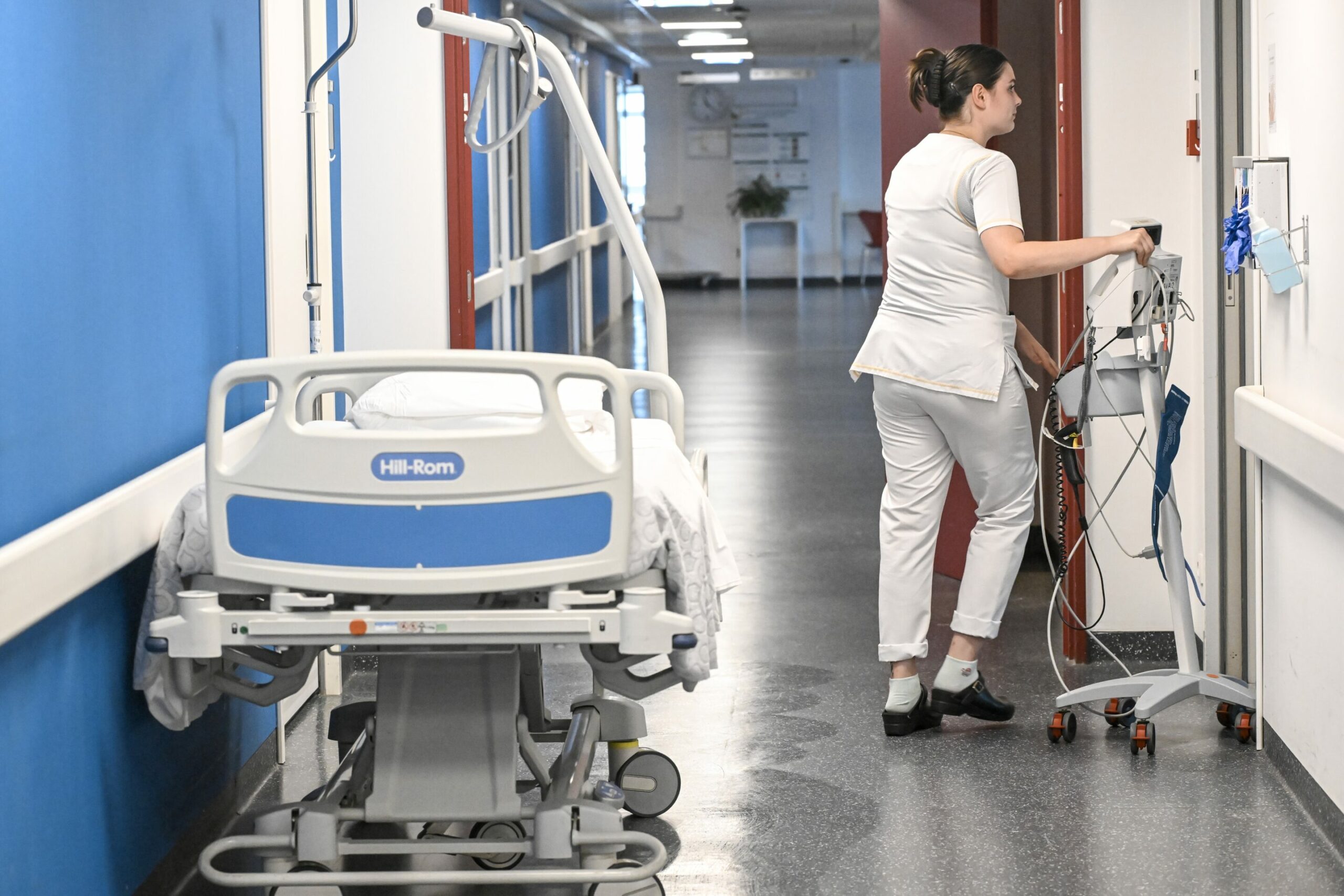
Hospital bed and a nurse in the corridor of the Imelda hospital in Bonheiden on, Thursday 17 August 2023. Credit: Belga / Dirk Waem
In the case of nearly 105,000 hospital stays, the patient received a bill of more than €3,000. In nearly 7,500 cases, a hospital stay cost more than €10,000.
"Patients often have hospitalisation insurance that helps cover the costs. Not everyone has that. And not all insurance policies cover the same amount," De Wolf said.
An additional problem: there are significant differences between hospitals and regions.
Brussels hospitals have much higher fee surcharges than those in Flanders, according to figures from Health Minister Frank Vandenbroucke (Vooruit): in 2023, the average fee surcharge in the Brussels-Capital Region was more than twice as high as in Flanders.
In the Brussels Chirec hospitals, a patient giving birth paid an average of €3,100 for a vaginal delivery in a single room. At UZ Gent, the cost was €1,500.
Meanwhile, for a vaginal delivery in a shared room, virtually the same rate of €200 was charged in every hospital.
For knee replacements, the differences between hospitals are even greater: in a single room, the price ranged from €2,869 at Jan Yperman in Ypres to €6,974 at the Chirec hospitals in Brussels. In a shared room, the average price was €900.
Expats with better insurance
Why such big differences? "It is hard to say. Hospitals are free to set these rates in consultation with doctors," said De Wolf.
"One possible explanation is that in Brussels and the surrounding area, many foreigners work for international organisations or companies that offer hospitalisation insurance covering high private room supplements," she added.
Another possible explanation is that demand in Brussels is high compared to supply. Federal MP Frieda Gijbels (N-VA), who requested the figures from Vandenbroucke, sees yet another reason.
"It is striking that it is precisely the hospitals with the highest supplements that record the worst financial results. This shows that the way a hospital is managed plays a decisive role," she said.

Illustrative image of a person receiving chemotherapy. Credit: Belga/Dirk Waem
Hospitals and doctors point to government underfunding. This puts them in financial difficulties and causes the service charges to rise. According to a report published by Belfius late last year, 37 of the 80 general hospitals in Belgium are operating at a loss.
This precarious financial situation is a structural problem. Among other things, hospitals depend on the fees paid by doctors for their income. "Some hospitals literally survive thanks to fee supplements," said Patrick Emonts, chair of the Belgian Doctors’ Union, in an interview with the Artsenkrant.
According to him, the general rise in fee supplements can be explained by low basic fees and the explosion in operating costs. "In real terms, doctors today earn less than they did 10 or 15 years ago. Some have seen their earnings fall by 30% in just a few years.
Emots also emphasised that excessively high bills are exceptional. "In most cases, patients are well protected."
Cap on fees
The health insurance funds are calling for greater transparency in any case. "Today, patients have absolutely no idea what final bill they can expect," said De Wolf. Health Minister Vandenbroucke agrees with her. He wants to limit fee supplements.
Currently, each hospital determines for itself the maximum fee percentage that doctors may charge. Vandenbroucke wants to cap the percentage at 125% by 2028 for hospitalisation in a single room.
According to the minister, the restriction is included in the coalition agreement, but implementation is taking its time.
Meanwhile, doctors are opposing the plans. They see it as a restriction on their freedom and are calling for the fixed rates to be adjusted first. In their view, these are often insufficient.

A nurse holds a baby in the maternity department in the Imelda hospital in Bonheiden on, Thursday 17 August 2023. Credit: Belga/Dirk Waem
Meanwhile, architect Pieter De Smedt refuses to pay his bill. He says he was misinformed and lodged a complaint with the UZ Brussel ombudsman service.
However, they referred him to the admission agreement he had signed at the time. According to the hospital, the costs charged were in line with the care provided and the stay.
"The cost for this patient turned out to be higher than initially expected," Karolien De Prez, spokesperson for UZ Brussel, told The Brussels Times.
"The course of a medical treatment cannot be guaranteed in advance," she said. "De Smedt was correctly informed about the costs of day admission and any additional costs. He signed an informed consent form."
