
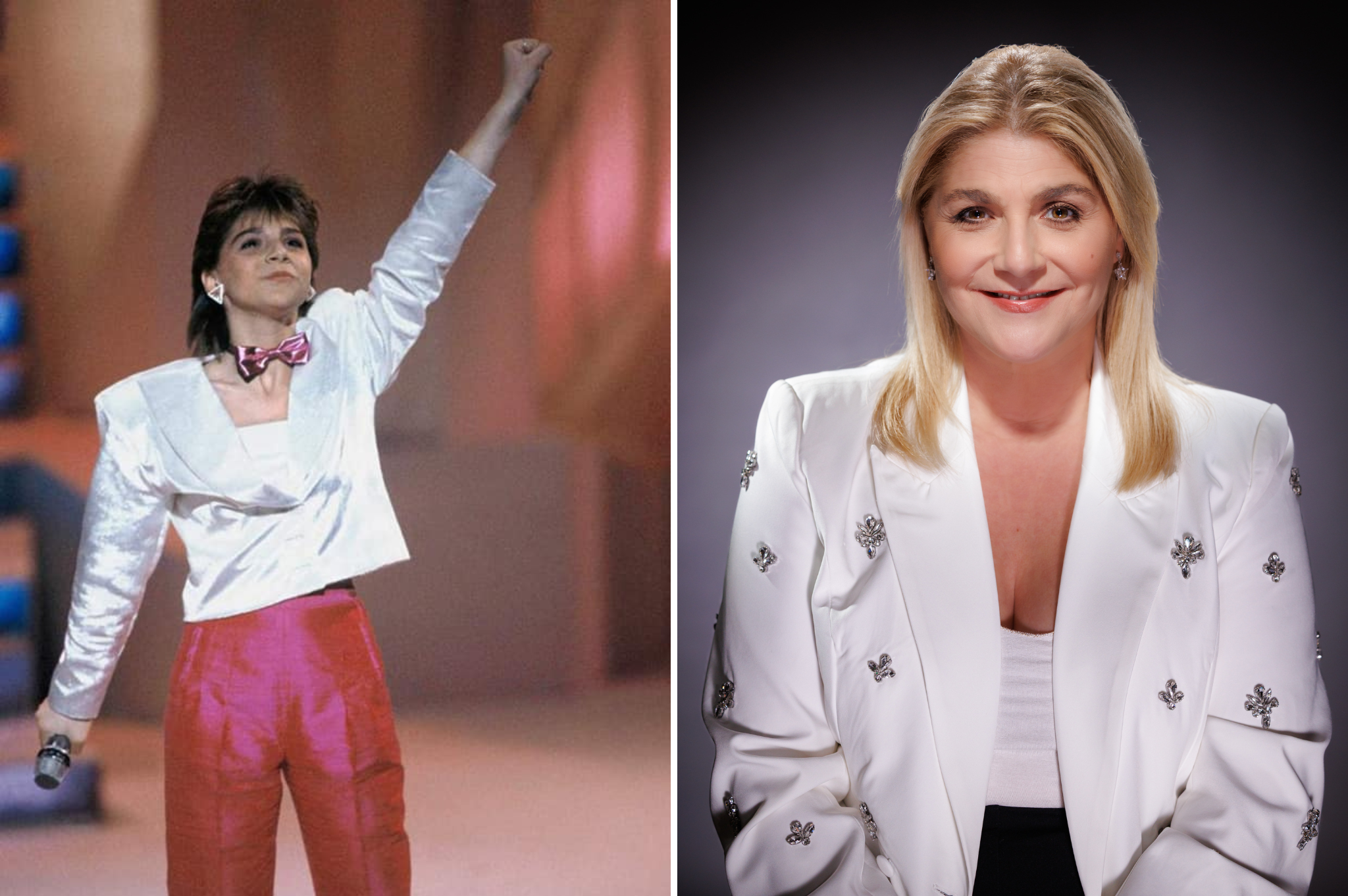
The day before I meet Sandra Kim, the only singer from Belgium to have won the Eurovision Song Contest in its 70-year history, a Flemish friend tells me he had a childhood crush on this “Belgian hero”. I can’t help but mention this to the now 53-year-old Kim when we meet some four decades after her triumph.
Thankfully, she smiles. So many aspects of her experience of early fame – she was just 13 when she won with the crazily catchy ‘J’aime la vie’ – have left her with decidedly mixed feelings.
But she still seems amused that young boys were charmed by her energetic performance that Eurovision night on May 3, 1986, in Bergen, Norway, wearing glittery, light maroon trousers, a smart white jacket and a decorative bow tie.
“They still come up to me now after my shows and tell me that they had a thing for me – and I can see that they are blushing,” she tells The Brussels Times.
While her status as Belgium’s last Eurovision winner may be altered one day – established Belgian band Hooverphonic gave it a go a few years ago – Sandra Kim will always be the youngest winner of the contest.
Despite singing about being 15 years old, she was in fact two years younger, and a few years after her success, the organisers imposed a minimum age of 16 (indeed, the second-place Swiss entry tried to get Kim disqualified at the time on account of her age.)
Considering the week-long rehearsals leading up to the big night and the post-midnight, winning-song reprise, this would have been an extraordinarily demanding time for any young girl – especially one who had just been on her first plane and who was usually tucked up in bed by eight o’clock. And it is a time that she has never been able to live down or quite move on from.
Nevertheless, when we meet at her home in Flanders, I kick off by asking about her time on the first Flemish edition of The Masked Singer that she won during the first Covid-19 lockdown - but our conversation keeps circling back to those early tender years. That she still gets recognised in the supermarket, or anywhere she goes in Belgium, as the singer of ‘J’aime la vie’ is something she’s stuck with.
Most of the time, she manages a smile despite admitting that she hates being recognised and has never courted fame. She recalls an occasion, when visiting the Hollywood Walk of Fame in search of the star of her idol, Barbra Streisand, she was accosted by fans saying her name.
“I was there as a simple tourist, and they reminded me of who I am. I was so angry at that time. I told them, ‘Please leave me alone.’ ‘Can we do a picture?’ ‘No, I'm here on holiday. I'm sorry. I know you're going to be disappointed, but you can have the chance to see me in Belgium. So, let's take a picture in Belgium, not here.’”
Who she is, or could have always only been, is Sandra Caldarone (her real name), a girl from Liège with a childhood dream of becoming an air hostess. One night in Norway changed everything.
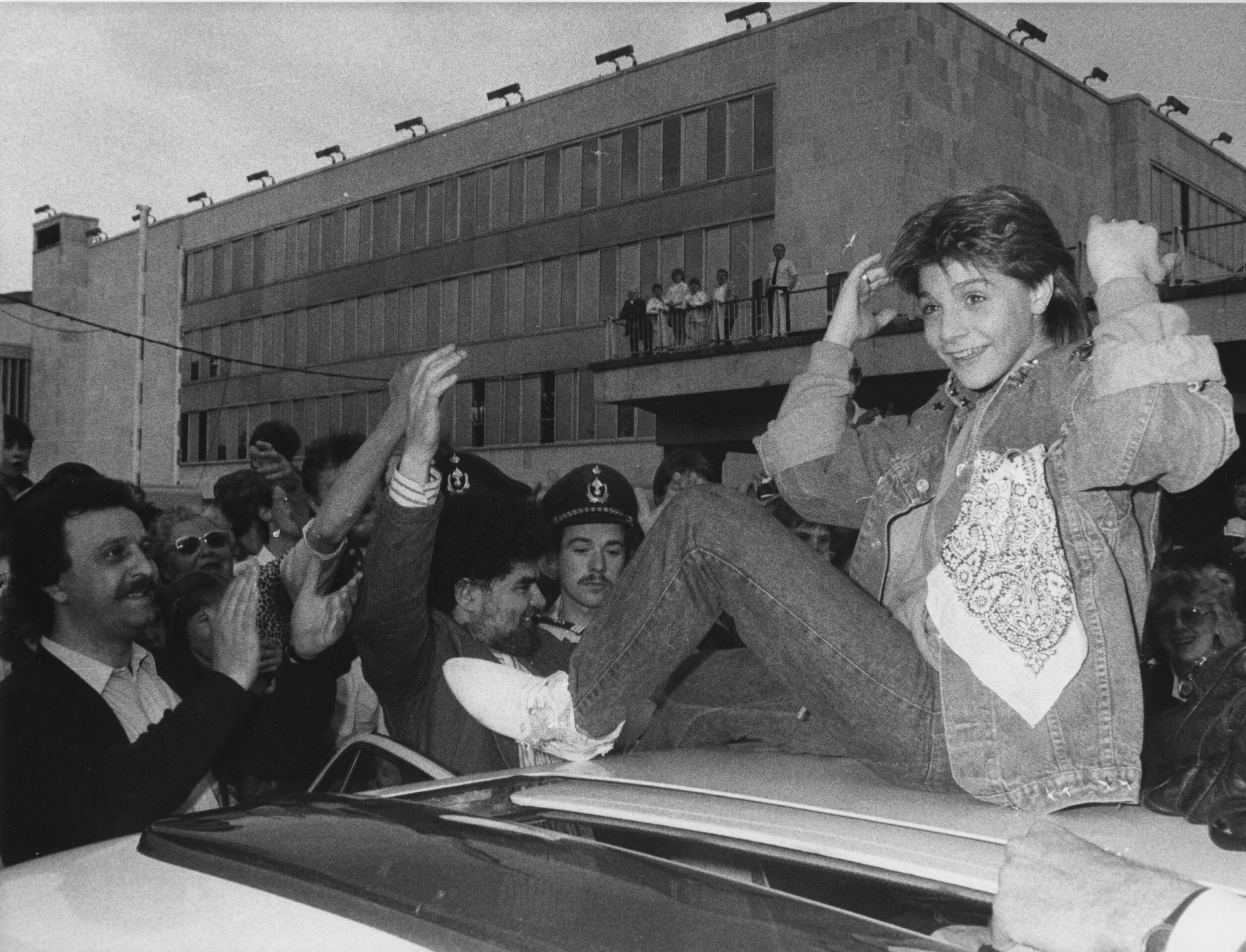
Belgian singer Sandra Kim as she arrives at Brussels International Airport in Zaventem after winning (1986) the 31st edition of The Eurovision Song Contest in Oslo (Norway) on 03 May, 1986. Credit: Belga Archives
Big in Flanders
Sandra Kim has lived in Flanders since she was 20; first in Zaventem and then for the past four years in a modest, but well-upholstered, modern house in a rural village near Sint-Truiden with her 53-year-old Flemish husband Jurgen, with whom she’s been married for 25 years now.
Easter is more than two weeks away, but the Kim household is already decorated for the season, alongside a few discreet promotional posters. She still performs a couple of concerts a month, some described as unplugged and others with her band, a group of musicians with whom she has been playing for some years.
These days she seems happy to keep her career ticking over, accepting invitations to perform – in Dutch and French – or participating in TV shows, as she wishes. She says Flemish audiences respond in a different way to those in Wallonia. “I know that the people love me more here. I don't know why. It's always been like that.”
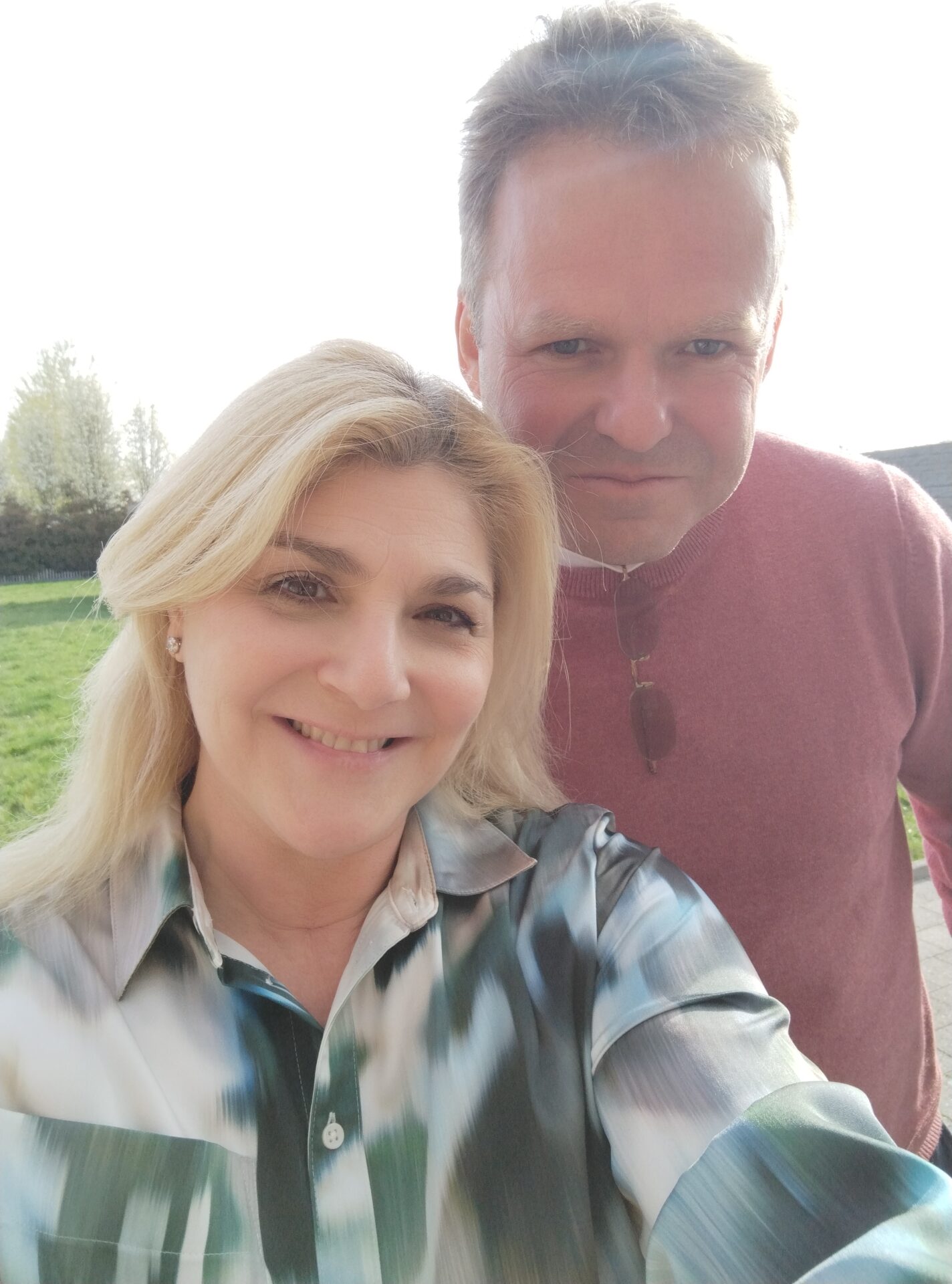
Belgian singer Sandra Kim and The Brussels Times Magazine journalist Jon Eldridge.
All the same, she says French-language broadcaster RTBF will air a documentary to mark the 40th anniversary of her Eurovision success, but she is a little bemused by the interest of The Brussels Times Magazine. I assure her that she has a great story to tell.
The pre-Kim Sandra Caldarone, the eldest of two daughters to an Italian father and a Belgium-born Italian mother, had always loved to sing. At the age of eight, her godfather was so impressed by the strength of her voice that he suggested she enter a contest in Liège. “He said, ‘Do you want to go?’ ‘No.’…’Well, there are a lot of presents, Sandra, you have to go’…’OK, I'm going to go.’”
And there were presents for the young Sandra, year after winning year: Walkmans, headphones, restaurant and cinema vouchers... “It was interesting for me because we didn’t have a lot of money. My parents were not poor, but they were not rich because my father was a manual worker.”
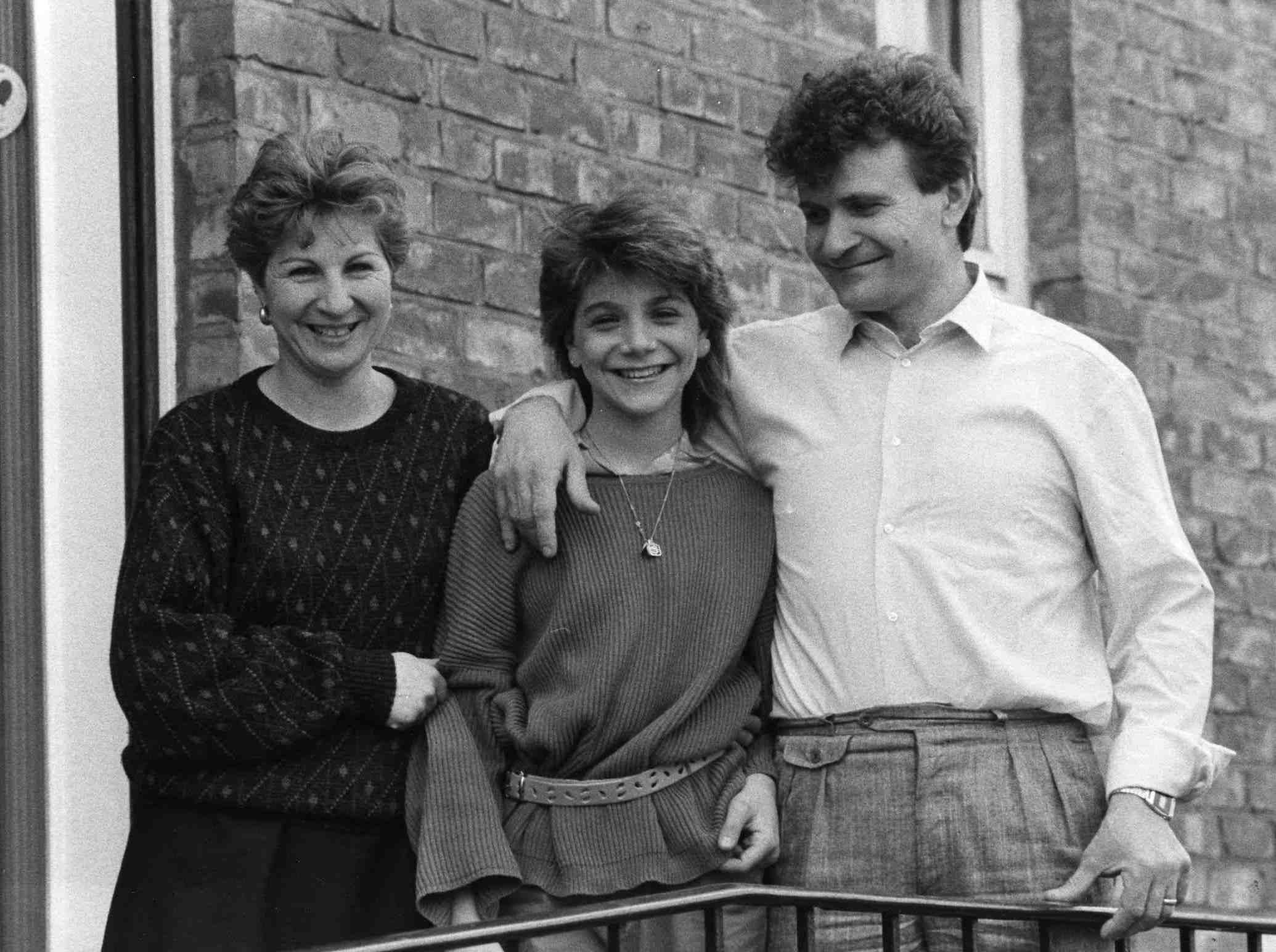
Belgian singer Sandra Kim, winner of the Eurovison Contest 1986 and her parents. Credit: Belga Archives
Her success attracted the attention of a local music business player, who had co-written a certain song, ‘J’aime la vie’. Her studio recording of the relentlessly upbeat number – which nevertheless contains lines about feeling small next to Brel and Mozart and being nothing but dust in the universe – was sent by cassette to RTBF and subsequently became one of 11 possible entries for that year’s Eurovision.
“It came on TV one week later, and the people televoting chose me,” she recalls. “So, I was at home with all the team, my parents, and I heard my name. Yes, we chose Sandra Kim to represent Belgium. Everybody was happy, but I was thinking, ‘My life is over.’”
One night in Bergen
Sandra Kim, who took her stage name from the Korean wife of her former bassist, insists she was never much of a fan of Eurovision and only really watches the “too long” show now because people will ask her about it. Nor was she even much of a fan of that song. “I didn't like it because I was more a fan of singers with beautiful voices. I wanted to sing like Barbra Streisand and Olivia Newton-John, and when I heard it, I thought, ‘What is that? I don't like it.’ ‘Yes, but you're going to sing it…’ I gave all the best of me because I'm a professional – even at that time.”
However, Kim now says that it was a “masquerade” and every decision around this time was being made for her, especially by the writer who penned the lyrics for the supposed 15-year-old, giddy on life. She says he was more like a dictator than a manager and has not spoken to him since they parted ways when she was 18. Even though she receives some royalties from the song, he earns a greater share, she tells me with a certain wry chagrin.
Furthermore, even the shiny bowtie she wore at the contest was chosen by a stylist. Looking back now, can she laugh at herself? “I don’t laugh,” she thunders. “I cry!”
“No, when I watch the images on TV, I always have something in my heart. It's not me. Why am I here? Why am I there? It was too early for me.”
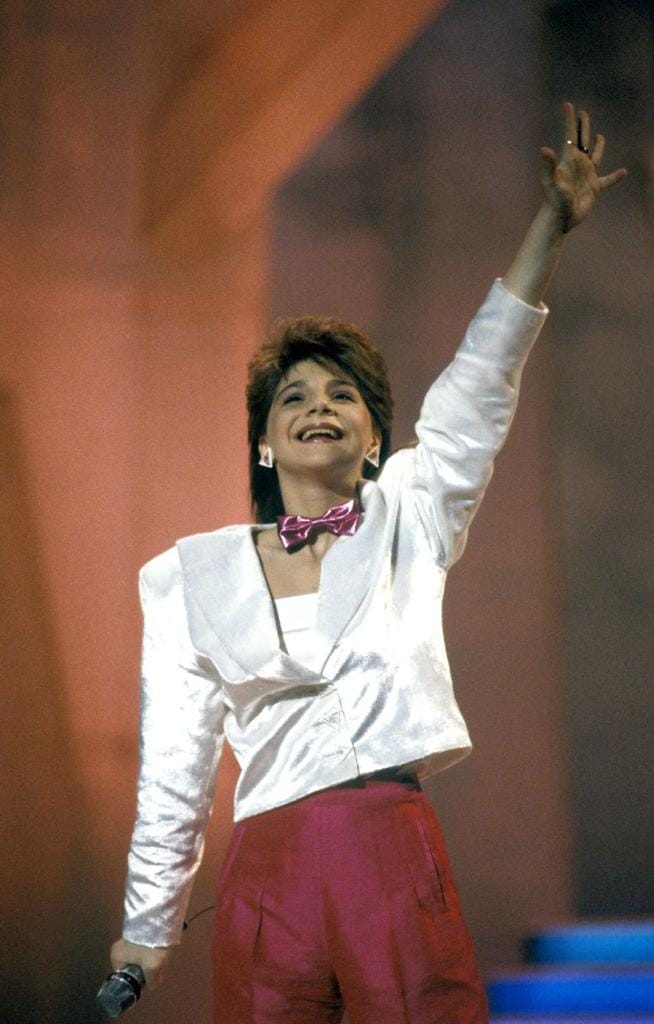
Belgian singer Sandra Kim performing at Eurovision in 1986, where she won.
Overnight fame, never mind for an early teenager, is not easy to manage, and nor was it for her school friends. Although she still retains one bestie from this time, she says most changed their attitude towards her and soon after the contest, she left school to be tutored privately from home. “Their behaviour was completely different to when I left them two months before. They were jealous of me because I travelled a lot,” she says. In the autumn of that year, Kim also represented Belgium at the Yamaha Music in Tokyo.
Indeed, it was to be a hectic year for Kim, who found herself roped into events, posing with politicians and even singing at the inauguration of the European flag at the European Commission’s Berlaymont building in Brussels.
She also released an album also titled ‘J’aime la vie’ and performed the title track, ‘Hymne à la Vie’, for an animated kids’ educational series, Il était une fois... La vie. The song was written by renowned French composer Michel Legrand, who had won an Oscar for his work on the 1983 musical film Yentl starring Kim’s beloved Barbra Streisand.
I ask whether she felt honoured to be chosen to sing the track. She doesn’t hesitate to reply: “I hate that song. I hate it so deeply. Even now…No, it was encore with la vie, la vie, la vie, Jaime la vie, la vie, la vie, enough with the life. I hate life. At the time, I was hating life so much, so deeply.”

Singer Sandra Kim performs at a concert' to honor Belgian musician Will Tura, Thursday 28 December 2023 in Antwerp. Credit: Belga
If this sounds a little tragic, I should point out that Sandra Kim today – hospitably offering me a coffee and a small chocolate Easter egg but frequently letting her half-Italian talking hands slap against the table when emphasising a point – is far from a wilting soul trodden down by la vie, la vie, la vie.
On several occasions, she refers to herself as a strong woman, and it’s easy to picture this Sandra saying “no” to offers that she doesn’t want. Not for her another crack at Eurovision à la Johnny Logan, who won for a second time the year after her, or Loreen whose second success came 11 years after her first (although she has taken part in Eurovision reunion events over the years). So why didn’t she refuse the first time around?
“I didn't want to disappoint people, disappoint all the people around me, my family and the producer at that time.”
It doesn’t sound like he was particularly supportive.
“No, he loved me very much, like a second daughter for him, but it was too intense. All my interviews were written by him. When you go on TV, you have to tell this, you have to say that.”
It sounds like hell, so why do young girls then want to be famous?
“Because they want to be a celebrity. It's very easy to be an influencer on social media and to make money very quickly. Sometimes I talk to young people who would like to be a singer, and I don't understand. Stay as you are.”
Sandra unmasked
Despite this inauspicious start to her professional career, Sandra Kim says she wants to keep going in her own way for as long as her voice holds out. She shows me a tattoo on her right wrist that reads ‘carpe diem’, and she seems content to seize whatever fun opportunities come her way.
Winning the first series of The Masked Singer in an elaborate ‘queen’ costume – a cross between Frozen’s Elsa and Angelie Jolie in Maleficent – she says earned her “the respect of the profession” and showcased her still strong vocals on covers of hits by Alicia Keys, Sia and Lady Gaga, among others. She believes that the initial singing aspect of the show, which has now run for five series, was more important than the costumes and performance. “It was difficult because I didn’t have much space between my mouth and the mask. And we sang live, always, and just one take.”
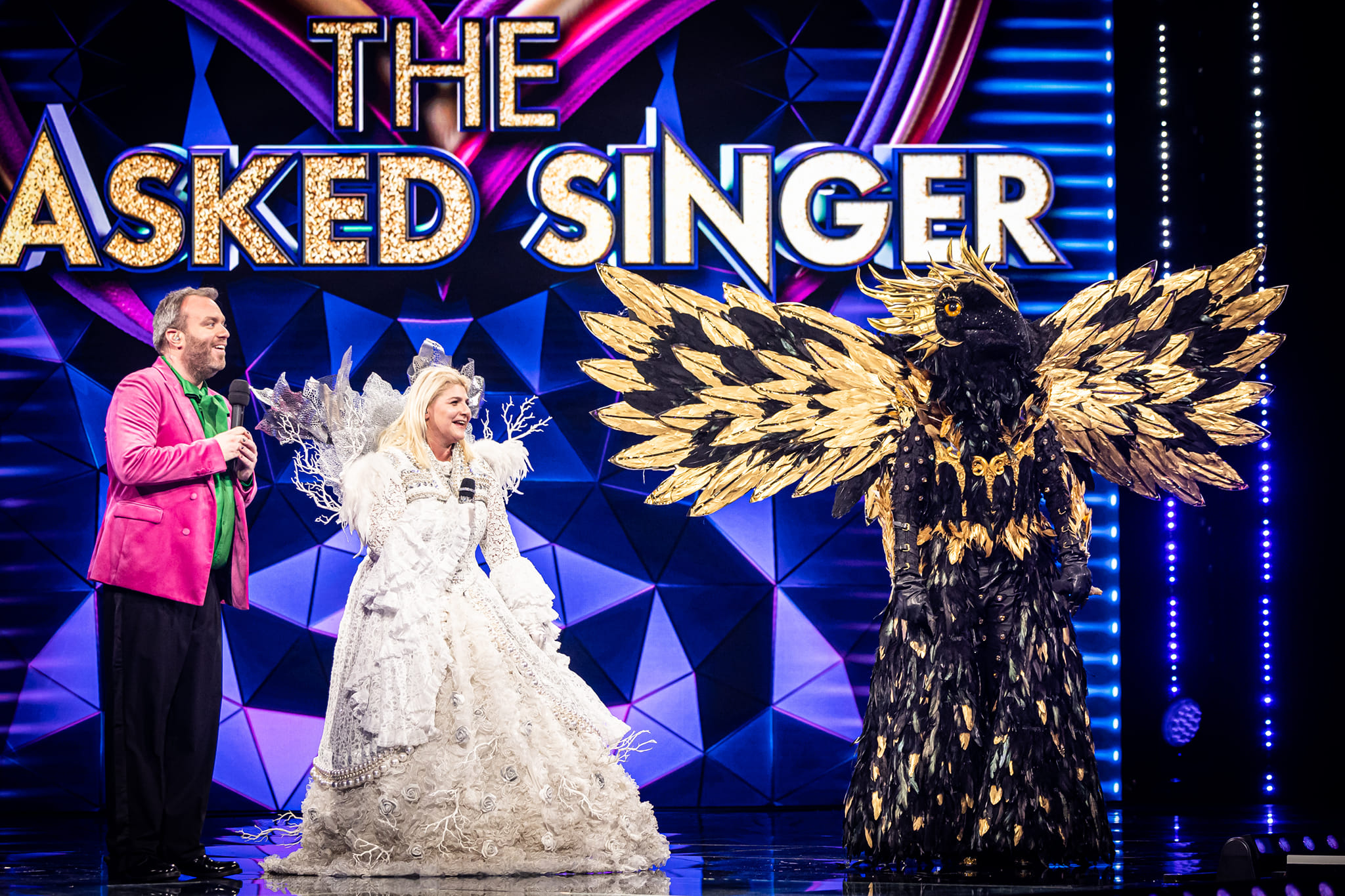
Sandra Kim at the Masked Singer TV show
Her incarnation as the queen seems apt, as she considers meeting and singing for Belgian royalty among her career highlights. She was even a big fan of the late Queen Elizabeth II and produces a commemorative mug from a cupboard to prove it. But another bonus of appearing on the show is hard to ignore. “Now, in Flanders, of course, they can talk more about the Masked Singer than the Eurovision song contest,” she says.
Has winning Eurovision been a poisoned chalice, I suggest? It’s certainly been a mixed blessing, she agrees. It’s allowed her to develop her natural talent for singing, while at the same time fulfilling her pre-teen stewardess dreams of travelling the world. If only there was a place Ms Caldarone could fly to where no one would say, “Aren’t you that Sandra Kim?”
