
In the early months of 2026, a new and more perilous migration route emerged in the English Channel for people seeking to reach the United Kingdom from mainland Europe via small boats.
Until this year, groups of migrants generally departed for southern England from the French provinces of Calais and Dunkirk. In 2025, around 41,000 people arrived in the UK via small boats using this route.
Now, migrants are seeking to bypass French controls by leaving from the Belgian coast instead – despite facing a longer and more dangerous journey from the Belgian coast to the UK.
The shift has come about as a result of changes to France's border security policies. Over the past two years, under pressure from the UK to close down English Channel migration routes, French authorities have significantly intensified patrols and prevention activities along the coast, exposing some "uncovered spots”.
As traffickers seek new, less controlled departure points, Belgium has become a fertile ground for migrant departures.
The Flemish coast
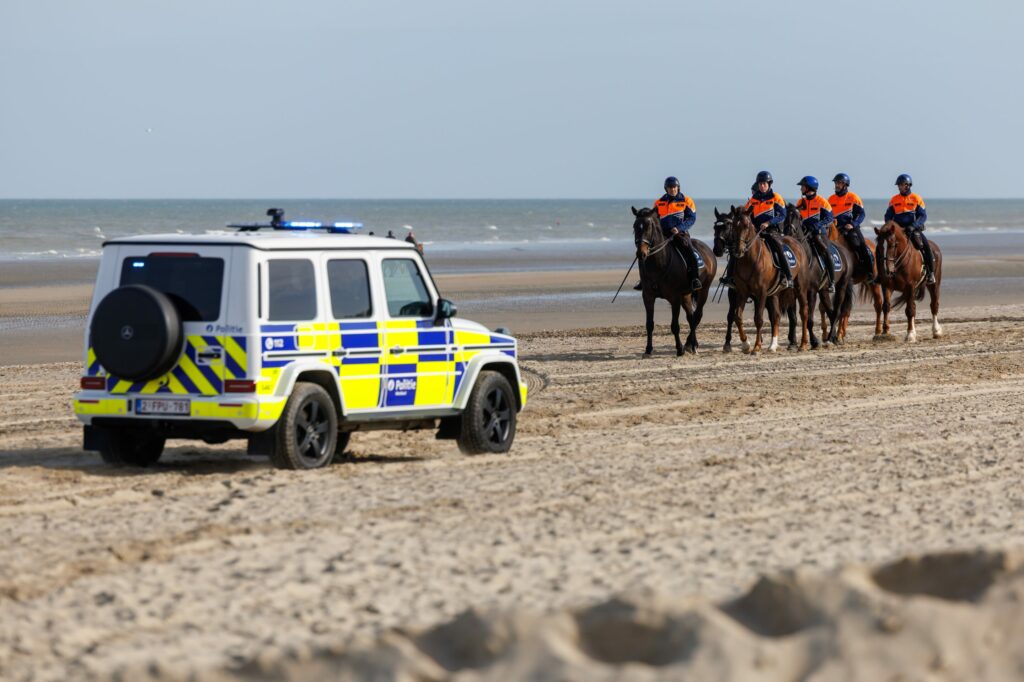
Belgian police have repeatedly intercepted groups of migrants attempting to cross the English Channel – some from the border region with France, others from points further east.
Earlier this month, dozens of migrants were intercepted by local and federal police as they tried to make the journey across the Channel from West Flanders. Police from the Westkust police zone in Flanders told the BBC that there have been multiple crossings so far this year. There were none in the area in 2025.
Police say gangs are using 'taxi boats' which move along the coast to pick up migrants in Belgian waters before heading towards France. Frontex spokesperson Krzysztof Borowski confirmed the phenomenon to The Brussels Times.
He said that from the Belgian coast, "a vessel typically departs from a quieter beach with a small number of people on board and then heads along the coast to a collection point near Calais or Dunkirk, where it stops offshore to pick up more migrants before crossing the English Channel to the United Kingdom”.

Belgian authorities are using drones to monitor coastal areas in West Flanders. Credit: Kurt Desplenter/Belga
According to Borowski, there are generally approximately 70 people on board such vessels. He added that while official figures from Frontex are "still under review and need to be finalised", the organisation can confirm "at least 15 departures from the Belgian coast so far this year, up from zero in 2024”.
On-the-ground operatives confirm there has been a shift in activities along the coast. While last year, small boats were spotted near Dieppe in northern France, this year, "the search for gaps has extended across the border into Belgium", according to the European Border and Coast Guard Agency.
In response to this trend, the UK government has given €1.5 million to Belgian law enforcement to deter smuggling attempts. The Federal Police has confirmed it has stepped up patrols, both on land and at sea, as well as from the air, with the deployment of drones and Frontex aircraft.
France and UK on the frontline
The issue has become a major political hot potato in the UK in recent years, and the British government is under intense pressure to restrict the number of migrants entering the country via small boats.
In a bid to tackle the issue, London set up a “one in, one out” scheme with France last year, meaning that for each migrant the UK returns to France, a migrant with a strong case for asylum in the UK can go there in return. French officials have also stepped up their interventions in recent months, putting pressure on smugglers.
The UK has also given money to the French government to fund the clampdown and help minimise departures from its coasts, especially in the Calais and Dunkirk areas. Funding for this purpose went up from €63 million in 2021 to €191 million in 2024-2025.
On 23 April, the French and British Interior Ministers, Laurent Nuñez and Shabana Mahmood, signed a new agreement aimed at extending and increasing British payments to French authorities. London is expected to pay France €767 million in the coming years under a three-year funding agreement.
The money will not only be used to control the coastline and the departure of so-called small boats, but also to finance the construction of a new administrative retention centre which is currently under construction and will become one of the largest such centres in Europe.
The new centre will house administrative offices for police officers, as well as a branch of the Dunkirk courthouse dedicated exclusively to migrant cases.
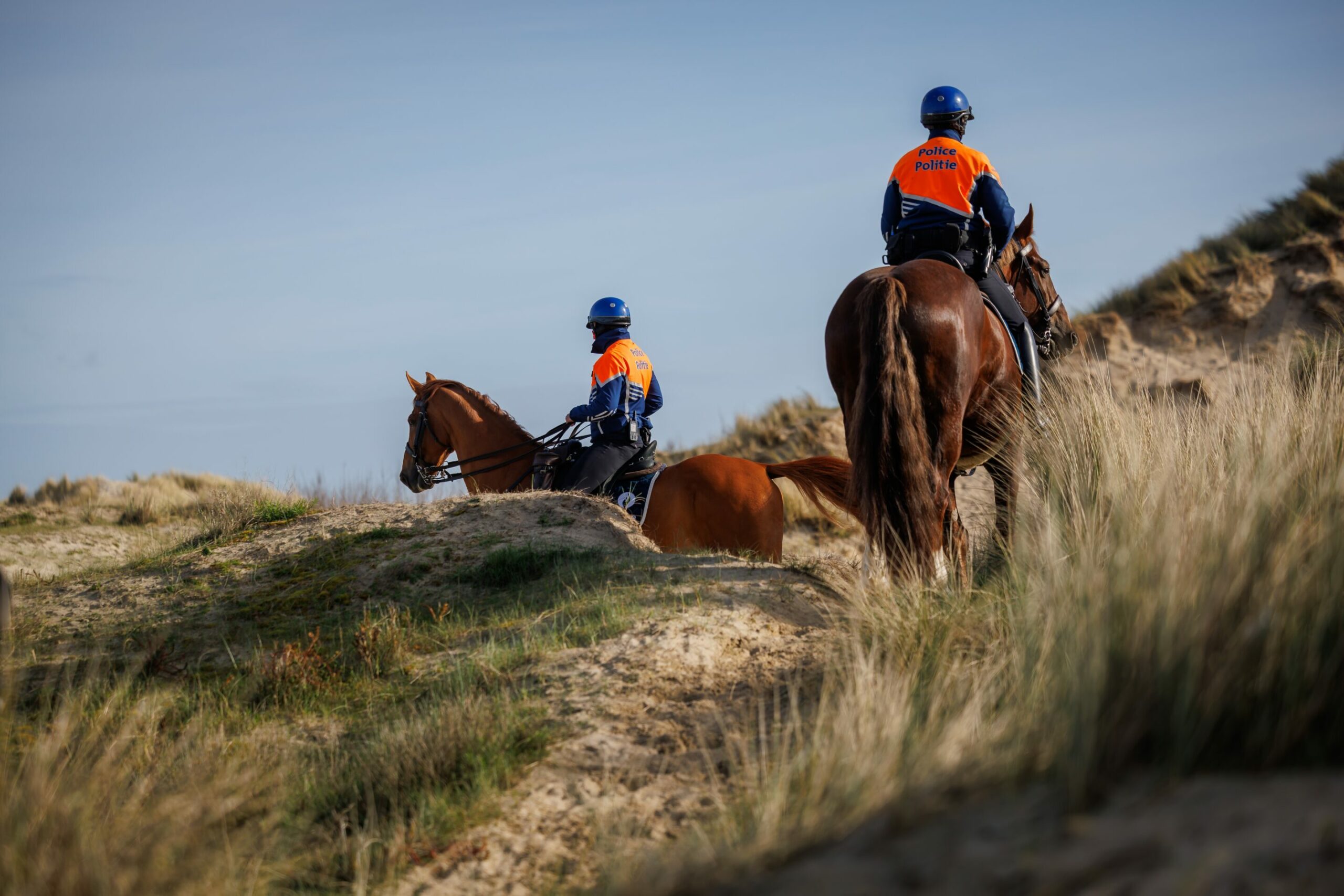
Belgian police patrols in West Flanders. Credit: Kurt Desplenter/Belga
Anti-migrant measures in France
This funding will increase the anti-migration activities currently being implemented in France against the migrant population – evident not only in police operations but also in the architecture of coastal cities.
Boulders under bridges, on riverbanks, and in flowerbeds are designed to prevent people from setting up tents, while benches equipped with dividers prevent people from lying down. A large wall, equipped with cameras, has transformed the port of Calais into a fortified citadel.
French authorities have also successfully deployed barriers made from buoys across canals and rivers to stop gangs from launching small boats from inland waterways – a tactic endorsed by the deputy chief of police in Westkust for use in Belgian waters.
Christian de Ridder told the Daily Telegraph: “We have to stop them before they get to the UK. We have to find a way to stop them on the water. If we could put up a naval barrier so they don’t get into French waters, everything will stop."
Several French humanitarian organisations have reported increased police operations on the French coast. Violent interceptions, constant expulsions, and arrests have pushed some people to change course and attempt to leave Belgium.
In response to the actions of the French police, who intercept migrants to prevent them from reaching the UK, the departure radius is increasingly widening, making it harder for the police to detect the so-called taxi boats.
According to Frontex, over the past two years, "French authorities have significantly stepped up patrols and prevention along their coastline, and that pressure is working. But it's also forcing smugglers to constantly search for new, less-monitored departure points."
A dangerous new route
Libby Kane from the Crossborder Forum, a network of civil society organisations working at the Belgium-France-UK border, told The Brussels Times that she was unsurprised by the emergence of a new migration route from Belgium.
"If anti-migration policies and police violence against migrants increase in France, it is inevitable that migration routes will change,” said Kane. "Migration routes don't disappear, but they change”.
Last month, the French prefect of the English Channel, Marc Chappuis, confirmed there had been 43 deaths in the English Channel in 2025, and six fatalities in 2026. The data shows a slight decrease compared to 2024, considered the deadliest year for Channel crossings" with 89 recorded deaths, but they remain worryingly high.
Kane is concerned that using the new route from Belgium will lead to more fatalities. "We fear that the difficulty of crossing from France will push more and more people to attempt new, more distant, and potentially deadlier routes," she said.
Retired coastguard Andy Roberts told the BBC that he was concerned about the health risks for those attempting longer journeys from Belgium.
"The majority of migrants wade out to the boats that take them, so they're soaking wet up to their chest before they even set off,” said Roberts. "The boats are overcrowded, and they're crossing the busiest thoroughfare for shipping in the world; it's extremely dangerous in every respect."
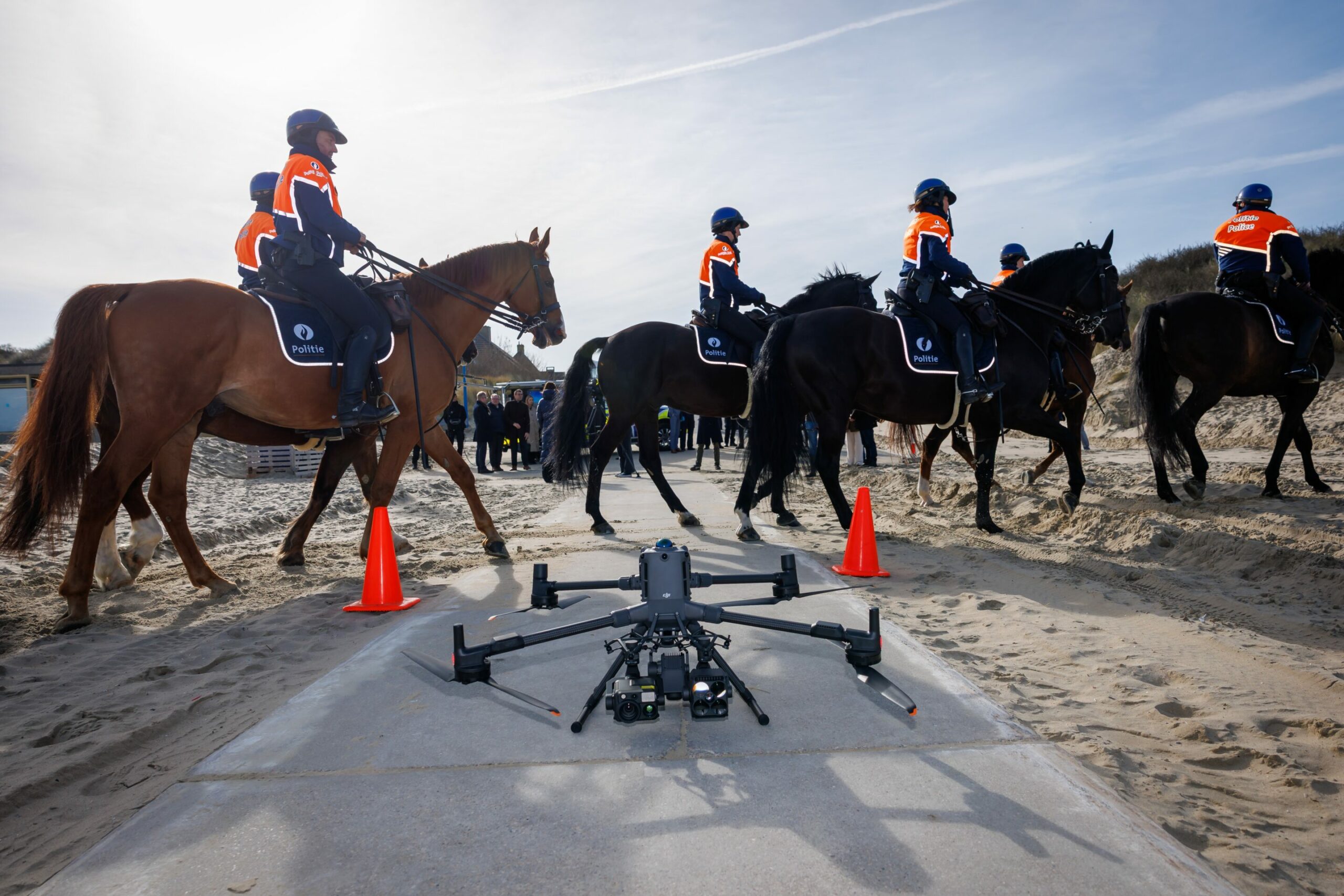
Belgian authorities are using drones to monitor coastal areas in West Flanders. Credit: Kurt Desplenter/Belga
The EU Channel Action Plan
The EU is aware of what is happening. "We are in contact with the authorities of all affected Member States," said Markus Lammert, European Commission Spokesperson for Home Affairs and Migration, adding that the European executive is "working on an action plan that should be published before the summer”
The action plan Lammert refers to was announced by European Commission President Ursula von der Leyen in March 2026. As is customary, at the European Council, the Commission President addressed a letter to member states on migration.
"Migratory pressure in the English Channel is increasing, requiring a structured response”, it reads. Specifically, the Commission, in close cooperation with the affected member states, von der Leyen stated, "will develop an EU action plan for the Channel route by June, with measures focused on strengthening external border management, promoting returns, fighting organised crime, and maximising support from EU agencies”.
The Brussels Times understands that the executive could be ready to present the plan between the end of May and the next EUCO on 18 June, but everything will depend on preliminary planning.
In addition to the Channel Action Plan, the EU is preparing a new EU Pact for Migration and Asylum which is also expected to come into force in the summer.
This will allow member states to make agreements for “returns” involving countries outside the EU and strengthen border controls. During the next plenary session in Strasbourg, the European Parliament will have a trialogue on the matter and on 1 June it will be discussed at Council level.
