
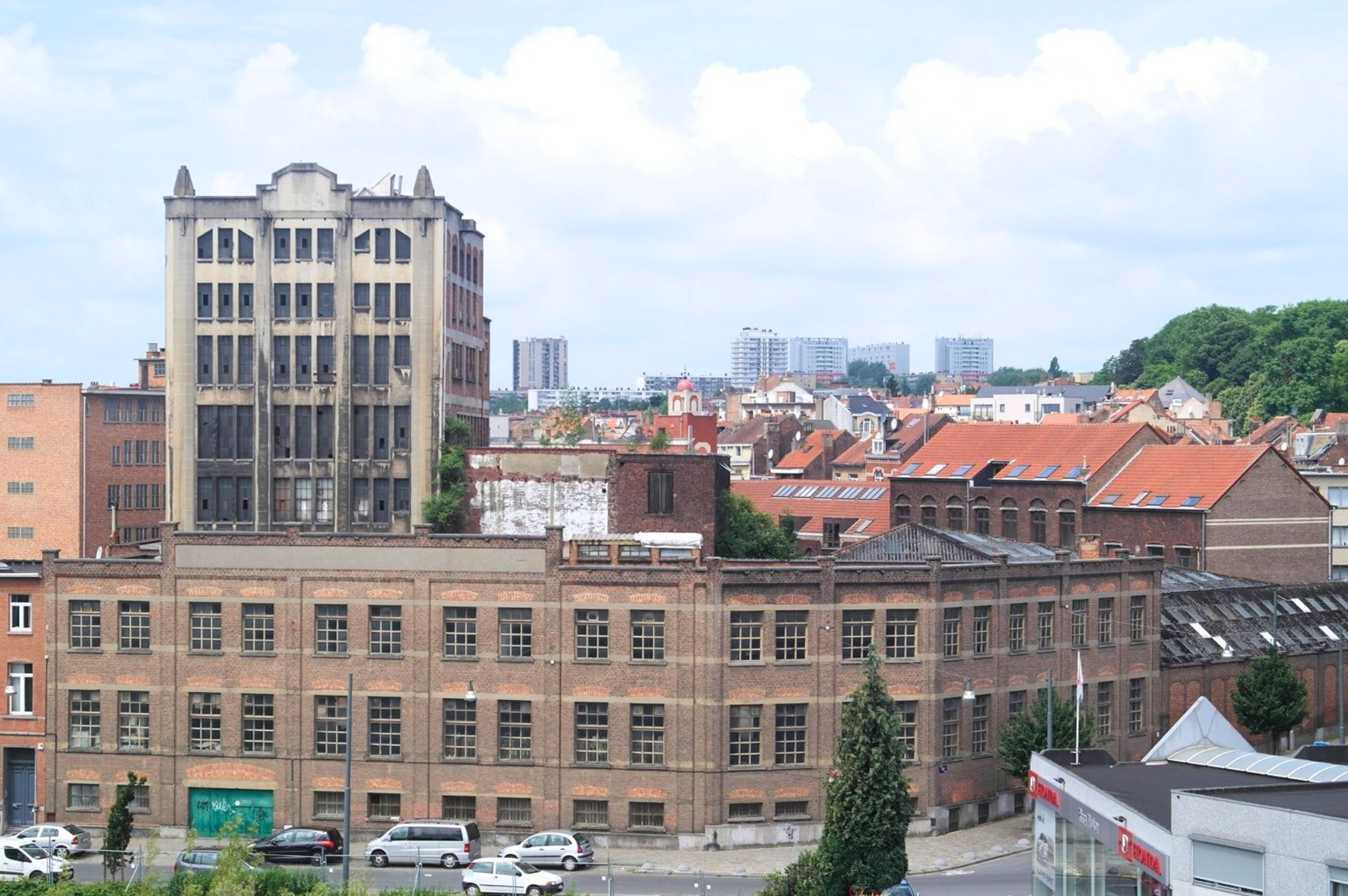
Brussels’ rich industrial and brewing heritage is threatened by the prospect of a new real estate project which could lead to a partial demolition of the iconic Atlas Brewery in Anderlecht, according to local campaigners.
Last week, a public hearing on the demolition and reconstruction of certain parts of the Brasserie Altas began, which threatens the future of the historic industrial complex, according to the Inter-Environnement Bruxelles (IEB), a non-profit network of around 80 neighbourhood committees and urban activists.
The site is largely known for its emblematic Art Deco tower, completed in 1926, which looms over the Brussels-Charleroi canal skyline and its facade with the inscription Brasserie Atlas, also visible from the street.
It serves as a testament to Brussels' past as a beer-brewing industrial capital, but the site has been neglected and left in a state of abandonment for decades.
Nevertheless, the space has maintained a largely creative and cultural focus in recent years thanks to the work of a local non-profit, occasionally hosting art exhibitions, concerts, club nights or even visitor tours during Brussels Heritage’s open days.
For years, there have been plans to renovate the site, but last year the process took a step forward with an open call for proposals from architecture studios. However, the redevelopment is complicated by the complex's semi-protected status.
Currently, only part of the street-facing facades and the Art Deco tower are on the preservation list, with the new plans set to renovate the protected parts (e.g. the tower) – while demolishing or modifying other non-listed sections.
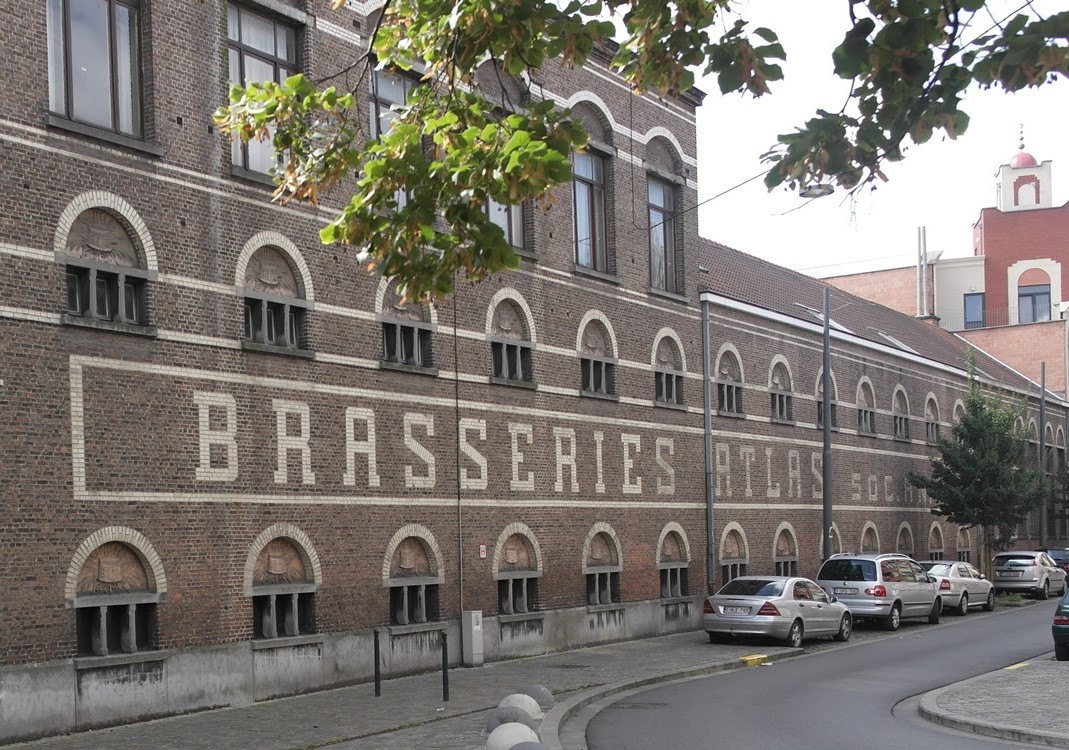
The facade of Brasserie Atlas in Cureghem in 2016. Credit: Inventory of Architectural Heritage
Architect studios Atelier Kempe Thill and RE-ST, who won the competition, plan to demolish two buildings inside the complex and rebuild them for housing. The listed tower would be used for "public and community" functions, according to the proposal.
Overall, the redevelopment includes 78 housing units and 91 student rooms, nearly 2000 m² of offices and 70 parking spaces. There would also be facilities for yoga, wellness and a rooftop, according to developer LIFE.
The outdoor space would also be divided between a private northern courtyard for residents, while the southern courtyard (near the tower) would maintain a more public role, according to an assessment by the BMA, the independent public service running architectural and urban planning in the Brussels Region.
Full protection needed
However, urban campaigners at IEB, alongside the non-profit behind the Brussels Museum of Industry and Labour, La Fonderie, have launched a petition to push for the full protection of the complex – not just the tower and facade.
Campaigners argue that the complex’s vast pillar-lined halls, its labyrinth of rooms, cellars, underground passages, and inner courtyard – "where it is pleasant to linger on sunny days" – offer numerous opportunities and solutions to "the many social and economic needs in the surrounding Cureghem district."
Indeed, the site could offer community, cultural, artisanal, and artistic activities, as well as social economy projects and even SMEs, the IEB stresses.
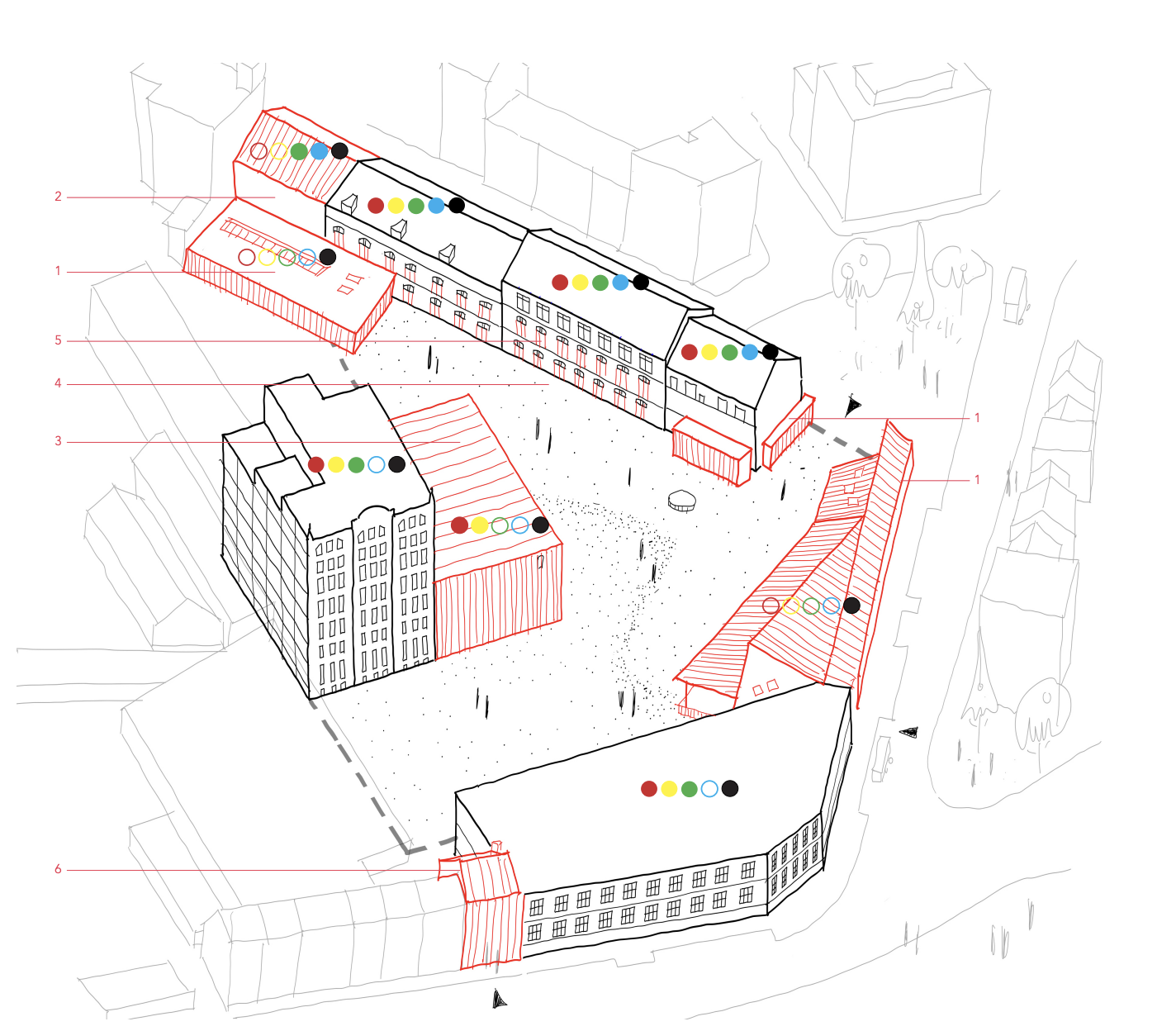
The plans would see building numbers 2 + 3 completely demolished, while number one would have its roof and other walls removed. Credit: BMA Brussels
"It is understandable that the authorities would support a project that prevents it from falling into ruin. Listing the building should not, however, prevent any evolution of the complex to fulfil new functions," the non-profit said in a statement. "But its demolition would forever jeopardise the potential it holds."
Innovative in its day
Historical particularities on the Brasserie Atlas site can also paint a picture of how brewing in Brussels rapidly evolved, thanks to rapid industrialisation in the early 20th century.
It is one of the few old breweries that included a "tank to door" system developed by a now-forgotten Swiss inventor, Léopold Nathan. His system revolutionised commercial brewing by eliminating traditional, open-air wooden or copper fermentation vats.
Furthermore, its 30-metre-high tower and its innovative "vertical brewery" design utilised a gravity-based "waterfall" system. This saw seven different steps carried out across multiple floors, each of which corresponded to one of the brewing processes.
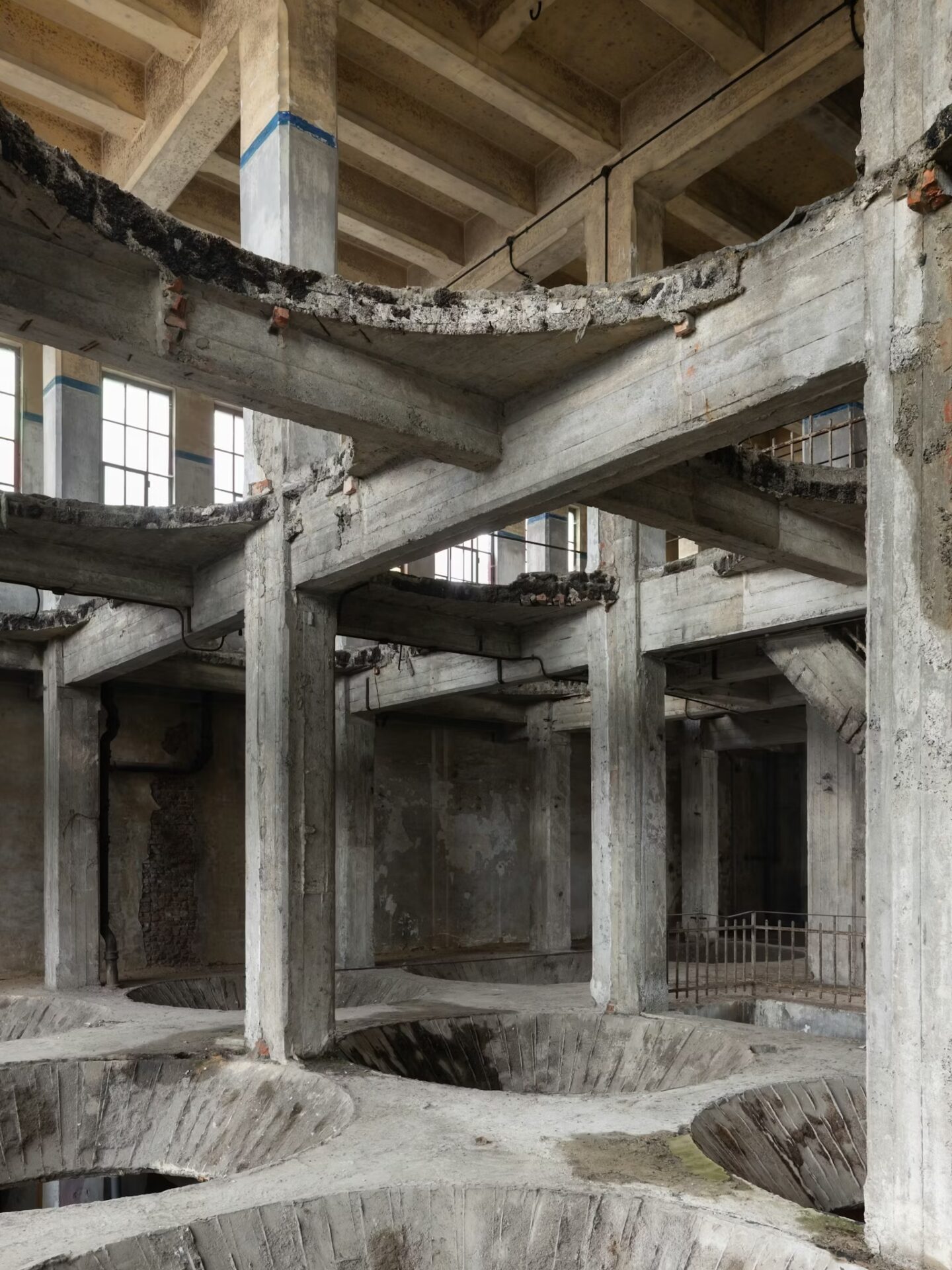
Brasserie Atlas's waterfall brewing technique: where the old brewing tanks used to be. Credit: LIFE
Another testament to its historical value is the two-storey stables, a rare feature which was used to load the beer for transportation. These would have been used for the last days of animal traction, but the advent of motorised vehicles would soon change transportation forever.
A brief history
The IEB also notes the presence of a nearby, covered-up stream – the Marais Biestebroeck, which suffered the same fate as the Senne River, and now passes underneath the city. This too would be affected by the development.
This stream is significant, as it led to the creation of the first brewery on the site. The Brasserie Saint Guidon first opened there in 1912 as a steam-powered brewery making gueze and Lambic.
Previously, the area hosted an old 14th-century windmill known as the Petit-Moulin, in what was known at the time as Op-Cureghem (upper Cureghem).
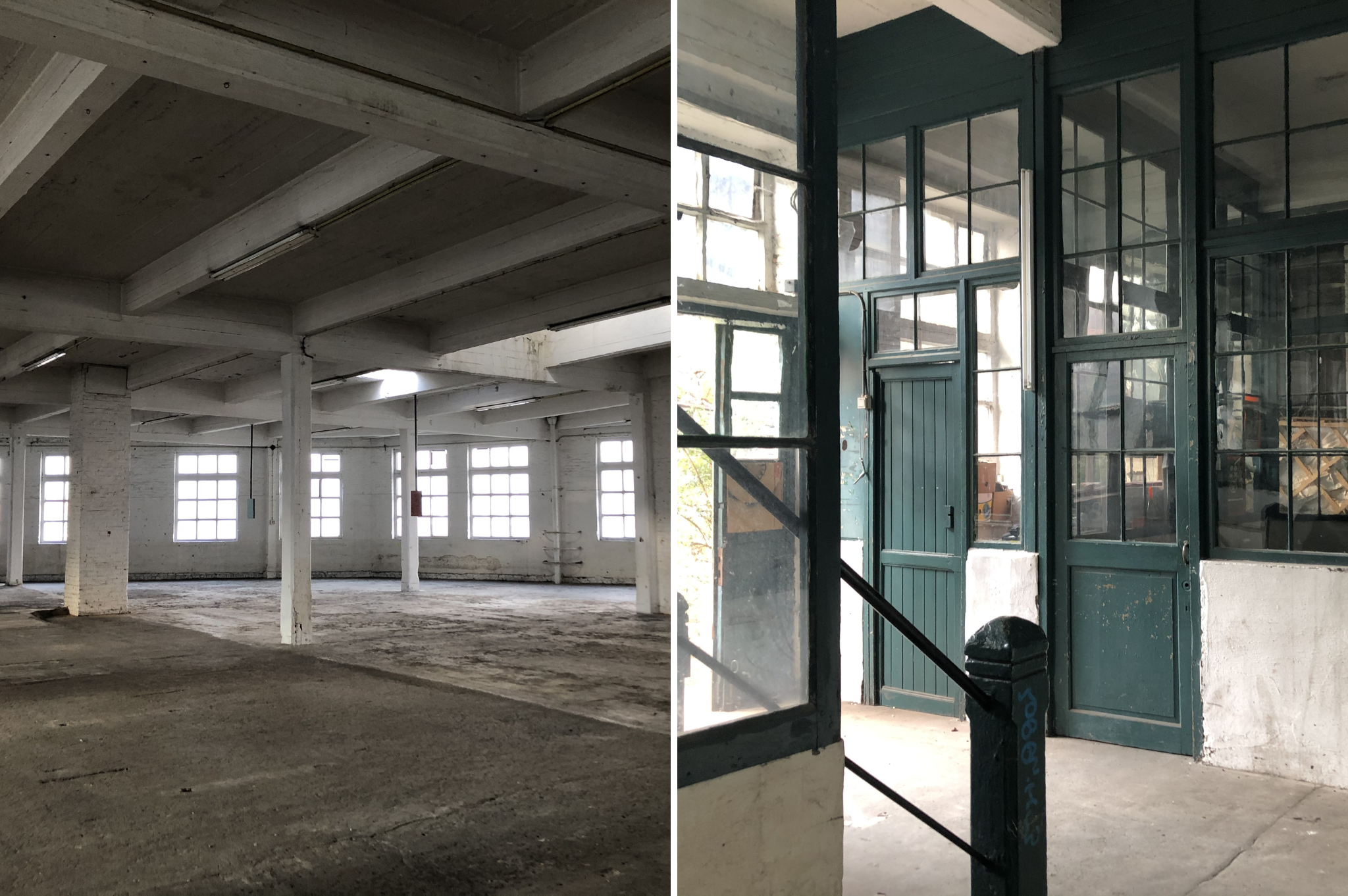
Inside the Brasserie Atlas in 2021. Credit: The Brussels Times / Ugo A Realfonzo
In 1925, the Brasseries Saint-Guidon merged with Brasserie Atlas to become Grandes Brasseries Atlas. It expanded production with the construction of the Art Deco tower in 1926. However, the brewing and fermentation rooms, as well as the cellars, date from the Saint-Guidon period.
The transformation into Atlas also marked the move away from the making of Brussels’ traditional beers, such as gueze and Lambic, which were brewed locally for centuries.
After the merger, the brewery shifted its focus to lagers and pilsners made in the Czech, German and Polish styles – a phenomenon felt across the Brussels brewing industry. This led to the tipple’s general decline in popularity in the city, even if the brewery maintained its traditional gueze production.
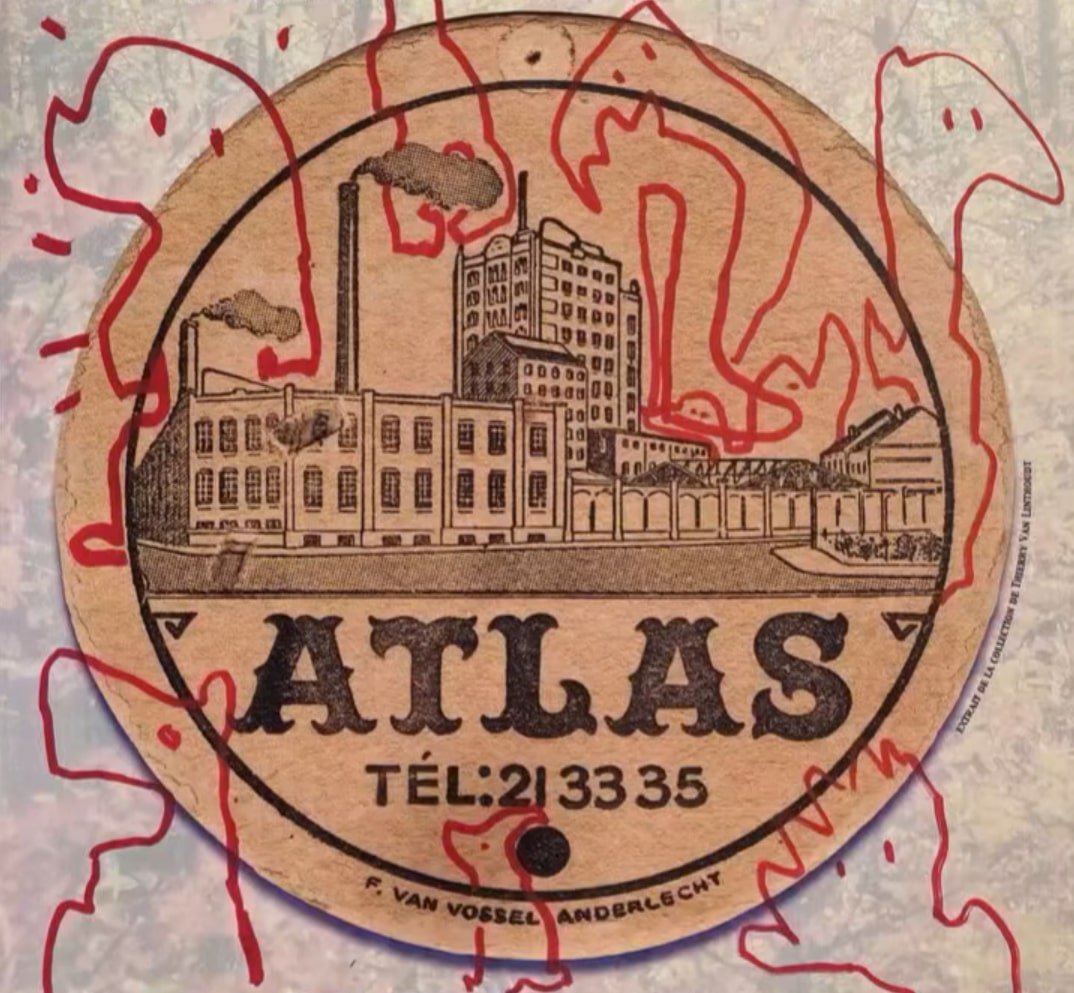
An old beer mat of the Brasserie-Atlas. Credit: Jubilee for Heritage Days
In 1952, Atlas was then bought by the family-owned Haacht Brewery, which moved the production outside of Brussels. The brewing complex in Cureghem was then used as a warehouse and transportation hub. However, Haacht moved out of the premises altogether in the 1980s, leaving it abandoned.
Apart from the removed brewing equipment, the interior remains almost exactly as it was left in the 1950s, with the site also proving popular with urban explorers (urbex). More recently, the building was bought by a non-profit organisation which housed artists for many years, who have since moved out for the renovation.
Future of Atlas
Now, with the redevelopment project being carried out by B&R Development and LIFE and according to the plans by architect studios Atelier Kempe Thill and RE-ST, several historic buildings within the brewing complex are facing demolition.
This proposal was selected for "its critical approach to the client’s request to preserve and renovate the existing structures," according to Brussels architectural authorities at BMA.
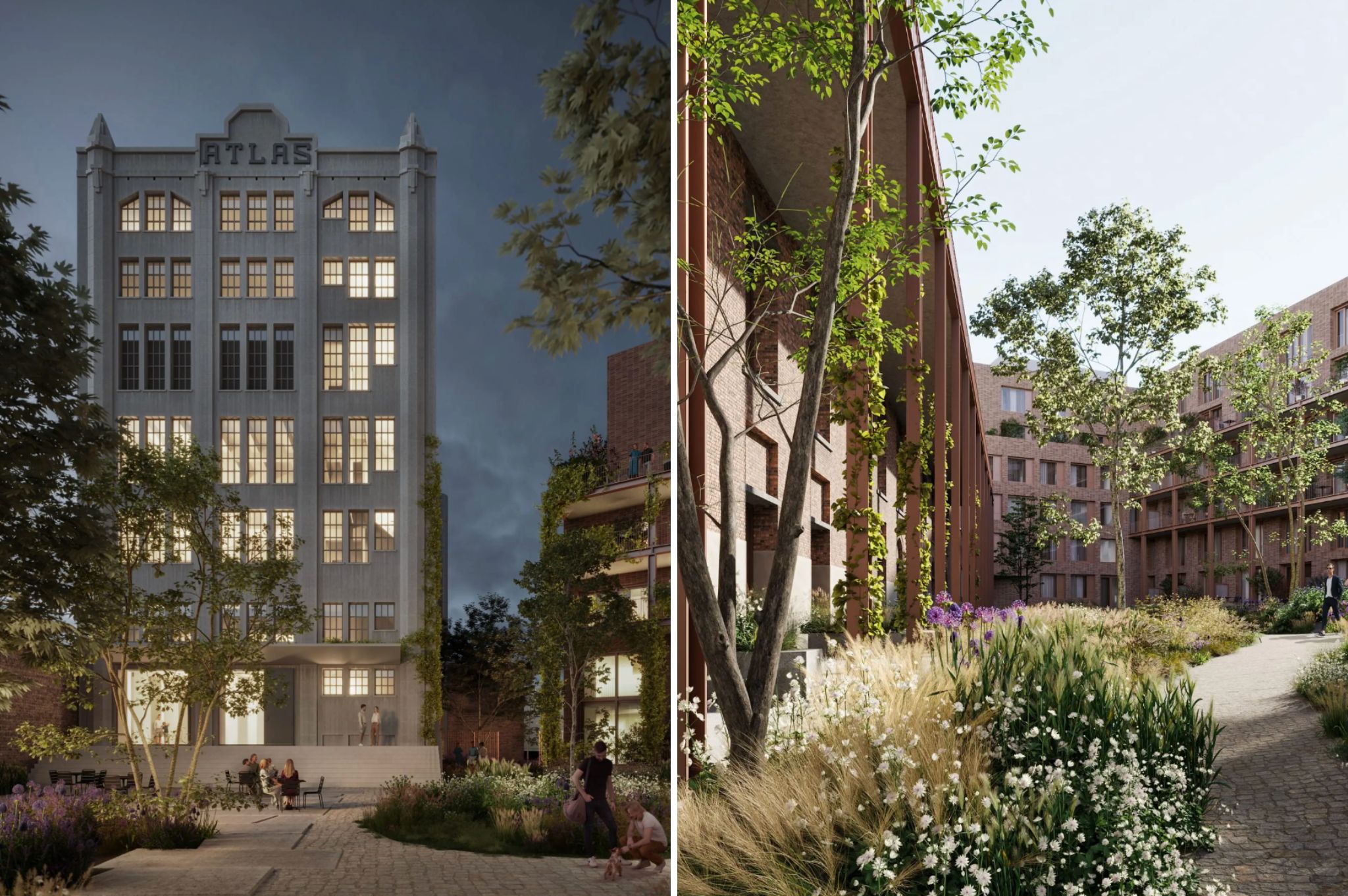
The winning plans for the development at Brasserie Atlas. Credit: Atelier Kempe Thill and RE-ST
However, longstanding campaigners at IEB and La Fonderie are calling for people to sign their petition to protect the entire complex as heritage and spare any demolition of the historic buildings in the brewing complex.
This is particularly important as the public hearing began on 11 May and ends on 9 June 2026, with a consultation planned for 18 June.
"The project destroys the historic stables, strongly encroaches on the interior of the block, provides very few public facilities and no productive activity in this historic industrial site," the IEB stressed,
Find out more information about the IEB petition here.
