
Belgium's progress towards creating a “tobacco-free generation” is at risk amid a lack of measures against industry interference and emerging nicotine-based products, the national health institute, Sciensano, has warned.
While the self-reported number of smokers in the country has reduced over the years, smoking remains a leading cause of preventable deaths in Belgium, with over 9,500 annual deaths in the country linked to smoking, according to the health institute. Smoking-related illnesses also put a significant economic strain on the healthcare system.
In 2022, Belgium ramped up its efforts against tobacco use, adopting an inter-federal plan to discourage smoking and reduce the number of new smokers to almost zero by 2040, creating the so-called "tobacco-free generation".
However, despite federal measures, including smoking bans and restrictions on tobacco product branding, the Belgian health institute says that none of the targets outlined by the country are currently expected to be achieved without policy changes.
Industry interference
The lack of official measures in place to prevent the tobacco industry from influencing health policies is an area of concern for the health institute.
In a global study last year on how governments protect tobacco policies and respond to risks of industry interference, Belgium scored above average, ranking 38th out of 100 countries worldwide, and 9th out of 25 European countries. Nonetheless, the report outlined several areas for improvement, according to Sciensano.
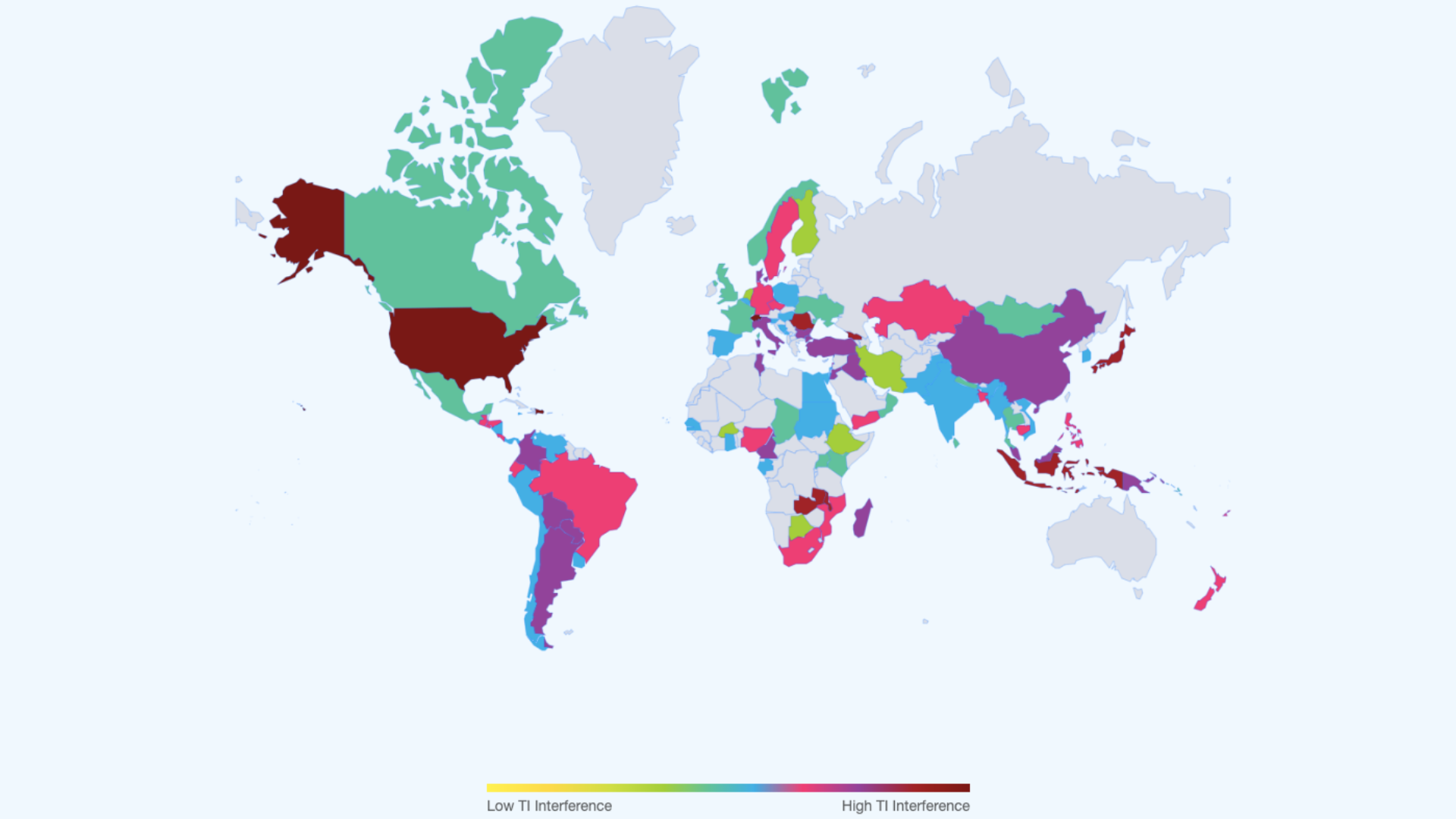
Tobacco industry interference global map. Credit: Global Center for Good Governance in Tobacco Control
Although the study did not find evidence of unjustified interactions between the tobacco industry and government institutions, it warned of contacts between the state and sectors that indirectly represent the interests of the tobacco industry in Belgium, such as shops benefiting from tobacco sales.
The report further identified several official partnerships between the Belgian Government and the tobacco industry for awareness campaigns against cigarette butt litter. According to Sciensano, these initiatives create an added risk of industry interference in health policies.
Among other proposals, Sciensano is calling for a ban on the industry's involvement in tobacco public awareness campaigns, a mandatory public register of all contacts between the Belgian state and direct and indirect representatives of the tobacco industry, and more transparent and accurate information regarding the industry's activities, including lobbying and marketing.
Changes in habits
Despite the ongoing decline in the number of people who regularly smoke cigarettes, experts at Sciensano warn that new emerging products may be partly contributing to the trend.
According to the health institute, an increasing number of young people in Belgium are shifting towards “alternative” ways to consume tobacco and nicotine, such as through e-cigarettes.
Sciensano's epidemiologist, Sarah Nayani, noted that action must continue to be taken to tackle all types of tobacco and nicotine-based consumption to achieve the country's goals.
“If we do not take action on both traditional smoking and new nicotine-based products, we risk perpetuating the same public health burden in a different form,” she said.
For the health expert, measures to reduce the visibility of tobacco products, make them more expensive and accessible, are among the most effective ways to prevent related diseases and deaths in the country.
Continued decline but missed targets
Belgium aims to reduce the number of daily tobacco smokers to 10% of the population aged 15 years and over by 2028 and 5% by 2040, based on existing policies and trends. But Sciensano predicts the number of daily smokers will only to drop under 10% of the population in 2037.
Among young adults aged 15 to 24 years old, it aims to reduce the number of of daily smokers to 6% of the young adult population by 2028. However, the health institute currently predicts the national percentage to be around 9.4% by that year, with Flanders expected to have a significantly lower number of young smokers (7.5%) than Wallonia and Brussels (around 12% each).
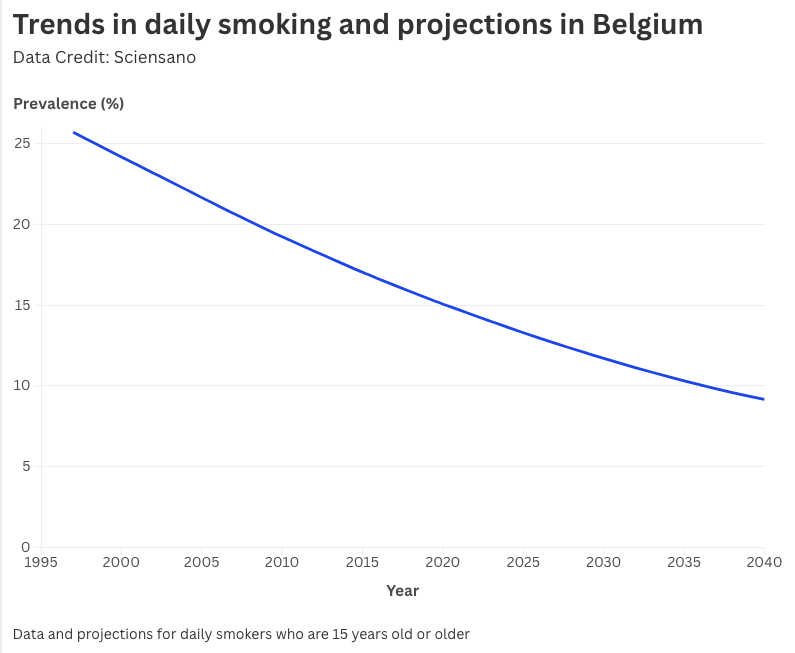 The health institute further noted that current smoking trends vary greatly depending on the level of education of individuals, with those with a lower level of education making up a higher percentage of frequent smokers. This trend is expected to remain the same over time, although no educational group is expected to meet the country's 2040 targets.
"Targeted approaches that address these persistent inequalities and the vulnerability of specific population groups will be necessary to achieve reductions in smoking across the whole population," the institute explained.
The Brussels Times contacted the Federal Health Minister Frank Vandenbroucke (Vooruit) for comment, but has yet to receive a response as of the time of publication.
The projections by Sceinsano are based on the Belgian Health Interview Survey, a nationally representative survey conducted around every five years since 1997.
The Global Tobacco Index 2025 was conducted by the Global Center for Good Governance in Tobacco Control.
Related News
- Tobacco products, vaccines and new labour laws: What changes in Belgium on 1 June?
- How Belgium's booming illegal cigarette trade is fuelling crime and endangering public health
- Quick smoking break leads to prison sentence for Brussels dealer
- Belgian anti-poison centre warns of illegal vapes after youngsters end up in hospital
