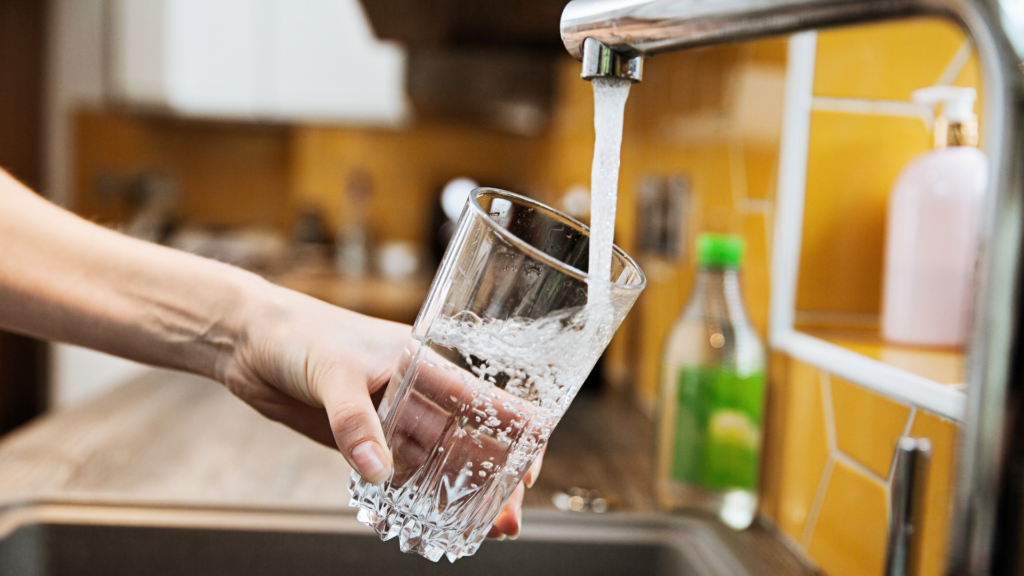
A court case in Italy has reignited the debate of whether tap water should be freely available to customers in the hospitality sector. Where does Belgium stand in the discussion?
Italy's top court recently ruled against a tourist who sued a luxury hotel for reportedly refusing to provide tap water with meals, instead offering a €7 bottle of mineral water.
The court stated that there is no law in Italy mandating that restaurants and similar establishments serve tap water.
Under the EU Drinking Water Directive, Member States are encouraged to urge establishments to serve tap water; however, there is no EU-wide law regulating this.
As a result, the rules and norms in the hospitality industry vary greatly across Europe, with some countries treating water as a commercial product, while others, like France and Spain, require the hospitality sector to offer free tap water to customers.
What is the situation in Belgium?
In Belgium, there is currently no legal obligation for restaurants, bars or cafés to offer free tap water to customers.
There have been attempts in the past to introduce measures to change the situation, including a 2019 policy statement by the Walloon Government and a 2023 interfederal plan against alcohol consumption.
However, these proposals did not lead to legal obligations to change the tap water rules in Belgian eateries and bars. The proposed changes encountered pushback from some sections of the hospitality sector, who cited financial concerns.
Concerns from the sector
In 2026, the financial impact of serving free tap water remains a worry for some hospitality businesses, according to Martin Stameschkine, communications officer of the hospitality federation Horeca Brussels.
“Free tap water in restaurants is neither envisaged nor feasible under current conditions. This isn't a matter of goodwill, it's a matter of survival,” Stameschkine told The Brussels Times, on behalf of the federation's president, Matthieu Léonard.
Stameschkine pointed to high labour and water costs as a source of the concern. “Our members run businesses, and they need to make a living…water represents a cost, and so does serving it.”
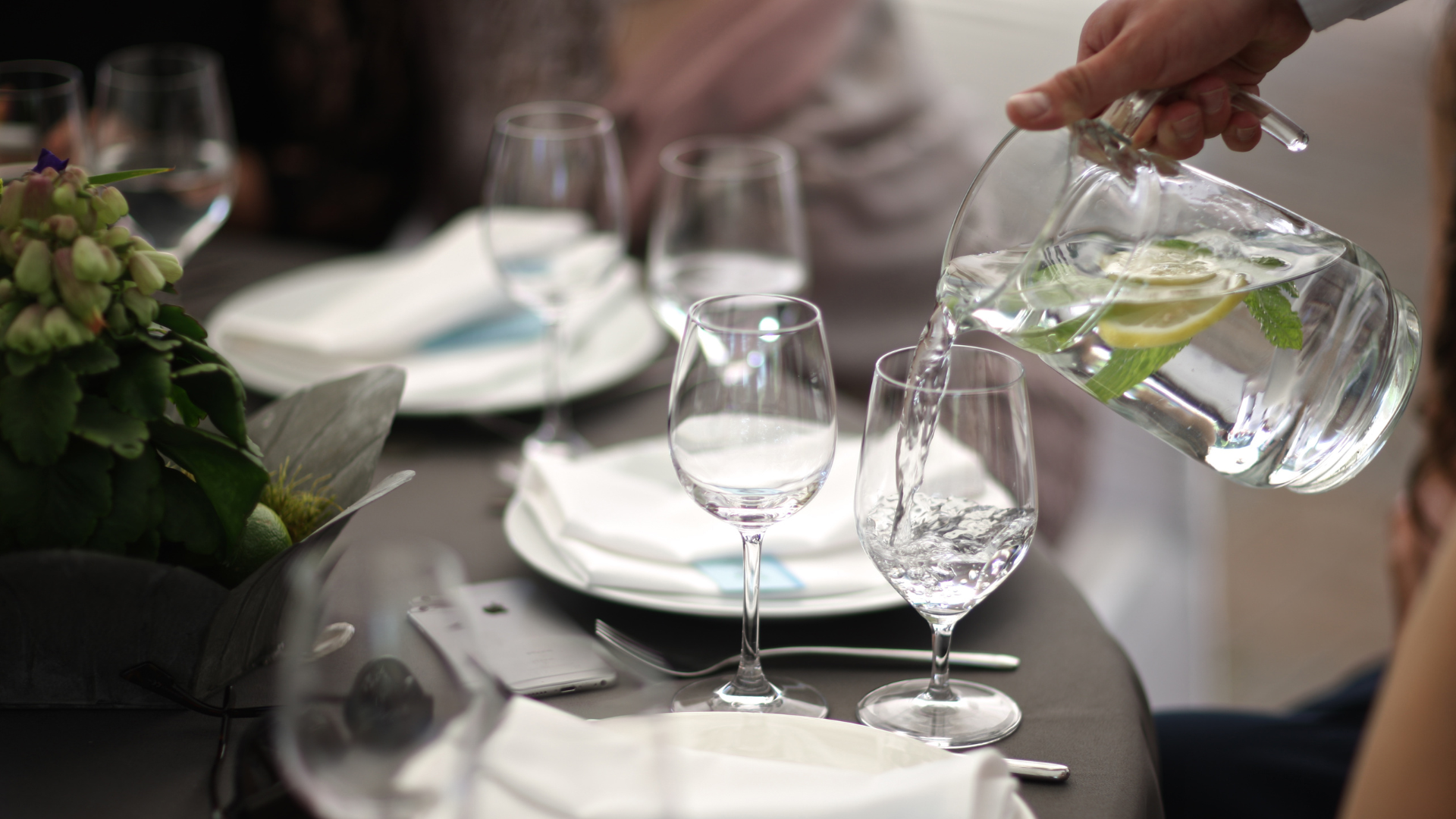
Illustrative image of a person serving water. Credit: Canva
Additionally, Stameschkine noted that free water could reduce the consumption of other paid drinks, reducing the profit margins for establishments.
"Restaurateurs are not opposed to the principle of offering tap water…but if this becomes an obligation, it has to be subsidised,” he added. ”We're asking that the financial reality of running these businesses be recognised before any such measure is even considered.”
Misleading comparisons?
Stameschkine further warned against making comparisons between different countries, as the price of doing business differs across the EU. “You cannot transplant the obligation without transplanting the conditions that make it bearable,” he said.
In Spain, for example, Stameschkine pointed out that labour costs and VAT on water are "significantly lower” than in Belgium.
A similar point was raised by Laura Clays, spokesperson for the Belgian consumer group Test Achats.
“I know that often the Belgian situation is compared to France, where tap water is free. But then again, in France, you pay for the bread. In the USA, you have to leave tips. Every country has its own culture,” she told The Brussels Times, adding that while the consumer group encourages that tap water is served for free, it understands the financial situation of restaurants.
Consumers push for tap water
While Clays noted that Test Achats does not have a specific position within the free tap water legislation debate, citizens have shown an active interest in the topic in Belgium, with the most notable example being the ‘Free Tap Water in Belgium’ campaign.
Launched in 2019 by British national Sarah Ehrlich, the movement promotes access to free tap water, initially focusing on eateries but now also advocating for better access to public drinking fountains and refill stations in general.
The campaign, which has attracted the support of several volunteers over the years, aims to give consumers more choice, to eliminate myths surrounding the quality of tap water, and to reduce unnecessary pollution from water bottles.
While Ehrlich recognises the cost of serving tap water, she noted that several Brussels restaurants and cafés have found ways to successfully do so, including the wine bar Fermento and the food chain Exki.
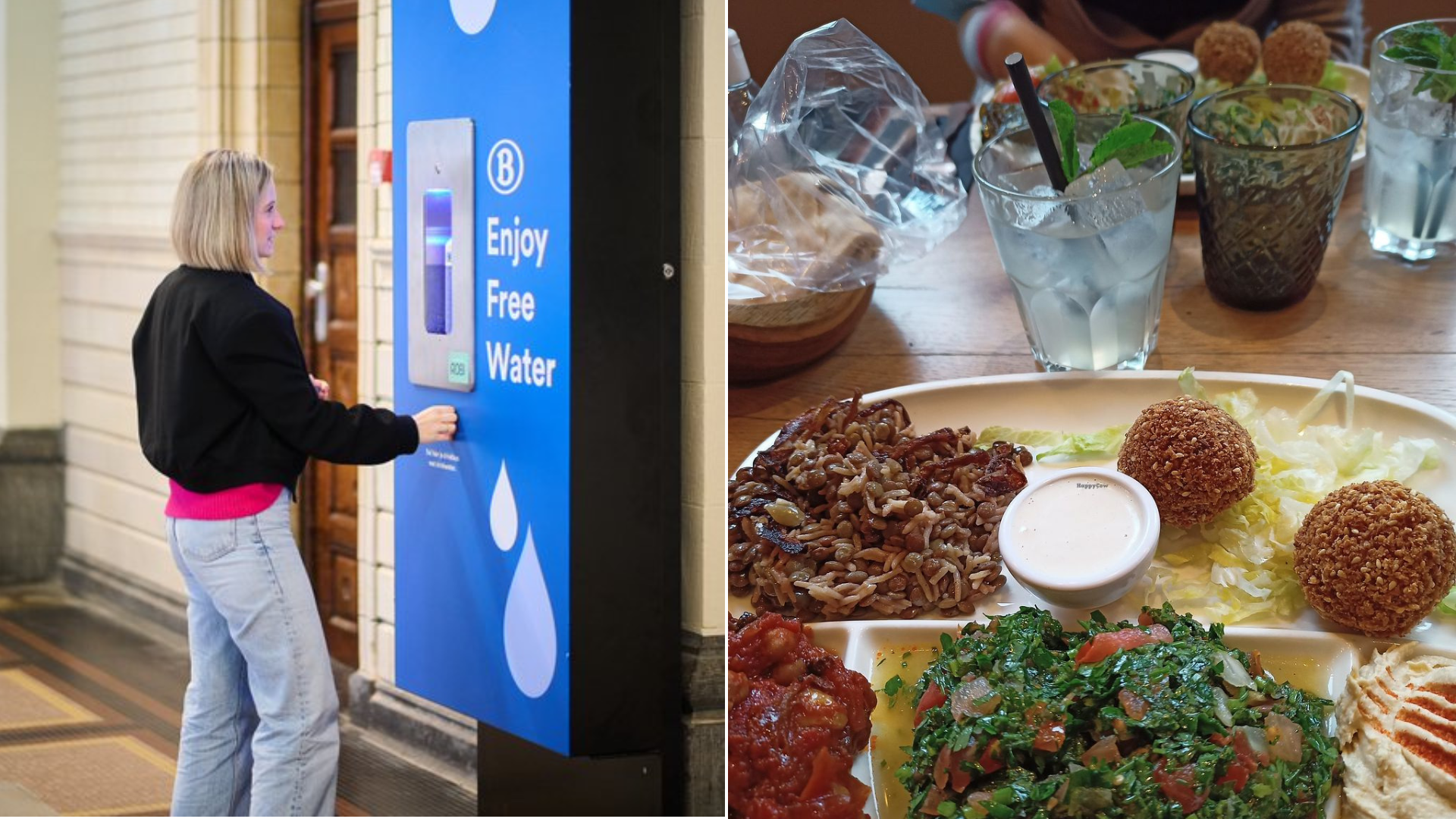
'Free Tap Water in Belgium' promotes access to public water refill stations (L) and tap water in restaurants (R). Credit: Sarah Ehrlich
For her, one "realistic step” forward would be the creation of legislation that obliges restaurants to offer customers a choice between bottled water and tap water.
Although Ehrlich believes that restaurants should retain the right to offer tap water for free or to charge for it, she believes guidelines would also need to be established to cap the price charged for tap water.
“Until Belgian VAT rules and soft drink taxation are reformed, we understand that restaurants may need to levy a reasonable charge. However, there should be limits so consumers do not feel exploited,” she told The Brussels Times.
Whether such legislation will ever see the light of day in Belgium remains unclear. In the meantime, Ehrlich hopes to recruit more volunteers to continue the movement towards more accessible tap water.
The Brussels Times contacted the Federal Health Minister Frank Vandenbroucke (Vooruit) and Federal Economy and Employment Minister David Clarinval (MR) for comment, but it has yet to receive a response as of the time of publication.
