Dozens of Belgian economists and other experts have presented the Federal Government with over 250 proposals to improve the country's difficult budgetary situation. Whether the government will take them up on it remains to be seen.
After the government requested input on getting the country's budget back on track, the Federal Planning Bureau asked numerous experts and institutions, including the National Bank, the High Council of Finance, and the Federal Knowledge Centre to come up with ideas. Prime Minister Bart De Wever (N-VA) is hoping to find a spare €7 billion.
As the Federal Planning Bureau is an impartial institution, it stressed that the list of proposed measures is presented as a kind of menu of options for the authorities to pick and choose from.
"We wish to support policymakers and contribute to the budgetary discussions through this exercise. In that respect, we do not present any measure as better or worse," said Baudouin Regout, the Planning Bureau's Commissioner.
"After all, it is and remains the responsibility of the Federal Government to take those decisions," he stressed. "We propose, we do not decide."
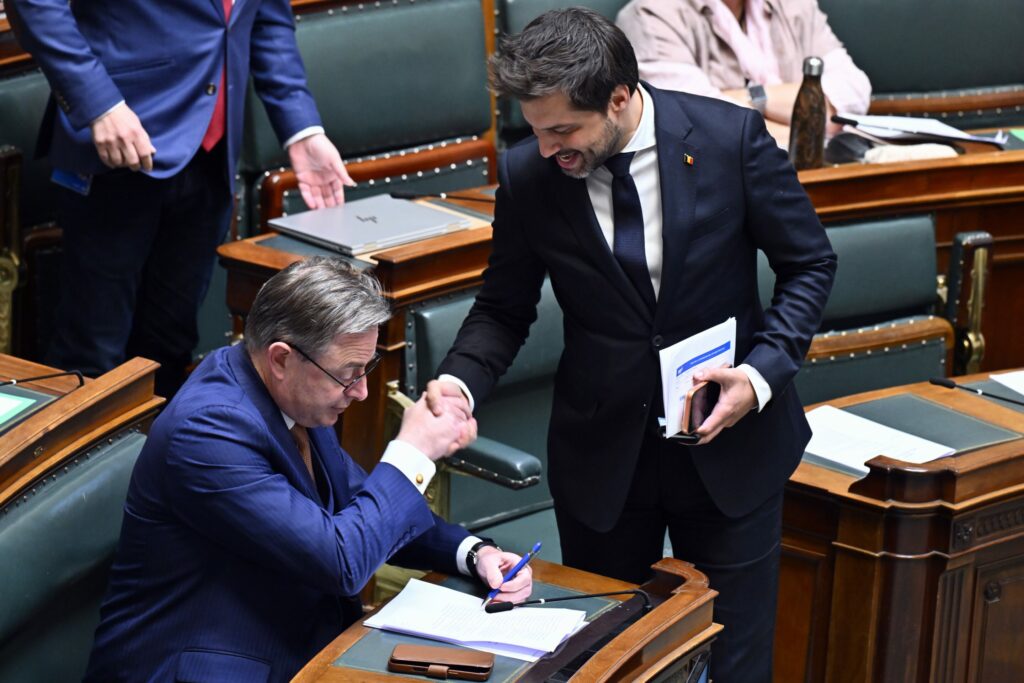
Prime Minister Bart De Wever and MR's Georges-Louis Bouchez pictured in the Federal Parliament in Brussels, Thursday 21 May 2026. Credit: Belga/Eric Lalmand
In total, more than 250 measures were listed: approximately 230 from knowledge and research institutions and some 30 that were previously submitted by the political parties as part of the cost analysis of the 2024 election manifestos.
The institution contacted various independent institutions and experts to present the government with "as broad and impartial a range of measures as possible".
The measures have been compiled in a database and summarised in a report.
VAT reforms
Among other things, the experts recommend a reform of the VAT system. One proposal suggests new rates of 7% or 8% for the reduced VAT rate (up from 6% currently), and 22% or 23% for the standard VAT rate (up from 21% currently).
The Dutch VAT system is also cited as an example: the Netherlands applies rates of 9% and 22%. This, some experts argued, could promote economic cooperation.
Regarding Belgium's indexation system (which links wages, benefits and pensions to inflation), a handful of wide-ranging proposals were also submitted.

Prime Minister Bart De Wever (N-VA). Thursday 28 May 2026. Credit: Belga/Jonas Roosens
These are bound to be controversial, as any suggested changes to the country's automatic wage indexation have historically been politically sensitive.
The list of proposed measures includes a "classic" index jump (a one-off deliberate skipping of an automatic adjustment), or the abolition of the recently agreed 'centenindex', in which only the first €4,000 gross monthly wages will be indexed.
Another measure proposes linking the 'centenindex' to a reform of how price increases for fossil fuels, such as natural gas and gasoline, are factored into the index. According to De Morgen, De Wever may be considering something similar.
At the same time, one proposal emphasised that the index must be retained because it "supports purchasing power" and provides a buffer against "lower tax revenues".
Wealth
Regarding general taxes, a series of familiar expert ideas are resurfacing in the Planning Bureau's menu.
One of these is the so-called dual income tax. Under that system, all income from assets (including dividends, capital gains, and rental income) is taxed at a fixed rate. This has yet to be calculated, but rates of 20% or 25% have been proposed.
Numerous proposals touch on another politically sensitive issue: various experts suggested a revision, postponement or complete abolition of the government’s promised tax cuts.
In the longer term, a proposal to metaphorically "sell off Belgium's crown jewels" was also put on the table: politicians have been discussing a reduction in existing government holdings for some time, but experts are now putting forward concrete ideas for it. The proceeds could be used to reduce the mountain of debt.
When it comes to investments in the military, experts stressed that the focus must be on the economic return for Belgium.
Pensions
In the unemployment and pension systems, there is currently very little room for savings. Especially on the latter issue, few proposals were submitted, likely due to Belgium's recently approved pension reform.
As a result of that reform, the increase in the budgetary cost of pensions due to population ageing between 2024 and 2070 is expected to fall by 1.4 percentage points of GDP (based on information available on 6 March 2026).
"This recent reform likely explains why few proposals have been put forward in this area," the Planning Bureau said.
Some had already largely been incorporated into the current reform: capping of the highest pensions, and actuarial neutrality regarding the choice of effective retirement age.
A "more ambitious" longer-term proposal, according to the Planning Bureau, recommends moving from a pay-as-you-go pension system (in which pensions are paid directly from current premium income, not through borrowing) to a funded pension system (in which beneficiaries save for their own pension).
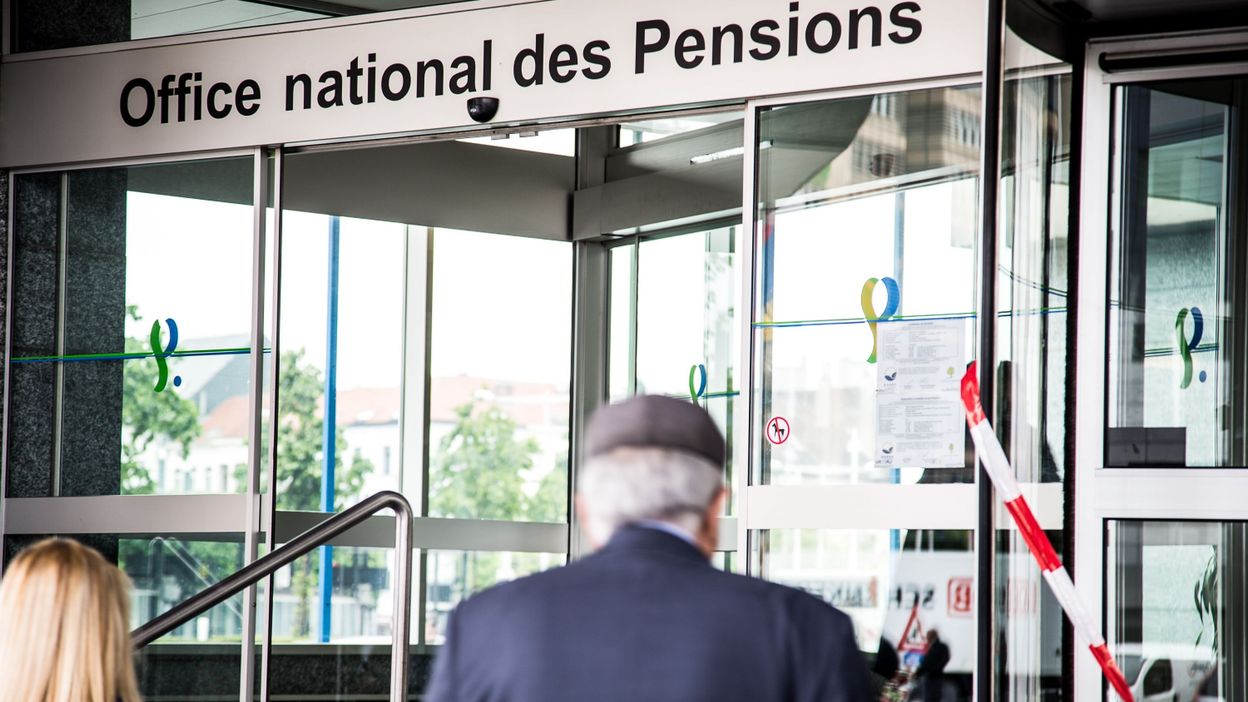
Credit: Belga
In healthcare, an additional cap on the growth rate and higher copayments are being proposed.
For subsidies, an "across-the-board cut" of 10% is among the proposals.
There are repeated calls for the regional and community governments to contribute their share to the Belgian coffers. A revised financing law could give the federal budget more breathing room.
The proposals compiled by the Planning Bureau have reportedly had a "rather cold reception" within the government, according to De Morgen.
With such a broad range of measures, a political compromise will be needed between the majority parties. Considering the difficulties the parties have had to first reach a coalition agreement and later find a deal for the budget, the process is not expected to go smoothly.
The Planning Bureau made it clear that measures should be taken sooner rather than later. However, without a breakthrough before the national holiday on 21 July, the process will "very possibly" be carried over into the summer.
