
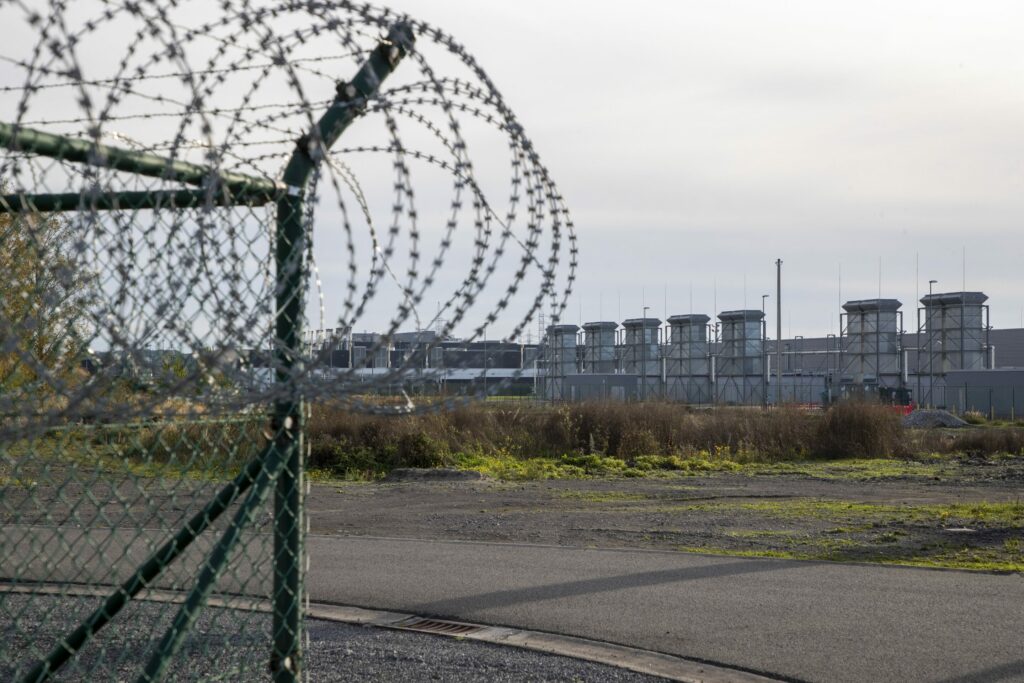
New EU plans aiming to boost its own tech capabilities, stop relying on foreign actors and become "an AI continent" could lead to more data centres in countries like Belgium, experts say, calling out a "misguided AI race to the bottom".
The European Commission last week announced its tech sovereignty package, with new measures to strengthen Europe's autonomy on tech by boosting capacity-building in semiconductors, artificial intelligence (AI), cloud and open source.
New plans include building "cutting-edge" semiconductor technologies which power AI, digitalising the energy system, boosting open-source in key areas and start-ups, as well as scaling up the "sustainable" construction of data centres.
Activists have welcomed the inclusion of open source, as Europe is home to three million open source technologies, which are seen as fostering better innovation and transparency due to their publicly accessible and modifiable codes.
'Built on belief'
However, there are concerns among experts and activists over the impact these measures will have on the environment and human rights – while the extent of the promoted economic benefits remain unclear.
"This package is built on the belief that ever more data centres will magically make the EU more "competitive", Jan Penfrat, Senior Policy Advisor at European Digital Rights Initiative (EDRi) told The Brussels Times after the announcement.
"This path is bulldozing through the guardrails that protect people and the planet – from strong data rights and environmental protections, to economic justice and redistribution of power.”
Despite concerns about the enormous environmental impact of data centres, the EU aims to double its data centre capacity in the coming years. It risks slowing Europe's clean energy transition and could push up power costs as grids come under strain.
Data centres are also expected to drive 20% of growth in electricity demand in advanced economies by 2030, according to the International Energy Agency.
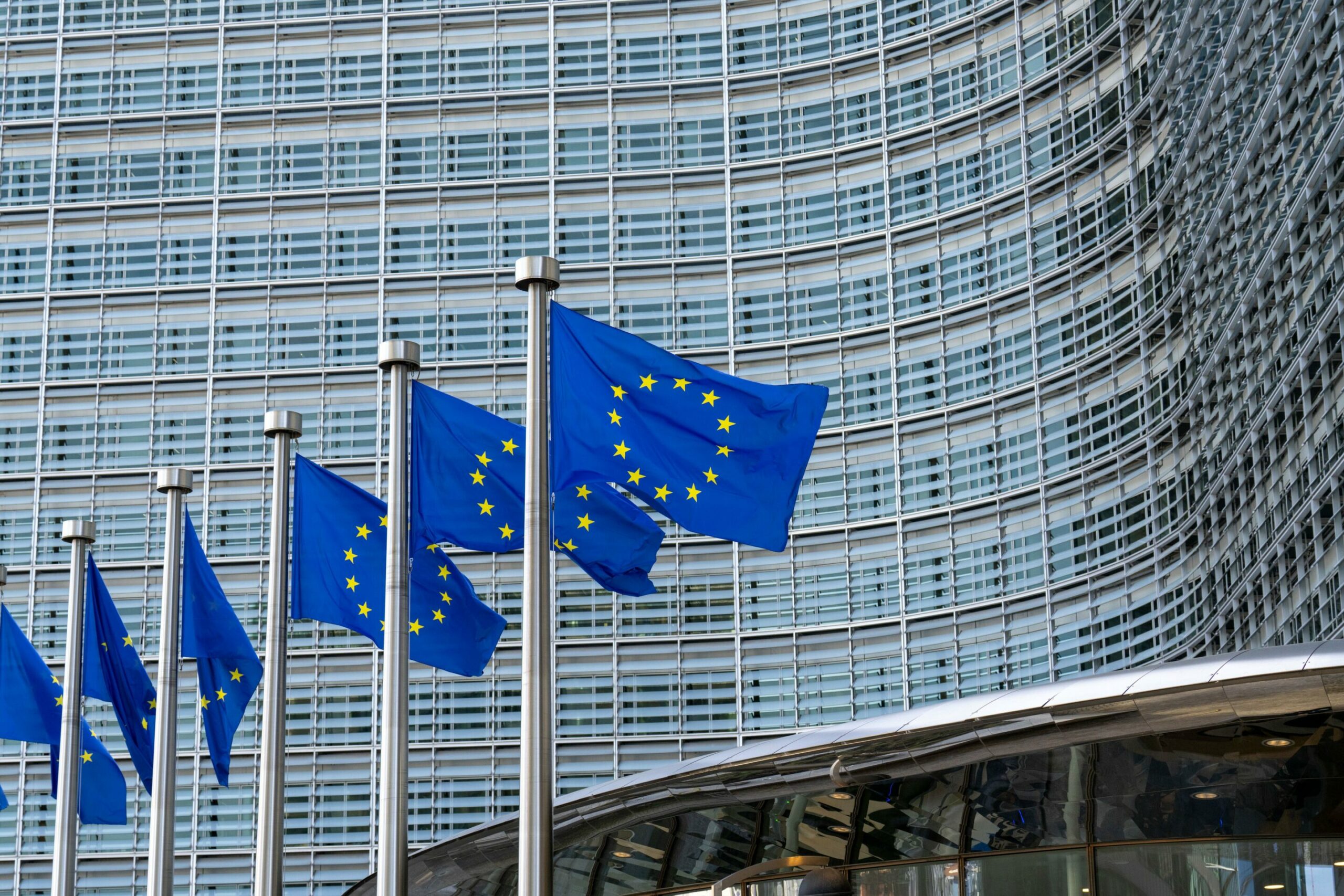
Several European flags seen at the Berlaymont building, the building of the European Commission Brussels, Friday 17 April 2026. Credit: Belga / Marius Burgelman
On Wednesday, the European Commission President Von der Leyen welcomed the package, saying Europe cannot afford to depend on others for the technologies that keep hospitals running, energy grids stable and services secure.
"This is about protecting our citizens, defending our interests and making our own choices," she said in a statement last Thursday.
Competitiveness push
However, according to Penfrat, the two legislative proposals conflate digital sovereignty with the Commission’s idea of "competitiveness". which he says really means pouring public money into more and more AI data centres "at any cost".
While there has been no explicit commitment to build more in the country. Belgium already has 47 data centres, according to Data Centers Map, and aims to position itself as a leading data centre hub.
This is particularly the case in the Brussels Region, which boasts 18 of these 47, the highest concentration in the country.
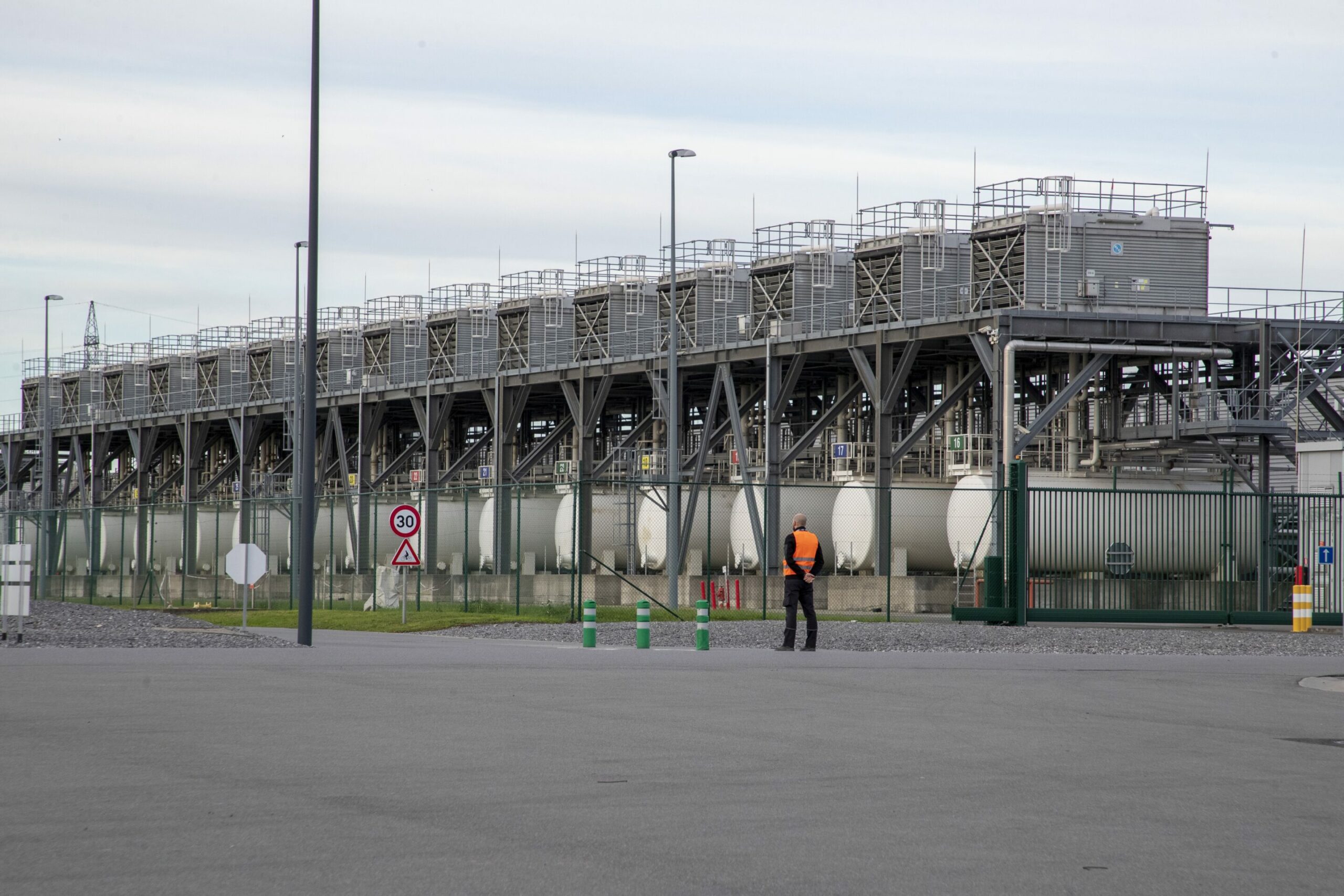
Illustration picture shows o the Google company in Saint-Ghislain (Wallonia) on the occasion of the 15th anniversary of the Google data centre in Belgium, Friday 21 October 2022. Credit: Belga / Nicolas Maeterlinck
Furthermore, Belgian Prime Minister Bart De Wever welcomed Google's announcement in October of its plans to invest €5 billion into its Belgian data centre in Saint-Ghislaine (Wallonia), which is over 15 years old, with up to four centres expected in total.
Microsoft, too, is the second biggest investor in Belgian data centres, having invested €1 billion to establish three Azure data centres around Brussels, with the first one having opened in November. However, Microsoft did not reveal the precise locations of the centres.
AI race to the bottom
Overall, the expansion of data centres has been justified due to an increasing number of companies and institutions turning to cloud services for data storage, as well as for the additional computing power required by AI applications.
"If implemented as proposed by the Commission, this will likely facilitate the construction of more and more data centres in Belgium and across the EU with little to no consideration of people's local preferences," Penfrat explains.
EDRi’s expert further warns that this could lead to developments already observed today in the US, where electricity and water prices are rising, and people are asked to limit their consumption in favour of the data centre’s production.
"In fact, this mindset is explicitly built into the Package, which argues we need to build more AI, which consumes enormous amounts of energy and water, in order to support people in reducing human consumption," he continues.
Activists are concerned because the Package contains no credible guarantees for sustainability when it comes to the development of data centres, despite claiming to do so.
Penfrat calls out the EU’s "unsubstantiated idea that more AI and bigger tech firms are good because then Europe can supposedly beat the US and China in their imaginary AI race."
Europe has grappled with the over-reliance on foreign technologies, a debate which has resurfaced since US President Donald Trump came back to power. This week, Euractiv reported that the European Parliament was dropping Google as its internal search engine for the French alternative Qwanta.

Former Belgian Prime Minister Alexander De Croo pictured during a visit to the Google data centre in Saint Ghislain on the occasion of the 15th anniversary of the Google data centre in Belgium, Friday 21 October 2022. Credit: Belga
With the European Tech Sovereignty package announced last week, the European Commission is trying to assuage fears of over-reliance on foreign technologies, but a huge lobbying operation mounted by Big Tech companies – to the sum of €151 million – has seen them get greater access to policymakers, concerning activists.
This is clearly getting results. A report by media Investigate Europe in May found that the EU had hidden the true environmental impact of data centres.
Microsoft and DigitalEurope, a lobby group whose members include Amazon, Google and Meta, secured a secrecy provision in EU law to block public access to critical information on data centres’ environmental impact.
In 2023, Google revealed consumption of 1 million m³ per year for its one data centre in Saint-Ghislain — the equivalent of 10,000 households, according to Walloon non-profit Canopea.
Economic benefits
Yet those in favour insist that data centres will bring huge economic benefits to EU countries like Belgium.
For example, a study from the University of Mons and Deloitte, circulated by Google, claims the company's huge investments in data centres would have generated a total economic impact of €697 million on GDP between 2022 and 2024, and are expected to add more than €1.5 billion per year between 2026 and 2027, reports RTBF.
Critics have argued that the EU's investments in AI, under heavy pressure from the US, will lead to greater sectoral power for large American big tech companies, at the expense of Europe’s own industry,.
However, on this package, it remains to be seen. "To what extent US big tech can benefit from this Package remains to be seen, but they will likely at least profit from the indirect artificial boost for the AI industry, a sector where US Big Tech is dominant," Penfrat explains.
"Although so far no one except hardware maker Nvidia currently makes any money in the AI industry, so it remains unclear where benefits can eventually come from.”
