Belgium is tightening checks on EU citizens looking for work, according to a draft proposal by Asylum and Migration Minister Anneleen Van Bossuyt (N-VA), which was given the green light by the Council of Ministers on Friday.
When applying for a residence card, EU citizens wishing to stay in Belgium for longer than three months will have to provide more evidence that they are looking for work.
After six months, they will also have to demonstrate that they have a realistic chance of actually finding work.
"In practice, we see that some people do take steps initially, but after obtaining a residence permit, they no longer make any serious effort to look for work and subsequently apply for social assistance," said Asylum and Migration Minister Anneleen Van Bossuyt (N-VA).
'No free pass'
The person concerned will first be given a "reasonable period" to look for vacancies and take steps towards finding work.
"But that right is no free pass. After six months, it must be clear whether someone is actually making an effort. For those who cannot demonstrate this, we will withdraw their right of residence," Van Bossuyt said.
In practical terms, the procedure is organised in two stages. When applying, the person concerned must now submit both proof of job applications and registration with the relevant employment service, such as Actiris, for example. Currently, only one of these is required.
A second check will follow after six months. At that point, the jobseeker must additionally demonstrate that they have a realistic chance of finding work. Acceptable evidence would be training, qualifications, work experience or specific job applications.
The Council of Ministers previously approved, at first reading, a draft bill stipulating that this group will not be granted access to social assistance, as long as they have not acquired a permanent right of residence.
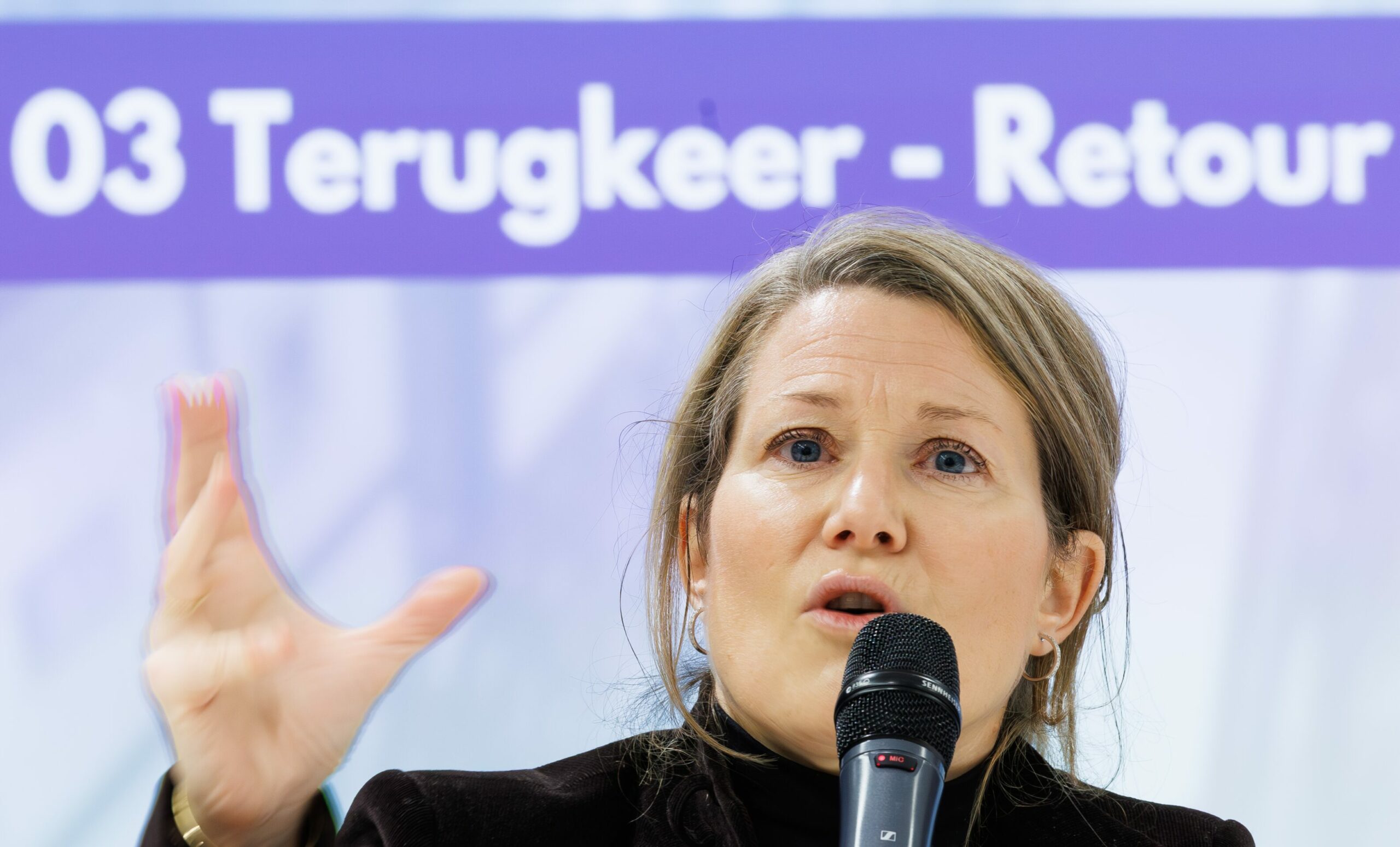
Minister of Asylum and Migration Anneleen Van Bossuyt (N-VA). Credit: Belga/Benoit Doppagne
According to Van Bossuyt, additional checks are necessary to prevent abuse of the system. "The right of residence is for those who meet the conditions, not for those who use the rules as a backdoor to social assistance," she said.
The procedure for family reunification with EU citizens is also being tightened: applications must now be complete before they are processed. If documents are missing, the application will be declared inadmissible.
According to Van Bossuyt, this should limit unnecessary administrative work for local authorities and services and ensure that cases can be assessed more quickly.
'Clearer, stricter, more consistent'
In 2025, the Immigration Office issued 1,266 EU residence cards to EU citizens seeking work. At the same time, there were 705 refusals and 202 terminations of residence in that category.
Also striking is the high number of applications from Romanians and Bulgarians. According to Van Bossuyt, further checks have already revealed that some applicants are actually from non-EU countries in the Western Balkans.
"We must be fair to those who work here or are looking for work," she stressed. "But we must be equally fair to our society, our services and the taxpayer. That is why we are making the rules clearer, the burden of proof stricter and checks more consistent."
Fast-track
The stricter rules come as part of a broader package of migration-related measures. On Friday, Van Bossuyt also launched a fast-track project for asylum seekers with a low chance of getting protection.
"Those who need protection will receive it. But those with little chance of protection should not be left in limbo for months, nor should they remain in the reception centre for an unnecessarily long time," she said.
Their procedure should provide clarity more quickly, shorten their stay in reception and, where necessary, lead to a return more swiftly.
According to Van Bossuyt, the fast-track project is bringing the procedure, reception and return closer together. "This is fairer for the people themselves, cheaper for the taxpayer, more efficient for our services and necessary to reduce the pressure on the reception system in general."
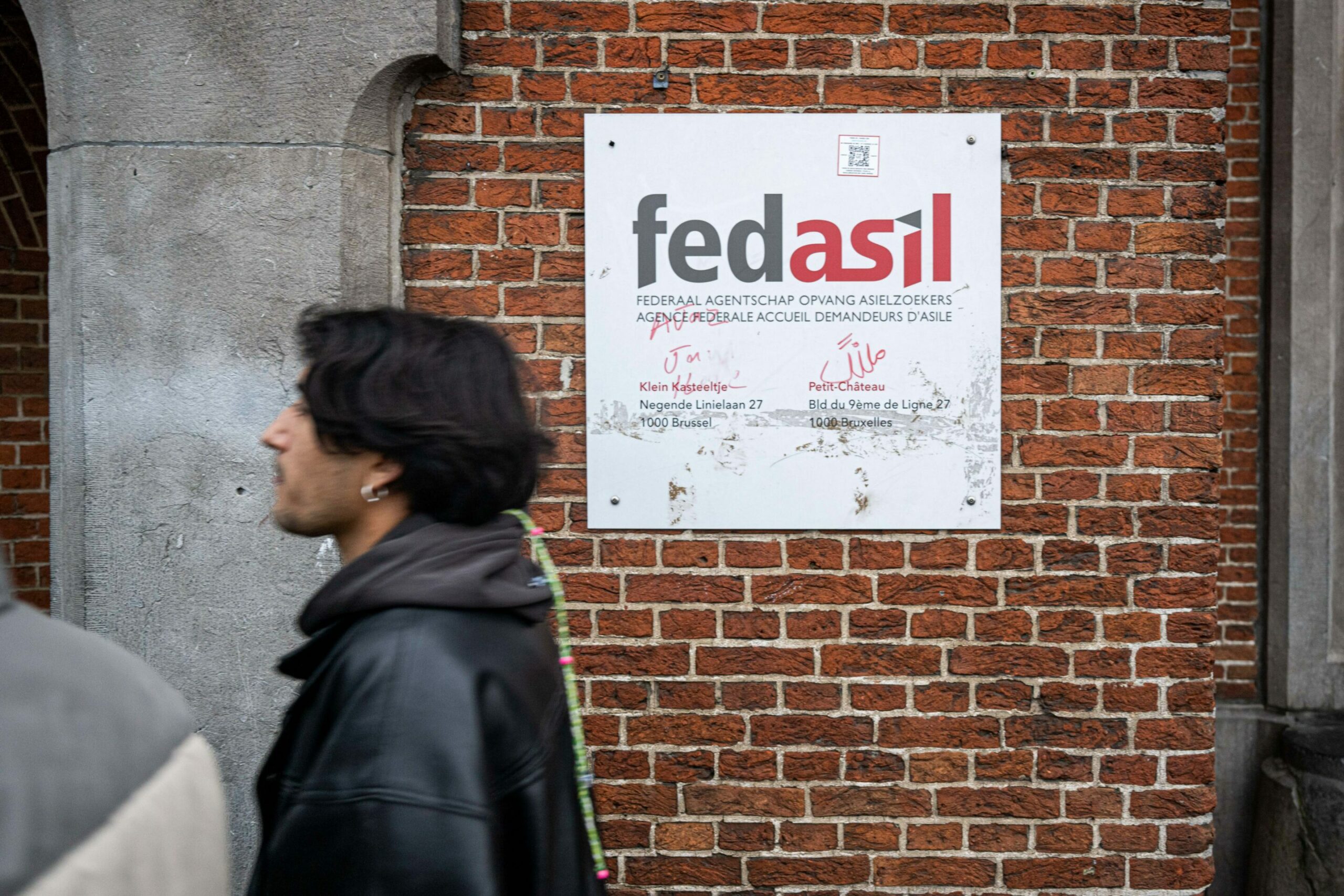
Fedasil centre. Credit: Belga/Jonas Roosens.
Additionally, this should result in better coordination between all services involved: the Immigration Office is responsible for registration, the Office of the Commissioner General for Refugees and Stateless Persons processes the application for protection, and the Council for Immigration Appeals handles any appeals.
Additionally, the Federal Agency for the Reception of Asylum Seekers (Fedasil) and the Immigration Office provide support for return. Meanwhile, Red Cross Flanders organises reception at the Ariane centre.
The pilot project is fully committed to "faster and more efficient" processing of cases, according to Van Bossuyt.
She stressed that from day one, there is also a focus on intensive support with a view to rapid return: the aim is to complete the entire asylum procedure within three months – a significant acceleration: the average asylum procedure in Belgium currently takes around 16.5 months.
'Clear signal'
Following the initial trial period in the coming months, further roll-out and scaling up will be considered.
She stressed that the project is also in line with the new European Pact on Asylum and Migration, which provides for the accelerated processing at the EU's external borders of applications from people from countries where the protection rate is 20% or lower.
"This approach is a logical next step towards a more efficient and stricter asylum policy," Van Bossuyt said. "We are sending a clear signal that applying for asylum in Belgium is pointless if, for example, it is purely for economic reasons."
Related News
- The population of Brussels grew by only 39 people last year – here's why
- EU rolls out migration pact as illegal crossings drop by 55%
- Far-right Vlaams Belang calls for Belgian referendum on EU migration pact
- EU pushes Schengen nations to phase out border checks despite security concerns
- A 'Belgian ICE'? Belgium strongly criticised for controversial 'home entry' bill
