

A Belgian university, KU Leuven, ranked 59th worldwide in the new QS World University Rankings – the "highest position ever achieved" by a Belgian institute in this international ranking.
The QS World University Rankings compare more than 1,500 universities worldwide across 106 higher education systems each year, based on nine indicators, including academic reputation, research impact, international collaboration and sustainability.
This year, KU Leuven achieved an overall score of 80.5 out of 100. The university made slight progress compared with last year, when it finished one place lower (60th) with a lower overall score.
Overall, Belgium presents a mixed picture this year. Of the ten Belgian universities in the rankings, four have risen, five have fallen, and one has remained stable. This results in a slight net decline – which is in line with broader European trends relating to increasing international competition and funding pressures.
Societal impact
KU Leuven, however, remains a clear standout within the Belgian landscape. The university scores particularly highly on international research collaboration.
In the ‘International Research Network’ category, KU Leuven ranks fourth worldwide, one of the strongest performances in Europe. It also achieves high scores for sustainability (22nd place) and academic reputation (52nd place).
At the same time, the ranking highlights challenges: research impact, measured by citations per academic staff member, is declining at the majority of Belgian universities. KU Leuven scores 93.9 out of 100 on this indicator, placing it 80th worldwide.
"I am very proud of this result, not so much because of our position in the ranking, but as recognition of the scientific work of our entire university community," said the university's Chancellor, Severine Vermeire. "Every day, our researchers, students and staff contribute to knowledge that has a societal impact."
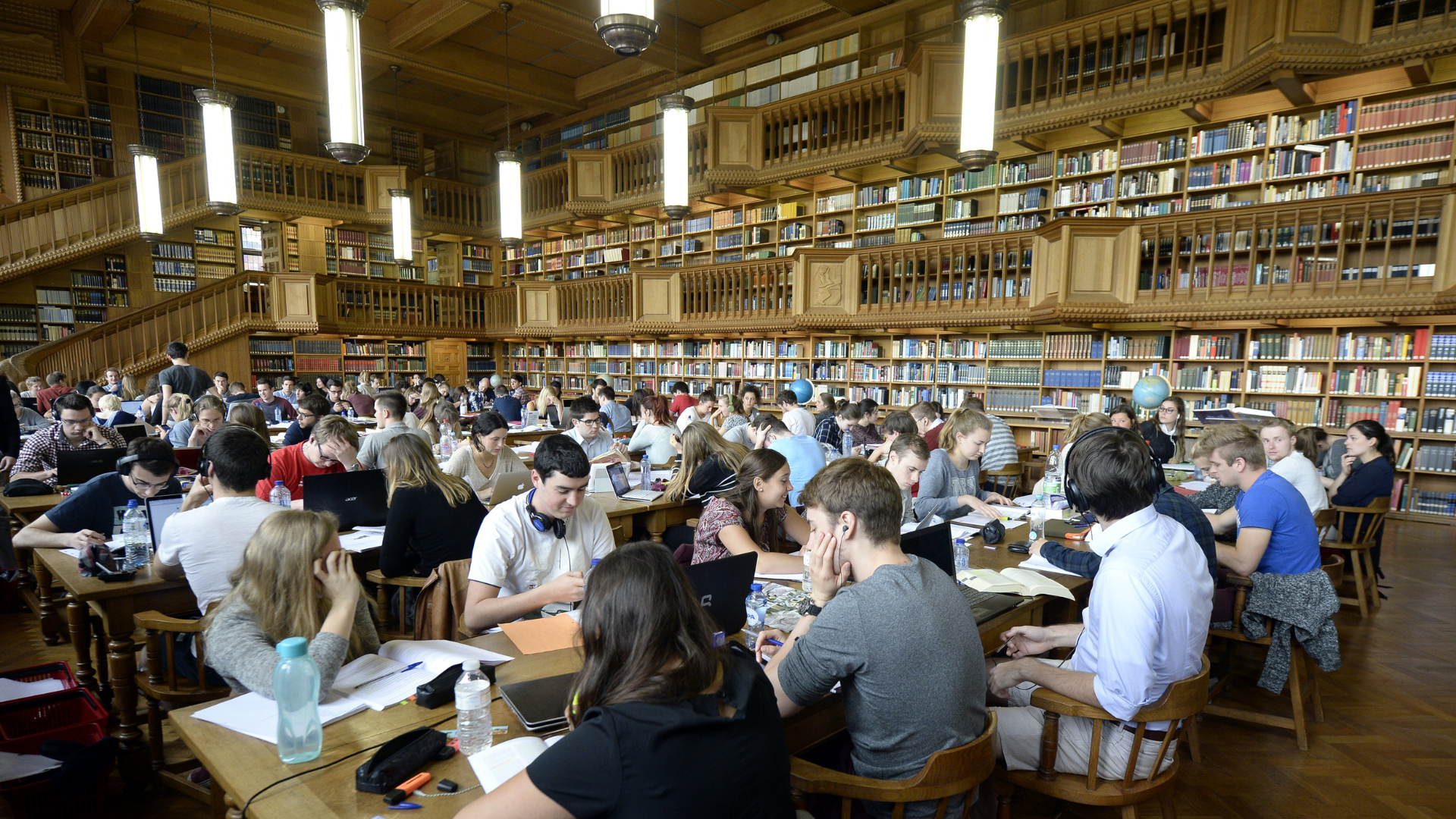
KU Leuven students. Credit: Belga
Alongside KU Leuven, the other Belgian universities also present a varied picture in the QS World University Rankings. Ghent University has risen 12 places to 150th in the world. UCLouvain has dropped slightly to 196th place, while the Université Libre de Bruxelles (ULB) has fallen back to 248th place.
The University of Antwerp climbed slightly to 277th place, while the Vrije Universiteit Brussel (VUB) remains around 295th place. The University of Liège has dropped to 364th place.
Further down the rankings are Hasselt University (639th), the University of Mons (801–850) and the University of Namur (801–850).
Elsewhere in Europe, too, the results are mixed. The United Kingdom remains the best represented, with seven universities in the global top 50, led by Imperial College London in joint second place, and the University of Oxford in fourth place.
Within the European Union, the Technical University of Munich remains the highest-ranked university, in 25th place. PSL University follows in 34th place. Germany, Spain and France are further expanding their representation in the ranking, while Italy is among the strongest climbers.
'Mixed picture'
At the same time, the results show that many European higher education systems are facing the same challenges as Belgium, including increasing international competition, pressure on research funding and fluctuating trends in scientific impact.
According to QS Senior Vice President Ben Sowter, the results for Europe present a "mixed picture".
He states that European higher education institutions continue to benefit from strong international research networks and a focus on innovation and sustainability, but are simultaneously under pressure due to a decline in research impact and increasing competition for international students and researchers.
Indeed, all Belgian universities are losing ground on the international students indicator.

Former Italian Prime Minister Mario Draghi and rector of KU Leuven Severine Vermeire pictured during the Patron saint's day celebrations with the procession of the togati and the ceremonial awarding of six honorary doctorates at KU Leuven, Monday 02 February 2026 in Leuven. Credit: Belga/Elias Rom
Globally, the top of the rankings remains dominated by Anglo-Saxon universities. The Massachusetts Institute of Technology (MIT) retains first place for the 15th year running.
Imperial College London remains in second place, alongside Stanford University, which has climbed to a joint second place. The University of Oxford and Harvard University round off the top five.
Institutions such as the University of Cambridge and ETH Zurich also remain prominent in the global top ten, alongside the National University of Singapore, the sole Asian representative in the top ten.
The QS World University Rankings are regarded as one of the most widely consulted international university rankings and are based on nine parameters: academic reputation and citations per faculty (‘Research and Discovery’), employer reputation and employment outcomes (‘Employability and Outcomes’), staff-student ratio (‘Learning Experience’), international staff ratio, international research network and proportion of international students (‘Global Engagement’), and sustainability.
