
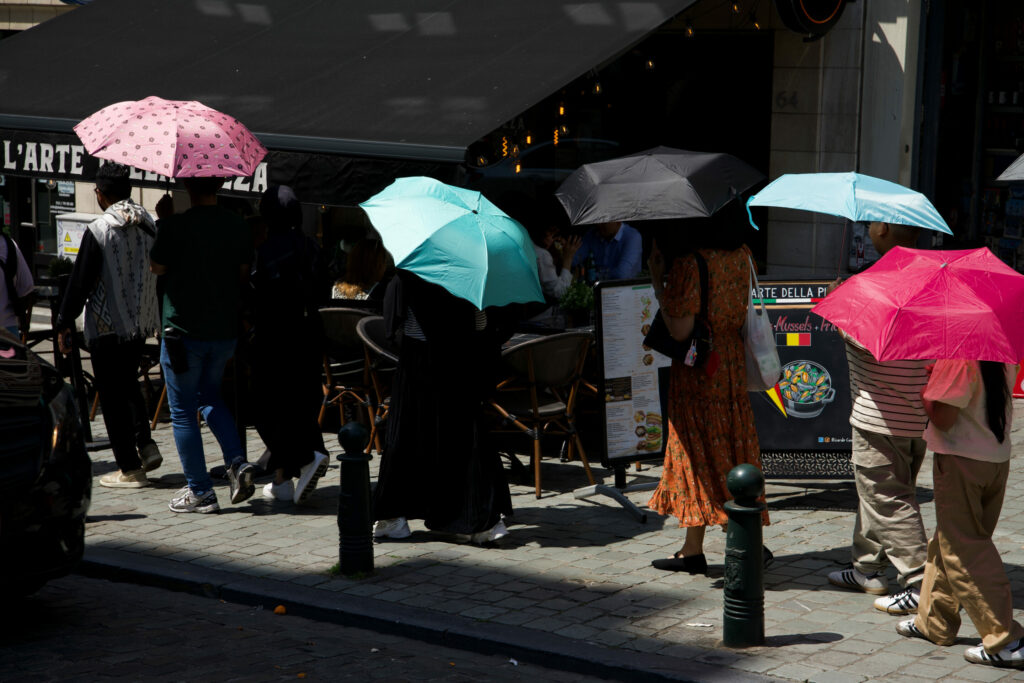
Belgium has declared a national heatwave alert phase, as temperatures will remain well above 30°C for the rest of the week – with an expected peak at 38°C on Friday.
Following a meeting of the National Crisis Centre, the Public Health Ministry, the Royal Meteorological Institute (RMI) and other partners on Tuesday, they declared the "alert phase" of the national ozone and heatwave plan for the entire country.
"For the past few days, Belgium has been experiencing an exceptionally severe heatwave, which will only intensify over the coming days and is set to continue at least until Sunday," the National Crisis Centre said.
From Wednesday, maximum temperatures in most places will reach or even exceed 35°C. An orange heat alert is in force for virtually the whole country.
Nighttime temperatures will also remain exceptionally high, and ozone concentrations will be exceptionally high over the coming days. Over the weekend, however, a thunderstorm system is expected to bring a (slight) drop in temperatures.
An orange alert goes into force once temperatures surpass 35°C. In that case, people are advised to take certain measures: drink regularly, dress more lightly, spend the day in cooler rooms, monitor their health regularly, eat easily digestible food (in smaller portions), and keep doors and windows closed to keep the heat out.
Even at night, temperatures are not dropping below 20°C on these days – turning them into tropical nights.
Currently, the record for the hottest night was set on the night of 3 to 4 July 2015, when the minimum temperature was 24.4°C. With the current daytime temperatures reaching well over 30°C, however, the night-time temperatures this week will likely not go below 25°C.
In urban areas, temperatures are often even a few degrees higher, due to the urban heat island effect when there is little wind and a clear sky – a situation that is also expected on Friday.
How to handle the heat
Because of this exceptional situation, the Crisis Centre has issued several simple measures people should take to help them cope better with the heatwave:
- Drink plenty of fluids, more than usual. Don’t wait until you’re thirsty. Preferably choose water. Avoid alcoholic drinks, coffee, sugary drinks,
- Are you leaving the house? Always take a bottle or flask of water with you.
- Wear a cap or hat when outdoors.
- Avoid the sun and stay indoors until it cools down. If that’s not possible, stay in the shade as much as you can or find a cool place if it’s too hot at home, such as a library or shopping centre.
- Close windows and draw curtains on the sides of the house exposed to the sun as long as the outside temperature is higher than the inside temperature. Only open them once the worst of the heat has passed, ie. early in the morning, in the evening and at night.
- Avoid strenuous physical activity or sport, especially during the hottest hours of the day.
- Wet your forehead and neck regularly.
- Wear light, pale-coloured clothing.
- Protect your skin from the sun: use sun cream with a high sun protection factor (at least SPF 30, preferably higher).
- Are you suffering from cramps, a high fever, a headache or feeling faint? Contact your GP.
- Call 112 immediately if your body temperature is very high (40 °C or higher).
- Never leave people or animals in a parked vehicle.
- Are you organising an event (large or small)? Then be sure to take the necessary measures to protect your visitors.
- For employers: look after your employees’ health (for example, by consulting health and safety advisers).
Specific measures could also be taken at the local level or in certain sectors (such as education and events). The Crisis Centre advises that people check their local authority's communication channels for further information.
The authorities have stopped short of issuing a red alert, which would only go into force at 40°C. In such extremely high temperatures, certain measures must be taken: drink plenty of fluids, maintain salt levels, get plenty of rest, stay in a cool room, use damp cloths if you feel dehydrated and avoid direct sunlight.
Call for solidarity
"For most people, this heatwave – however exceptional it may be – does not pose an immediate threat to life," the Crisis Centre said. "For vulnerable people, however, these extreme temperatures can pose a serious risk."
They referred to children, people with chronic illnesses, elderly people and socially isolated people, who do not always have access to the right information or are unaware of the dangers.
"Do you know anyone in your community who is particularly vulnerable? If so, take the initiative to get in touch or pop round to see them," they said. "Let's show solidarity and look out for one another."
Related News
- Belgium braces for 34°C as heatwave set to continue throughout the week
- Anderlecht street market on Saturday cancelled due to heatwave
- Over 40°C soon? Belgium prepares for more extreme heatwaves
- Brussels Fire Brigade issues tips on how to cope with the city's heatwave
- Extreme heat forces Etterbeek municipal schools to cancel afternoon classes
