
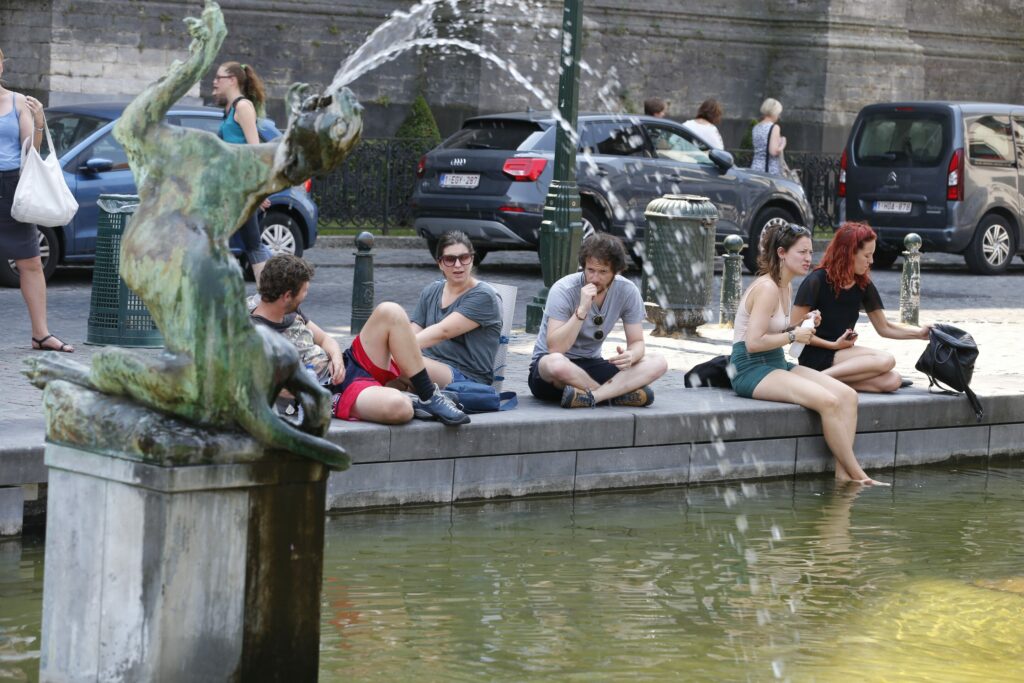
As the mercury creeps up and high temperatures return, Belgium is facing its second official heatwave in less than a month, with the heat expected to last.
Just over a fortnight ago, the country was engulfed by a scorching 12-day-long heatwave, with temperatures having reached 35.3°C at Belgium's official measuring station in Uccle during the hottest day of the heatwave on 26 June.
The intense heat led to 1,222 additional deaths, broke several daily temperature records and caused the cancellation of numerous events for safety reasons.
On Monday, the Royal Meteorological Institute (RMI) extended another yellow heat alert for most of the country (except for the coast) until Saturday, with temperatures forecasted to gradually rise until then.
Across Belgium, the mercury will hover around the 30ºC mark at the start of the week, before definitively crossing the 30-degree threshold on Thursday.
Temperatures in the Belgian capital will not rise above 28°C, paired with cloudy conditions, but there will be a gradual increase during the week until reaching 34°C and 32ºC on Saturday and Sunday, respectively.

Young men jump in the water of the Houtdok pictured during the heatwave in Ghent, Tuesday 23 June 2026. Credit: Belga / James Arthur Gekiere
Heat continues next week
According to the RMI, this latest heatwave is expected to last beyond the weekend, with temperatures expected to stay above 30°C at the start of next week. A possible thunderstorm on Tuesday or Wednesday could break this heat spell, but this remains to be confirmed.
Officially, Belgium’s RMI defines a heatwave as a series of five consecutive days where the maximum temperature exceeds 25°C. Of these five days, at least three must be tropical (at least 30°C).
The current code yellow heat warning means that it is recommended that older and more vulnerable people drink more fluids and avoid staying in direct sunlight. The alert moves up to code orange when temperatures exceed 35°C.
On Saturday, the Belgian Interregional Environment Agency (IRCEL-CELINE) confirmed it had activated its ‘warning phase’ for the Extreme Heat plan for the second time this year.
If necessary, the Risk Management Group will decide whether to activate the following 'alert phase', as was already done in late June.
The 'warning phase' consists of the authorities informing the public, healthcare professionals, health facilities, local authorities and other partners of the health risks and precautionary measures.
The 'alert phase' consists of reinforcing these measures, but also assessing whether new ones should be brought in, such as cancelling or postponing sporting or cultural events, as seen during the previous heatwave.
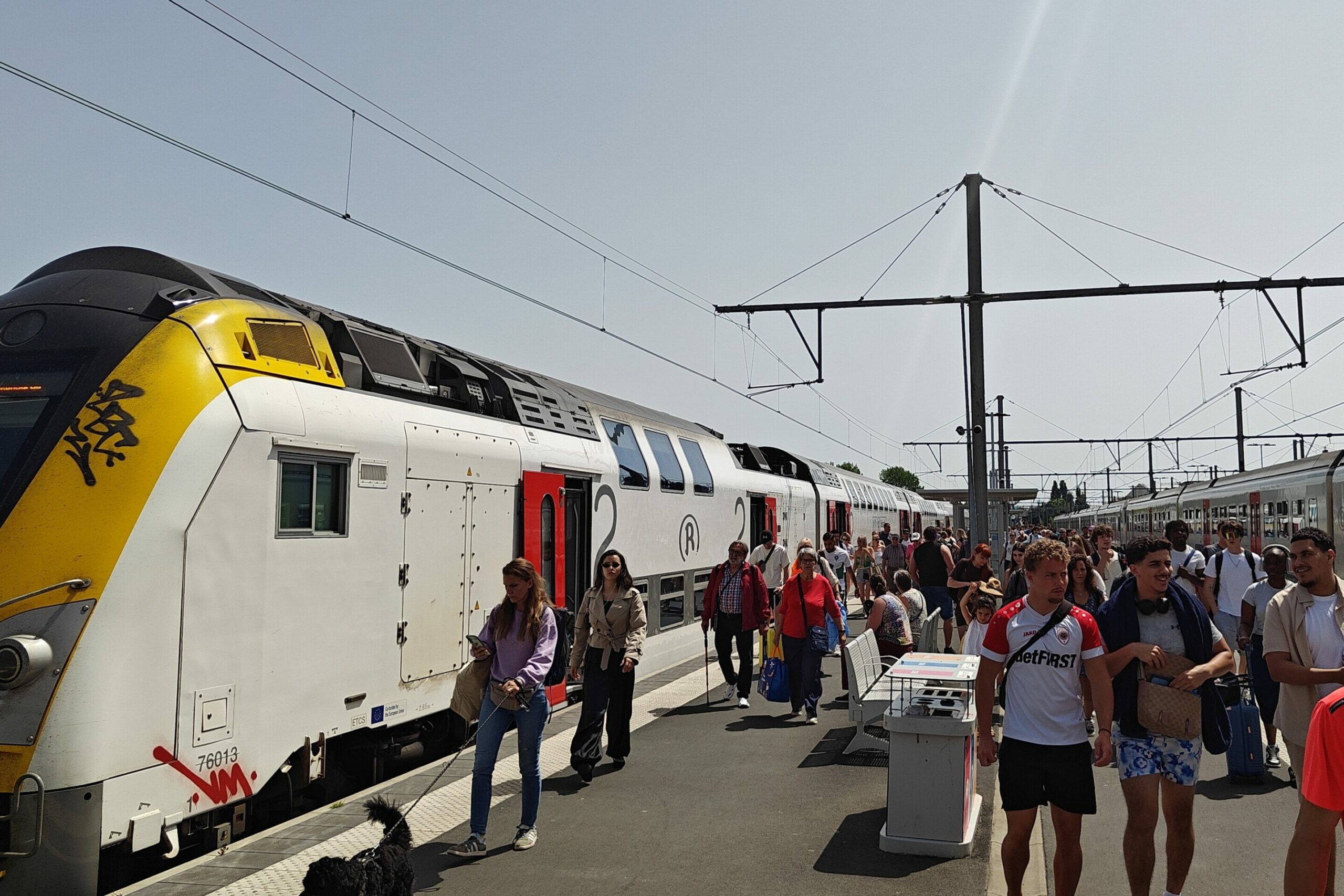
People arrive by train at the Belgian coast in Blankenberge, on Saturday 23 May 2026. Tourists are expected to flock to the Belgian coast, as temperatures are rising for the weekend. Credit: Belga / Maaike Tijssens
For those wanting an escape from the city this weekend, the Belgian coast will be cooler thanks to North Sea winds, with temperatures hovering around 25°C.
While Belgium's national railway operator, SNCB-NMBS, normally puts on extra trains towards the coast on hot days, the route is, as always, expected to be busy.
'Dress rehearsal'
Last week, the World Health Organization (WHO) said that the European region is warming at more than twice the global average, with heatwaves no longer "one-off freak" events.
Noting the high number of emergency calls and excess deaths during the last heatwave, it warned this was "a dress rehearsal" for what is to come due to climate change.
"They are recurring crises, and they are getting more frequent, stronger and lasting longer. Every summer we fail to prepare for them is a summer we pay for in lives," said Dr Hans Kluge, WHO Regional Director for Europe.
The elderly, young children and people with chronic illnesses are among the most at risk, with intensified heat exposure and sleepless nights posing serious health risks, as organisms recover less well.
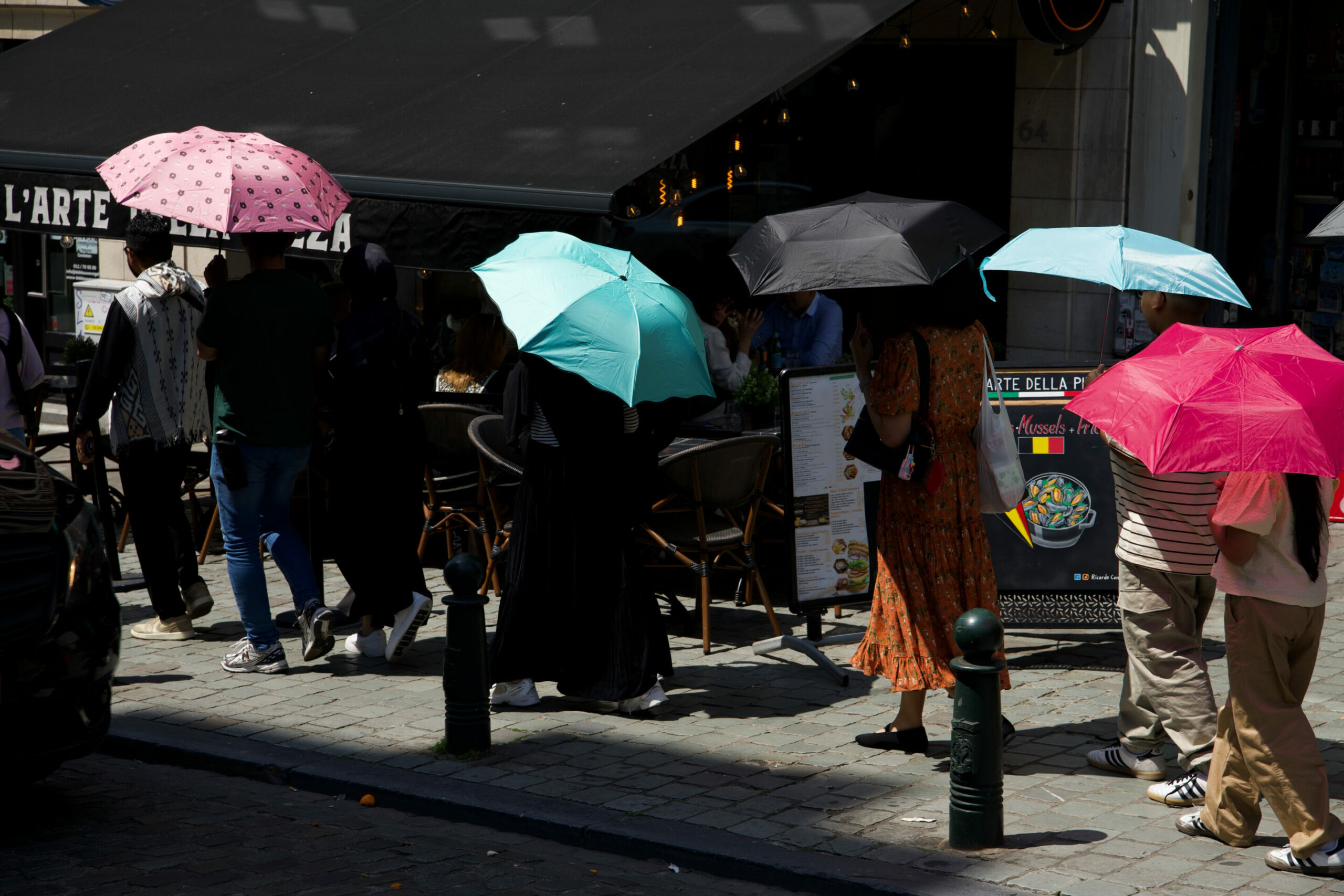
Tourists hide from the sun under umbrellas in the centre of Brussels during the June 2026 heatwave. Credit: Vicente Torre Hovelson/ The Brussels Times.
Conditions inside cities are also particularly challenging: a temperature difference of almost 23°C was recorded between Brussels city centre and the nearby Sonian Forest on 24 June, according to the European Environment Agency (EEA).
Moreover, the consensus among experts is that these heatwaves are something which Europeans (and the rest of the world) will need to grow more accustomed to.
A new Flemish study has found that the probability of a heatwave lasting at least 12 consecutive days, such as the previous heatwave, has increased fivefold since the 1980s.
Since 1975, the RMI has recorded only seven heatwaves of at least 12 consecutive days at its weather station in Uccle.
While it remains to be seen whether this heatwave will match the intensity of June, authorities are calling for vigilance ahead of another spell of intense heat.
