
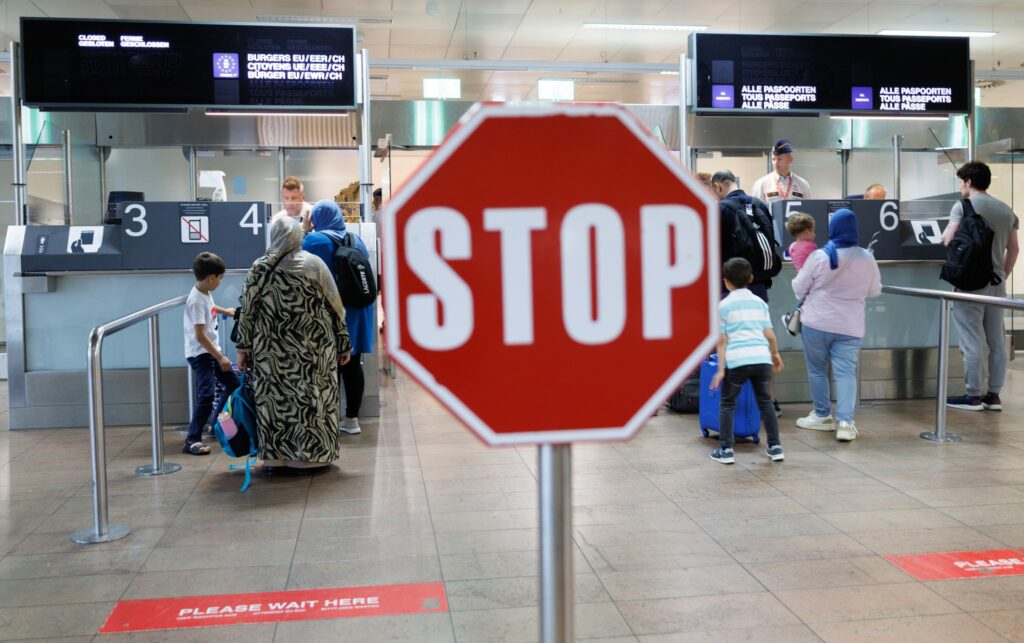
Major European airports are at risk of coming to a "complete standstill" this summer due to new European border controls for travellers from outside the EU, representatives of the aviation sector have claimed.
Airports and airlines across Europe are demanding that the Entry-Exit System (EES) be paused until September to avoid hours-long queues for air passengers. In an open letter to European Commission President Ursula von der Leyen, they argued that the EES is experiencing so many teething problems that the situation is "unsustainable".
"Since the full rollout of the EES in April, waiting times at border control have increased significantly, now reaching up to five hours during peak traffic periods," the European aviation sector (ACI) said in the letter.
Since April, travellers from outside the EU flying to one of 29 European countries (EU members minus Cyprus and Ireland, but including Iceland, Liechtenstein, Norway and Switzerland) no longer receive a stamp in their passport.
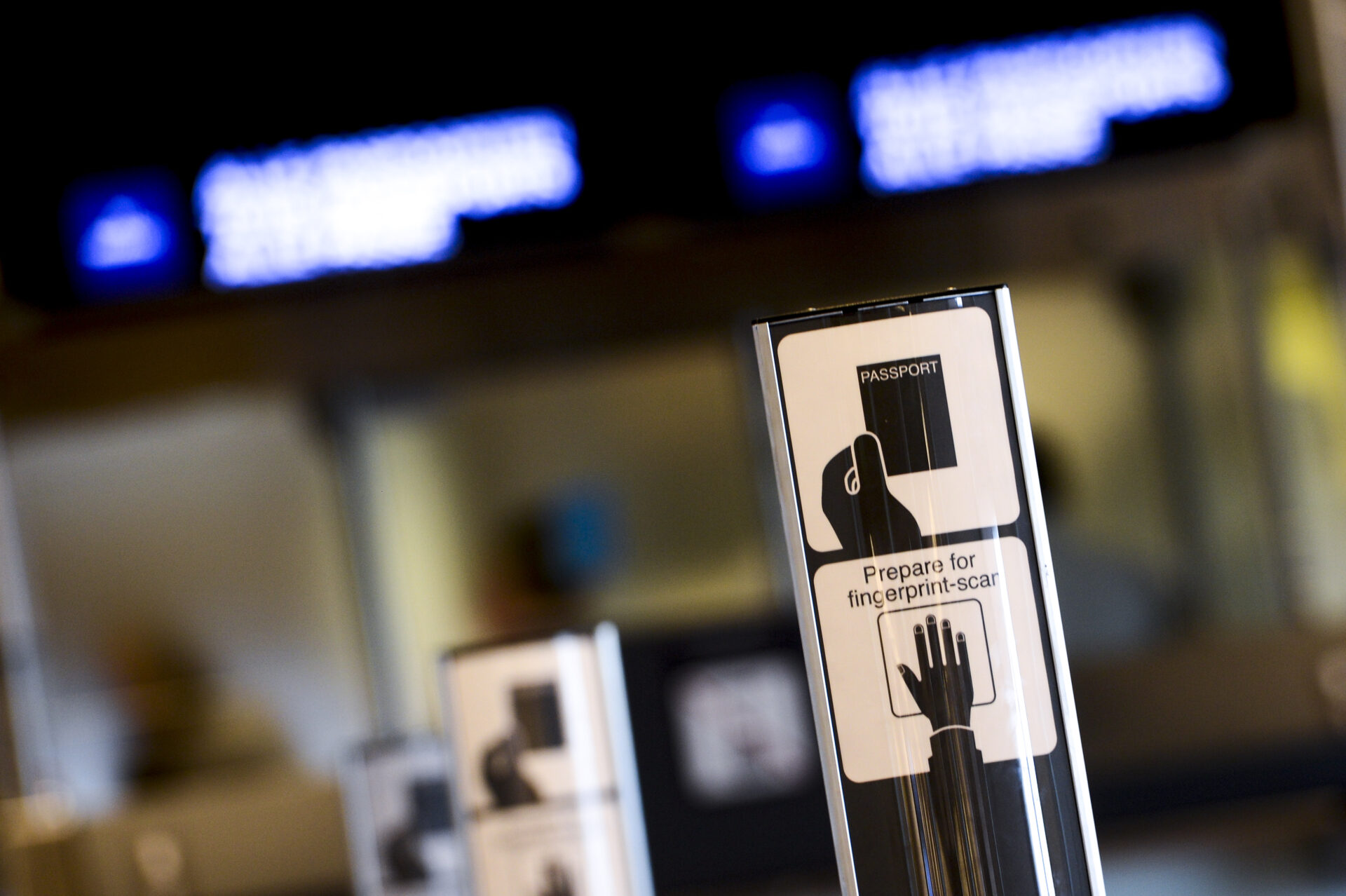
Instead, travellers are required to provide biometric information (such as fingerprints and facial scans), as well as their passport and other travel information, including their arrival and departure dates and places.
Minimising impact
Over the past few months, the introduction of this system has already led to long queues, missed connections and flight delays at various European airports, including in Belgium.
As the summer holidays have now officially started, the chaos is only expected to increase. In Belgium, Brussels Airport alone is expecting a total of around 5.2 million passengers in July and August – an increase of 4% compared with last summer. The busiest day of the summer holiday for the Belgian airport will be 20 July, with more than 90,000 travellers passing through.
"Over the past few weeks, queues on arrival have been two to three hours long at most. For departures, waiting times are around one hour," Quentin Mertens, spokesperson for Brussels Airport, told The Brussels Times.
Priority is always given to departing passengers to ensure that people do not miss their flights, he stressed. Additionally, Brussels Airport has installed some 30 EES registration kiosks and is deploying extra staff at border control to reduce queues.
During the summer, the airport is not expecting the maximum waiting times to increase. "Together with the federal police, we are doing our best to minimise the impact on passengers," Mertens said.
However, Brussels Airport also supports ACI Europe's open letter. "In line with what they wrote, we are calling for greater flexibility," the spokesperson added.
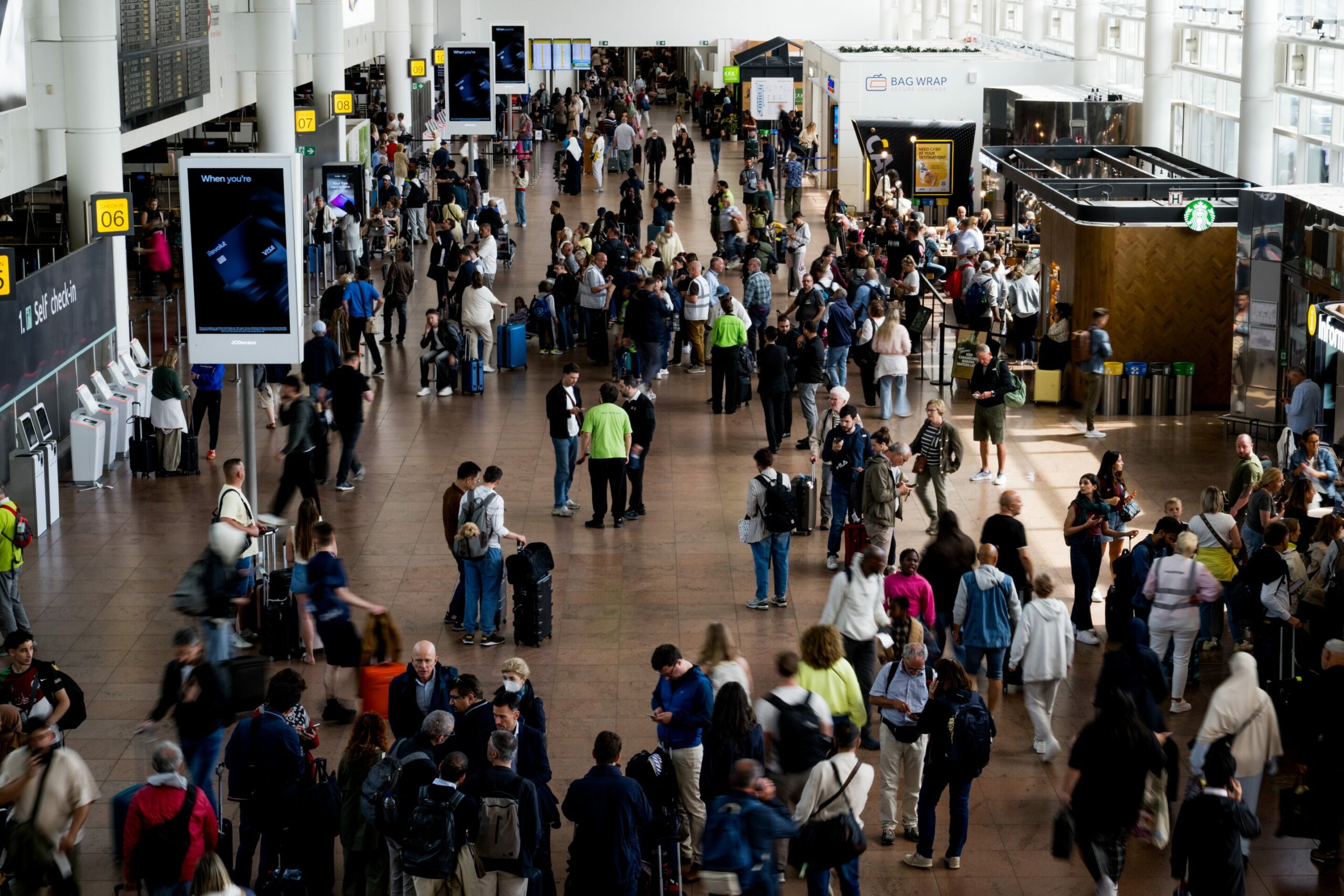
Illustrative image of passengers at Brussels Airport in Zaventem. Credit: Belga/Jasper Jacobs
In Belgium, the introduction of the EU's Entry/Exit System falls within the remit of the Interior Affairs Minister Bernard Quintin (MR). The Brussels Times contacted his office for comment, but did not receive a reply by the time of publication.
However, Federal Mobility Minister Jean-Luc Crucke (Les Engagés) has been closely monitoring this issue for several months, and has been in regular contact with Brussels Airport and the ministries involved to assess the operational impact of this new procedure on passenger flows.
"From a mobility perspective, the minister advocates a phased introduction of the EES to minimise disruption to travellers as much as possible and to prevent an excessive increase in queues at airports," Crucke's spokesperson, Amandine Dupont, told The Brussels Times.
In this context, Crucke considers it desirable to postpone the collection of biometric data "until after the summer holidays, a period when airports are traditionally very busy".
However, any postponement must be accompanied by additional measures, his cabinet stressed. In particular, the number of aviation police officers must be increased to address the staff shortage at the borders and ensure the effective and smooth screening of travellers.
Additionally, Crucke believes that consideration should be given to extending the exemptions currently granted to certain countries or categories of travellers with regard to entering and leaving the territory.
'Europe's reputation at stake'
Last week, Irish low-cost airline Ryanair called on the EU to pause the EES's implementation until after September, when the busy summer travel period has passed.
"As schools break up and Europe enters the busiest travel period of the year, it is clear that the EES is still not ready for peak summer volumes," said Ryanair's COO, Neal McMahon. "Passengers and families should not be used as guinea pigs for a half-baked passport control system."
Other airlines, including British Airways and Easyjet, agree with Ryanair that if the new digital system continues to falter, consequences for travellers would be significant. Videos circulating on social media are already showing passengers – including families with young children, the elderly and people with reduced mobility – stuck in long lines.
Credit: Belga/Dirk Waem
They are urging the EU to allow airports to temporarily switch off the system as soon as capacity becomes insufficient – "at least throughout July and August" and put an exemption scheme in place for the period after.
The airlines believe Europe's reputation is at stake. "There are already reports that some international travellers are reconsidering their trips to Europe due to the expected long waiting times at the border," they noted in the open letter to von der Leyen.
Airports such as Tenerife South, Palma, Alicante, Malaga, Milan Bergamo, Krakow and Paris Beauvais are already experiencing major disruptions, with further congestion expected as the busiest weeks of summer are now starting.
'Still a lot to do', admits Commission
In the meantime, the European Commission president has acknowledged that there is "still a lot to do" to resolve the "problems" related to the EES roll-out and the resulting long airport queues. "We are working closely with the Member States to resolve the technical issues," she said last Friday.
The Commission added that this system is crucial for better control over who enters and exits the EU, adding that Member States and airports had time to prepare for this new system.
On Wednesday, a meeting was held between the European Commission services and representatives of the air transport industry. There, the Commission confirmed that the EES rules include "flexibility measures for the use of the EES during the summer holiday period of 2026", with the "possibility to temporarily suspend the registration of biometric data where needed".
This article was updated on Thursday morning to include the European Commission statement.
