

For years, drones were widely regarded as useful accessories to modern warfare – valuable for reconnaissance, surveillance and the occasional precision strike, but still secondary to tanks, fighter jets and artillery.
Russia's invasion of Ukraine changed that assumption. Today, swarms of relatively cheap drones routinely destroy multi-million-euro tanks, attack strategic bombers hundreds of kilometres behind enemy lines and force armies to rethink decades of military doctrine. European governments, belatedly recognising how exposed they are, are pouring billions into defence technology while scrambling to build a home-grown drone industry that can reduce dependence on Chinese manufacturers.
Among the companies hoping to ride that wave is DroneMatrix, a Belgian firm employing barely 20 people. It is a minnow compared with Europe's established defence giants. Yet its founder and chief executive, Frank Vanwelkenhuyzen, believes companies like his could become increasingly important as warfare shifts towards autonomous systems powered by artificial intelligence.
"We underestimated the role of drones," Vanwelkenhuyzen says of Western militaries' early reaction to the Ukraine war. "A few years ago, generals laughed at them. They were toys for boys. Now they have changed the complete battlefield."
'Drone in a box'
DroneMatrix did not begin life as a defence company.
Vanwelkenhuyzen, a serial entrepreneur with a background in security technology, originally developed software to help private security firms manage guards, patrols and critical infrastructure. Looking for ways to automate surveillance, he began experimenting with autonomous drones capable of flying pre-programmed patrols around industrial sites without requiring a human pilot.
The concept became what the industry calls a "drone in a box": an autonomous aircraft housed in a docking station, ready to launch automatically when required, inspect a site and return to recharge. It took three years to develop the technology and another three years to secure regulatory approval to fly autonomously in Europe.
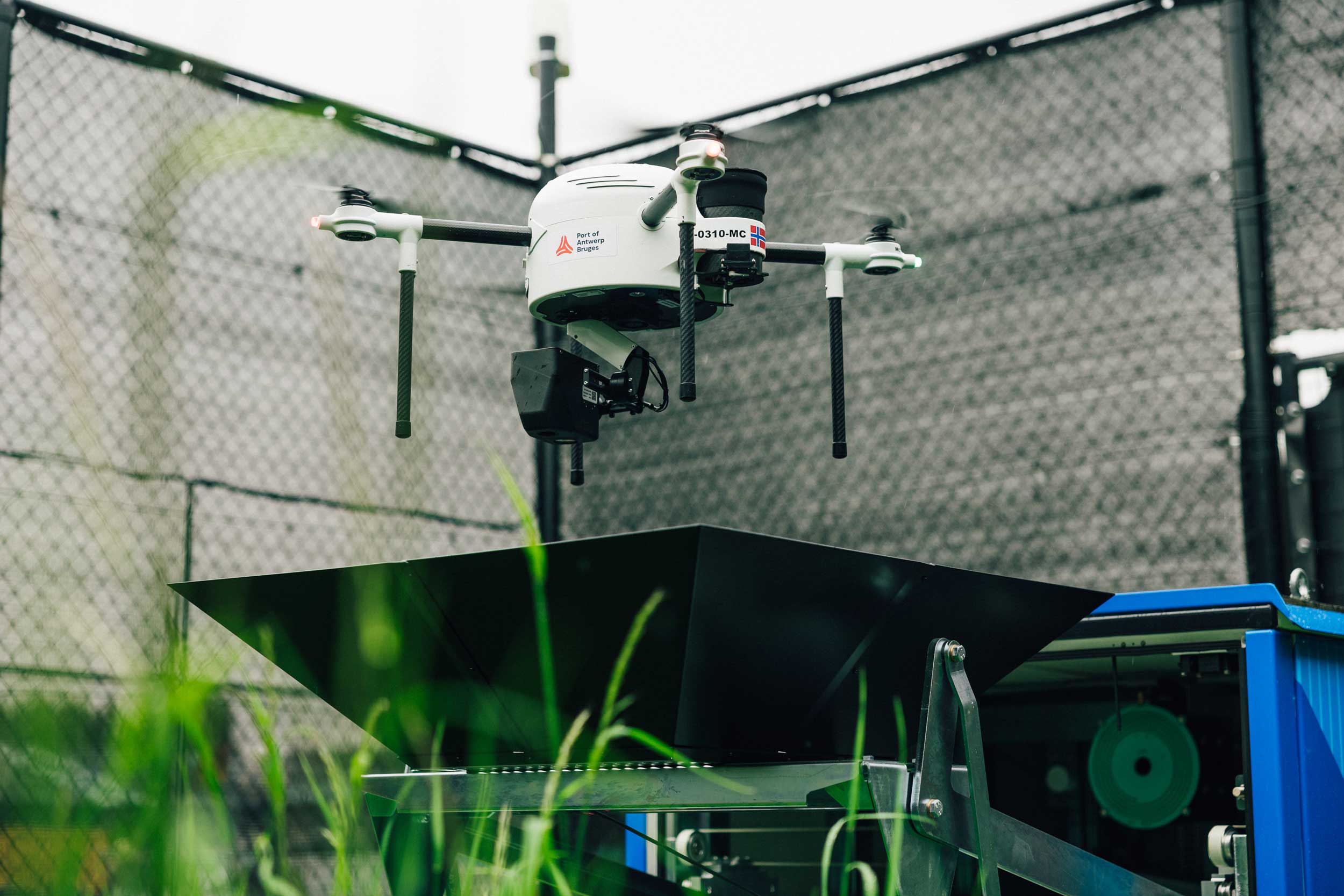
One of the company's drones in action. Credit: DroneMatrix
One of DroneMatrix's earliest demonstrations came in Antwerp, where the company worked with police to test autonomous drones capable of reaching incidents faster than officers travelling by road.
That led to a more ambitious deployment at the Port of Antwerp-Bruges, where six autonomous drones now patrol Europe's second-largest port, monitoring everything from terminal safety and critical infrastructure to suspected drug trafficking.
Then came Ukraine. For Vanwelkenhuyzen, the conflict fundamentally altered the company's priorities.
A different approach to warfare
Watching cheap Iranian-designed Shahed drones and increasingly sophisticated Ukrainian systems overwhelm conventional air defences convinced him that Europe needed a different approach.
"It becomes an economic war," he says. "You are shooting a €1 million missile against a drone costing perhaps €30,000."
Instead of relying on expensive surface-to-air missiles, DroneMatrix has focused on developing low-cost interceptor drones designed to hunt and destroy incoming hostile drones.
The concept is straightforward: fight inexpensive drones with other inexpensive drones rather than exhausting air-defence stocks using vastly more expensive missiles. The company says its AI-assisted interceptor has a substantially higher success rate than many current battlefield systems because it uses autonomous visual recognition during the final interception phase.
DroneMatrix's flagship security drones can also act as "mother ships", carrying several interceptor drones before launching them into the air to engage incoming threats.
The company insists it is concentrating on defensive rather than offensive capabilities, although Vanwelkenhuyzen readily acknowledges that similar technology could easily be adapted for attack missions.
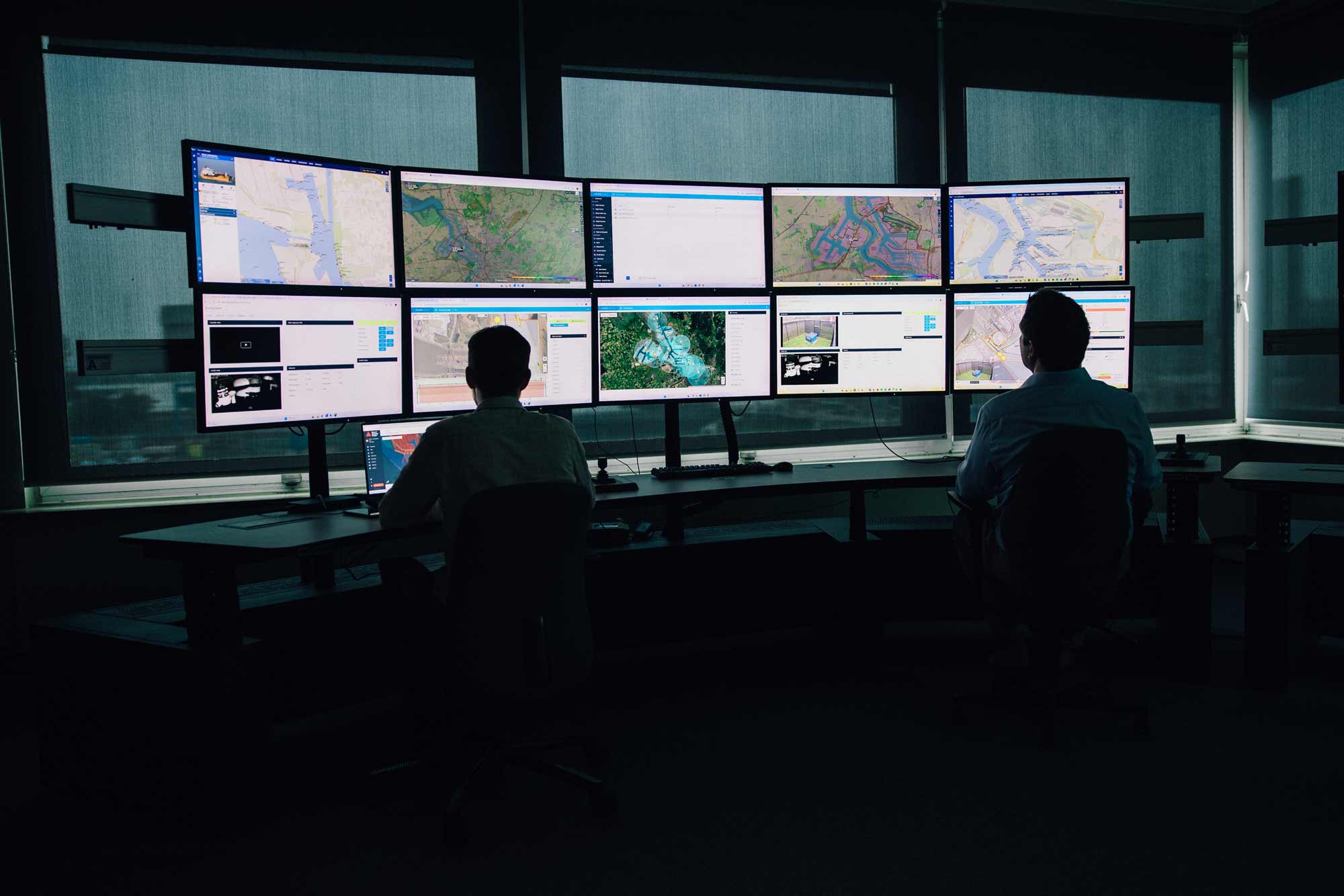
The company insists it is concentrating on defensive rather than offensive capabilities. Credit: DroneMatrix
Thinking beyond Ukraine
Despite the urgency created by the war, Vanwelkenhuyzen argues Europe should resist the temptation simply to copy today's battlefield technology.
Ukraine has become extraordinarily effective at rapidly producing thousands of inexpensive first-person-view attack drones. But he believes that by the time Europe builds comparable manufacturing capacity, the technology will already have evolved.
"I don't think we have to develop the drones for today," he says. "We have to develop the next battle drone.
That means autonomous navigation without GPS, greater resistance to electronic warfare, sophisticated artificial intelligence and coordinated drone swarms capable of operating with minimal human intervention.
"The next battle," he predicts, "will be machine against machine."
That vision aligns with wider trends across European defence, where artificial intelligence, electronic warfare and autonomous systems are increasingly seen as the technologies likely to define future conflicts.
DroneMatrix is still operating on a modest scale. The company’s 20 employees, mostly engineers, have produced roughly 150 drones since it was founded. Manufacturing itself is largely outsourced to specialist subcontractors after prototypes have been designed internally.
But Vanwelkenhuyzen believes the market is changing rapidly. For years, commercial drone markets were dominated by Chinese manufacturer DJI, whose products became ubiquitous across policing, infrastructure inspection and industrial monitoring. Increasing security concerns, combined with restrictions on Chinese technology in several Western countries, are creating opportunities for European manufacturers.
"The opportunities and the contracts are there," Vanwelkenhuyzen says pointing to work protecting critical infrastructure, with Norwegian partners and ongoing programmes involving the US Department of Defence, where the company's interceptor system has progressed through early evaluation stages.
Whether those opportunities translate into large-scale production remains to be seen.
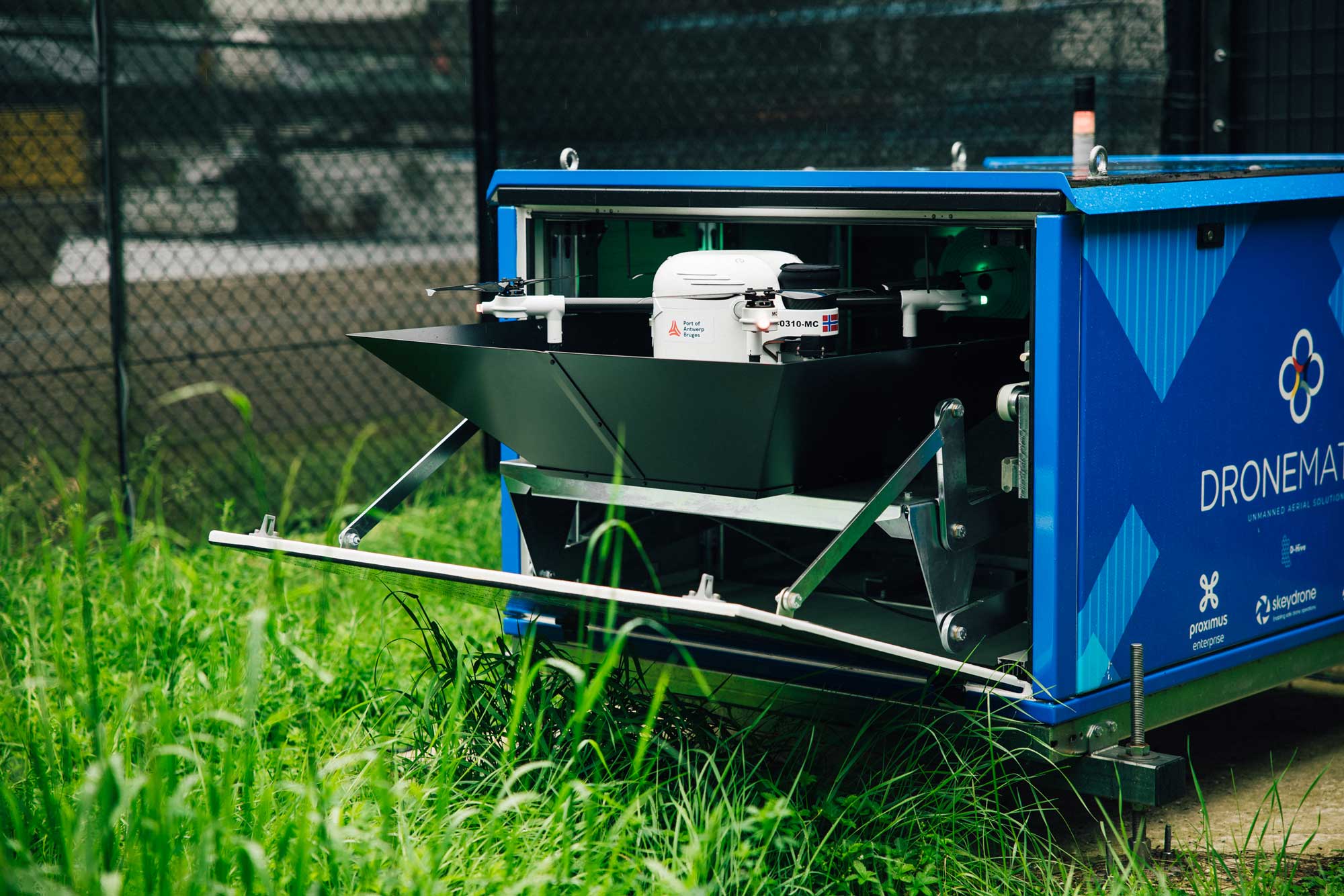
The drone market is changing rapidly. Credit: DroneMatrix
Playing to Belgium's strengths
Vanwelkenhuyzen believes Belgium possesses much of the technical expertise needed to compete internationally.
Flanders' universities, research institutes and electronics companies provide strong engineering foundations, he argues. What Belgium lacks is the venture capital required to transform promising engineering firms into major industrial players.
That challenge is shared across Europe's defence technology sector. Policymakers have repeatedly warned that innovative firms often struggle to move from prototypes to mass production, leaving Europe dependent on foreign suppliers precisely when strategic autonomy has become a political priority.
Perhaps Vanwelkenhuyzen's strongest warning is that drones themselves are only part of a much larger transformation. "The real big thing behind this is AI," he says.
Autonomous systems capable of identifying, tracking and intercepting targets with minimal human involvement raise difficult ethical as well as military questions. Europe has traditionally emphasised safeguards, oversight and accountability, while other actors have embraced faster deployment of military AI.
For Vanwelkenhuyzen, that debate is becoming increasingly urgent. He worries Europe could find itself falling behind not only in drones but also in the AI that will increasingly control them. The contest, he argues, is no longer simply about building aircraft. It is about developing the software, autonomy and industrial capacity that will underpin Europe's future security.
DroneMatrix remains a small engineering company, not yet a major defence contractor. But as Europe speeds up its search for sovereign defence technologies, companies like it may find themselves operating in a market that barely existed just a few years ago. Whether they can grow quickly enough to seize that opportunity may prove just as important as the drones themselves.
