
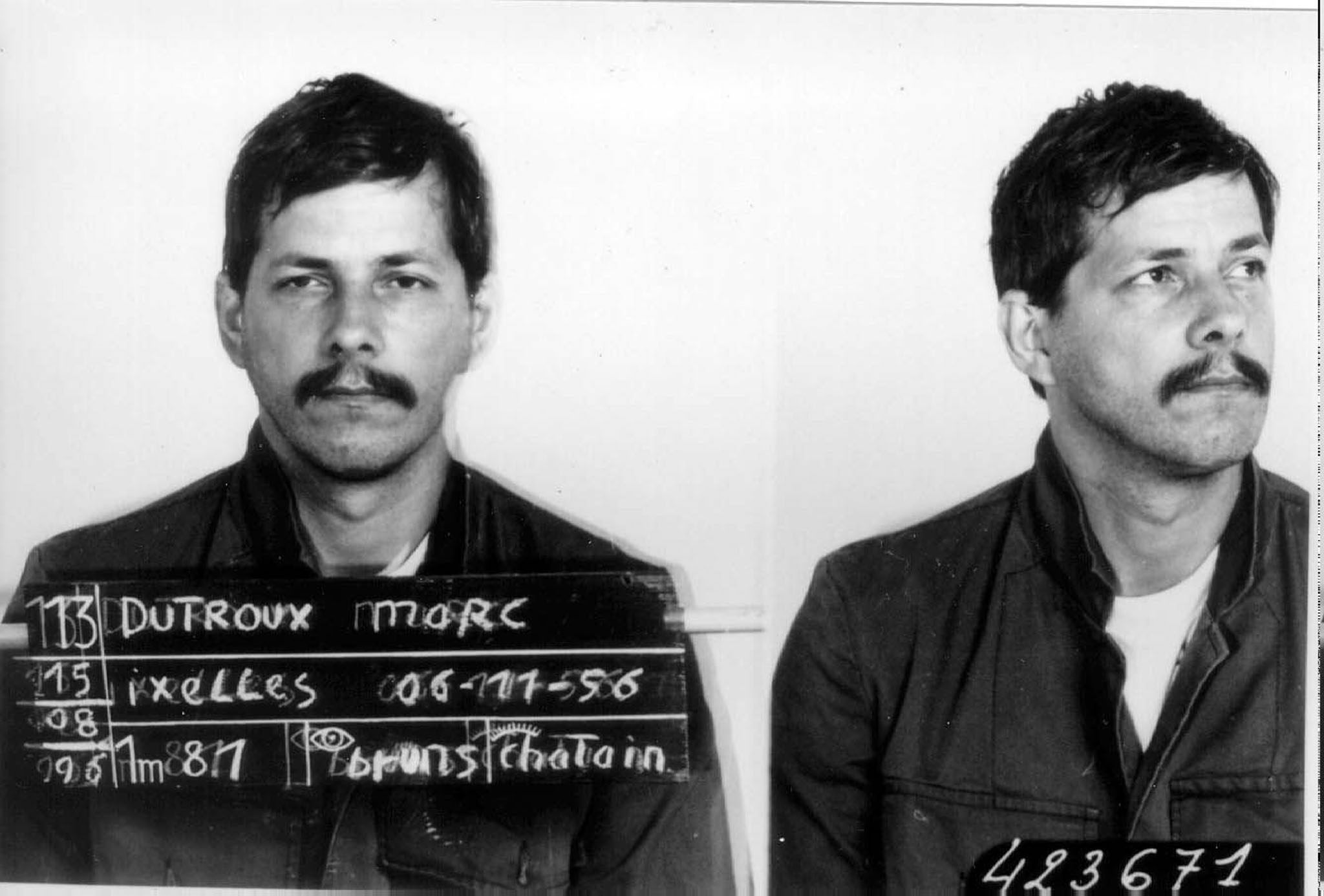
The Dutroux Case remains one of Belgium's darkest scandals, shocking Belgian society and its system to its core. It sparked public outrage over the judicial and political failures that led to a convicted serial rapist not being investigated, despite multiple warnings and witnesses. Here's what happened.
Exactly 30 years ago today, on 13 August 1996, police arrested Marc Dutroux, now 69, in Marcinelle in Charleroi (Hainaut), as a suspect in the kidnapping of 14-year-old Laetitia Delhez. Within weeks, they uncovered Laetitia and another girl hidden in his basement and the bodies of four more girls, buried in the back gardens of multiple houses he owned.
At the core of the Dutroux case lies the kidnapping and sexual abuse of Sabine Dardenne, 12, and Laetitia Delhez, 14, and the kidnapping, sexual abuse and murder of Julie Lejeune, 8, Mélissa Russo, 8, An Marchal, 17, and Eefje Lambrecks, 19, between June 1995 and August 1996.
But Dutroux's list of victims is much longer. Dubbed 'Le Monstre', the serial killer was convicted of the kidnapping and rape of five young girls in 1989, and sentenced to 13.5 years in prison before being released in 1993.
He also murdered his accomplice, the French criminal Bernard Weinstein, as he feared he would reveal their crimes to the police. He has been convicted of three sexual assaults on young women and girls from Slovakia, and is suspected of several other sexual assaults in Belgium, France and Slovakia.
To this day, it remains unclear exactly what happened to the six girls held in Dutroux's basement and houses. However, detectives have managed to stitch together a timeline based on contradictory testimonies from Dutroux, his wife Michelle Martin and an accomplice, Michel Lelievre.
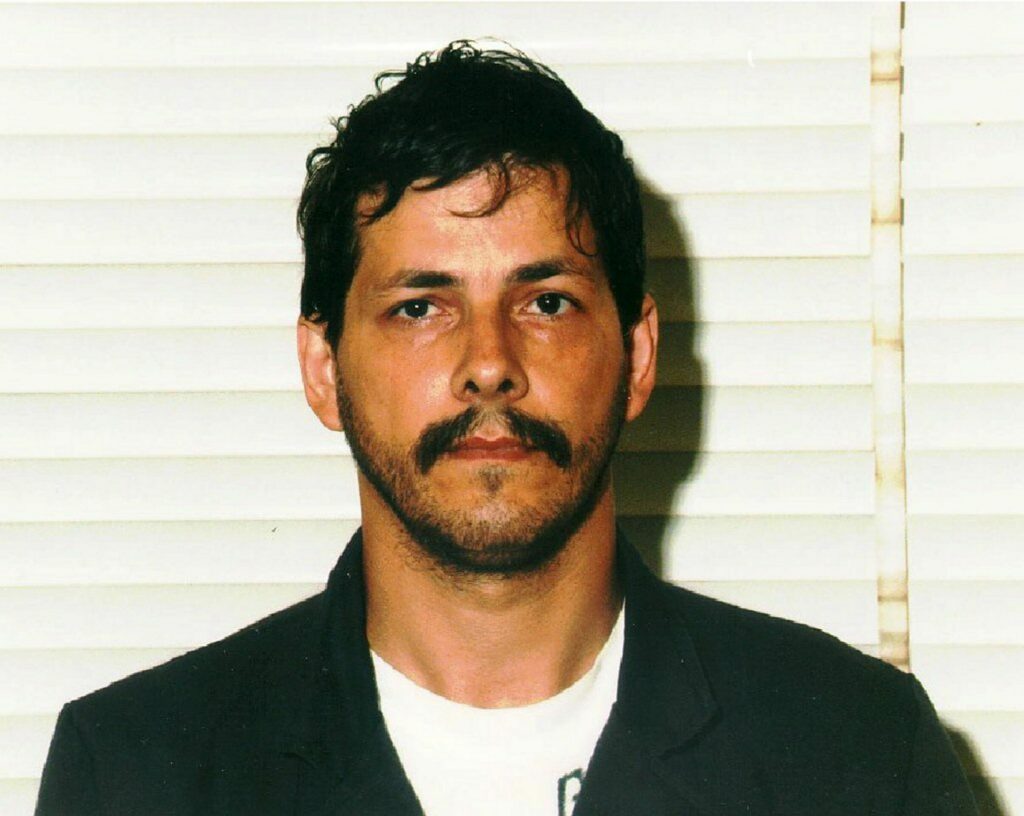
Police handout of picture of Marc Dutroux. Credit: Belga / Federal Police
Two of the girls, Julie Lejeune and Mélissa Russo, were abducted on 24 June 1995. A witness saw them step into a car in Grâce-Hollogne (Liège province) after the girls had left Mélissa's house to wave at cars on a nearby motorway bridge. Their bodies were found on 17 August 1996, buried in the garden of one of Dutroux's houses.
Dutroux abducted the girls, with the help of Weinstein, as Martin testified that her husband had called her bragging about the abduction, saying that he had to do all the work while Weinstein drove the car.
Hidden cellars
Dutroux claimed that the girls were dropped off at his house in Marcinelle by Lelievre, and that he only kept them hidden out of fear of being arrested. During the investigation, he would regularly change his story and be caught lying.
In reality, Dutroux had begun constructing hidden cellars to imprison the girls he planned on abducting in the spring of 1993. His plans were reported to local police by a petty thief whom Dutroux had tried to recruit. When police raided Dutroux's houses, however, they only found unfinished renovation projects which he claimed were drainage works.
Julie and Mélissa were initially kept in the bedroom of one of Dutroux's children, who were staying in a different house with their mother in Marcinelle, as the hidden cellar in the basement took another month to complete. By the end of July, the girls were moved into the basement and would only rarely return to the house.
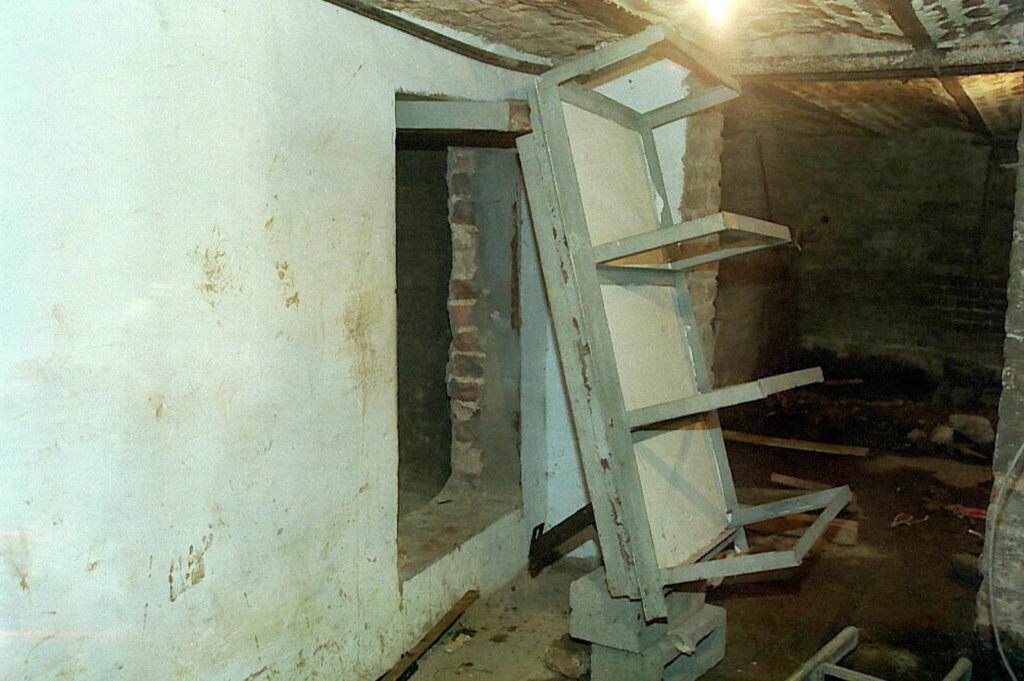
The hidden cellar in Marc Dutroux's house in Marcinelle. Credit: Belga / Bernard Delentree
On 22 August 1995, An Marchal and Eefje Lambrecks attended a hypnosis show in the casino of Blankenberge on the Belgian coast. The two teenagers waited to receive a videotape of the show afterwards before taking the tram back to Westend.
According to statements from Lelievre, he and Dutroux were driving around in the area and caught a glimpse of An and Eefje on the tram before losing sight of them in the centre of Ostend. They continued driving around in the hopes of finding them.
An and Eefje took the last tram of the evening, without realising it wouldn't take them all the way to Westend. The girls decided to hitchhike. The tram driver was the last person to see them before Dutroux and Lelievre offered them a ride home.
According to Lelievre, Dutroux forced the girls to take a sedative before driving towards Marcinelle. Halfway there, the car broke down, and Dutroux convinced two road-trippers sleeping in their car to give him a ride home. He picked up a new car and drove back to the ditch where he had left Lelievre and the two unconscious girls.
An and Eefje were locked in an upstairs bedroom, while Julie and Mélissa remained in the basement. The girls never found out about each other.
An and Eefje's bodies were discovered on 3 September 1996, buried under a shed in Jumet in Charleroi.
An autopsy revealed that both suffered sexual abuse leading up to their deaths. Both were malnourished, and there were strong indications that they were buried alive.
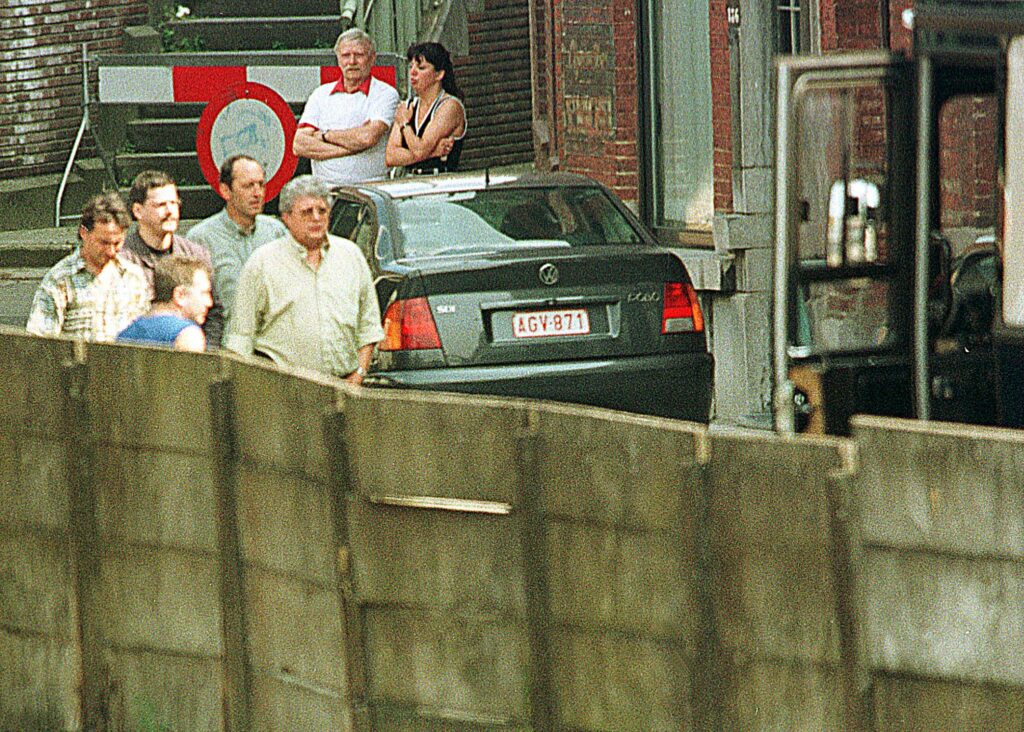
Mark Dutroux with police officers outside his house in Marcinelle. Credit: Belga / Oliver Matthys
It is unclear exactly how long An and Eefje were in the house in Marcinelle, nor the horrors they endured. The only people who know the full story are Weinstein, who was killed before talking to police, and Dutroux himself.
Initially, Dutroux shifted the blame to Lelievre and Weinstein, claiming they kidnapped An and Eefje, and said he only got involved when they called him to bring a new car after the first one broke down.
He then admitted to assisting them in the abduction, but claimed it was Lelievre who planned it all. He alleged that Lelievre and Weinstein were responsible for the sexual abuse the girls endured, and that they had killed the girls.
He later blamed the murder of An and Eefje on Weinstein, who had conveniently told him where the bodies of the girls were buried.
According to Martin, Dutroux told her in September 1995 that he and Weinstein had killed and buried the girls near Weinstein's house. Dutroux told her that he decided to murder them as managing four children was too much work.
Police failings
Julie and Mélissa stayed in the basement until a freak dispute resulted in Dutroux being sent to prison. During an argument over a stolen truck, Dutroux held three people hostage and drugged them while robbing their houses. But as one of them woke up and escaped, police were alerted to the incident and issued an arrest warrant.
Dutroux reported to a local police station on 6 December 1995. As he assumed he would be away from his house in Marcinelle for some time, he left Julie and Mélissa locked in the basement with some provisions. He told his wife to take care of them.
The police searched his house and confiscated videotapes of the hidden cellar. The tapes were left unwatched as the local police department did not have a television.
While searching the basement, an officer reported hearing a young girl's voice through a wall. He thought the noise was coming from the street and ignored it.

Rescue workers searching in the garden of a house owned by Marc Dutroux in Tienen. Credit: Belga / Oliver Matthys
Martin, Dutroux's wife, said she tried to bring the girls food one time. However, the hidden door fell off its hinges, so she couldn't reach Julie and Mélissa and gave up.
She has always claimed to have allowed the abductions and murders to happen out of fear of retaliation from her husband. While he spent three months in prison, however, she took no steps to help the girls, nor to report him to the police.
Detectives assume that when Dutroux left prison on 20 March 1996, the girls were dead. He initially claimed that they died shortly after he returned, but later changed his version to the girls being dead when he returned.
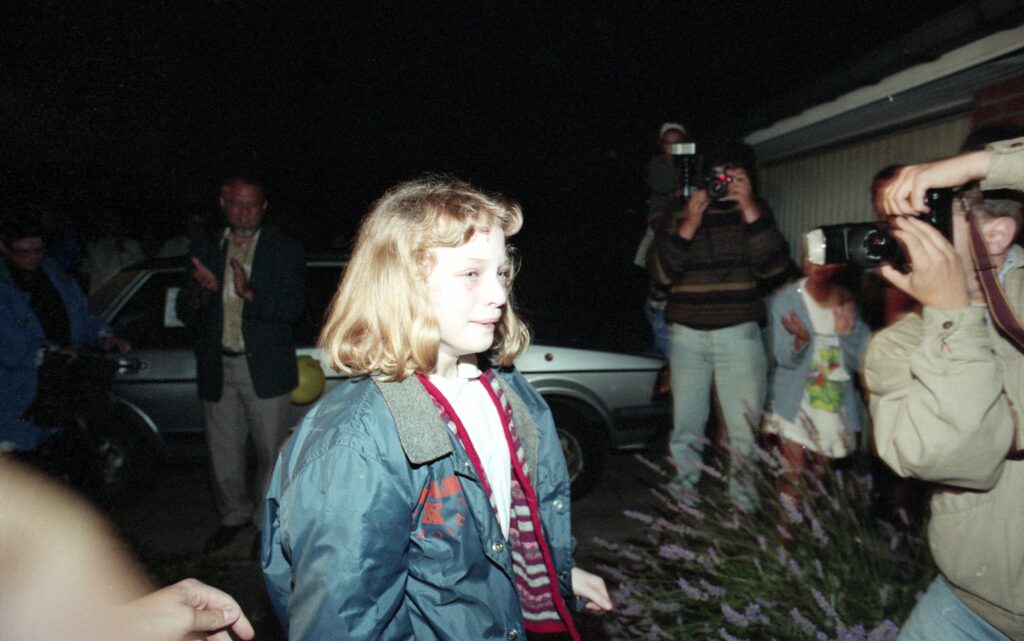
Sabine Dardenne shortly after her release from Dutroux's cellar. Credit: Belga Archive
Two months passed before Sabine Dardenne, the fifth girl, was abducted near Tournai. Dutroux and Lelievre pulled her off her bike as she was cycling to school and brought her back to the house in Marcinelle. Sabine spent 80 days in the house, most of it locked in the cellar.
Dutroux told Sabine that she was abducted by a large criminal network which was trying to collect a ransom for her release. He said that, as her parents could not pay the ransom, the boss of the network had ordered her to be killed.
Dutroux claimed to be hiding her in his cellar to protect her, and allowed Sabine to write letters to her parents. He then used the information in her letters to further manipulate her into believing his lies.
Sabine was subjected to sexual abuse daily. She marked each day on her calendar with either a cross or a star: a cross indicated Dutroux hurt her that day; a star meant that he hurt her a lot.
When police officers released her from the cellar, she thanked them for bringing her back to her mother, before turning to Dutroux and kissing him on his cheek.
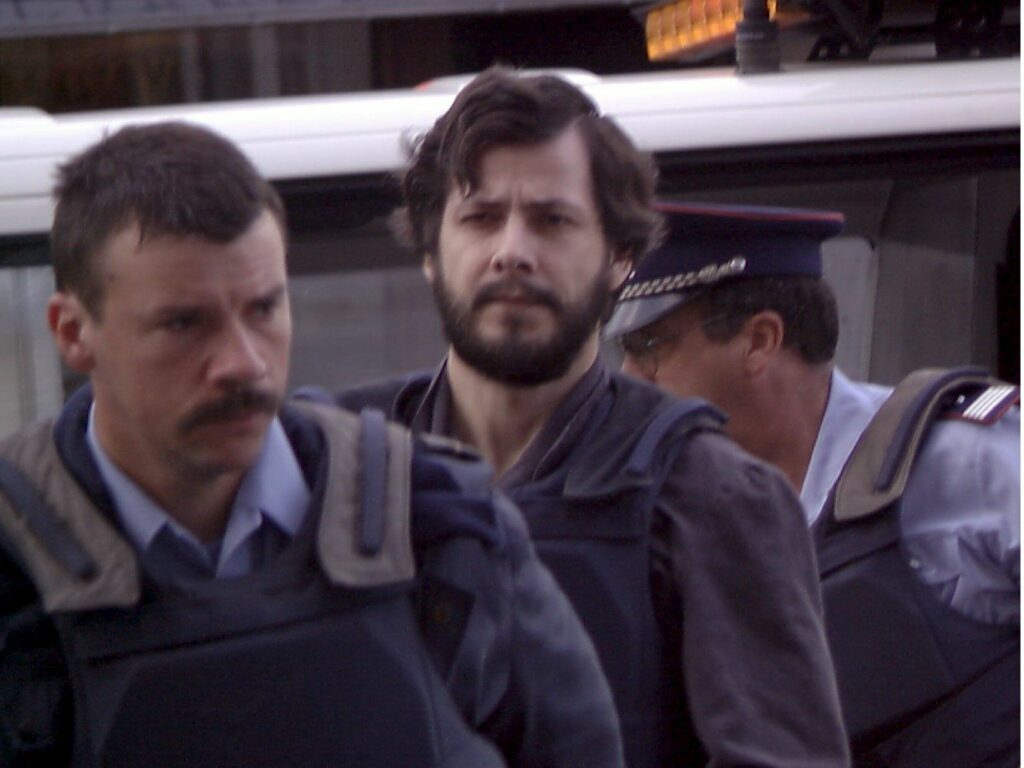
Marc Dutroux. Credit: Belga Archive
On 9 August 1996, Laetitia Delhez was kidnapped as she was walking home from the municipal pool in Bertrix (Luxembourg province). At that point, no one knew that all the girls' disappearances were linked, or that they had even been kidnapped.
But Dutroux and Lelievre were spotted in Bertrix.
While no one witnessed Laetitia's abduction, people remembered an old, white van making a lot of noise as it struggled to start its engine right around the time she was taken. One saw part of the number plate, while another recalled the brand. When cross-referenced, the central database gave 77 hits for Renaults with FRR on their plates.
One name caught the detectives' eye: Marc Paul Alain Dutroux.
The name sounded all too familiar: local police were aware of rumours circulating about Dutroux kidnapping young girls, and the Federal Police had been tracking him for a while. But until then, they had been unable to find any incriminating evidence.
Confession time
Marc Dutroux, his wife Michelle Martin and accomplice Michel Lelievre were all arrested on 13 August. After two days of interrogations, Lelievre started struggling with withdrawal from his heroin addiction, and told police that he and Dutroux had kidnapped a girl in Bertrix.
Confronted with the confession, Dutroux surprised the detectives by promising he would lead them to not one, but two girls locked in his basement.
He showed officers how to open the hidden door in his basement. Police had been searching in and around the house for days, but never discovered the cellar. Sabine and Laetitia were both rescued and reunited with their parents.
In the days that followed, he led detectives to the bodies of Julie and Mélisse, and to Weinstein. After weeks of taunting detectives, he eventually told them where An and Eefje were buried in Jumet.
All six girls had been found. But at that point, the Dutroux case was only just getting started.
The rest of the story will be published on Friday, 14 August.
