
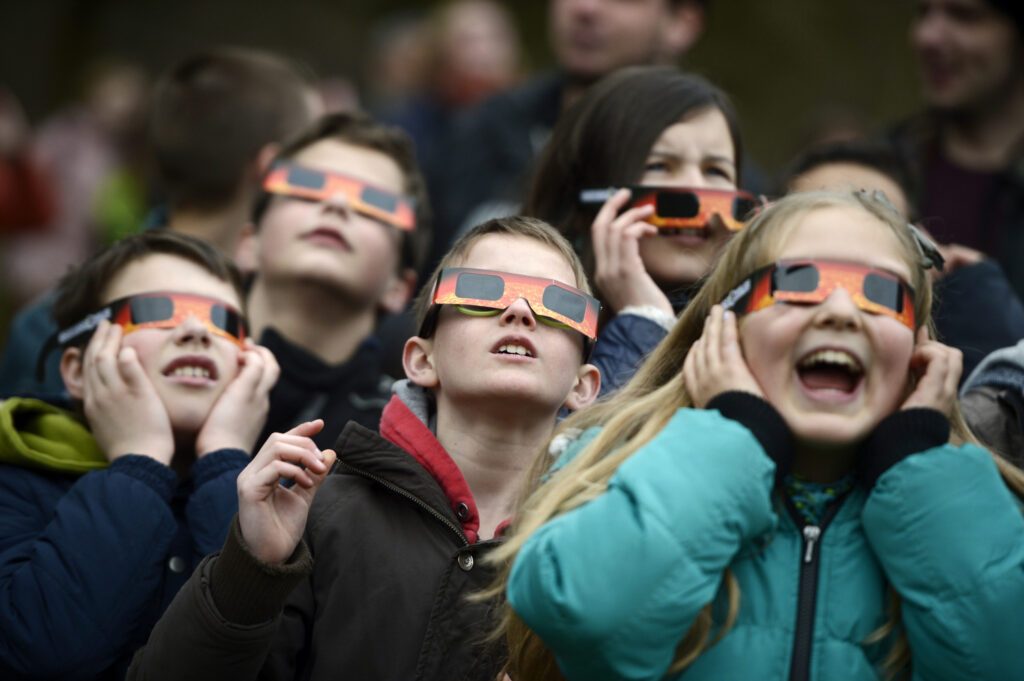
A solar eclipse will be visible from Belgium on Wednesday evening, with about 90% of the Sun covered, making it the most complete eclipse the country has seen since 1999.
The Moon will pass in front of the Sun for nearly two hours, creating a striking period of sudden twilight. A similar eclipse will not be visible from Belgium again until 2081.
The eclipse begins at 19:18 (Belgian time), reaching its peak at 20:13, when around 90% of the Sun will be obscured. The eclipse is set to end at 21:05.
Anyone hoping to watch the eclipse is advised to choose a location with an unobstructed view to the west. Several Brussels venues will open to the public today exclusively for the solar eclipse.
The Flemish public observatory Urania has warned that viewers must wear proper eclipse glasses to watch safely. Looking at the eclipse without adequate protection can cause permanent eye damage.
Ordinary sunglasses and improvised viewing methods do not provide enough protection and are also dangerous, Urania said.
The MAS museum shop on Antwerp’s Eilandje reportedly sold nearly 16,000 eclipse glasses in recent days, with several people visiting the shop from different parts of the country just for the glasses, including buyers from Brussels, Ghent, Leuven and Hasselt.
The zone of the total solar eclipse begins north of Russia, then passes over Greenland and Iceland towards Western Europe.
The shadow band crosses northern Spain, clips the northeast of Portugal, and ends at sunset over the Balearic Islands. Many Belgian eclipse chasers have travelled to those areas to experience the total eclipse.
