
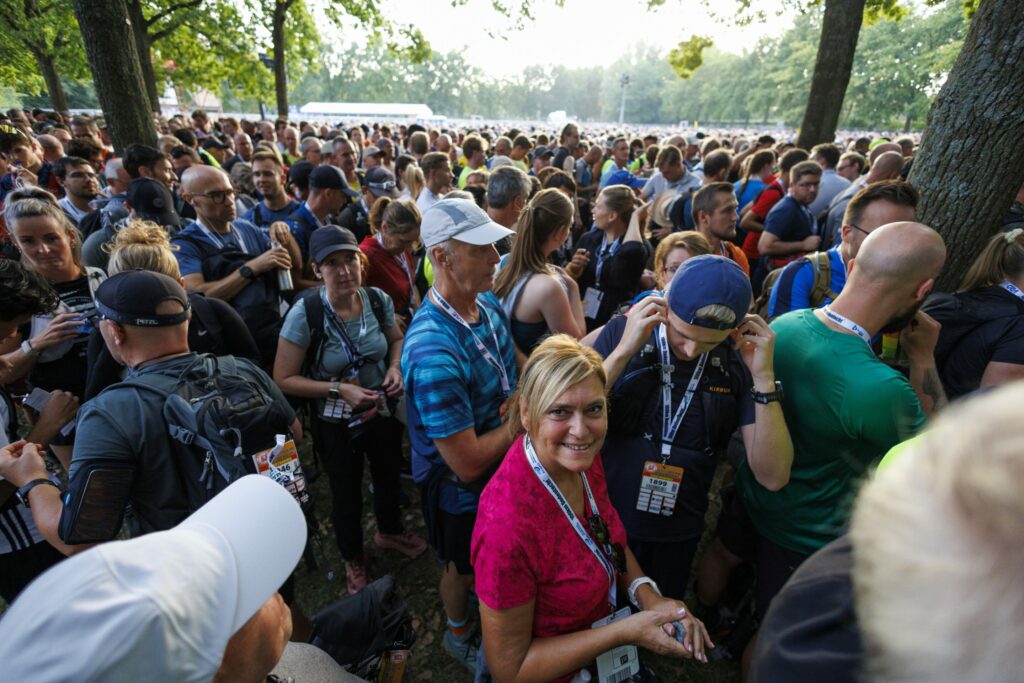
The Dodentocht, literally meaning "Death march" in Dutch, is an annual Belgian hiking event starting on the second Friday of August, challenging participants to walk 100 kilometres in under 24 hours.
What started in 1970 with just 65 club-affiliated hikers in the Flemish town of Bornem has turned into a massively popular event in recent years – consistently attracting over 10,000 since 2009. This year, the 13,000 tickets were sold out in just 1,5 hours after sales opened in March.
The event is highly regarded among European hikers, with participants coming from the Netherlands, France, Germany, the United Kingdom, and even the United States.
Still, it has retained its original spirit and local identity, and is still operated by a grassroots non-profit organisation grown from the club that started the "Death March".
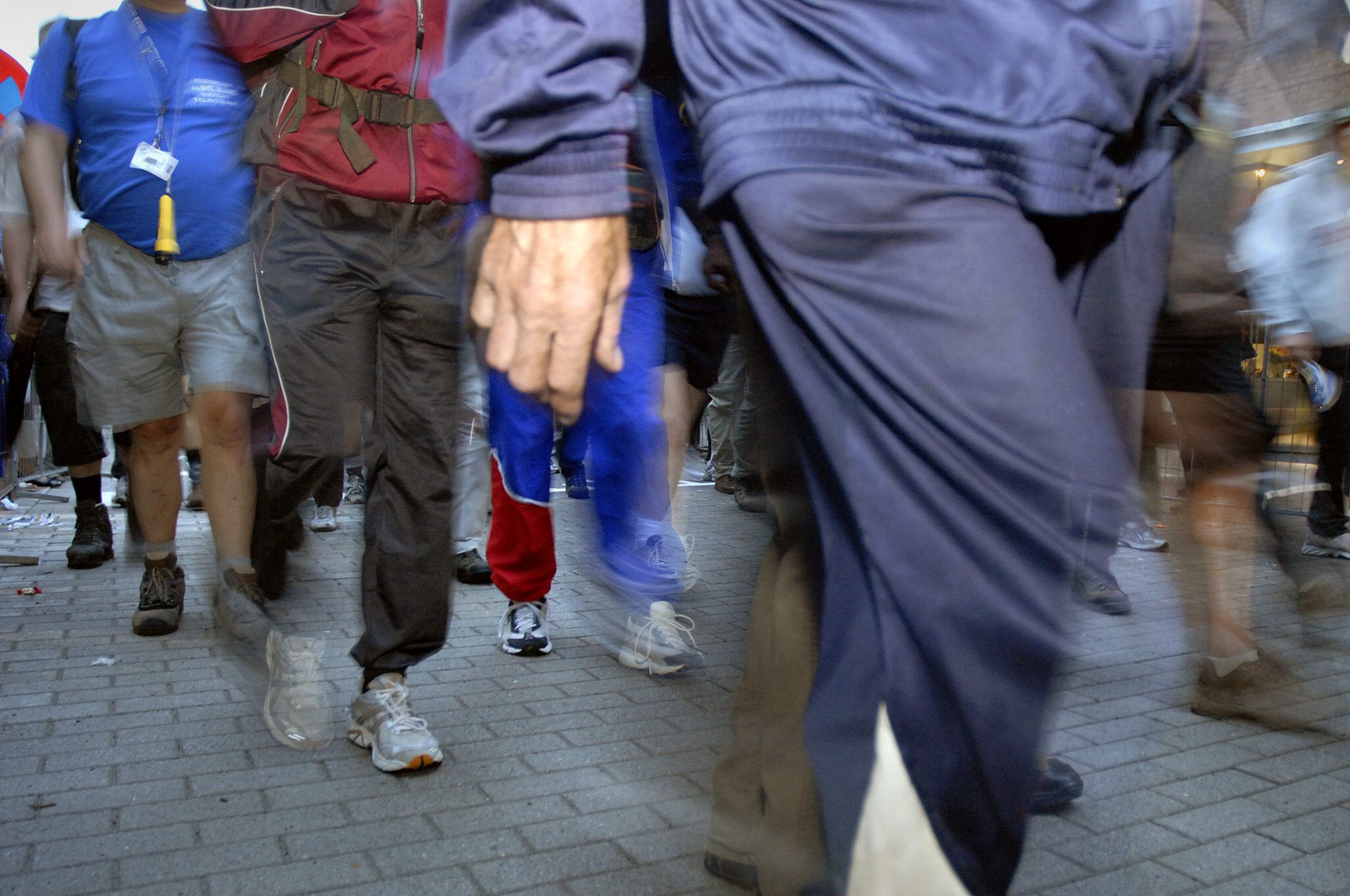
Credit: Belga
On the evening before the event, the most dedicated participants will gather at the Abbey Church of Bornem for a prayer and a shoe blessing ceremony – a tradition that aims to bring good luck to all of the hikers.
On the day of the event itself, the walkers will gather at the starting point. At 21:00, everyone sets off. Through the night and darkness, the hikers make their way around Klein-Brabant, the triangle of smaller Flemish towns in between Brussels, Antwerp and Ghent.
The 100 km are mostly made up of paved flat roads, surrounded by beautiful nature and more exquisite locations, like a Duvel brewery (with free beer!).
To support participants, the designated route comes with 14 checkpoints, all supplied with food, medical staff and emergency golf carts that can take the drop-outs off the trail. Crowds of supporters from all over Belgium will gather around to cheer.
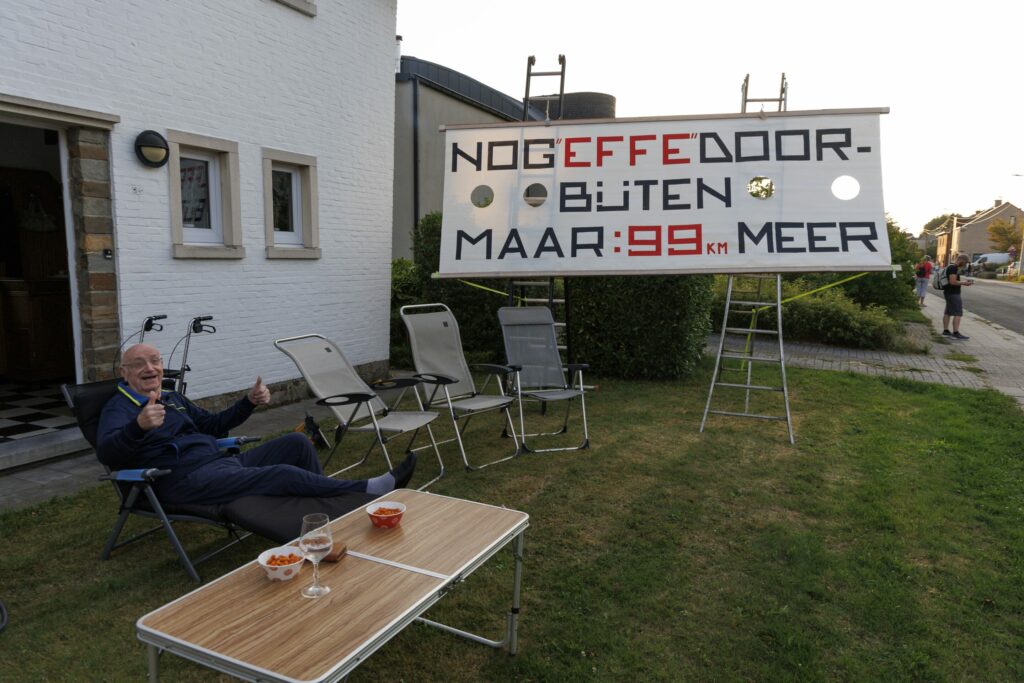
A teasing banner showcased by a local during 2025 Dodentocht, roughly translating to "Just a little more, 99 km to go". Credit: Belga
For most participants, no matter how prepared they are, the Dodentocht is a grueling test of their physical and mental endurance. Still, 60% to 70% of walkers generally complete the march. Those who make it receive a medal, gingerbread and hearty congratulations.
Importantly, the "summit fever" can turn the name "Death March" into a grim reality. Although rare, an infamous case happened in 2010, when a properly trained five-time participant collapsed 300 metres short of the finish line and died from cardiac arrest.
This year's heat sparked discussion of shortening to the route, like in 2022, when 100 km turned into 66.6 km. However, after consultations with the authorities, the organisers decided to stick to the full length – preparing extra cooling, hydration and safety opportunities.
While the march is not marketed as a charity walking event unlike "Kom op tegen kanker" or "Race to the cure", its slogan reads "Walking for a better world" and many people try to raise funds for a charity of their choice. The website even has a registered charity sections for people who want to promote good causes.
Yours truly will also be participating this year. As a bit of an adventurist myself, I can't skip the chance of joining in on the event.
I will also be promoting mental health awareness and suicide prevention, wearing a green ribbon on my backpack. So if you see me among the participants, feel free to say hello. Otherwise, tune in next week to read my account of the brutal trail that's waiting ahead.
A ticket for the Dodentocht costs €62.
