Reforms to unemployment benefit have increased the supply of workers, while at the same time austerity measures and economic conditions have reduced the number of available jobs.
The number of registered jobseekers in Brussels who have been looking for between one and two years climbed 13.4% in August compared to the same time last year. Young people are also struggling to find work, with the number of job seekers under 25 increasing by 15.2% over the same period.
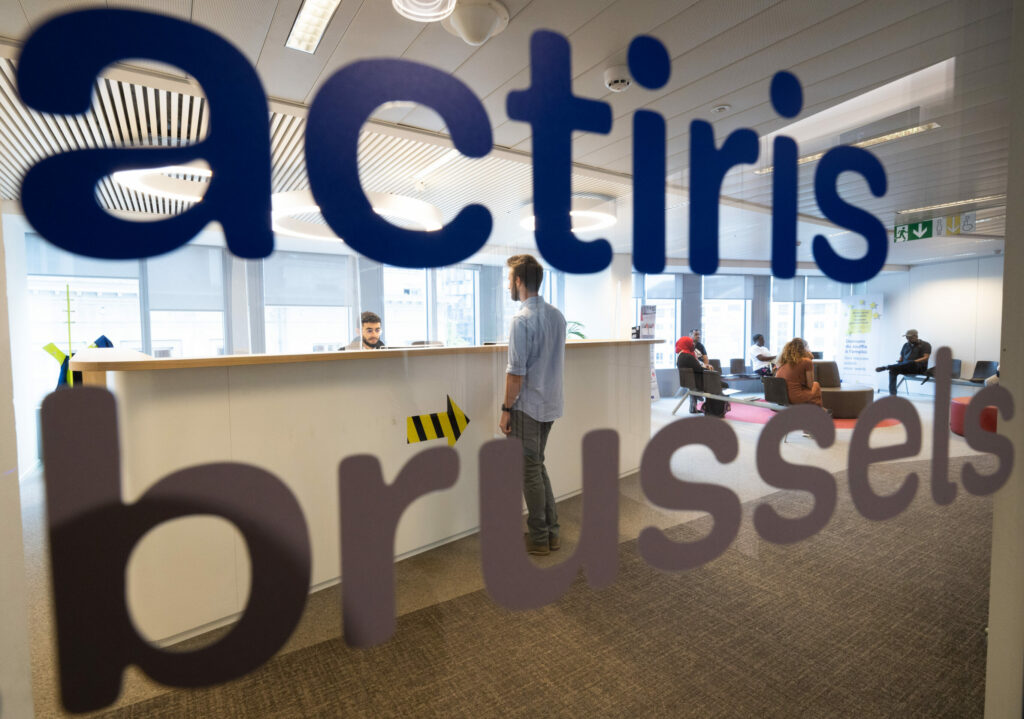
The figures, released this week by Brussels' employment agency Actiris, show the worsening employment market faced by job seekers.
This is despite the unemployment rate (the share of the working population that are without a job) remaining stable over the same period at just 0.45%.
Around one in six people in the active working population in Brussels are now classed as unemployed. This compares to around one in 15 in Flanders.
The figures, at first glance, show a confusing picture – the number of job seekers are increasing, but the unemployment rate is fairly flat. What explains this?
Job seekers have fewer jobs to seek
Three factors are at play that explain the current employment market. Government policies are increasing the supply of people looking for jobs, the number of jobs available has not increased to match, and an ageing population means more workers are leaving that joining the workforce.
Changes to unemployment benefit rules, which have aimed to restrict access to the benefits, mean that more people remain registered as jobseekers while they lose their access.
"The current numbers are difficult to interpret due to the measures that have been taken to limit unemployment benefit," Philippe Ledent, an economist at ING Belgium, told The Brussels Times.
"There is also a structural change as they continue to be registered as job seekers, while they transition to another status."
The reforms by the Federal Government last year introduced time limits to unemployment benefits in Belgium for the first time. The aim is to reduce the cost of unemployment benefit, as part of measures to reduce Belgium's budget deficit, and encourage a transition into employment.
Ledent highlighted that, as a result of these measures, there has been an increase in the number of people registering as job seekers across Belgium over the last year.
He cautioned against reading the figures as an increase in people losing their job, highlighting that job creation is slow but still positive, "the increase in job seekers is not due to a strong decline in employment," he said.
Instead he explained that while the supply of labour has increased, "the ability to create massive new jobs is limited, as long as we continue to have low economic growth."
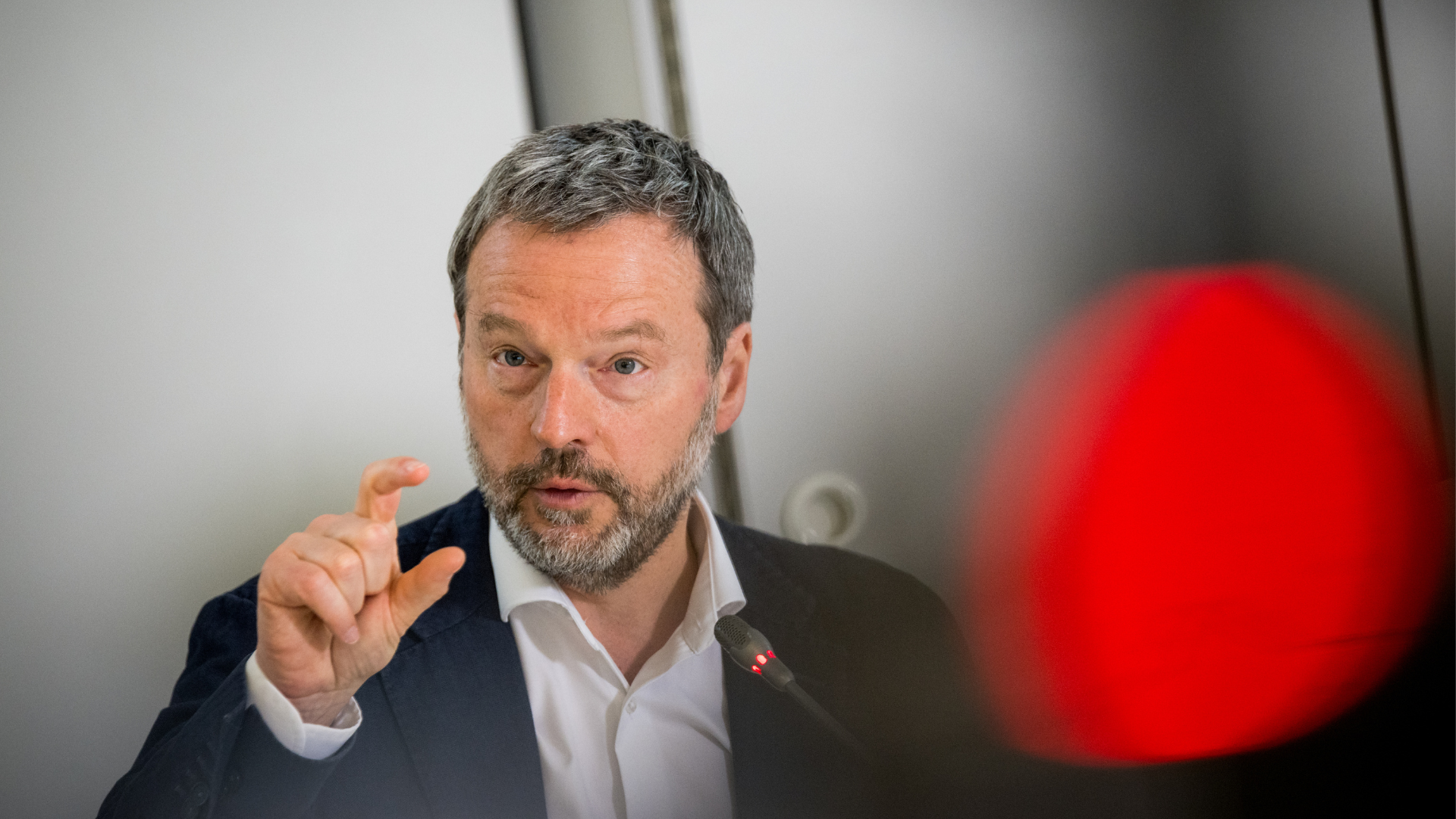
National Bank (NBB) Governor Pierre Wunsch pictured during a press conference. Credit: Belga/Jasper Jacobs
'The economic situation is quite difficult'
The National Bank of Belgium published figures in July which showed Belgium’s economy stagnated in the second quarter, recording zero growth compared with the previous three months.
Belgium's low growth means that employers cannot absorb the increasing number of job seekers coming onto the market fast enough. "The economic situation is quite difficult," argued Ledent.
The public sector has also been unable to pick up the slack due to an ongoing hiring freeze, "with government cutting spending, the risk is that this sector of the economy, which was the biggest employer, will slow down," Ledent noted.
This sentiment is echoed in part by Annaïk De Voghel, a spokesperson from trade union ABVV-FGTB, who described the figures as "concerning and worrying."
She told The Brussels Times that the reasons were "probably partly cyclical, linked to the worsening international economic situation, the freeze on recruitment in the public sector and the non-profit sector, as well as other, potentially more structural factors that still need to be properly assessed."
These structural factors, according to De Voghel, include the impact of AI and the knock-on effects of austerity policies in Brussels.
"All of this is compounded by policies that reduce investment and support for workers’ purchasing power at a time when international economic growth is slowing, which has a negative impact on employment."
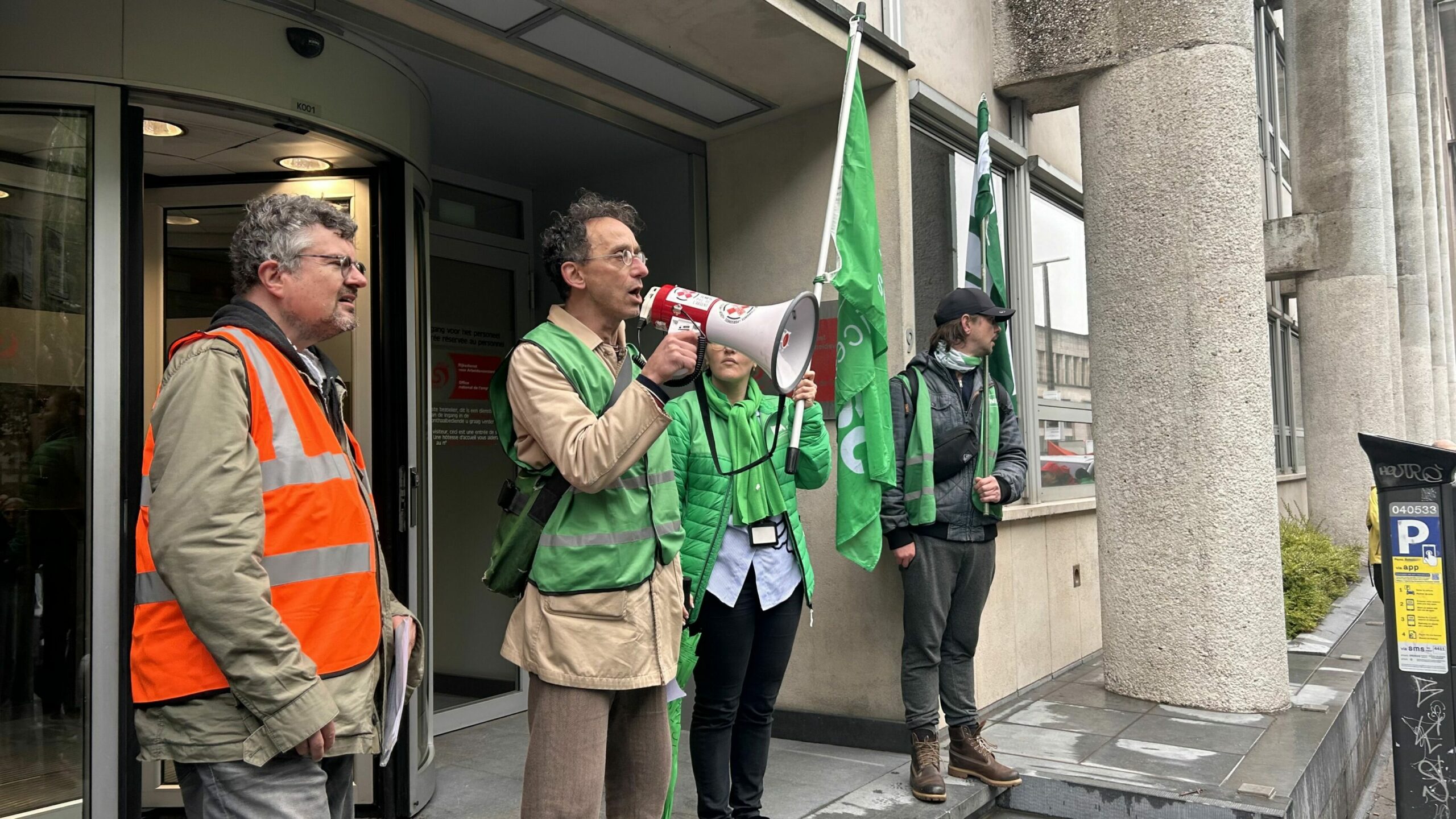
Demonstration against the reform of long-term unemployment benefits and its impact on the CPAS/OCMW, in Brussels on Thursday, 24 April 2025. Credit:
Belga / Tristan Janssens
According to Ledent, the economic conditions explain the growing share of job seekers who have been looking for between one and two years.
"This is exactly the period where we see some economic growth, but it is not strong enough to absorb the people on the labour market. This is only the accumulation of people suffering from the fact that the labour market is not dynamic enough," he said.
Ledent also highlighted the ageing population as part of the mix. "With the population ageing, the active population is not growing, leading to a slight improvement in the unemployment rate."
This partly explains why the unemployment rate has remained stable, even while the job seeker rate has grown.
Given all the dynamics at play, in particular weakening economic conditions, Ledent issued a clear warning: "Do not expect strong growth on the labour market in the short term."
Related News
- Rejected for being ‘too old’ or wearing a headscarf: Discrimination on Brussels’ job market persists
- The Brussels economy minister has a strategy for jobs, growth and Midi – but will it change anything?
- More than 85,500 Belgians work across the border as French workers in Belgium increase
- How to stand out on the Brussels job market
