

Since the pandemic sent workers home en masse in early 2020, there has been much to do about working from the comfort of your own home. Whether you love it or loathe it, telework has established itself as a permanent feature of working life in Belgium.
Or has it?
The Befimmo Office Barometer, conducted by iVox, indicates that more and more Belgian office workers are abandoning the casual and cosy vibes of their homes and heading back into the office: 54% of office workers say they never work from home, up from 45.9% just a year ago.
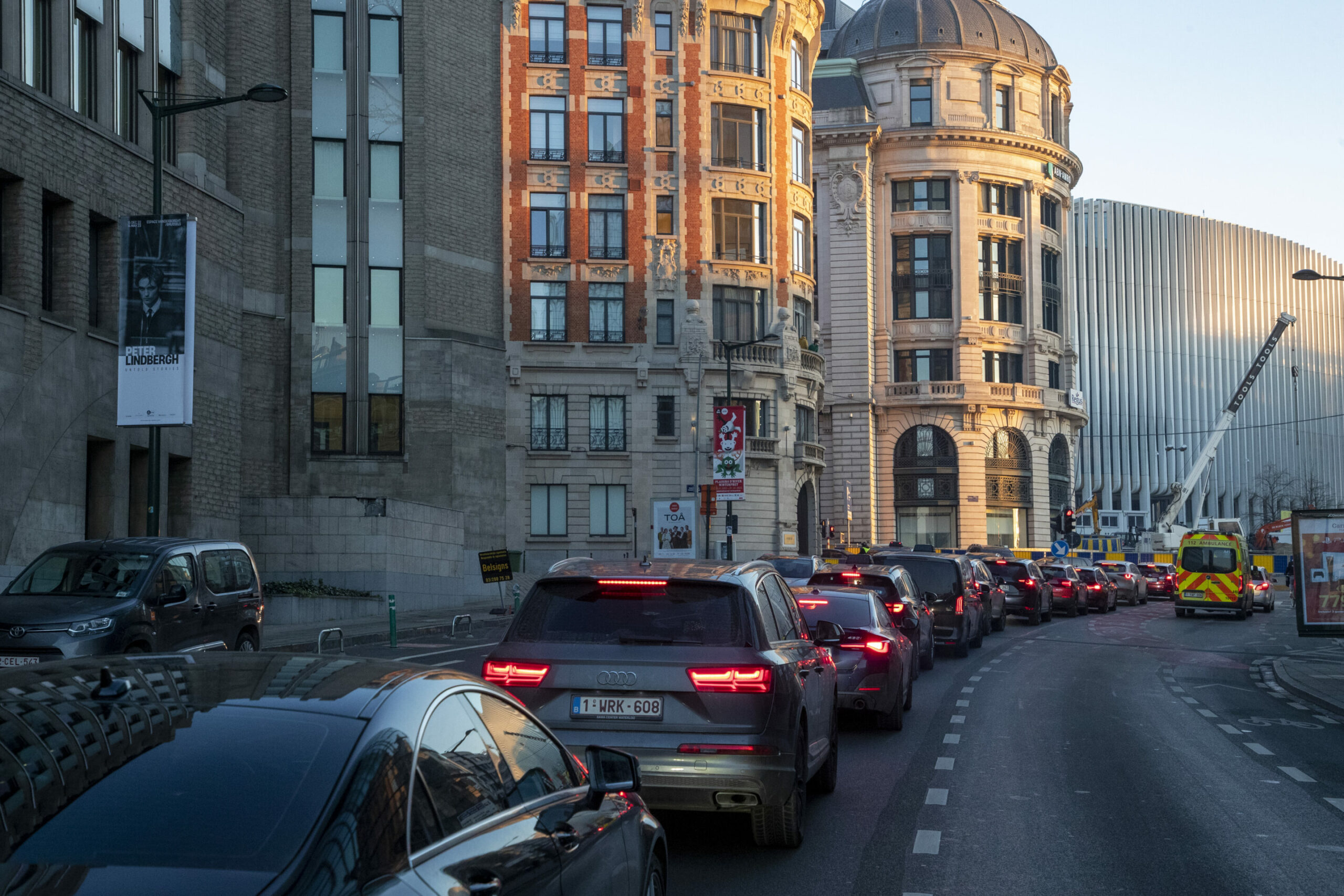
This is perhaps surprising for a small country with big traffic problems. When it comes to time spent commuting, Belgium punches well above its weight at an average of 61 minutes per day – the longest in Europe.
However, official statistics about telework patterns tell a different story than the Barometer: Brussels stands apart from the rest of the country in its office-going habits. An apparent shift toward people choosing the office full-time could in fact be telework in transition, influenced by factors like office set-up, travel times, and even gender.
Is a choice really a choice?
One obvious explanation for the upward tick in people working from the office is that they are simply mandated to do so, but the results of the Barometer suggest that there is more to it.
"The share of people who say they go to the office because they are required to is essentially unchanged: 55% this year against 53% last year, which is within the margin of error," Jean-Philippe Vroninks of Befimmo told The Brussels Times. "So mandates are not what changed. What did change is preference."
In just one year, the share of employees who would rather be in the office five days a week rose from 25% to 33%. Meanwhile, nearly six in 10 respondents said that they no longer have a fixed home-working day, a practice that is also on the rise.
"What we are seeing is less a wave of new obligations and more the quiet erosion of structured hybrid," said Vroninks.
On the ground, people seem to be chosing the connection of the office over the convenience of their own homes. At Dataminded in Leuven, CEO Kris Peeters stressed that he likes being in the office and interacting with people.
"Starting at a screen all day long in your own home gets boring really fast," he told The Brussels Times. "Face-to-face meetings are way more rewarding."
Some of his employees seem to be of a similar mind. "Days at the office are more energising. Interacting with people face-to-face feels much smoother and more inspiring than a lonely day at home," said data engineer Jos Teunissen.

Credit: Pexels
But there is more to it than just the being surrounded by people. For Teunissen, the commute is also "a bit of me-time", during which he can listen to a podcast on the train.
His colleague Raghid Bsat agreed, and underlined the importance of good coffee. “I’ve been in offices where the coffee was bad, and that alone doesn’t help your motivation before the day even starts.”
Additionally, Belgium's headline-grabbing commuting time is not as bad as it may seem on first thought, according to Befimmo's Vroninks. "In our sample, 56% commute less than 30 minutes each way and only 10% travel more than an hour."
But there is another structural factor, according to Stijn Baert, an empirical labour economist at the University of Ghent. In Belgium, there is a strong cultural drive to buy or build one's own home. Belgians do tend to buy rather than rent, which makes the population less likely to relocate for work.
"We are more likely to stay where we are, and are therefore more inclined to look for work in that neighbourhood, or to commute if necessary," he said.
More desks, but fewer places to think
Unsurprisingly, how people feel in the office makes a big difference. Nearly two-thirds of employees want a permanent desk and fewer than one-third of employees surveyed said that they can find a quiet place to work.
For Baert, this is the key finding of the Barometer: 38% of people with a fixed desk would like to be in the office every day, compared to just 13% of those with only a flexible workspace.
“Flexible workspaces and open-plan offices have a negative impact on autonomy, engagement, and competence – the basics of work motivation,” said Baert. “In such working environments, employees have fewer opportunities to organise their work themselves and to tailor their working conditions to their personal preferences and needs.”
As distractions and disruptive noises can limit concentration and effective working time, flexible workspaces and open-plan offices can also reduce employees' cognitive performance. And workers do not bear the brunt of this equally.
"Studies suggest that, on average, women may be more sensitive to disruptive noise, meaning that the impact of flexible workspaces and open-plan offices on their cognitive performance may be greater," Baert said.
Credit: Belga/Nicolas Maeterlinck
Whatever is happening elsewhere in Belgium, Brussels often stands apart.
This is no less true for teleworking trends: last year, 55% of salaried employees working for a Brussels-based employer worked from home at least sometimes, against 35% nationally, according to BISA.
This gap already existed before the pandemic but widened in 2020 and seems be holding steady at around 20%.
BISA does not claim a single cause, but its data on who works in Brussels points to likely factors.
Based of LFS data, almost half of the people who work in Brussels commute in from another region and they are far more likely to have a highly qualified profession, including intellectual, scientific, or artistic professions. In Brussels, four out of every 10 workers falls into this category.
While the numbers show that telework is now indeed a structural feature of working life in Belgium, there are trends within the trends. It is not simply about employee choice, but the factors that make one option more appealing than another.
Employee ability to focus, manage social interactions, claim a desk, and even their gender can all shape how tempting a worst-in-Europe commute feels.
