
Brussels has long been defined by its offices, but with tens of thousands on social housing waiting lists and large swathes of workspace underused, attention is turning to conversion and reuse. Policymakers, planners and developers are beginning to rethink how the city’s building stock can better match its needs.
Brussels is well known for its endless construction projects, and nowhere is that more visible than in the EU quarter near Schuman – itself currently a building site. Rue Belliard and Rue de la Loi are lined with scaffolding, empty buildings and signs proclaiming new office space to rent.
Even where offices are occupied, many are a case of "lights on, nobody home."
And yet, at the same time, the city is grappling with a deepening housing crisis. Some 55,000 families are on the waiting list for social housing, raising an obvious question: could Brussels’ empty buildings be used for accommodation – as highlighted by March’s Immense festival.
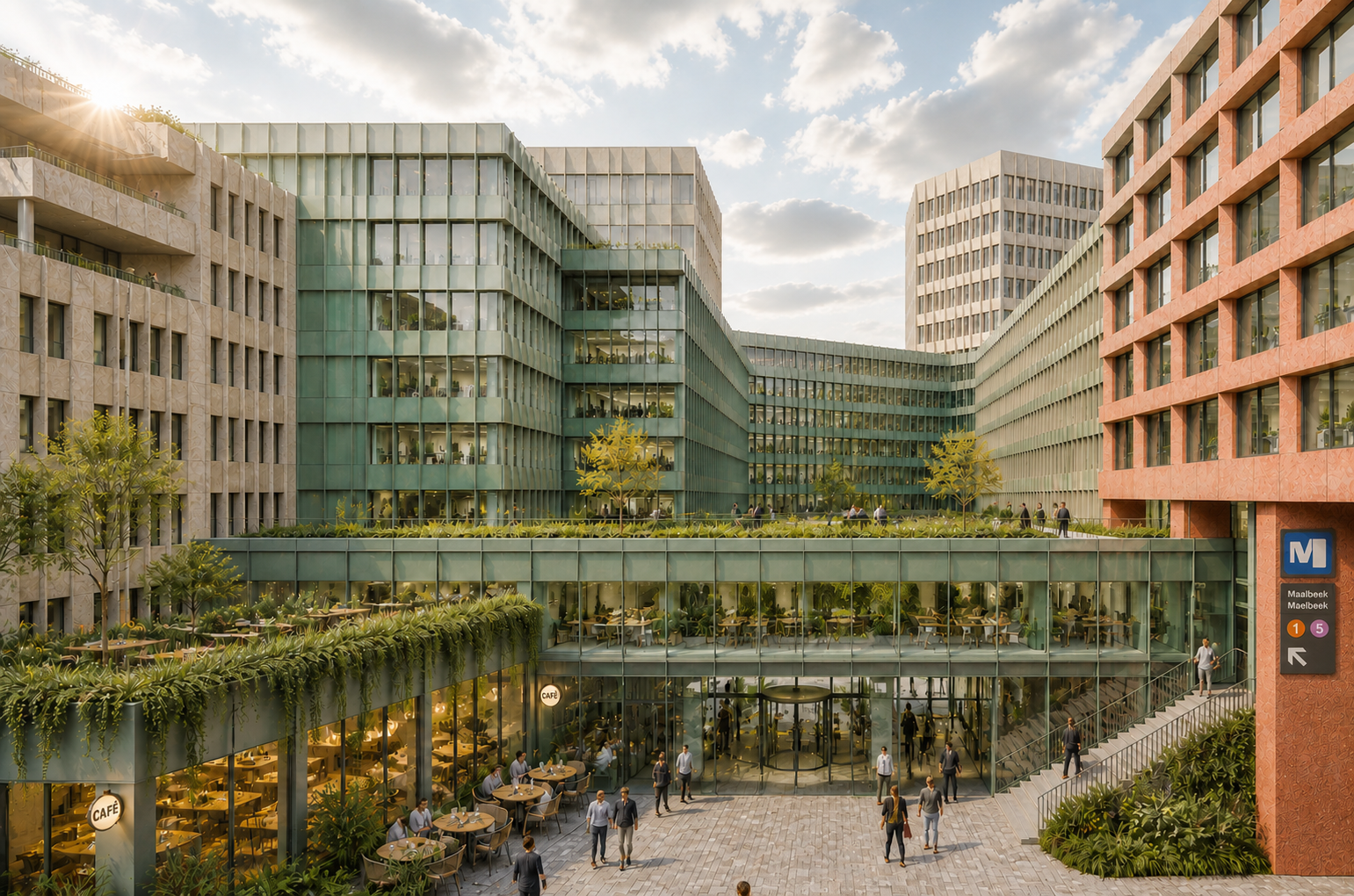
Credit: Whitewood Capital
That paradox – surplus office space alongside acute housing need – is now firmly on the political agenda. The new Brussels regional government’s Political Declaration, released in February, makes clear that “the reconversion of office space into housing continues is to be supported, as do policies linked to unoccupied housing.”
But translating that ambition into reality remains a challenge. According to Perspective Brussels, the centre of expertise for regional and territorial development, the region had more than 1 million m² of empty office space in 2022, with at least 20% potentially convertible into housing.
“The oversupply of offices, juxtaposed with a severe housing shortage, highlights a profound misalignment between the city’s building stock and the needs of its citizens,” says Oana Bogdan, a co-founder of &bogdan architecture studio.
“The paradox is not only an economic anomaly, but a symptom of decades of planning that prioritised commercial interests over social needs.”
How Brussels got here
That mismatch is rooted in the city’s postwar development. From the late 1950s, as Brussels became the de facto capital of the European project, demand for office space surged. A largely speculative boom followed, enabled by weak planning controls and a permissive regulatory culture.
Between the 1960s and 1980s, Brussels operated under a largely laissez-faire approach to planning, says Bogdan, “producing mono-functional office districts with little urban resilience or social life."
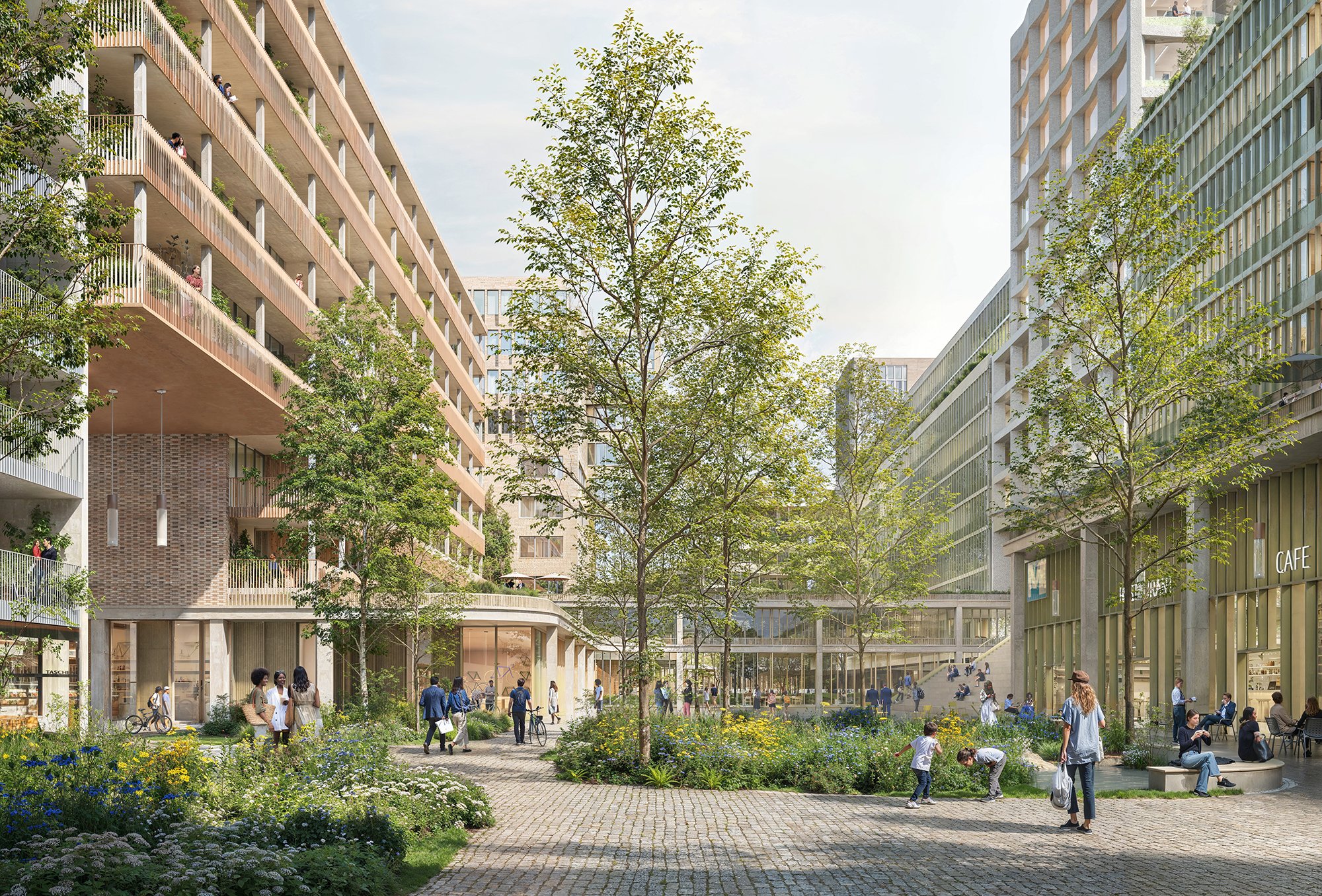
Credit: Whitewood Capital
Meanwhile, Brussels headquartering European institutions from 1958 meant a whole neighbourhood needed offices for people working in the institutions.
Belgium only introduced a coherent national planning framework with the 1962 Planning Act, while its successor, the 1991 Organic Order on Planning and Urban Development, continued what Bogdan describes as a “permissive, market-driven approach.”
That legacy still shapes the city today – not only in its skyline, but in the economic incentives that govern development. Without a clear mandate, reconversion projects tend to focus on middle- and upper-income housing rather than the affordable homes most in demand. Private developers, driven by maximising yield at minimum cost, have little incentive to include social housing.
A shift in thinking
Institutionally, change has been underway for more than a decade. The creation in 2009 of the independent Brussels Government Architect (BMA) introduced greater coherence into public projects through improved procurement and planning processes.
Lisa De Visscher, who took over as head of the BMA in December 2025, says the picture is evolving. The oft-cited 1 million m² of empty office space is not simply a sign of oversupply: many buildings no longer meet modern standards or are poorly located in terms of public transport.
“For that reason, even if many offices stay empty, others are being built or renovated.” Working patterns have also shifted since the Covid-19 pandemic, with teleworking reducing the need for daily office presence. But, De Visscher adds, “we do not want to get rid of all offices, we just want to organise them in another way.”
And the market still reflects that ambivalence. Walk through the EU quarter and along Boulevard du Régent, and new developments continue to advertise “timeless urban workspaces," flexible desks and rooftop views.
At the EU level, meanwhile, housing has climbed higher up the agenda. The European Commission has, for the first time, appointed a Commissioner for Housing, Dan Jørgensen. Building on the 2020 Renovation Wave, which aims to renovate 35 million buildings by 2030, the Commission launched its European Affordable Housing Plan in December 2025, with a summit planned later this year.
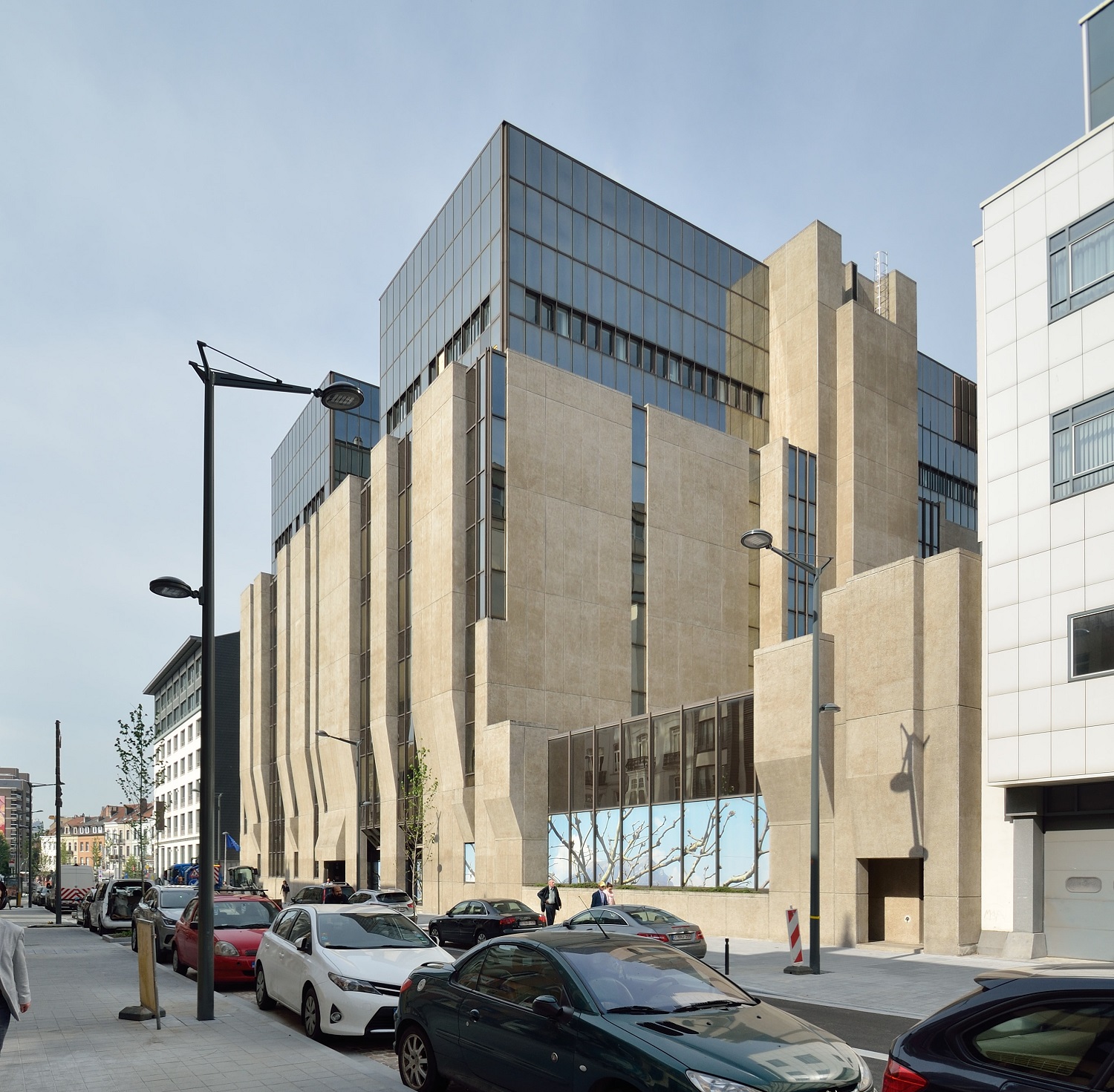
Credit: Whitewood Capital
Despite the often-desolate appearance of parts of the EU quarter, Commission officials insist that all buildings it owns or leases are currently occupied. Its decision to sell 21 office buildings – a 300,000 m² portfolio acquired by the Belgian government in April 2024 for around €900 million – has opened the door to one of Europe’s most ambitious adaptive reuse schemes.
The clearest expression of this shift in thinking can be seen in the Cityforward project. Managed by Brussels-Antwerp real estate firm Whitewood, the project will run until 2032 and aims to deliver a mixed-use neighbourhood: 70% offices, 25% housing and 5% retail and public facilities.
“This project is unique, and a big mentality shift, as ten years ago we would destroy and build anew,” the BMA’s De Visscher says. “But now there is political pressure and pressure for laws to keep existing buildings as much as possible. And in the government’s building code, if you want to demolish, you have to prove that what takes its place will be better.”
That shift is reflected in planning rules: developers must now justify demolition by proving that replacement buildings offer a clear improvement.
For De Visscher, the case is both environmental and cultural. Retaining structures reduces embedded carbon, waste and the use of primary materials – but it also preserves the city’s architectural fabric. “They are part of the city fabric. Some are visually interesting with special volumes and spaces, offering design challenges,” she says.
These principles underpin the Shared Vision for the European Quarter, approved in July 2023, which prioritises renovation and reuse wherever possible.
What conversion can – and cannot – do
Cityforward’s housing component – around 80,000 of the 300,000 m² from the 21 outdated office buildings owned by the Commission – could help revitalise an area that remains largely deserted outside office hours (bar Thursday evening shindigs on Place du Luxembourg). The project will also have a quarter of its space reserved for social housing.
Some 19 buildings are in competition or planning stage, working towards getting a permit but already with an architect in place.
A notable example is Cityforward’s mammoth Ilot 130. Running from Rue de la Loi to Rue Joseph II, this complex – formerly the offices of the Commission’s Directorate-General for Agriculture and Rural Development – will be converted into a mix of green spaces, housing, offices and shops with a green ‘garden’ in between.
Other important projects are to renovate the Brutalist concrete Borschette Centre minutes from Place Jourdan and the De Mot complex near Mérode, with some 15,000 m² to be used for offices and housing.
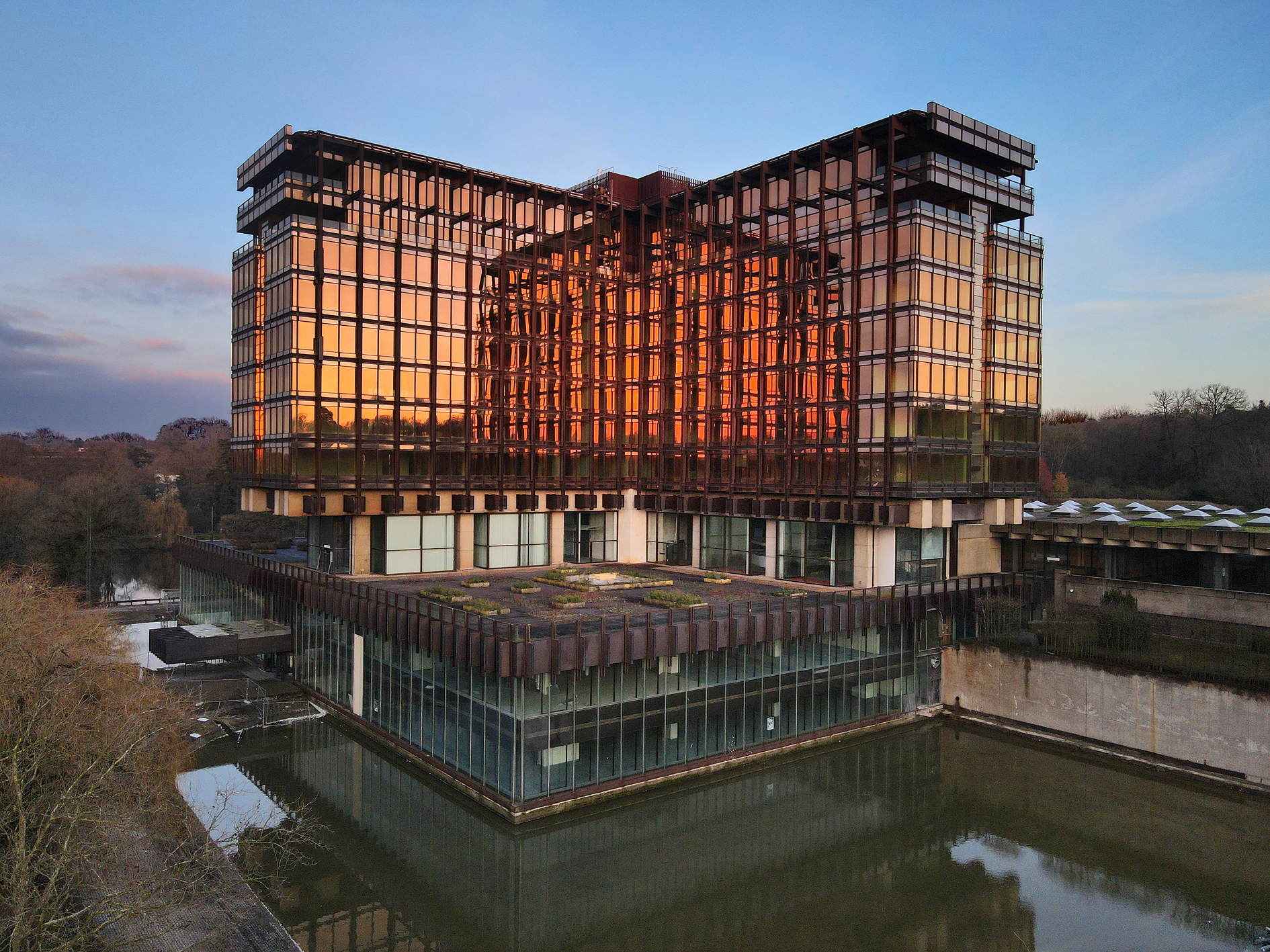
Mix
But converting offices into homes is far from straightforward. Office buildings were never designed for domestic life: basements dedicated to parking, limited natural light, low ceilings and a lack of outdoor space all present challenges. Added to this are strict environmental and fire safety standards.
However, vacant buildings are not always a silver bullet solution to the housing crisis: not all office buildings can become housing, and reconversion does not solve every challenge. The Perspective Brussels study shows that only a fifth of the 1 million m² of empty buildings can be converted to housing; for example, you cannot build on industrial business sites or use just parts of office blocks as housing.
And the overall impact remains limited. Perspective Brussels estimates that only around 200,000 m² – roughly 2,000 homes – of vacant office space can realistically be converted.
Vacancy rates, moreover, are often misunderstood. In the EU quarter, they stand at around 5.3%, below the regional average of 8.7%, while areas such as Avenue Louise see significantly higher levels.
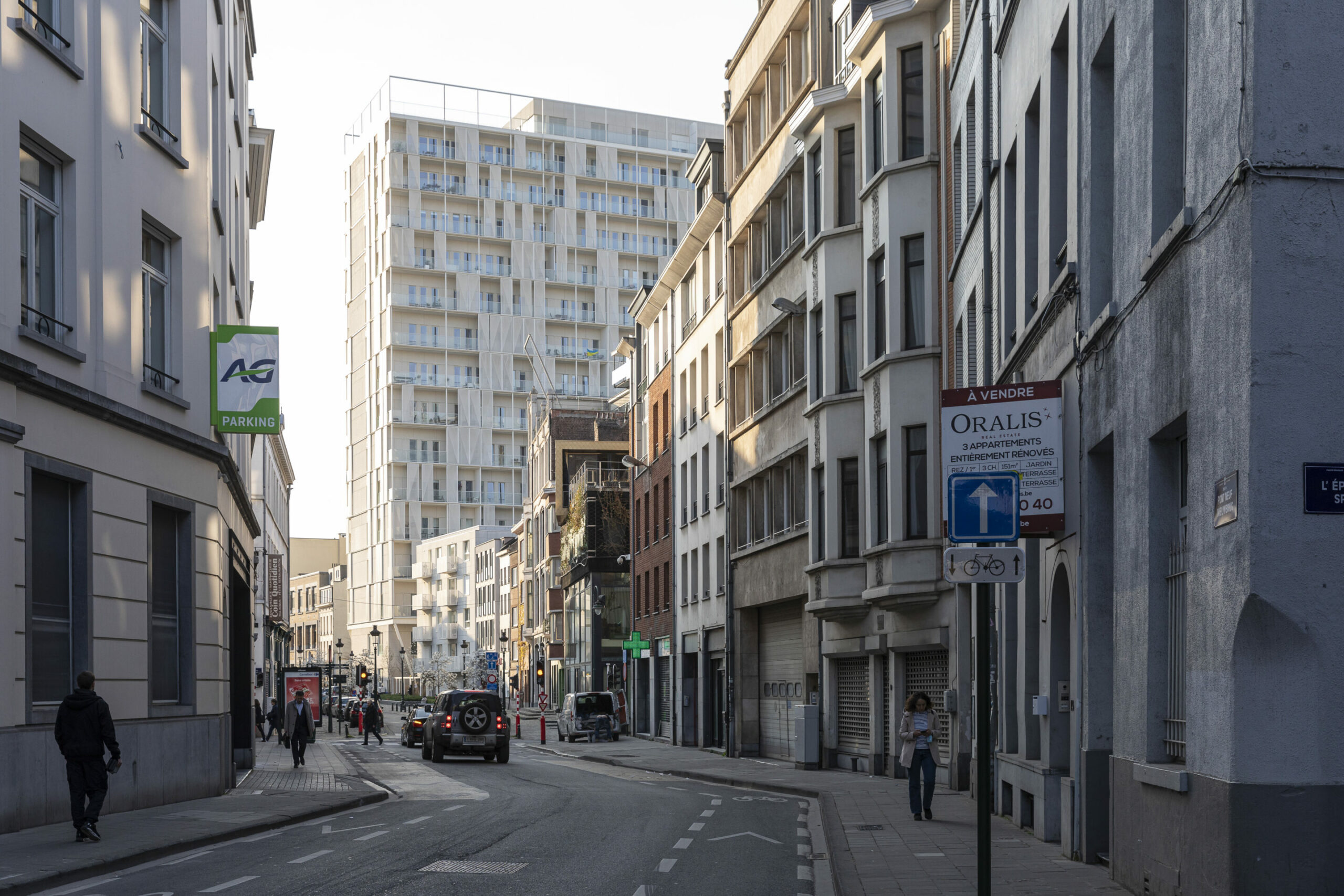
The Cosmopolitan &bogdan. Credit: Laurian Ghinitoiu
Still, momentum is building. Between 2012 and 2022, an average of 125,000 m² of office space was converted annually, rising to 182,000 m² in 2021. Since 1997, Brussels has reconverted 1.7 million m² of offices –one of the highest rates in Europe.
Flagship conversion projects show what is possible, combining offices, housing and public space in increasingly sophisticated ways.
They include not only the award-winning Royale Belge building in Auderghem (now the Mix), but also the stylish ZIN complex in downtown Brussels, which blends the luxury Standard Hotel, Flemish government offices and housing; and the visually striking OXY building just off Place de Brouckère – another mix of offices, shops and social spaces.
Another is the Cosmopolitan, a neglected 1960s office tower near the canal that was transformed between 2014 and 2019 into 156 dwellings and two levels of offices. Funds are not seen as a sticking point, as costs can be comparable depending on the building and extent of the works, according to Perspective Brussels.
The value of office and housing in different areas of the city is more relevant when looking at reconversion, with rents highest in the EU area. More reconversions take place in South-East and East Brussels, as housing is more valued there, while the central business district (CBD) values offices more than housing.
Change the system
Yet for many, the deeper challenge lies not in individual projects but in the system itself.
Josiane Schmidt, campaign manager for HouseEurope, a non-profit organisation advocating ‘power to renovation’, says that rapid reconstruction after World War II and the misunderstanding that a building’s environmental impact can be measured by its energy performance put the brake on renovating empty offices.
“This negation of the energy spent constructing a building and wasted during its demolition leads to the widespread assumption that a new energy-efficient building is greener than an existing one with lesser standards,” she says.
It also means clients, contractors, investors, architects, and policy makers finance new builds instead of transforming existing property.
“We must change the system and make renovation and transformation the new normal,” Schmidt says. This is all the more crucial given Brussels’ lack of social housing, “while so much existing space in Brussels can be transformed into housing.”
Brussels is unlikely to solve its housing crisis simply by converting offices. But the broader shift now underway – from demolition as default to reuse as priority – suggests a deeper rethinking of how the city builds, and rebuilds, itself.
