Belgium's federal government has to reach a deal on the more than €10 billion it needs to find following a weekend of talks.
As autumn sets in, Belgium's political calendar is entering another familiar season: budget negotiations.
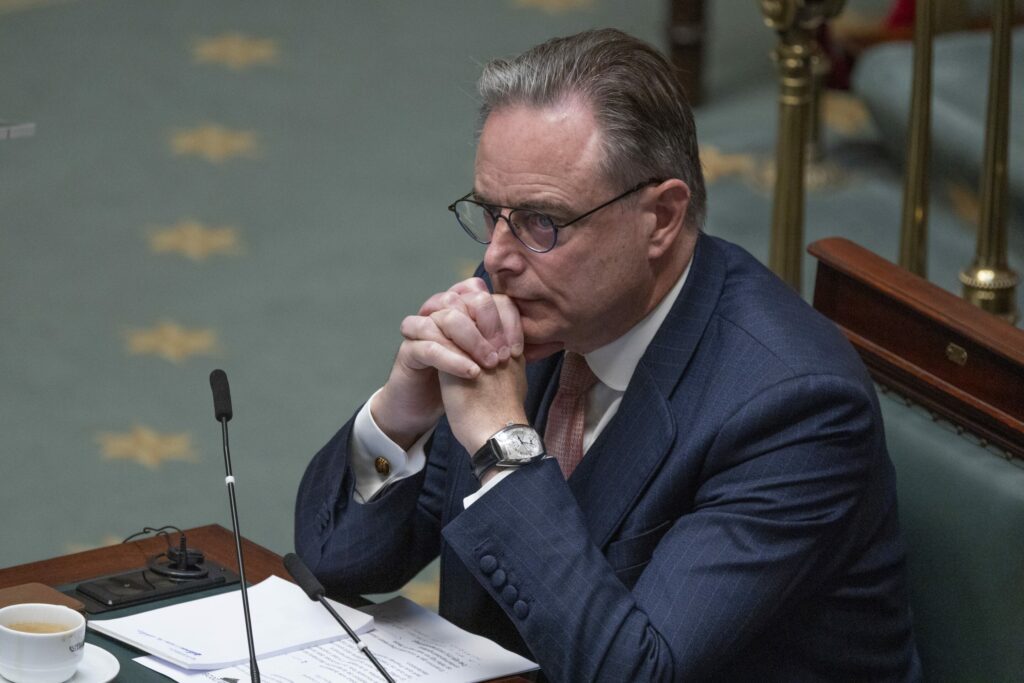
On Sunday, Prime Minister Bart De Wever (N-VA) and his coalition partners met for almost nine hours in an attempt to find more than €10 billion in savings and new revenue. The coalition has to reduce the deficit in its budget to improve Belgium's budget position and avoid being hit by a so-called interest snowball in 2030.
The weekend was billed as a key moment for the negotiations. De Wever wanted to know whether or not his coalition was ready for the final stretch towards an agreement.
On Friday evening, De Wever presented a new version of his plan, described by Minister of Foreign Affairs Maxime Prévot (Les Engagés) as "unbalanced." He had called a previous draft of the proposal "indigestible."
Yet the clash many expected never came.
Instead, the ministers went through the proposal line by line, with heated moments but no crisis. One source summed it up as "civilised, but with very strong differences of opinion," De Tijd reported on Monday.
The key points where the coalition disagrees
Vooruit (Flemish socialists) and Les Engagés (Francophone centrists) continue to argue against €2 billion in healthcare cuts and the N-VA's (Flemish nationalists) measures to fill the budget gap at the Asylum and Migration Department. Les Engagés still call the proposal unacceptable, but they say that they feel De Wever is listening and hope for a more balanced version.
Revenue is another sticking point. De Wever's plan includes raising the top VAT rate from 21% to 22%, possibly merging the 6% and 12% rates into a single 9% rate, and a few targeted measures such as lower VAT on new build homes.
However, without a structural VAT reform, N-VA, CD&V (Flemish Christian Democrats) and Les Engagés believe €10 billion is hard to find.
The MR (Francophone liberals) firmly opposes raising VAT. They argue that 56% of the population lives within 25 kilometres of a national border, making cross-border shopping a major concern. Vooruit is also against raising the 6% rate.
Both the MR and Vooruit oppose measures that would increase the cost of everyday purchases and have called for a narrower tax reform. But the N-VA and CD&V refuse to undo the agreed cut in labour costs, which will cost the budget around €2 billion net.
De Wever closed the talks around 21:00 on Sunday. The entire proposal was discussed, but there were too many differences to reach a deal.
One governing party described it as "no ground lost," but that "no progress" had been made either.
The way forward
Working groups with experts from all parties will now develop the disputed points, and the inner cabinet will meet again later this week.
The absence of an agreement put pressure on De Wever's timetable. He has to present the revised budget to Parliament on 13 October, the day of his State of the Union speech.
Belgium is required to submit its annual budget to the European Commission by 15 October.
MR leader Georges-Louis Bouchez is challenging that deadline, just as he did last year.
The government wants to avoid starting 2027 with an emergency budget, as happened in 2025 and 2026.
