
Belgian businesses are facing a growing wave of cyberattacks, with more incidents reported in the first nine months of 2026 than throughout the whole of last year. Artificial intelligence is making attacks faster and more sophisticated, raising concerns about companies' ability to protect themselves.
Belgium's Centre for Cybersecurity (CCB) received 588 reports of cyber incidents between January and September 2026, compared with 556 throughout 2025 and 372 in 2024, according to figures reported by L'Echo. This represents an average of more than two reported incidents per day, highlighting the increasing threat facing Belgian businesses.
The figures come as several major European companies have recently been targeted by cyberattacks. This week, hundreds of supermarkets in France experienced disruptions to their refrigeration systems, forcing stores to dispose of millions of euros' worth of spoiled food.
Meanwhile, supermarket group Ahold Delhaize reported a cybersecurity incident affecting its network, prompting the company to temporarily take certain systems offline. Its subsidiaries Delhaize and Albert Heijn were consequently unable to process some online orders and deliveries, while certain stores experienced shortages on their shelves.
Ransomware attacks on the rise
According to the CCB figures cited by L'Echo, account compromises have more than doubled in two years, rising from 72 reported incidents in 2024 to 144 in 2025. During the first nine months of 2026 alone, 156 cases were recorded. System compromises, which occur when hackers gain unauthorised access to computers or networks, have also increased significantly, with 97 incidents reported this year compared with 50 in 2025.
Ransomware remains another major threat. The CCB has already recorded 80 such attacks in 2026. These involve malicious software that blocks access to company systems or encrypts files, with hackers often demanding payment to restore access.
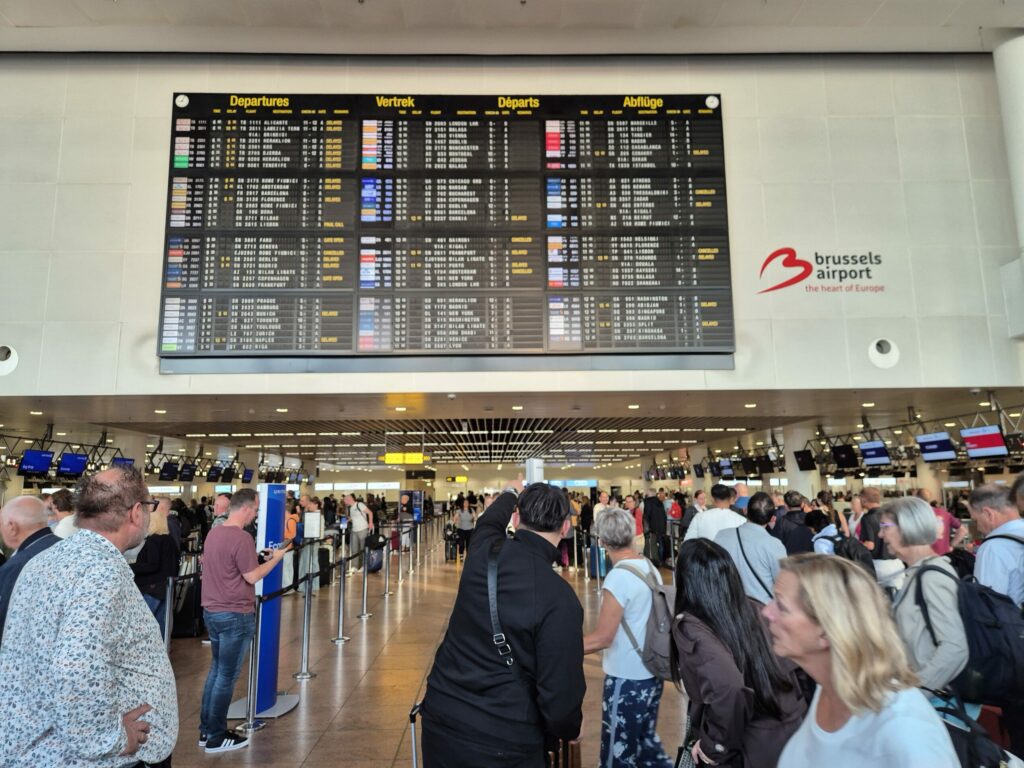
Belgium has experienced several high-profile incidents in recent years. Brewery group Duvel Moortgat was paralysed by a ransomware attack in March 2024, while Brussels Airport was forced to cancel flights in September 2025 following a cyberattack targeting one of its suppliers.
Artificial intelligence accelerating cyber threats
Artificial intelligence is also transforming the way cybercriminals operate. Speaking to L'Echo, Pieter Philippaerts, a cybersecurity researcher at KU Leuven, warned that AI tools are allowing attackers to identify vulnerabilities more quickly and carry out increasingly sophisticated operations.
"The latest AI models can automatically analyse source code and even machine code to identify vulnerabilities," he explained, adding that the technology can also help criminals organise attacks and create more convincing fraudulent emails.
The time available for companies to address security weaknesses is also shrinking. According to cybersecurity firm Rapid7, the median period between the disclosure of a serious vulnerability and evidence of its exploitation by hackers was just five days in 2025.
Philippaerts warned that preventing every cyberattack is no longer a realistic objective. "Companies must therefore prepare for a successful attack, contain it quickly, limit the damage and resume their operations," he said.
The researcher also highlighted the risks posed by external IT providers and suppliers, whose access to sensitive systems can expose multiple businesses to a single attack.
Belgian cybersecurity company Secutec recently reported that a cyberattack targeting an American IT partner portal had affected at least 270 Belgian organisations. According to the CCB, financial gain remains the primary motivation behind cybercrime, although espionage activities linked to groups associated with Russia, China and Iran have also been detected.
